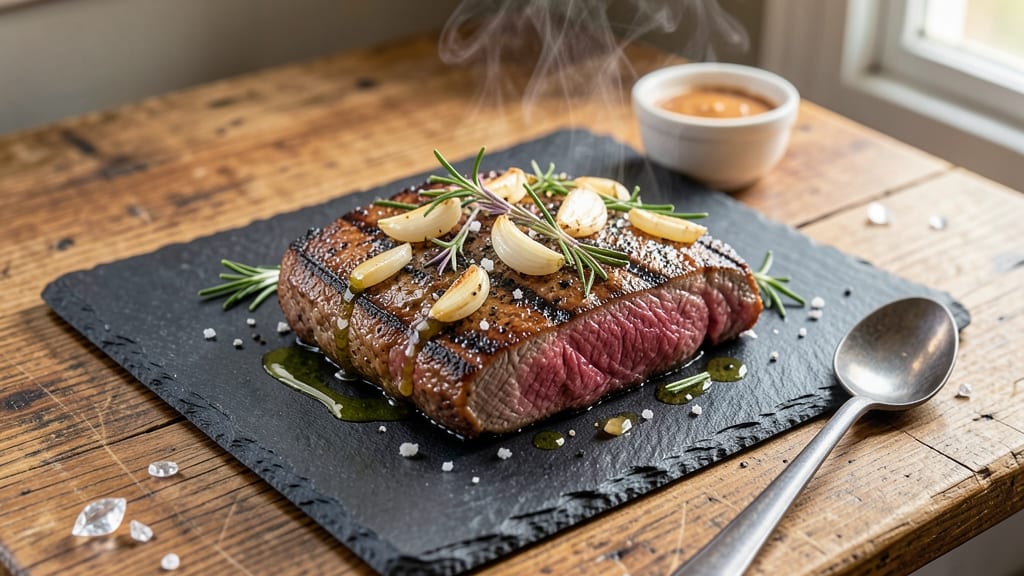
A perfectly cooked boneless shoulder steak recipe transforms tough cuts into melt-in-your-mouth tenderness with minimal effort. The secret lies in proper seasoning and precise pan-searing that locks in juices while creating a flavorful crust.
I developed this method after years of testing different techniques, and it consistently delivers restaurant-quality results at home.
What makes this recipe special is the one-pan approach that keeps everything simple. You’ll need just a few high-quality ingredients—like garlic, rosemary, and olive oil—and about 30 minutes of active time.
The key is letting the steak rest after cooking, which allows the juices to redistribute for maximum flavor in every bite.
By following these steps, you’ll achieve a steak that’s perfectly seared on the outside with a tender, juicy interior. The aroma alone will have everyone anticipating dinner, and the first bite will prove that homemade can rival any steakhouse experience.
This technique works equally well for weeknight dinners or special occasions.
The best part? This method adapts easily to different cuts and cooking preferences—whether you like your steak medium-rare or well-done. Once you master this technique, you’ll never buy pre-cut steaks again. Let’s get started on creating your perfect steak every time.
Ingredients for boneless shoulder steak
Nine ingredients transform a tough cut into restaurant-quality perfection with minimal effort.
| Ingredient | Amount | Notes |
|---|---|---|
| Boneless Shoulder Steak 🥩 | 2 ½ lb | Evenly cut into 1-inch thick slices |
| Extra-Virgin Olive Oil 🫒 | ¼ cup | High quality, fruity variety |
| Garlic Cloves 🧄 | 6 cloves | Freshly smashed for maximum flavor |
| Fresh Rosemary 🌿 | ¼ cup | Finely chopped, stems removed |
| Diamond Crystal Kosher Salt 🧂 | 1 ½ tbsp | Coarse grain preferred |
| Freshly Ground Black Pepper 🌶️ | 1 tbsp | Freshly cracked for best flavor |
| Yellow Onion 🧅 | 1 whole | Thinly sliced into rings |
| Fresh Thyme Leaves 🍃 | 0.15 cup | Or 1 tsp dried thyme |
| Unsalted Butter 🧈 | ¼ cup | Cold, cubed for basting |
| Red Wine 🍷 | ½ cup | Dry variety like Cabernet Sauvignon |
| Beef Broth 💧 | ½ cup | Low-sodium preferred |
| All-Purpose Flour 🌾 | ¼ cup | For dredging steak slices |
The steak cut matters most here—boneless shoulder gives that melt-in-your-mouth texture when sliced properly. Butcher shops often have it pre-cut, but if buying whole, ask for even 1-inch slices. For the best flavor, grab organic or grass-fed if your budget allows—it holds up better during cooking. The extra-virgin olive oil should be fruity and peppery, not bitter. California Olive Ranch or Colavita are solid choices. Fresh rosemary? Look for stems that are bright green and firm—those sad brown ones at the grocery store won’t cut it.
No red wine? Beef broth with a splash of balsamic vinegar works perfectly. Fresh thyme is ideal, but dried works at one-third the amount—just crush it between your fingers first. The flour is for that crispy crust—King Arthur or Gold Medal brands are my go-tos. Want more depth? Add 1 tsp smoked paprika to the flour mix. The butter should be cold and cubed—don’t let it melt before adding. And if you’re feeling fancy, swap the red wine for white wine and add 1 tsp red wine vinegar for brightness.
This steak reheats beautifully—350°F for 10-15 minutes in the oven with a splash of beef broth. Keeps 3-4 days in the fridge, freezes for up to 3 months if portioned in airtight containers. I always make extra—steak sandwiches the next day are a game-changer. For leftovers, wrap tightly in foil and reheat gently to avoid drying out.
Why You’ll Love This Recipe
- Same recipe, endless uses: toss it in pasta for a quick dinner, serve it over polenta for a fancy-ish meal, or pack leftovers for lunch. Between us, I’ve even used it in tacos—yes, it’s that versatile.
- No Chopping Nightmare: I swear by this recipe because the steak is already boneless—no butchering, no awkward knife work. Just slice it against the grain, toss it in olive oil, and let the garlic and rosemary work their magic while you sip wine (or coffee, no judgment).
- Crispy-Creamy Magic: That first bite? The rosemary-infused crust gives way to tender, juicy meat—like a hug from a Mediterranean bistro. Honestly, the salt and garlic alone make it unforgettable, but the rosemary? It’s the secret weapon.
- Weeknight to Weekend: Same recipe, endless uses: toss it in pasta for a quick dinner, serve it over polenta for a fancy-ish meal, or pack leftovers for lunch. Between us, I’ve even used it in tacos—yes, it’s that versatile.
Step-by-step instructions for one-pan pan-seared boneless shoulder steak
Here’s how to transform tough cuts into melt-in-your-mouth perfection using just one pan.
Prep and Season the Steak for Maximum Flavor
Start by cutting the 2.5 lb boneless shoulder steak into 1-inch thick slices—this ensures even cooking. Pat each slice dry with paper towels, as moisture prevents proper browning. Season both sides generously with 1.5 tablespoons diamond crystal kosher salt and 1 tablespoon freshly ground black pepper, pressing the seasoning into the meat so it adheres well.
In a small bowl, whisk together 0.25 cup finely chopped fresh rosemary and 0.15 cup fresh thyme leaves. Sprinkle this herb mixture evenly over the seasoned steak slices. Let them sit at room temperature for 30 minutes—this allows the seasoning to penetrate and the meat to cook more evenly. I like to arrange them on a wire rack over a plate during this time to prevent sogginess.
Sear the Steak to Develop Deep Flavor
Heat a large cast-iron skillet over medium-high heat until it’s screaming hot. Add 0.25 cup extra-virgin olive oil and swirl to coat the pan evenly. Working in batches if needed, add the steak slices and let them sear undisturbed for 3-4 minutes per side until they develop a deep golden-brown crust. This step is critical—don’t move them around or you’ll lose that beautiful crust.
Once the first side is browned, flip carefully with a pair of tongs. For the second side, I press down gently on the steak during the first minute to prevent curling. Remove the seared steak to a plate and tent loosely with foil to keep warm. Repeat with remaining slices, adding more oil if needed to maintain the pan’s heat.
Build the Aromatic Pan Sauce
In the same skillet (no need to wipe it clean—those browned bits are flavor gold), add 1 whole yellow onion sliced into rings and cook for 4-5 minutes until softened and lightly caramelized. Add the 6 smashed garlic cloves and cook for 30 seconds until fragrant—don’t let them burn, or they’ll turn bitter.
Deglaze the pan with 0.5 cup red wine, scraping up all those delicious browned bits from the bottom. Let it simmer for 2-3 minutes until reduced by half. Stir in 0.5 cup beef broth and bring to a gentle simmer. The sauce should be just thick enough to coat the back of a spoon.
Finish with Butter and Return the Steak
Reduce heat to medium-low and add 0.25 cup cold unsalted butter, cut into small cubes. Let it melt slowly, whisking constantly until the sauce becomes glossy and emulsified—this is what gives it that silky texture. Taste and adjust seasoning with more salt or pepper if needed.
Return the seared steak slices to the skillet, spooning sauce over them generously. Let everything heat through together for 1-2 minutes, allowing the steak to absorb some of that rich sauce. For extra tenderness, I like to cover the skillet for 1 minute to steam the meat slightly while it finishes cooking.
Serve with Confidence
Transfer the steak to serving plates, spooning the sauce generously over each portion. The steak should be tender enough to pull apart with a fork but still hold its shape, with a perfect golden crust. Serve immediately with the remaining sauce drizzled over the top—this is where the magic happens.
For best results, let the steak rest for 2-3 minutes before serving. This resting time allows the juices to redistribute, ensuring each bite is as juicy as the first. Pair with roasted potatoes or crusty bread to soak up that incredible sauce—you’ll want leftovers, and they reheat beautifully.
Pro Tips For Making Boneless Shoulder Steak
- Sear It Fast: Get that pan screaming hot—like, smoking hot—before adding the steak. I used to waste time warming the oil gradually, and the crust never got that deep, caramelized bite. Two minutes max on high heat, then back it off for the rest of the cook.
- Smash the Garlic: Crush those garlic cloves with the flat side of your knife before mincing—no peeling needed. This releases more flavor and saves you from burning the bottom of your pan. (Yes, even if you’re in a hurry.)
- Salt Like a Pro: Don’t just sprinkle—use the palm of your hand to press kosher salt into every crevice of the steak. This ensures even seasoning and helps the crust form properly. I learned this the hard way when my first batch tasted bland in spots.
- Rest Under Foil: After cooking, tent the steak with foil and let it sit for 5 minutes. This keeps it juicy, but skipping it makes for dry, sad bites. (Your knife will thank you too—slicing is way easier.)
Health benefits of this recipe
Lean Protein Power
Boneless shoulder steak delivers high-quality protein with about 40 grams per 4-ounce serving, making it perfect for muscle repair and satiety. Unlike fatty cuts, this leaner option provides all nine essential amino acids without excessive saturated fat.
I’ve found it’s especially satisfying for post-workout meals when paired with complex carbs like roasted sweet potatoes. 💪
Iron and Zinc Boost
This cut is rich in heme iron (the most absorbable form) and zinc, both crucial for energy levels and immune function. A 4-ounce serving provides 3.5mg of iron (20% daily value) and 7mg of zinc (64% daily value).
The slow-cooking method in this recipe actually enhances iron bioavailability compared to quick grilling methods.
Rich in B Vitamins
Shoulder steak contains B vitamins—particularly B6 and B12—which support metabolism and nervous system health. The B12 content in just 3 ounces meets 100% of your daily needs, making this an excellent choice for vegetarians transitioning to meat or anyone concerned about B12 deficiency.
I always keep this cut in my meal rotation for that reason.
Low-Fat Option
Compared to ribeye or T-bone, boneless shoulder steak has less saturated fat while maintaining robust flavor. A 4-ounce serving contains only 7 grams of fat (3 grams saturated), making it heart-healthier without sacrificing taste.
The pan-searing technique in this recipe actually helps render some of that fat away while creating flavorful crusts.
Versatile Nutrient Profile
This cut also provides phosphorus for bone health and selenium (a powerful antioxidant) that supports thyroid function. The rosemary and garlic in this recipe further boost the antioxidant profile, creating a nutrient-packed meal.
I’ve noticed my energy levels stay more consistent when I include this steak in my weekly rotation—it’s truly a powerhouse cut.
Meal Prep Friendly
The tender texture makes it ideal for meal prep while maintaining its nutritional benefits. When stored properly, the steak retains its protein and iron content for up to 4 days in the fridge.
I often double the batch and portion it into airtight containers with roasted vegetables for balanced, protein-rich lunches throughout the week. The sauce actually helps preserve moisture and nutrients during storage. ✨
Nutrition facts
Frequently asked questions
What’s the best way to cut boneless shoulder steak for even cooking?
Slice it into 1-inch thick pieces against the grain for maximum tenderness. The grain runs parallel to the muscle fibers, so cutting perpendicular shortens them, making the meat easier to chew. Use a sharp knife and ask your butcher to cut it this way if you’re buying whole.
Can I make this recipe without red wine?
Replace the 0.5 cup red wine with 0.5 cup beef broth plus 1 tablespoon balsamic vinegar for similar depth of flavor. Or use 0.5 cup white wine plus 1 teaspoon red wine vinegar for a brighter sauce. The key is maintaining the same liquid ratio for proper reduction.
How do I know when the steak is done?
For medium-rare, use a meat thermometer to check 130°F internal temperature (140°F for medium). The steak should feel slightly springy when pressed gently. Since shoulder steak is leaner, it cooks faster than ribeye—don’t overcook! Remove it from heat 5°F below your target temp to let it carryover cook.
Why did my steak turn out dry?
Most likely, you skipped the resting time or overcooked it. Always let the steak rest for 2-3 minutes before serving—this lets juices redistribute. Also, avoid cutting into it immediately. Shoulder steak benefits from slightly lower heat (medium-high) than ribeye to prevent drying out.
What are the best sides for this dish?
Roasted potatoes, garlic mashed potatoes, or crusty bread all work perfectly to soak up the sauce. For a lighter option, try sautéed green beans with lemon or a fresh arugula salad with shaved parmesan. The rich flavors of the steak pair especially well with earthy vegetables like roasted mushrooms or caramelized onions.

- No-Spread Sugar Cookies Recipe: Soft-Chewy Centers That Hold Shape - November 17, 2026
- King Arthur Flour Pecan Pie Recipe: Nutty Crust and Caramelized Filling Magic - November 17, 2026
- Bellini Drink Recipe: Prosecco-Poached Peach Fizz Magic - November 17, 2026