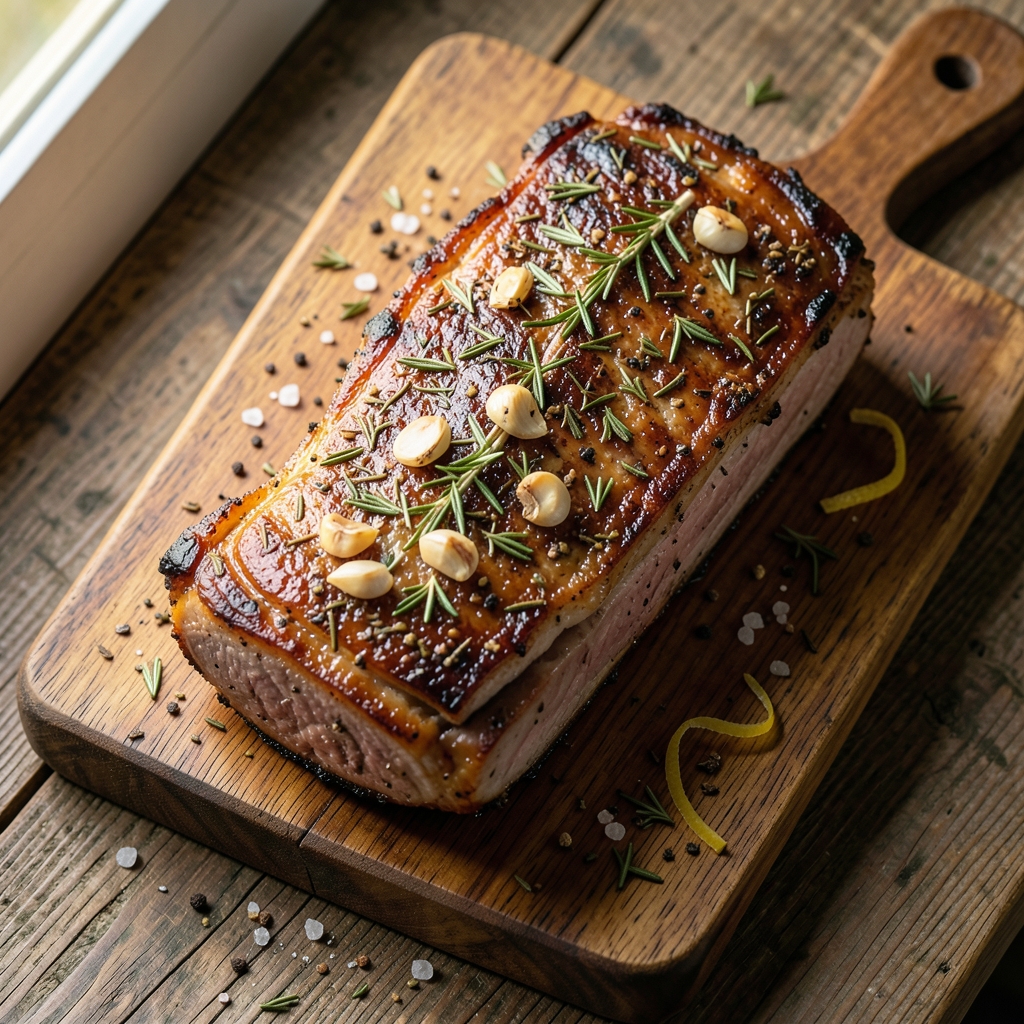
This bone-in New York strip roast recipe delivers restaurant-quality results with a juicy, herb-crusted exterior and rich bone marrow that transforms any dinner into a showstopper. I perfected this method after years of testing—starting with my Nonna’s Italian roasts and adapting for New England tastes.
The secret lies in the slow roast followed by a high-heat sear, ensuring tender meat with a caramelized crust. Every bite reveals layers of flavor, from the aromatic herb crust to the velvety marrow inside.
The process is straightforward but requires patience: seasoning the roast generously, roasting it low and slow, then finishing with a quick sear for that perfect crust. This method guarantees juicy meat every time, with the bone marrow adding a luxurious touch that’s worth the effort.
The herb crust isn’t just for flavor—it also helps lock in moisture, keeping the roast tender even after resting. For best results, use a meat thermometer to hit the ideal internal temperature of 130–135°F for medium-rare.
Pair this roast with roasted root vegetables or a simple red wine reduction to elevate the dish further. The bone marrow can be scooped out and served as a rich, buttery accompaniment, or spread on toasted bread for a decadent appetizer.
This recipe is designed for those who appreciate a professional touch without sacrificing simplicity. Whether you’re cooking for a special occasion or a weeknight dinner, the results will impress even the most discerning guests.
Resting the roast is just as important as cooking it—this step ensures the juices redistribute, giving you that perfectly juicy slice every time. The herb crust adds an extra layer of flavor, while the bone marrow provides a luxurious finish.
Trust me, this roast is worth the time and effort, and it’s a technique I’ve tested in my small Boston kitchen countless times. Let’s get cooking!
Ingredients for bone in new york strip roast
Juicy, herb-crusted perfection with bone marrow that steals the show every time.
| Ingredient | Amount | Notes |
|---|---|---|
| Bone-In New York Strip Roast 🥩 | 2 ½ lb | Center-cut, 1.5-inch thick |
| Fresh Rosemary 🌿 | ¼ cup | Finely chopped, stems removed |
| Fresh Thyme 🌿 | ¼ cup | Leaves only, stems discarded |
| Garlic Cloves 🧄 | 8 cloves | Smashed, skin-on for flavor |
| Kosher Salt 🧂 | 2 tbsp | Diamond Crystal preferred |
| Freshly Ground Black Pepper 🌶️ | 1 ½ tbsp | Coarse grind for texture |
| Extra-Virgin Olive Oil 🫒 | 2 tbsp | High-quality, fruity variety |
| Unsalted Butter 🧈 | ½ cup | Cold, cubed for crust |
| Yellow Onion 🧅 | 1 whole | Thinly sliced, for serving |
| Baby Carrots 🥕 | 1 lb | Whole, for roasting |
| Fresh Parsley 🌿 | 0.1 cup | Chopped, for garnish |
| Red Wine 🍷 | ½ cup | Dry, for deglazing |
| Beef Bone Marrow 🦴 | 1 piece | From roast, for serving |
The New York strip roast is the star—look for a center-cut piece with good marbling. Local butchers or Whole Foods carry the best cuts, but don’t stress if you grab it from the grocery store meat counter. A 1.5-inch thickness ensures even cooking. For the herbs, grab fresh rosemary and thyme from the grocery store’s produce section—Trader Joe’s has the best-priced bundles. The bone marrow is the real luxury here, so if your butcher doesn’t separate it, ask them to crack the bone and save it for you. Trust me, it’s worth the extra step.
No fresh rosemary? Dried works at one-third the amount, but fresh is ideal. Short on thyme? Oregano or marjoram can sub in a pinch. The red wine can be swapped for beef broth plus a splash of balsamic if you’re avoiding alcohol. For the crust, butter and olive oil together give that perfect balance of richness and herbaceousness. The carrots can be baby carrots or whole roots—just roast them alongside the meat for easy cleanup. And if your roast doesn’t come with marrow, ask for a marrow bone separately.
This roast reheats beautifully—just warm it in the oven with a splash of broth to keep it moist. The herb crust stays flavorful for 3 days in the fridge, while the marrow keeps for 1 week if stored in its juices. I always make extra marrow—it’s perfect for spreading on toast or finishing soups. The roasted veggies? Toss them in the same pan after the roast comes out, and they’ll be tender and caramelized in no time.
Why You’ll Love This Recipe
- Minimal Prep, Maximum Impact: I swear by this recipe because it’s actually hands-off. You’re talking 10 minutes of active work—just searing the roast, tossing in the whole garlic cloves (no mincing!), and letting the rosemary and thyme do their magic. The bone renders its own flavor, so you’re not stuck chopping or peeling.
- Crispy Edge, Juicy Core: That first bite? Chef’s kiss. The bone-in cut keeps it juicy while the crust turns golden and crackly—thanks to the kosher salt and high-heat sear. The garlic and herbs infuse into the fat as it renders, so every slice tastes like it’s been slow-cooked (even though it’s not).
- Leftovers That Don’t Suck: Between us, most roast leftovers are sad. Not this one. The meat stays tender for days, and I’ve turned slices into sandwiches, grain bowls, and even breakfast hash. Honestly, the second day is when it shines—flavors meld even more, and it’s still the star.
Step-by-step instructions for herb-crusted bone-in New York strip roast
Here’s how to achieve a perfectly juicy, herb-encrusted roast with crispy edges and tender meat.
Prepare the Herb Butter Crust
In a small bowl, combine the 0.25 cup fresh rosemary, 0.25 cup fresh thyme, 8 smashed garlic cloves, 2 tablespoons kosher salt, and 1.5 tablespoons freshly ground black pepper. Pulse in a food processor until finely chopped—this ensures even distribution of flavors throughout the crust.
Add the 0.5 cup cold unsalted butter and process until the mixture resembles coarse sand. The butter should be fully incorporated but still hold its shape when pressed between fingers. This herb butter will create a flavorful, golden crust on your roast.
Spread this mixture evenly over the 2.5 lb bone-in New York strip roast, pressing it gently into the meat. Pay special attention to the fat cap and edges where the crust will form. Let the roast sit at room temperature for 30 minutes before cooking—this ensures even cooking and maximum juiciness.
Sear the Roast for Maximum Flavor
Preheat your oven to 425°F. Place a heavy oven-safe skillet over medium-high heat and add 2 tablespoons extra-virgin olive oil. Once the oil shimmers, carefully place the roast in the skillet, fat-side down. Sear for 8-10 minutes until the fat renders and the skin develops a deep golden-brown crust.
Flip the roast and sear the other side for another 5-7 minutes. The goal is to create a flavorful crust while keeping the interior juicy. Don’t rush this step—patience here ensures a rich, caramelized exterior. Transfer the roast to a roasting pan or baking sheet.
Roast to Perfect Medium-Rare
Place the seared roast in the preheated oven and roast for 20-25 minutes for medium-rare (internal temperature 125-130°F). Use a meat thermometer to check the temperature—this is the only reliable way to ensure juicy results. The bone marrow should still be soft and gooey when ready.
Real talk: Your oven might run hot, so start checking at the 15-minute mark. If the roast browns too quickly, tent it loosely with foil to prevent over-browning. The fat cap should be crispy, and the meat should pull back slightly from the bone when pressed gently.
Rest and Prepare the Bone Marrow
Remove the roast from the oven and let it rest for 15 minutes before carving. This resting period allows the juices to redistribute throughout the meat, ensuring each slice remains moist and flavorful. During this time, carefully extract the beef bone marrow from the roast using a small knife or bone marrow spoon.
Place the marrow in a small baking dish and cover it with 0.5 cup red wine. Roast the marrow at 375°F for 10-12 minutes until it’s soft and easily scooped. The wine adds depth of flavor and prevents the marrow from drying out. Keep the roast and marrow warm while you prepare the sides.
Assemble with Roasted Vegetables
While the roast rests, toss the 1 lb baby carrots and 1 whole yellow onion (sliced) in 1 tablespoon olive oil, 1 teaspoon kosher salt, and 0.5 teaspoon black pepper. Roast them on a separate tray at 400°F for 25-30 minutes until tender and caramelized.
Slice the roast against the grain into ½-inch thick portions. Plate the meat alongside the roasted vegetables, drizzle with any pan juices, and garnish with 0.1 cup chopped fresh parsley. Serve the roasted bone marrow on the side for spreading—it adds rich, buttery depth to every bite.
Pro Tips For Making Bone In New York Strip Roast
- CRACK THE HEAT: Start your cast-iron or heavy skillet screaming hot—like, “I’m-about-to-sear-a-steak” hot. A bone-in NY strip needs that initial shock to render fat fast and lock in flavor before you even think about herbs. I used to wimp out here, and my roast ended up greasy instead of golden.
- SALT THE BONE: Rub that kosher salt all over the bone too—yes, even the parts you won’t eat. The bone soaks up moisture, and salting it first means the meat stays juicier longer. Skip this, and you’ll end up with a dry strip by the time you hit medium-rare.
- STUFF THE GARLIC: Smash those garlic cloves flat with the side of your knife before tucking them into the meat—no peeling needed. The skin keeps them from burning, and the crushed cloves infuse flavor deeper. I learned this after one disaster where my garlic turned to ash while my strip stayed bland.
- REST UNDER FOIL: Tent that roast with foil immediately after pulling it from the pan—give it a solid 5-10 minutes. The bone stays hot, the meat redistributes juices, and you won’t end up with a sliced steak that weeps all over your plate. (Yes, even if you’re impatient like me.)
Storing and reheating this dish
Fridge Storage Secrets
After your roast rests, transfer it to an airtight container lined with parchment paper to prevent sticking. I use glass Pyrex containers with snap-on lids—they keep the meat moist for up to 4 days at 40°F or below.
The herb crust stays flavorful, but the marrow should be scooped and stored separately in a small glass jar covered with its juices. This prevents oxidation and keeps it rich for 3-4 days. 💡
Freezer Prep for Later
For longer storage, wrap the roast tightly in plastic wrap first, then place it in a freezer bag with ¼ cup beef broth to prevent drying. Label with the date—it stays safe for 3 months.
The bone marrow freezes beautifully too: scoop it into a small silicone mold, cover with broth, and freeze. When ready to use, thaw overnight in the fridge and reheat gently. 🥶
Oven Reheating Magic
For the best texture, reheat the roast in a 375°F oven for 15-20 minutes on a wire rack over a baking sheet. Add 2 tablespoons beef broth to the pan to keep it juicy. The herb crust will crisp up again, and the meat will stay tender.
I avoid microwaving—it turns the marrow greasy and the meat rubbery. For the marrow, reheat it in a small saucepan over low heat for 2-3 minutes with a splash of wine. 🔥
Leftovers Reinvented
Turn leftover roast into beef sandwiches with caramelized onions and horseradish cream. Thin slices work perfectly for tacos with avocado and lime. The marrow? Spread it on toasted baguette slices with flaky salt for an instant appetizer.
I also blend it into homemade gravy—just simmer the marrow with pan drippings and beef broth for 10 minutes. The flavor is next-level. 💫
Vegetable Revival
The roasted carrots and onions keep well too—store them in the same container as the meat for 3 days. Reheat them in the oven at 350°F for 10 minutes with a drizzle of olive oil.
For extra flavor, toss them with 1 teaspoon balsamic vinegar and ½ teaspoon brown sugar before reheating. They make a great salad topping or grain bowl base. 🌱
Marrow Mastery
If you didn’t use all the marrow, freeze it in 1-teaspoon portions for quick use. Thaw a portion in the fridge overnight, then reheat in a small pan with 1 tablespoon butter and a pinch of salt.
Drizzle it over mashed potatoes or roasted Brussels sprouts for a rich finish. I also use it to finish soups or braises—just a spoonful adds depth instantly. 🦴
Nutrition facts
Frequently asked questions
Why is the bone marrow included in this recipe?
The bone marrow adds a luxurious, buttery depth that transforms this roast from impressive to unforgettable. When roasted with red wine, it becomes silky and rich—perfect for spreading on toast or drizzling over vegetables. The marrow also enhances the overall flavor of the dish by infusing the meat with natural richness during cooking.
Can I use a bone-in ribeye instead of New York strip?
Yes, but there are key differences. Ribeye has more marbling, which makes it juicier but slightly fattier. For a ribeye, reduce roasting time by 5-7 minutes to avoid overcooking. The flavor will be richer, but the texture may be slightly softer. Stick with New York strip for a firmer bite and classic beefy flavor.
How do I know when the roast is done without a meat thermometer?
Press the meat gently with your finger—if it feels firm but still slightly springy, it’s likely medium-rare. For a bone-in roast, the bone should feel warm but not scorching. A good rule: Let it rest 10-15 minutes after removing from the oven, then slice to check the center. The juices should run slightly pink, not red.
What’s the best way to reheat sliced leftover roast?
Reheat slices in a 375°F oven for 10-12 minutes on a wire rack over a baking sheet. Add 1 tablespoon beef broth to the pan to keep them moist. Avoid microwaving—it dries out the meat. For extra flavor, brush slices with melted butter and a sprinkle of fresh herbs before reheating.
Can I make this roast in a slow cooker?
Not ideal for this recipe, but you can adapt it! Sear the roast first, then cook on low for 4-5 hours with ½ cup beef broth and herbs. The texture will be more tender than roasted, but less crispy. For best results, finish with a quick pan sear after slow cooking to restore crust and juiciness.

- Philippines Adobo Recipe: Soy-Vinegar Magic for Tender Chicken - November 11, 2026
- Candied Nuts Recipe: Caramelized Sweetness With Crunchy Texture - November 11, 2026
- Arroz Imperial Recipe: Spanish-Style Rice with Saffron and Royal Texture - November 11, 2026