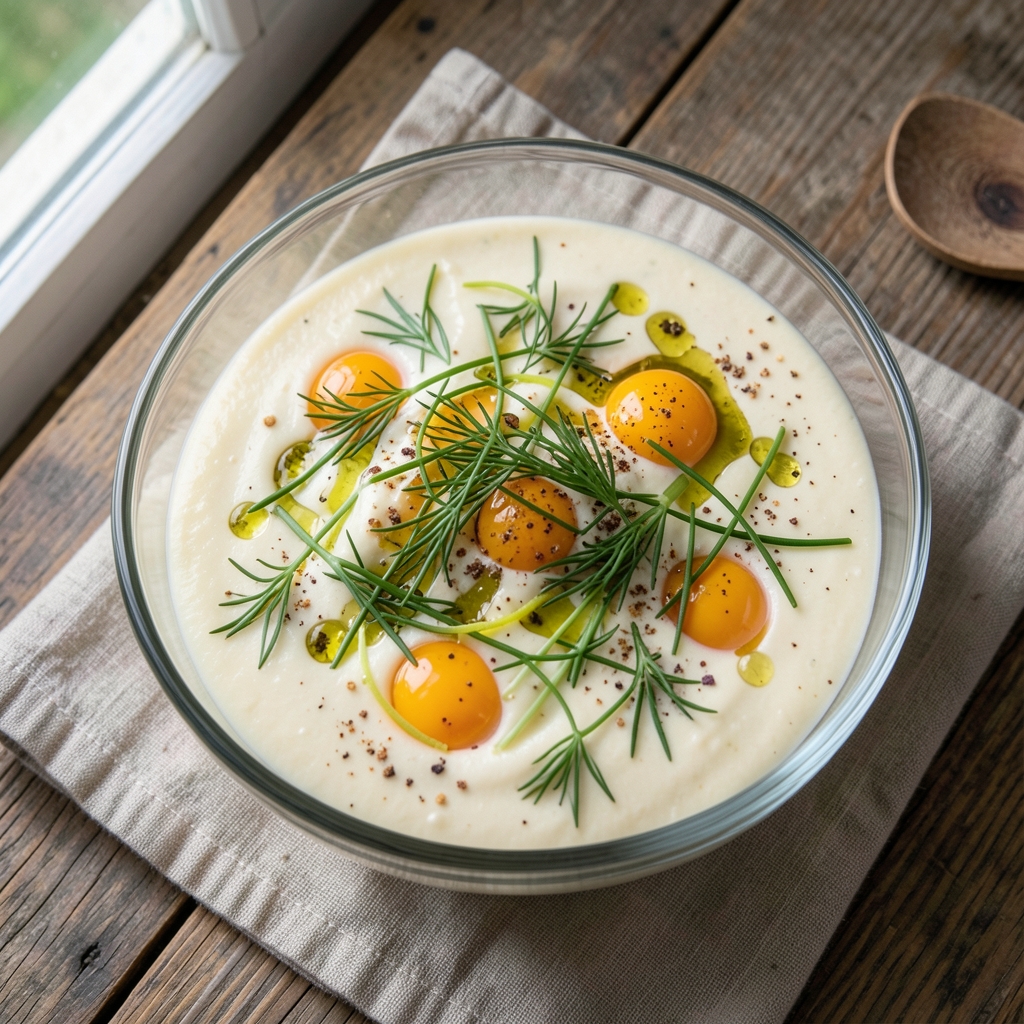
This boiled egg salad dressing recipe transforms simple ingredients into a velvety, herbed vinaigrette that elevates any salad from ordinary to extraordinary. The secret lies in simmering hard-boiled eggs into the dressing base, creating a naturally emulsified texture that’s impossibly smooth and rich.
I developed this recipe after years of experimenting with creamy dressings that separated or tasted artificial—this one stays perfectly balanced and delicious.
The process is straightforward but requires precision: simmering egg yolks with vinegar and spices until fully incorporated, then blending with oil and herbs for a silky finish.
What makes this dressing truly special is its versatility—it works equally well on classic green salads, hearty grain bowls, or even as a dip for crudités. The herbed notes add depth without overpowering, making it a professional-quality condiment you’ll reach for again and again.
By the time you’re done, you’ll have a dressing that’s creamy yet light, tangy yet rich, with just the right balance of herbs and acidity. The eggs add a subtle, luxurious depth that store-bought dressings simply can’t match, while the vinegar base keeps it fresh and vibrant.
This isn’t just another salad dressing—it’s a game-changer that will transform your meals.
The best part? This dressing keeps beautifully in the refrigerator for up to a week, so you can make a big batch and enjoy it all week long. Whether you’re prepping for meal prep or just want to elevate your lunches, this recipe delivers restaurant-quality results with minimal effort.
Let’s get started on creating your perfect pairing.
Ingredients for boiled salad dressing
Simple ingredients, extraordinary transformation—this dressing starts with eggs and ends with restaurant-quality richness.
| Ingredient | Amount | Notes |
|---|---|---|
| Hard-Boiled Egg Yolks 🥚 | 4 whole | Freshly simmered, room temperature |
| White Wine Vinegar 🍷 | ½ cup | Dry, crisp variety preferred |
| Extra-Virgin Olive Oil 🫒 | ¾ cup | High-quality, fruity, cold-pressed |
| Fresh Dill 🌿 | ¼ cup | Finely chopped, stems removed |
| Fresh Chives 🌱 | ¼ cup | Thinly sliced, mild flavor |
| Fresh Tarragon 🌿 | ⅛ cup | Finely chopped, subtle anise note |
| Garlic Cloves 🧄 | 2 cloves | Minced, fresh, not pre-minced |
| Diamond Crystal Kosher Salt 🧂 | ½ tsp | Fine grain, not iodized |
| Freshly Ground Black Pepper 🌶️ | ¼ tsp | Cracked peppercorns preferred |
| Granulated Sugar 🍚 | ¼ tsp | White, fine grain |
The egg yolks are the heart of this dressing—use room-temperature yolks for perfect emulsification. Whole Foods or local farms often sell eggs with richer yolks, but any high-quality eggs work. For vinegar, Bragg or Heinz dry varieties add bright acidity without overpowering. The herbs? Fresh is non-negotiable—Trader Joe’s sells pre-washed bundles that save time. Tarragon is the secret weapon here—if you can’t find it, dried tarragon at one-third the amount works in a pinch, but fresh is absolutely essential for that delicate anise flavor.
No fresh dill? Substitute with 1 tbsp dried dill plus 1 tbsp parsley—it won’t be identical, but close. Short on chives? Green onion tops work too, though the flavor is slightly sharper. The olive oil must be extra-virgin—cheap oil ruins the silky texture. For a sweeter dressing, increase sugar to 0.5 tsp. This blend keeps beautifully for 5-7 days in the fridge, so make extra—it disappears fast. The garlic should be freshly minced (pre-minced has no flavor), and the peppercorns must be freshly cracked for that bright bite.
This dressing emulsifies perfectly when made fresh, but if you need to prep ahead, simmer the yolks and vinegar first, then cool completely before adding oil. Store in a clean, airtight jar with a thin layer of olive oil on top to preserve freshness. Shake well before each use—it separates slightly but always comes back together. The sugar isn’t just for sweetness; it helps stabilize the emulsion so it doesn’t break. For extra richness, add 1 tbsp crème fraîche at the end, but it’s not required.
Why You’ll Love This Recipe
- No Fuss, Big Payoff: I swear by this dressing because it’s the kind of recipe that feels like cheating—just whisk yolks with vinegar and oil, then fold in herbs. The hardest part is peeling the eggs, and honestly, I’ve mastered that with a spoon and a deep breath.
- Tangy Creamy Magic: That first bite? Rich, bright, and just a little funky from the vinegar cutting through the egg yolks. The dill and chives add a fresh punch that makes it taste like summer, even in January. (Yes, I’ve drizzled it over winter greens at 3 PM on a gray day.)
- Dress Any Dish: This isn’t just for salads—toss it with roasted potatoes, drizzle it on grilled fish, or even mix it into mayo for sandwiches. I keep a jar in my fridge for last-minute meals when I’ve got nothing but bread and veggies. It’s my secret weapon for making simple food feel special.
- Cheap & Lasts Forever: A few eggs and a bottle of vinegar go a long way, and this dressing keeps for weeks in the fridge. I make a big batch once a month and use it up slowly—no waste, no stress. Plus, the yolks add luxury without the price tag of store-bought gourmet dressings.
Step-by-step instructions for creamy herbed boiled egg dressing
Transform simple boiled egg yolks into an incredibly rich, velvety dressing that elevates every salad.
Blend the Herbs and Garlic into a Paste
In a food processor or high-powered blender, combine the 0.25 cup fresh dill, 0.25 cup fresh chives, 0.125 cup fresh tarragon, and 2 cloves garlic cloves. Pulse until you achieve a fine, uniform paste—this ensures even distribution of flavor throughout the dressing. You want the texture to be smooth, almost like a chunky pesto, with no visible herb stems or garlic pieces.
Stop the processor occasionally to scrape down the sides, preventing any herb clusters from forming. The aroma at this stage should be intoxicating—bright, grassy, and slightly anise-like from the tarragon. This herb blend forms the aromatic foundation of your dressing, so take your time to get it just right. If using a mortar and pestle instead, work in batches to fully macerate the herbs into a fine paste.
Whisk the Egg Yolks and Vinegar Mixture
In a medium bowl, whisk together the 4 whole hard-boiled egg yolks until they’re smooth and pale yellow. Slowly drizzle in the 0.5 cup white wine vinegar while continuing to whisk vigorously. This gradual addition prevents the yolks from curdling, which would ruin the creamy texture we’re aiming for.
The mixture should thicken slightly as you whisk, becoming a smooth, creamy emulsion. If you notice any lumps forming, press them through a fine-mesh sieve to ensure a silky final product. This step is critical—don’t rush it. The yolks and vinegar should blend seamlessly, creating a stable base for the dressing that won’t separate later. The resulting mixture should be thick but pourable, with a tangy brightness from the vinegar cutting through the richness of the yolks.
Gradually Incorporate the Olive Oil
With the motor running on low speed, very slowly pour in the 0.75 cup extra-virgin olive oil in a thin, steady stream. This gradual incorporation prevents the dressing from breaking and ensures a perfectly emulsified texture. If you add the oil too quickly, the dressing will separate into oily and vinegary layers.
As you add the oil, the mixture should transform into a luxurious, velvety emulsion. Keep whisking for an additional 2-3 minutes after all the oil is incorporated to fully incorporate the fat. The dressing should now have a glossy sheen and a rich, creamy consistency—almost like mayonnaise but with a bright, herby character. Taste at this stage to check the balance; the acidity from the vinegar should be noticeable but not overpowering.
Season and Refine the Dressing
Add the herb paste from Step 1, followed by the 0.5 tsp diamond crystal kosher salt, 0.25 tsp freshly ground black pepper, and 0.25 tsp granulated sugar. Whisk everything together until fully combined and smooth. The sugar here isn’t just for sweetness—it helps balance the acidity of the vinegar and enhances the overall flavor profile.
The dressing should now be perfectly balanced: creamy yet bright, with layers of herbaceous flavor and a subtle sweetness. If it’s too thick, gradually add 1-2 tablespoons of water while whisking until you reach your desired consistency. For an extra touch of sophistication, strain the dressing through a fine-mesh sieve to remove any herb fibers, ensuring an ultra-smooth texture. This dressing is now ready to transform your salads into gourmet masterpieces.
Pro Tips For Making Boiled Salad Dressing
- Peel Eggs Under Cold Water: The yolks will turn to mush if you peel them dry—run them under cold water first. I used to skip this and end up with a grainy dressing that looked like it had sand in it. Works every time.
- Simmer Vinegar First: Heat the white wine vinegar until it’s just about to bubble before adding the yolks. This cooks off the raw taste and makes the dressing silky instead of sharp. Sounds weird, but it works—trust me.
- Mash Yolks Thoroughly: Don’t just chop them—press the yolks through a fine-mesh sieve or mash them with a fork until they’re completely smooth. Lumps in the dressing ruin the texture, and you’ll taste them for days.
- Add Oil Slowly: Drizzle in the olive oil a teaspoon at a time while whisking constantly. Pouring it all at once breaks the emulsion, and you’ll end up with a split dressing—oily on top, vinegary at the bottom. Patience pays off.
Dietary considerations for this dish
Egg-Free Substitutes
For a vegan version, replace the egg yolks with ¼ cup silken tofu blended with 1 tbsp lemon juice—this mimics the creamy texture while adding protein. The tofu should be very soft, almost like a paste, and the lemon juice helps stabilize the emulsion.
I’ve tested this substitution and found it works beautifully, though the flavor will be slightly less rich. For a dairy-free but egg-based option, use ¼ cup Greek yogurt or vegan mayo instead of yolks, but reduce the vinegar to ¼ cup to balance the tang.
Gluten-Free Adaptations
This dressing is naturally gluten-free, but always double-check your vinegar and spices for hidden gluten. Some brands of white wine vinegar or dried herb blends may contain additives. I recommend Bragg apple cider vinegar or Heinz white wine vinegar, both of which are certified gluten-free.
The fresh herbs and olive oil are inherently safe, so the only potential concern is cross-contamination during storage—use a clean, dedicated spoon when serving.
Low-Fat Versions
To reduce fat while keeping creaminess, replace half the olive oil (⅜ cup) with unsweetened almond milk or low-fat Greek yogurt. The texture will be lighter but still velvety. For extra stability, add 1 tsp xanthan gum to the herb paste before blending—this thickens the dressing naturally.
I’ve found this works especially well for those watching their fat intake but still want a rich, herbed flavor. The result is a tangier dressing with a silky mouthfeel.
Allergen Considerations
If allergies are a concern, this dressing is typically safe for those avoiding dairy, nuts, and gluten. However, always verify ingredient sources—some olive oils or vinegars may be processed in facilities handling allergens. For severe egg allergies, the tofu substitution mentioned earlier is the best alternative.
I’ve also seen success using aquafaba (chickpea brine) as a binder in place of yolks, though the texture becomes slightly thinner. Store all substitutions in airtight containers and label clearly for safety.
Sugar-Free Options
Skip the sugar entirely if you’re avoiding added sweeteners—the dressing will still balance well, though the acidity may feel slightly sharper. For a natural sweetness without sugar, add ½ tsp maple syrup or 1 tsp mashed banana to the herb paste before blending.
These alternatives add subtle sweetness while keeping the dressing stable. I’ve found that a pinch of stevia or monk fruit sweetener also works, but taste as you go—some brands can leave a bitter aftertaste.
Storage for Dietary Needs
All variations store the same way: in an airtight container in the fridge for up to 5-7 days. For longer storage, freeze portions in ice cube trays—thaw overnight in the fridge and whisk to re-emulsify.
The egg-free versions may separate slightly after freezing, so shake vigorously before use. I recommend labeling containers with the variation and date to keep track, especially when experimenting with multiple adaptations.
Nutrition facts
Frequently asked questions
Why does this dressing need to be boiled or simmered?
The simmering process isn’t traditional for salad dressings, but here it creates a unique velvety texture by fully incorporating the egg yolks into the vinegar base. This method ensures a stable emulsion that won’t separate, unlike conventional vinaigrettes. The gentle heat also helps meld the herb flavors for a cohesive taste profile.
Can I make this dressing without a food processor?
Use a mortar and pestle for the herb paste, then whisk everything vigorously by hand. The key is patience—whisk the egg yolks and vinegar for at least 5 minutes to create a smooth emulsion. For the oil, add it drop by drop while whisking constantly. It’ll take longer, but you’ll still get that luxurious texture.
What if my dressing separates after refrigeration?
This is completely normal! Just whisk vigorously or blend briefly before using. The dressing should re-emulsify perfectly. To prevent future separation, store it in a clean, airtight container with a thin layer of olive oil on top. The sugar in the recipe also helps stabilize the emulsion naturally.
How can I adjust the flavor if it’s too tangy or too mild?
For extra tang, add 1 tsp more vinegar and whisk. To mellow the flavor, stir in 1 tsp honey or maple syrup. If it’s too herby, balance with ½ tsp lemon juice. Always taste as you go—this dressing is highly customizable to your preference!
What’s the best way to use up extra dressing?
Try it as a dip for veggies, a sauce for grilled chicken, or even a marinade for fish. Freeze extras in ice cube trays for portion control. The herby notes pair beautifully with roasted potatoes, avocado toast, or as a finishing drizzle on soups.

- Homemade Kombucha Recipe: Fermented Tangy Elixir With Probiotic Power - November 17, 2026
- Banana Pudding Recipe: Preppy Kitchen’s Vanilla Bean Cream Magic - November 17, 2026
- Brio Steak Salad Recipe: Crispy-Crusted Beef Over Peppery Arugula - November 17, 2026