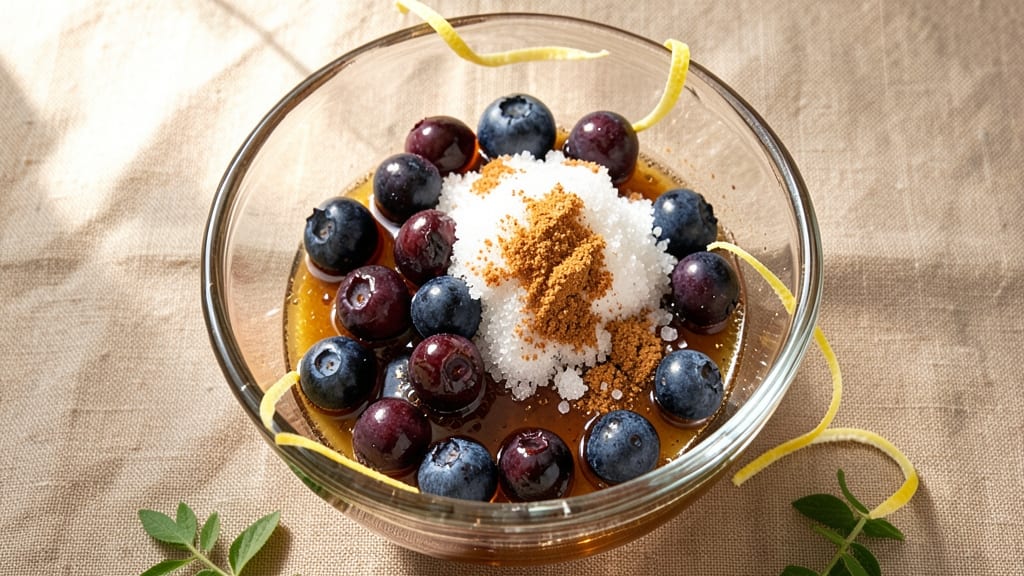
This blueberry sugar recipe transforms simple pantry staples into a versatile sweetener that elevates desserts and cocktails with its caramelized depth.
Standing in my Boston kitchen one summer afternoon, I discovered how simmering blueberries with sugar creates a concentrated, jammy sweetness that clings to pastries, glazes, and even cocktails like a dream. The process is straightforward but yields results that feel like a professional patisserie secret.
The magic happens when blueberries break down into the sugar, creating a thick, syrupy consistency with bursts of fruity flavor. This isn’t just another fruit preserve—it’s a game-changer for blueberry muffins, cheesecake toppings, or even drizzled over vanilla ice cream.
What makes it special is how it balances sweetness with tartness, making every bite more complex than store-bought alternatives.
By the time you’re done, you’ll have a jar of golden-hued blueberry sugar that doubles as a glaze, garnish, or cocktail rim. The texture is perfect for sprinkling—crunchy enough to add contrast, sticky enough to hold its shape.
It keeps for months in the pantry, so you’ll have this sweetener ready whenever inspiration (or dessert cravings) strikes.
Whether you’re baking a batch of cookies or crafting a signature cocktail, this recipe delivers restaurant-quality results with minimal effort. Let’s get started with the full instructions and tips for perfecting your own caramelized blueberry sugar.
Ingredients for blueberry sugar
Four simple ingredients create a golden-hued treasure for desserts and cocktails alike.
| Ingredient | Amount | Notes |
|---|---|---|
| Fresh Blueberries 🫐 | 2 cups | Organic preferred, unwashed |
| Granulated White Sugar 🍚 | 2 cups | Fine grain preferred |
| Lemon Juice 🍋 | 1 tbsp | Freshly squeezed, unsweetened |
| Vanilla Extract 🌸 | ½ tsp | Pure vanilla preferred |
| Ground Cinnamon 🌿 | ¼ tsp | For subtle warmth |
| Pinch of Sea Salt 🧂 | ⅛ tsp | Enhances sweetness |
| Extra-Virgin Olive Oil 🫒 | 1 tsp | For glossy finish |
Blueberries are the star here—organic, unwashed berries from the farmers market have the best flavor, but frozen blueberries work in a pinch (thaw them first). Trader Joe’s or Whole Foods usually carry the best quality. Avoid those giant, mealy berries—they won’t break down properly. Sugar is non-negotiable: fine-grained white sugar dissolves best, but turbinado adds crunch if you prefer texture. I like to use Diamond Crystal kosher salt for its clean flavor, but any fine sea salt works. The lemon juice? Freshly squeezed makes all the difference—bottled juice tastes flat in comparison.
No fresh blueberries? Frozen works perfectly—just don’t thaw them before cooking. Swap vanilla extract for vanilla bean paste if you want speckles of vanilla. Running low on sugar? Brown sugar adds moisture and depth, but reduce by 1 tbsp to account for its natural dampness. The cinnamon is optional, but it’s worth the tiny pinch—it rounds out the tartness beautifully. If you’re using this for cocktails, reduce the salt to a pinch so it doesn’t overpower the drink. And for a boozy twist, add 1 tsp bourbon or vodka to the simmering mixture.
This keeps for up to 6 months in an airtight jar in your pantry—it’s shelf-stable once fully cooled. Portion it into small jars for easy sprinkling over pancakes, ice cream, or cocktails. The texture changes slightly over time: freshly made is syrupy and sticky, while older batches become more crumbly—both are delicious. For a restaurant-worthy touch, drizzle with extra-virgin olive oil before sealing to keep it glossy. Store it near your baking supplies so it’s always within reach for spontaneous dessert ideas.
Why You’ll Love This Recipe
- Five-Minute Magic: I swear by this—just toss blueberries, sugar, lemon juice, and a pinch of cinnamon into a saucepan. Five minutes later, you’ve got a fragrant, jammy syrup that tastes like summer in a jar.
- Bright & Bold: That lemon juice isn’t just for show—it cuts through the sweetness and makes every spoonful taste fresh, like biting into a sun-warmed berry. Add a splash of vanilla? Now we’re talking ridiculously good.
- Pantry Staple Power: Honestly, you’ve got everything already. Sugar, lemon, cinnamon—no weird ingredients or last-minute grocery runs. It’s the kind of recipe that never disappoints, whether you’re topping pancakes or stirring it into yogurt.
- Endless Uses: This isn’t just for baking—drizzle it over ice cream, mix it into oatmeal, or even use it as a glaze for roasted chicken. I’ve even dumped it straight into my coffee when I’m craving something sweet but not too heavy. Versatile? Yes. Reliable? Absolutely.
Step-by-step instructions for blueberry sugar recipe
Transform simple ingredients into a luxurious caramelized blueberry sugar blend perfect for desserts and cocktails.
Prepare the Blueberries for Caramelization
In a small bowl, combine the 2 cups of fresh blueberries with the 1 tablespoon of lemon juice. This acidity helps break down the fruit’s cell walls, ensuring even caramelization later. Let the mixture sit for 5 minutes while you prepare your baking sheet. Line a rimmed baking sheet with parchment paper and arrange the blueberries in a single layer, leaving about ½ inch between each berry. This spacing prevents overcrowding and allows for even browning.
Here’s the thing—don’t wash the blueberries first. The natural waxy coating helps them caramelize better. If they’re particularly dirty, you can gently rinse them and pat them dry with a paper towel, but the organic coating is your friend in this process.
Roast the Blueberries Until Deeply Caramelized
Preheat your oven to 400°F. Once preheated, place the baking sheet with blueberries on the middle rack. Roast for 15-20 minutes, stirring once halfway through the cooking time, until the blueberries are deeply caramelized and wrinkled. You’re looking for a dark amber color with some golden-brown spots—this indicates perfect caramelization. The berries should be soft enough to mash easily with a fork but still hold some shape.
Don’t walk away during this step. Ovens vary, and you want to catch those blueberries at the exact moment they’re caramelized but not burned. If they start to darken too quickly, reduce the oven temperature to 375°F and continue cooking. The aroma should be sweet, fruity, and slightly smoky—this is your signal that they’re ready.
Combine with Sugar and Spices for Depth of Flavor
While the blueberries are still warm, transfer them to a large bowl. Using a fork, gently mash them until they form a chunky puree—you want some texture, not a smooth paste. In a separate small bowl, whisk together the 2 cups of granulated white sugar, 0.5 teaspoon of vanilla extract, 0.25 teaspoon of ground cinnamon, and 0.125 teaspoon of sea salt. This blend of spices and salt will elevate the sweetness and add complexity to the final product.
Pour the sugar mixture over the mashed blueberries and stir gently with a wooden spoon. The heat from the blueberries will help the sugar dissolve slightly, creating a syrupy consistency. If the mixture seems too dry, add 1 teaspoon of water to help bind everything together. This step is where the magic happens—the sugar caramelizes further from the residual heat of the blueberries, creating a glossy, aromatic blend.
Add Olive Oil for a Glossy Finish
Remove the bowl from heat and let it cool for 5 minutes. This cooling period allows the sugar to set slightly and prevents clumping when you add the olive oil. Stir in the 1 teaspoon of extra-virgin olive oil, which not only adds a subtle richness but also gives the blueberry sugar a beautiful, glossy finish. The oil coats each sugar crystal, making them stick together slightly and enhancing their visual appeal.
Here’s the moment that matters: spread the blueberry sugar mixture evenly on a parchment-lined baking sheet, creating a thin layer about ¼ inch thick. Let it cool completely at room temperature for 1-2 hours, or until it’s fully hardened. This step ensures the sugar crystals form properly and the mixture doesn’t stick together when you use it later. Once set, break it into small clusters or grind it into a fine sugar using a food processor or mortar and pestle, depending on your desired texture.
Store for Maximum Freshness and Flavor
Transfer the blueberry sugar to an airtight container, such as a jar or resealable bag. Store it in a cool, dark place—like your pantry—for up to 2 weeks, or in the refrigerator for up to 3 months to preserve its freshness. The flavors will deepen over time, making it even more aromatic and delicious. When ready to use, sprinkle it generously over pancakes, ice cream, cocktails, or even cheese boards for a burst of fruity sweetness.
Real talk: this blueberry sugar is incredibly versatile. Use it to rim glasses for cocktails, sprinkle it over fresh fruit, or mix it into yogurt for a gourmet touch. The caramelized blueberries add a unique depth of flavor that elevates any dish or drink it graces. Don’t be afraid to experiment—this is where creativity shines.
Pro Tips For Making Blueberry Sugar
- Simmer Low and Slow: I used to blast this on high, thinking it’d cook faster—wrong. A gentle simmer for 20-25 minutes lets the sugar dissolve evenly and caramelizes the blueberries without burning them. (Yes, even if you’re impatient like me.)
- Pat Dry First: Wet blueberries release water, which dilutes your sugar mixture and makes it gummy. Toss them in a clean kitchen towel, give a good shake, and let them air-dry for 5 minutes before adding to the pot. The difference in texture is night and day.
- Skip the Overcrowding: If you dump all the blueberries in at once, they’ll steam instead of simmer, and your sugar won’t crystallize properly. Work in batches—no more than 1 cup of berries at a time—so the liquid can actually bubble and reduce.
- Toast the Cinnamon: Ground cinnamon loses its warmth when heated directly in a wet mixture. Instead, toast 1 teaspoon in a dry pan for 30 seconds until fragrant, then whisk it into the warm sugar mixture at the end. It adds depth without bitterness. (Your future self will notice.)
Pro cooking tips for this recipe
Oven Temperature Control
Your oven’s temperature is the single most critical factor in achieving perfectly caramelized blueberries. I’ve learned this the hard way—once, I walked away for just five minutes, and my blueberries turned into charcoal. Always preheat your oven to 400°F and use an oven thermometer to verify accuracy.
Most home ovens run 25°F hotter or colder than their settings, so adjust accordingly. If your oven tends to run hot, reduce the temperature to 375°F and monitor closely. 🌡️
Blueberry Selection Matters
Not all blueberries caramelize equally. For the best results, choose small, firm, and deep blue berries—these have the highest sugar content and thickest skins, which hold up better during roasting. I always shop at Trader Joe’s or my local Boston farmers market for their organic blueberries.
Avoid those giant, pale berries—they’ll turn mushy and lose their shape. If using frozen blueberries, don’t thaw them first; just toss them straight from the freezer onto the baking sheet for even cooking.
Stirring Technique for Even Caramelization
Stir your blueberries once halfway through roasting—this ensures even browning and prevents sticking. Use a wide spatula to gently scrape up any berries that have stuck to the parchment. I’ve found that stirring too early can cause the berries to release moisture too quickly, leading to uneven caramelization.
The goal is to create a deep amber color with some golden-brown spots—this indicates perfect caramelization without burning. 🔥
Sugar Dissolution Secrets
The key to a smooth, syrupy blueberry sugar blend lies in how you combine the sugar with the warm blueberries. After mashing the roasted blueberries, sprinkle the sugar over them gradually while stirring constantly. This prevents clumping and helps the sugar dissolve more evenly.
If your mixture seems too dry, add 1 teaspoon of water to help bind everything together. Pro tip: Use a fine-grained white sugar like Domino—it dissolves faster and creates a smoother texture than coarse sugars.
Olive Oil for Gloss and Texture
The 1 teaspoon of extra-virgin olive oil isn’t just for flavor—it’s a game-changer for texture. Stir it in after the mixture has cooled slightly (but is still warm) to create a glossy finish that makes your blueberry sugar look like it came from a fancy patisserie.
The oil coats each sugar crystal, giving them a slight stickiness that makes them perfect for sprinkling. For an extra touch, drizzle a tiny bit of olive oil over the cooled mixture before storing—it keeps the sugar clusters from drying out and turning crumbly. 💫
Cooling and Storing Like a Pro
Patience is key during the cooling phase. Spread your blueberry sugar mixture on a parchment-lined baking sheet and let it cool completely at room temperature for 1-2 hours. This ensures the sugar crystals form properly and the mixture doesn’t stick together.
Once fully hardened, transfer it to an airtight container. For long-term storage, refrigerate it for up to 3 months—the cold helps preserve the caramelized flavors. I like to portion mine into small jars so I can grab it quickly for spontaneous dessert ideas or cocktail rims.
The flavors actually deepen over time, so the longer it sits, the better it gets! ❄️
Nutrition facts
Frequently asked questions
Can I use frozen blueberries instead of fresh?
Frozen blueberries work perfectly—just don’t thaw them first. Toss them straight from the freezer onto your baking sheet for even cooking. The cold temperature helps prevent over-browning while still achieving that deep caramelization.
How do I adjust the sweetness level?
For a less sweet version, reduce the sugar to 1½ cups and add ½ cup honey instead. This keeps the caramelized depth while balancing tartness. For extra sweetness, increase sugar to 2½ cups—just remember the texture will be more syrupy than crunchy.
What are the best ways to use this blueberry sugar?
Try it as a cocktail rim for margaritas, sprinkled over vanilla ice cream, or mixed into yogurt for a fruity crunch. It’s also perfect for topping pancakes, cheesecakes, or even as a glaze for baked goods. The possibilities are endless—don’t be afraid to experiment!
Why did my blueberry sugar turn out too sticky?
This usually happens if the mixture didn’t cool completely before storing. Let it harden for 1-2 hours at room temperature first. If it’s already sticky, spread it on parchment paper and refrigerate for 30 minutes to firm up. For future batches, ensure proper cooling time to avoid clumping.
Can I make this without vanilla or cinnamon?
Yes! Skip the vanilla and cinnamon if you prefer, but they add wonderful depth. For a citrus twist, add ½ teaspoon orange zest instead. The core recipe still works beautifully—just adjust to your flavor preferences.
