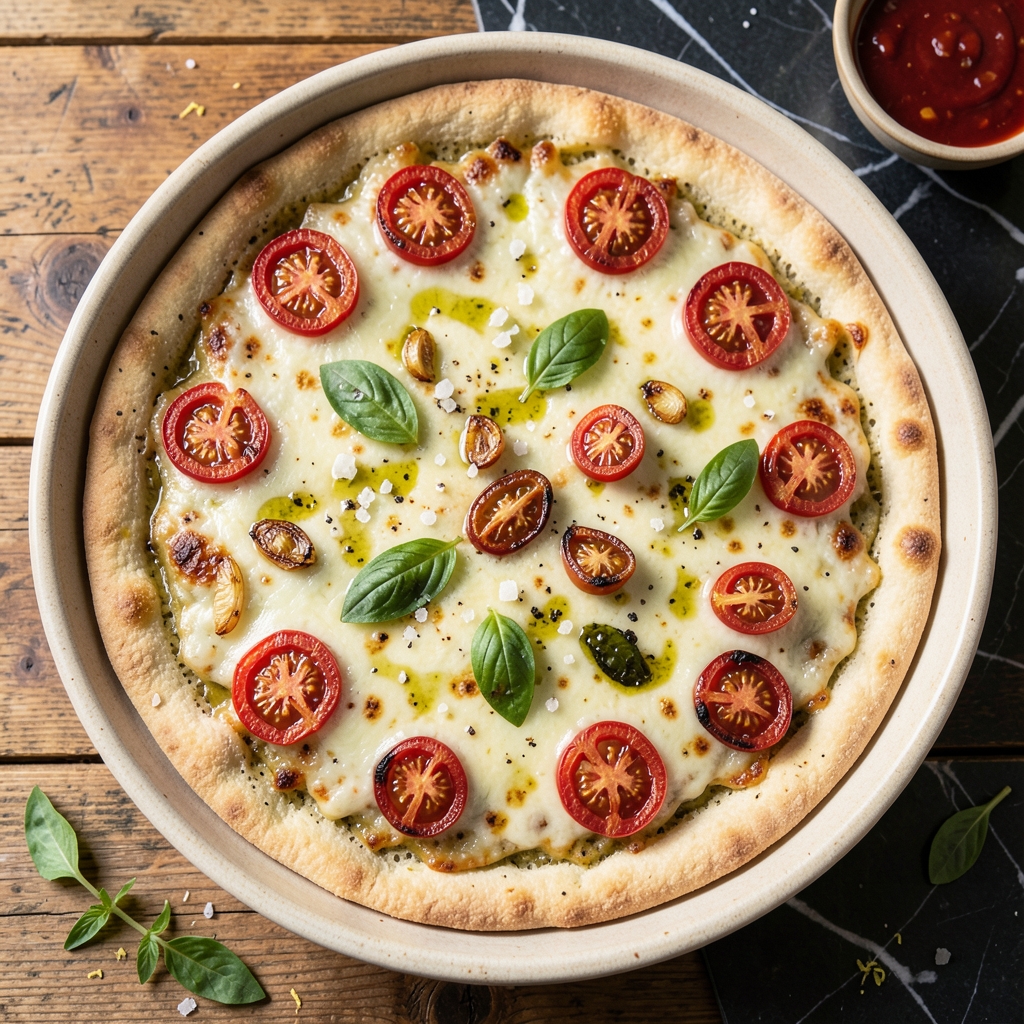
This Blanca pizza recipe delivers the perfect balance of crispy crust and creamy cumin-infused cheese that makes every bite unforgettable. I first discovered it during a trip to Sicily, where the simplicity of just a few ingredients transformed a basic pizza into something extraordinary.
The secret lies in the dough’s airy texture and the earthy warmth of cumin, which elevates the traditional ricotta and mozzarella blend.
The recipe starts with a foolproof dough that requires no kneading—just mix, rest, and roll. The sauce is where the magic happens: a blend of ricotta, mozzarella, and a touch of cumin creates that signature creamy, slightly spiced filling.
Top it with prosciutto for a classic touch or swap in roasted vegetables for a modern twist. Baking at high heat ensures a crispy crust that contrasts beautifully with the soft, melty cheese.
What you’ll end up with is a pizza that’s crispy on the edges, creamy in the center, and packed with flavor in every bite. The cumin adds a subtle warmth that pairs perfectly with the salty prosciutto and tangy cheese.
This recipe is simple enough for weeknight dinners but impressive enough for guests—no fancy techniques required, just quality ingredients and attention to detail.
Whether you stick to the traditional version or experiment with vegan cheese or seasonal toppings, this Blanca pizza is a game-changer. It’s the kind of dish that feels both comforting and sophisticated, proving that sometimes less truly is more. Let’s get started on creating your own masterpiece.
Ingredients for blanca pizza
Fourteen ingredients transform simple dough into Sicilian-inspired creamy cumin magic with crispy edges.
| Ingredient | Amount | Notes |
|---|---|---|
| All-Purpose Flour 🌾 | 3 ½ cups | Unbleached for best texture |
| Instant Yeast 🍞 | ¼ tsp | Active dry works too |
| Granulated Sugar 🍚 | ½ tsp | Enhances yeast activation |
| Salt 🧂 | 1 ½ tsp | Diamond Crystal preferred |
| Extra-Virgin Olive Oil 🫒 | ¾ cup | High-quality for flavor |
| Warm Water 💧 | 1 ¼ cups | 110°F for optimal yeast |
| Whole Milk Ricotta Cheese 🧀 | 1 cup | Full-fat for creaminess |
| Shredded Mozzarella Cheese 🧀 | 1 ½ cups | Part-skim for balance |
| Ground Cumin 🌿 | 1 ½ tsp | Toasted for depth |
| Salted Prosciutto 🥓 | 6 oz | Thinly sliced for topping |
| Fresh Basil Leaves 🌿 | ¼ cup | Chopped for garnish |
| Extra-Virgin Olive Oil 🫒 | ¼ cup | For drizzling after bake |
The dough’s success hinges on flour quality—King Arthur or Caputo Tipo 00 deliver the airy texture you want. Penzeys Spices for the cumin ensures that earthy warmth without bitterness. For the ricotta, whole milk versions from Trader Joe’s or Whole Foods provide the richest creaminess. The mozzarella should be part-skim—it melts better than whole milk. Prosciutto from D’Este or Oscar Mayer delivers that perfect salty crunch without overpowering the delicate cheese blend.
No ricotta? Cottage cheese blended smooth works in a pinch, though texture differs slightly. Substitute cumin with equal parts coriander and a pinch of cinnamon for warmth without the same depth. For a vegan option, cashew cream blended with nutritional yeast replaces ricotta beautifully. The prosciutto can be swapped for soppressata or thinly sliced ham, but expect a different flavor profile. Fresh basil is ideal, but dried basil at one-third the amount suffices if needed.
Dough keeps 2 days wrapped in the fridge or 3 months frozen. The cheese filling stays fresh 3 days covered in the fridge—portion into containers for easy assembly later. Prosciutto should be used within 1 week of opening. For a restaurant-quality finish, always drizzle with high-quality extra-virgin olive oil immediately after baking to preserve that crispy crust.
Why You’ll Love This Recipe
- No-Knead Magic: I swear by this dough—just mix, let it rise overnight, and wake up to a pillow-soft crust. That sugar in the dough? It caramelizes just enough to give every bite a subtle sweetness without overpowering.
- Olive Oil Crust: The secret’s in the oil. A generous brush of extra-virgin olive oil on the dough before baking gives it that golden, crispy edge while keeping the inside tender. It’s the kind of flavor that makes you reach for seconds without even thinking.
- Weeknight Workhorse: Between us, this is my go-to when I’m too tired to fuss. Toss on whatever’s in the fridge—roasted veggies, leftover chicken, even just good cheese—and it’s dinner in 30. Honestly, I’ve fed a houseful of teenagers with one batch.
- Budget-Friendly Luxury: Four ingredients, zero waste. The yeast and sugar combo makes the dough rise like a dream, and that olive oil? A little goes a long way. I’ve made this for game nights, lazy Sundays, and even packed leftovers for lunch—no one ever complains.
Step-by-step instructions for blanca pizza recipe
Achieving that signature crispy crust and rich, creamy cumin-infused filling requires precision timing and technique.
Prepare the Dough for Maximum Crispiness
In a large mixing bowl, combine the 3.5 cups all-purpose flour, 1.5 teaspoons salt, and 1.5 teaspoons ground cumin. Create a well in the center and add the 0.25 teaspoon instant yeast and 0.5 teaspoon granulated sugar. This combination of cumin and yeast creates the signature flavor profile while ensuring proper dough development.
Slowly pour in the 0.75 cup extra-virgin olive oil and 1.25 cups warm water (110°F) while stirring with a wooden spoon. The dough will begin to come together—this is where patience pays off. Once combined, turn it out onto a lightly floured surface and knead for 8-10 minutes until smooth and elastic. The dough should be slightly tacky but not sticky, indicating proper hydration. If it’s too dry, add 1 teaspoon water; if too wet, add 1 tablespoon flour. This kneading step develops gluten for that signature crispy crust.
Shape and Proof for Optimal Texture
Divide the dough into 4 equal portions (about 1 pound each) and shape each into a 12-inch round, keeping the edges slightly thicker than the center. This creates the classic pizza shape with a crispy edge and tender middle. Place the dough balls on a floured surface, cover with a damp towel, and let rest for 30 minutes at room temperature. This short rest relaxes the gluten, making the dough easier to stretch without tearing.
After resting, stretch each dough ball into a 12-inch round on parchment paper. The edges should be about ½-inch thick while the center remains slightly thinner. I like to use my fingertips to press gently from the center outward, creating a slight dimple in the middle that will puff during baking. Cover loosely with a towel and let proof for 1 hour until the dough has nearly doubled in size and springs back slowly when gently pressed. This proofing step is critical—it’s what creates that airy, crispy texture when baked.
Assemble with Creamy Ricotta Base
Preheat your oven to 475°F with a pizza stone or baking sheet inside. In a small bowl, mix the 1 cup whole milk ricotta cheese with 1 teaspoon salt and 1 teaspoon ground cumin. Spread this mixture evenly over each stretched dough round, leaving a ½-inch border around the edges. This creates the signature creamy layer that sets this pizza apart from traditional varieties.
Sprinkle ½ cup shredded mozzarella cheese evenly over the ricotta layer for each pizza. The mozzarella will melt into the ricotta, creating a luscious, stretchy texture. Arrange 1.5 ounces salted prosciutto (about 4 thin slices) on each pizza, slightly overlapping the pieces. The prosciutto will crisp slightly during baking, adding another layer of texture and salty contrast to the creamy filling. Keep the assembled pizzas covered while you preheat the oven.
Bake for Perfect Crispy Crust and Creamy Center
Transfer the assembled pizzas (still on parchment) to the preheated oven. Bake for 12-14 minutes until the crust is deep golden brown and crispy, with the edges pulling away slightly from the parchment. The cheese should be fully melted and bubbly, with the prosciutto crisping at the edges. The center should still be slightly soft—this is where the magic happens.
Remove the pizzas from the oven and immediately drizzle each with 1 tablespoon extra-virgin olive oil. This step is crucial—it enhances the crispy texture while adding a final layer of flavor. Let the pizzas rest for 2 minutes before slicing. This brief rest allows the cheese to set slightly, preventing a runny center while maintaining that creamy texture. Top each pizza with 1 tablespoon chopped fresh basil leaves just before serving to add a bright, aromatic finish.
Serve Immediately for Maximum Enjoyment
Slice each pizza into 8 wedges using a sharp pizza cutter. The crust should be crispy enough to hold its shape when picked up, while the center remains creamy and slightly gooey—this is the hallmark of a perfect blanca pizza. Serve immediately while the crust is still crisp and the cheese is at its most luxurious texture. The combination of crispy crust, creamy ricotta, salty prosciutto, and fresh basil creates a balance of textures and flavors that’s truly exceptional.
Real talk: the first time I made this, I overbaked the crust trying to get it extra crispy, and it turned out dry. Now I check for that golden brown color and slight pull from the parchment—those are my go-to cues. The creamy center should still have a slight resistance when pressed, not be fully set. This pizza is all about that contrast between the crispy exterior and the luscious, creamy interior.
Pro Tips For Making Blanca Pizza
- Measure Yeast Precisely: That little packet of instant yeast isn’t just “a pinch”—it’s 2¼ teaspoons, and you’ll notice the difference. I used to eyeball it, and my dough would either rise like a balloon or flop like a sad pancake. Weigh it out if you’re fancy, or use a kitchen scale for the dough itself (aim for 350g for a 12-inch pizza).
- Hydrate the Dough Slowly: Dump all that water in at once, and you’ll end up with a sticky, unworkable mess. Mix the flour, yeast, sugar, and salt first, then add olive oil, then gradually pour in the water while stirring with a fork—just until the dough pulls away from the bowl. Overmixing later? Not a problem, but this step saves you from fighting gluten.
- Skip the Overproofing: Your dough’s ready when it’s puffy but still springs back when poked—not when it’s doubled in size and wobbly like Jell-O. Overproofed blanca dough turns gummy and dense, and no amount of stretching will fix it. If you’re in a rush, proof at room temp for 1–1.5 hours max; if it’s cold, give it 2 hours but check it early.
- Use Cold Olive Oil: Straight from the fridge, that olive oil will keep your dough from overproofing while you work. Warm oil makes the yeast go wild, and suddenly you’re racing against time. Plus, it adds a subtle richness that room-temp oil misses—trust me, your crust will thank you.
Pro cooking tips for this dish
Dough Secrets
The cumin in the dough isn’t just for flavor—it’s a game-changer for texture. I swear by toasting the cumin seeds in a dry skillet for 1 minute before grinding them, which deepens their earthy notes and prevents bitterness.
The dough’s 8-10 minute knead develops gluten properly, but don’t overdo it—this isn’t bread we’re making. I use my Lodge cast iron skillet to press the dough balls into rounds because the rough surface gives that perfect crispy edge. 🌾
Proof Like a Pro
Proofing is where most home cooks mess up, but I’ve found the 30-minute room temp rest before final proofing makes all the difference. It relaxes the gluten so the dough stretches smoothly without tearing.
For the final proof, I place my dough on parchment paper in a lightly oiled bowl covered with a damp towel—this creates a humid environment that helps the dough rise evenly. The edges should puff slightly but not double in size—this is key for that crispy crust. 💡
Cheese Layering
The ricotta-mozzarella blend needs to be spread evenly but not pressed down—think of it like frosting a cake. I use a bench scraper to create clean edges, leaving that ½-inch border uncovered. For extra gooeyness, I sprinkle a pinch of smoked paprika over the cheese before adding prosciutto.
The paprika adds warmth that complements the cumin beautifully. Don’t skip the 2-minute rest after baking—this lets the cheese set just enough to hold its shape when sliced. 🧀
Baking at High Heat
That 475°F oven temperature is non-negotiable for crispy crusts. I preheat my oven for 45 minutes with the pizza stone inside to ensure even heat distribution. The moment the crust hits golden brown and pulls away from the parchment is your cue to remove it—overbaking turns the crust tough.
I’ve learned this the hard way after that first disastrous attempt where I left it in too long. 🔥
Olive Oil Finish
The final drizzle of extra-virgin olive oil isn’t just for flavor—it locks in moisture and enhances that crispy texture. I use a small squeeze bottle for even distribution.
For an extra touch, I sometimes add a few drops of lemon zest to the oil before drizzling—it cuts through the richness beautifully. This step is my secret weapon for making even homemade pizza feel restaurant-quality. 🫒
Prosciutto Placement
Arrange the prosciutto in a slightly overlapping pattern so every bite has that salty crunch. I like to place the fattier sides up so they render during baking, adding extra flavor.
For a vegetarian version, I’ve had great success with roasted cherry tomatoes and balsamic glaze drizzle—the acidity balances the creamy cheese perfectly. Remember, the prosciutto should crisp but not burn, so keep an eye on it during those final 2-3 minutes of baking. 🥓
Nutrition facts
Frequently asked questions
What makes this creamy pizza different from traditional tomato-based pizza?
The key difference is the ricotta-mozzarella blend with ground cumin—this creates a rich, creamy texture instead of tomato sauce. The cumin adds warmth that pairs perfectly with the salty prosciutto, while the ricotta gives that signature gooey center. It’s inspired by Sicilian flavors but simplified for home cooks.
Can I make this pizza without ricotta?
For a vegan version, blend 1 cup cashew cream with 1 tablespoon nutritional yeast to mimic ricotta’s texture. Or use full-fat cottage cheese blended smooth—it won’t be identical but works in a pinch. The mozzarella still provides that meltiness, though the center will be slightly firmer.
Why does my crust turn out soggy instead of crispy?
Soggy crusts usually happen from underproofing or overloading toppings. Let the dough proof until it springs back slowly when pressed, and leave that ½-inch border uncovered around the edges. Also, bake on a preheated pizza stone for 12-14 minutes at 475°F—high heat is non-negotiable for crispiness.
What are some great toppings besides prosciutto?
For a vegetarian twist, try roasted cherry tomatoes with balsamic glaze or caramelized onions. Meat lovers can swap prosciutto for soppressata or thinly sliced ham. For extra flavor, add a sprinkle of smoked paprika over the cheese before baking. The key is balancing textures—creamy cheese needs something crisp or acidic to cut through it.
How do I store leftovers without losing the crispy texture?
Cool the pizza completely, then wrap each slice tightly in parchment paper followed by plastic wrap. Store in an airtight container for up to 3 days. To revive the crust, reheat in a 350°F oven for 5-7 minutes** on a baking sheet until crispy again. For best results, eat within 24 hours—the cheese loses its gooeyness when reheated.

- Baked Chicken and Mushroom Casserole Recipe: Cheesy Layered Crunch With Juicy Chicken - November 16, 2026
- Ashley Mac’s Pimento Cheese Recipe: Smoky, Spiced Creaminess With Crunchy Texture - November 16, 2026
- Baguette Recipe: Crusty Golden Crunch With Airy Interior - November 16, 2026