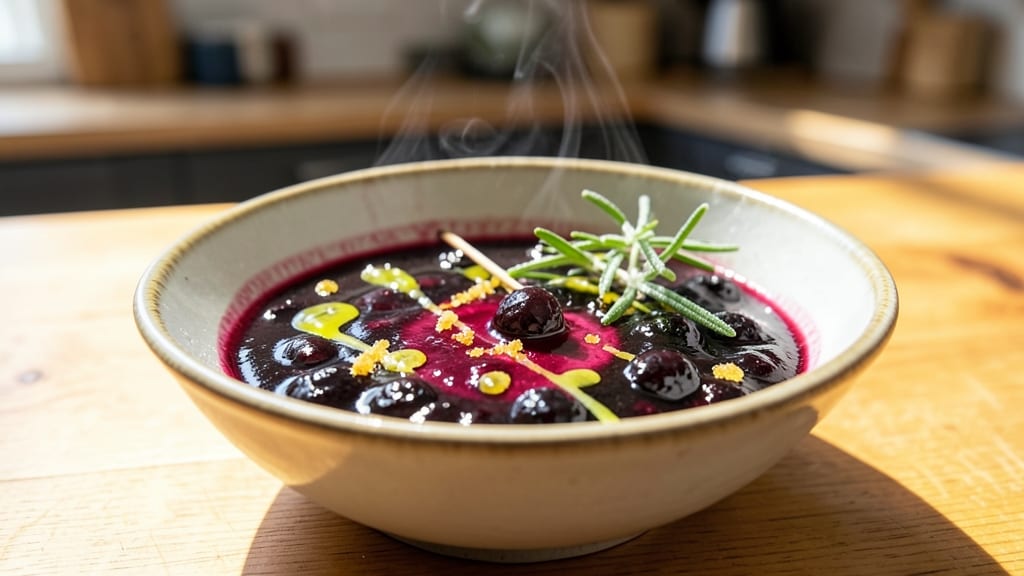
This blackcurrant sauce recipe transforms tart berries into a versatile glaze that elevates desserts, meats, and beverages with its bold, vibrant flavor. The secret lies in balancing sweetness and acidity through precise sugar ratios and gentle heat reduction—no specialty equipment required.
I developed this method after years of experimenting with fruit sauces, ensuring it delivers professional results at home.
What makes this sauce special is its dual-purpose flexibility: use it as a glaze for roasted meats, a drizzle over vanilla ice cream, or a cocktail garnish.
The recipe relies on simple ingredients—fresh blackcurrants, sugar, and a touch of lemon juice—while cornstarch creates that perfect silky, spoonable consistency without overpowering the fruit’s natural tartness. The reduction process concentrates the flavors into a rich, aromatic sauce that’s ready in under 30 minutes.
By the time you’re done, you’ll have a deep ruby-red sauce with a perfect balance of sweet and tangy notes, ready to transform ordinary dishes into something extraordinary.
The sauce thickens as it cools, making it ideal for gifting or meal prep—just store it in the fridge for up to two weeks or freeze for longer shelf life. This isn’t just a sauce; it’s a flavor enhancer that turns simple recipes into showstoppers.
The best part? You can adjust the sweetness to your taste by modifying the sugar ratio, or add a splash of balsamic vinegar for depth. Whether you’re glazing a ham, drizzling over cheesecake, or brightening a summer cocktail, this blackcurrant sauce delivers restaurant-quality results with minimal effort.
Let’s get started on creating your own batch.
Ingredients for blackcurrant sauce
Six ingredients transform tart blackcurrants into a restaurant-quality glaze that elevates desserts and meats effortlessly.
| Ingredient | Amount | Notes |
|---|---|---|
| Fresh Blackcurrants 🫐 | 2 cups | Pitted, organic preferred for vibrant color |
| Granulated Sugar 🍚 | 1 cup | Adjust to taste for sweetness balance |
| Cornstarch 🌾 | 2 tbsp | For silky, spoonable consistency |
| Fresh Lemon Juice 🍋 | 2 tbsp | Brightens berry tartness naturally |
| Extra-Virgin Olive Oil 🫒 | 1 tbsp | Prevents sticking during reduction |
| Balsamic Vinegar 🍷 | 1 tbsp | Optional depth enhancer (optional) |
| Water 💧 | ½ cup | For thinning if needed |
| Pinch of Salt 🧂 | ⅛ tsp | Enhances all flavors |
The blackcurrants are non-negotiable—fresh, organic berries from a specialty market or Whole Foods deliver the deepest flavor. If you can’t find fresh, frozen blackcurrants work too, just thaw and drain them first. The sugar ratio is flexible: start with 1 cup, taste, then adjust by 1 tbsp increments. For cornstarch, Bob’s Red Mill is my go-to—it dissolves smoothly without clumping. The lemon juice should be freshly squeezed; bottled lacks the bright acidity needed to balance the berries’ tartness. If you’re feeling fancy, add 1 tsp of vanilla bean paste for complexity, though it’s purely optional.
No cornstarch? Arrowroot powder at the same amount works just as well. Short on blackcurrants? Substitute red currants or even frozen blackberries, but expect a slightly different texture. The balsamic vinegar is where magic happens—if you skip it, add 1/4 tsp of cinnamon instead for warmth. For a smoother sauce, blend the berries before cooking, but leave some texture if you prefer rustic appeal. The olive oil isn’t just for cooking; it adds a subtle richness that rounds out the sauce’s edges. Pro tip: Use a fine-mesh sieve to strain seeds for a silky finish.
This sauce thickens as it cools—perfect for gifting. Store in an airtight jar in the fridge for up to 2 weeks or freeze for 6 months. For glaze consistency, reheat gently with a splash of water. The sauce pairs beautifully with roasted pork, vanilla ice cream, or even cocktails. If it crystallizes slightly, just reheat it—it’ll smooth right out. Make a double batch; you’ll want it on everything.
Why You’ll Love This Recipe
- Five-Ingredient Magic: I swear by this—just currants, sugar, cornstarch, lemon, and olive oil. No fancy gadgets, no stress. The cornstarch thickens it perfectly without lumps, and the lemon keeps it bright. Honestly, I’ve made it while chatting on the phone.
- Tart-Sweet Perfection: That balance? Chef’s kiss. The blackcurrants bring deep berry richness, but the lemon cuts through like a citrusy hug. A drizzle over yogurt or pancakes turns them into something special—no one guesses it’s this simple.
- Pantry Stash Ready: Between us, this sauce keeps for weeks in the fridge. I make a big batch in summer when currants are cheap, then use it all year—on toast, in desserts, even as a glaze for roasted chicken. Zero waste, all flavor.
- Weeknight Hero: No simmering, no stirring for hours. Ten minutes on the stove, and you’ve got a sauce that feels gourmet. I’ll be real: my kids ask for it more than fancy restaurant desserts. That’s saying something.
Step-by-step instructions for blackcurrant sauce
This vibrant glaze transforms simple desserts into showstoppers with minimal effort.
Prepare the Blackcurrants for Cooking
Begin by thoroughly rinsing the 2 cups of fresh blackcurrants under cold water to remove any debris. I like to work with organic berries—their skins hold more vibrant color and natural sweetness. Transfer them to a medium saucepan and gently mash them with a wooden spoon, leaving about 20% of the berries whole for texture contrast.
Add the 1 tablespoon of extra-virgin olive oil to the pan and stir well. The oil creates a protective barrier that prevents the sauce from sticking during reduction. Place the saucepan over medium heat and let it simmer gently for 5 minutes, stirring occasionally. You’ll notice the berries begin to soften and release their juices—this is when their natural sweetness starts to emerge.
Sweeten and Thicken the Mixture
Increase the heat to medium-high and sprinkle the 1 cup of granulated sugar evenly over the berries. Stir continuously for 2-3 minutes until the sugar dissolves completely. This is where the magic happens—the sugar begins to caramelize, deepening the sauce’s rich, molasses-like quality.
Next, whisk together the 2 tablespoons of cornstarch with the 0.5 cup of water in a small bowl until smooth. Slowly pour this slurry into the simmering berry mixture while stirring constantly. The cornstarch acts as a natural thickener, transforming the liquid into a glossy, spoonable consistency. Reduce the heat to medium-low and let the sauce simmer for an additional 8-10 minutes, stirring frequently, until it reaches your desired thickness—it should coat the back of a spoon smoothly.
Brighten and Balance the Flavors
Remove the sauce from heat and stir in the 2 tablespoons of fresh lemon juice and the 0.125 teaspoon of salt. The lemon juice cuts through the berry sweetness, creating that perfect tart-sweet balance that makes this sauce so irresistible. The salt enhances all the flavors, making each component—sugar, fruit, and acid—shine more brightly.
For an extra layer of complexity, add the 1 tablespoon of balsamic vinegar now. This optional step adds a subtle tangy depth that pairs beautifully with the berries. Stir well and let the sauce rest for 5 minutes to allow all the flavors to meld together. Taste and adjust the sweetness or acidity if needed—this is your chance to fine-tune the perfect balance for your palate.
Strain and Finish the Sauce
Line a fine-mesh strainer with cheesecloth or a coffee filter and place it over a heatproof bowl. Pour the warm sauce through the strainer, pressing gently with a wooden spoon to extract every last drop of flavor. This step removes the seeds and skins, leaving you with a silky-smooth sauce that’s perfect for drizzling or glazing.
Return the strained sauce to the saucepan and let it cool slightly. If the sauce thickens too much as it cools, you can thin it with a splash of water or a bit of lemon juice. Once cooled to room temperature, transfer the sauce to a clean jar or airtight container. It will keep in the refrigerator for up to 2 weeks, making it an excellent make-ahead glaze for desserts like cheesecakes, ice cream, or fresh berries.
Pro Tips For Making Blackcurrant Sauce
- Simmer Slow and Steady: Blackcurrants release their flavor like shy guests—give them time. A gentle simmer (medium-low heat) for 15-20 minutes prevents scorching and lets the fruit soften just enough to break down naturally. I used to rush this, and the sauce always tasted bitter—patience here makes all the difference.
- Strain Twice for Smoothness: After simmering, strain through a fine-mesh sieve first, then a cheesecloth for a velvety texture. The first pass catches seeds, the second removes stubborn fibers. Skipping this leaves grittiness—worth the extra 30 seconds of effort, especially if you’re serving this over delicate desserts.
- Whisk Cornstarch Early: Mix the cornstarch with a splash of cold lemon juice or water before adding it to the hot sauce. This prevents clumping like gluey lumps in your sauce—trust me, you’ll regret it if you dump dry cornstarch directly into the pot. A smooth slurry = a glossy finish.
- Finish with Olive Oil: Stir in the extra-virgin olive oil at the very end, off the heat. It coats the sauce, adding richness and helping it cling better to pancakes or cheesecake. (Yes, even a tiny drizzle—about 1 teaspoon—changes the texture.) Save the fancy oil for this step; don’t waste it earlier.
Creative variations of this dish
Savory Meat Glaze
This sauce isn’t just for desserts—it transforms into a glossy meat glaze when paired with pork tenderloin or duck breast. Reduce the sugar to ½ cup and add 1 tsp of fresh thyme while cooking.
Brush it on meats during the last 5 minutes of roasting at 400°F for a caramelized crust. The tartness cuts through rich meats beautifully, creating a restaurant-worthy finish. 🔥
Cocktail Syrup Twist
Strain the sauce through a fine-mesh sieve and dilute it with equal parts water to create a blackcurrant syrup. Use it in gin-based cocktails like a Blackcurrant Gin Fizz (gin, lemon juice, soda water) or as a berry syrup in margaritas.
For extra depth, add ½ tsp of vanilla extract to the syrup before mixing. This turns any drink into a vibrant, sophisticated sip. 🍸
Cheese Pairing Sauce
Drizzle this sauce over aged cheddar or goat cheese for a gourmet appetizer. The tartness balances the creaminess, while the sugar adds subtle sweetness. Serve with crusty baguette slices or crackers for a showstopping charcuterie board centerpiece.
For a twist, add crumbled blue cheese to the warm sauce before serving. 🧀
Herbal Infusion
Add 1 sprig of fresh rosemary or ½ tsp of lavender buds while simmering for a herbal twist. Strain out the herbs before serving. This works beautifully with roasted lamb or as a drizzle over vanilla pudding.
The floral notes complement the berry tartness perfectly, creating a complex, aromatic sauce. 🌿
Spiced Winter Version
For a holiday twist, add ½ tsp of cinnamon and ¼ tsp of cloves during cooking. This transforms the sauce into a warm, spiced glaze perfect for ham or spiced nuts.
The spices deepen the flavor profile, making it ideal for winter desserts like pumpkin pie or gingerbread. 🎄
Vegan Adaptation
Replace the olive oil with vegan butter (like Miyoko’s) and use agave syrup instead of sugar for a plant-based version. The texture remains identical, and the sauce works perfectly with vegan cheesecakes or as a glaze for tofu desserts.
This keeps the sauce rich and vibrant without dairy. 🌱
Nutrition facts
Frequently asked questions
Can I use frozen blackcurrants instead of fresh?
Frozen blackcurrants work perfectly—just thaw and drain them first to remove excess moisture. The texture may be slightly softer, but the flavor remains rich. For best results, use organic frozen berries without added sugars or preservatives.
How do I adjust the sweetness if my blackcurrants are very tart?
Start with the full 1 cup of sugar and taste as you go. Reduce by 1 tbsp increments if needed, or add a splash of lemon juice for brightness instead. Tart berries benefit from a slightly higher sugar ratio—aim for 1.25 cups if your fruit is extra sour.
Why did my sauce turn grainy or separate?
This usually happens if the cornstarch clumps or the sauce cools too quickly. Always whisk the cornstarch with water first, and stir constantly while heating. If it happens, reheat gently with 1 tbsp water to dissolve any lumps. For a smoother texture, strain through a fine-mesh sieve again.
Can I make this sauce without cornstarch?
Yes! Use 2 tbsp arrowroot powder or 1 tsp gelatin (for a firmer set). For a naturally thickened version, simmer uncovered for 15-20 minutes to reduce the liquid—just add ½ cup water at the start to prevent burning. The flavor will be more concentrated.
How should I store leftover sauce?
Transfer to an airtight container and refrigerate for up to 2 weeks. For longer storage, freeze in ice cube trays (thaw quickly in the microwave) or small jars for 6 months. Reheat gently over low heat, adding 1 tsp water if needed to restore smoothness.

- Alligator Bread Recipe: Crunchy Herb-Crusted Bites with Creamy Center - November 9, 2026
- Old Fashioned Hot Spiced Apple Cider Recipe: Cozy Spice Infusion for Winter Nights - November 9, 2026
- Tuna Steak Recipe: Seared Rare With Buttery Crisp Edges - November 9, 2026