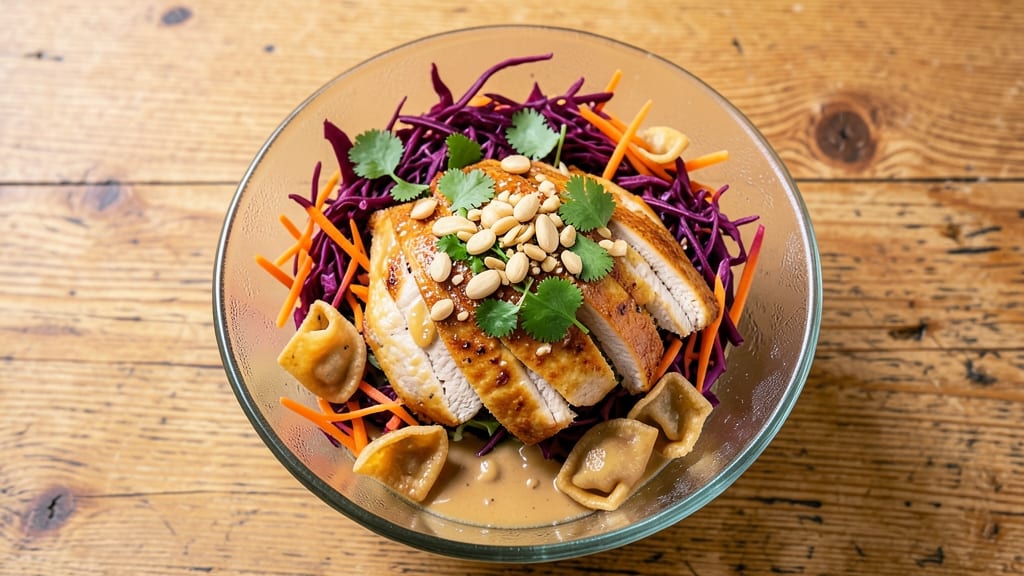
BJ’s Asian Chopped Salad Recipe brings that signature restaurant crunch and peanut dressing harmony right to your kitchen counter. The secret lies in perfectly crisp vegetables, tender wontons, and a creamy peanut sauce that ties everything together with just the right balance of sweet and savory.
I’ve recreated this dish after years of perfecting the texture contrast—crunchy cabbage, chewy wontons, and creamy dressing in every bite.
What makes this recipe special is the foolproof assembly method that keeps all ingredients vibrant and fresh-tasting. You’ll start with 15 minutes of prep work—chopping vegetables, assembling wontons, and making the dressing—then let the flavors meld together for a salad that’s restaurant-quality without the wait.
The peanut sauce, with its perfect peanut butter and sesame balance, is the star that elevates this salad from simple to unforgettable.
By the time you’re done, you’ll have a salad that’s visually stunning with its colorful mix of red cabbage, carrots, and crispy wontons, all coated in a glossy peanut dressing. The texture contrast is what makes this salad addictive—crunchy vegetables, tender wontons, and creamy dressing in every bite.
This is the kind of salad that disappears quickly, making it perfect for lunch, dinner, or even as a light appetizer before a meal.
Serve it immediately for the best texture, or assemble ahead and refrigerate for up to 4 hours before serving. The flavors only get better as they sit, making this an ideal make-ahead option for busy weeknights or meal prep.
Let’s get started on this restaurant-inspired salad that’s sure to become a family favorite.
Ingredients for bj’s asian chopped salad
Crisp veggies, chewy wontons, and a creamy peanut sauce—this salad delivers BJ’s signature crunch and harmony.
| Ingredient | Amount | Notes |
|---|---|---|
| Red Cabbage 🥬 | 3 cups | Shredded, thinly sliced |
| Carrots 🥕 | 1 cup | Julienned or thinly sliced |
| Wonton Wrappers 🥟 | 1 package | Square or round, frozen |
| Chicken Breast 🍗 | 1 lb | Boneless, skinless, cooked |
| Peanuts 🥜 | ½ cup | Roasted, unsalted, chopped |
| Peanut Butter 🥜 | ½ cup | Creamy, unsweetened |
| Sesame Oil 🫒 | 1 tbsp | Toasted, for aroma |
| Sesame Seeds 🌾 | 1 tbsp | Toasted, for garnish |
| Lime Juice 🍋 | 2 tbsp | Freshly squeezed |
| Soy Sauce 🍶 | 2 tbsp | Low-sodium preferred |
| Honey 🍯 | 2 tbsp | Pure, for sweetness |
| Garlic Cloves 🧄 | 2 cloves | Minced, for dressing |
| Ginger Root 🌿 | 1 tsp | Freshly grated |
| Vegetable Oil 🫒 | 1 tbsp | For frying wontons |
| Salt 🧂 | ½ tsp | To taste, adjust |
The red cabbage is the star here—look for vibrant purple leaves at the grocery store, not wilted ones. Trader Joe’s and Whole Foods carry the best quality, but any fresh market works. For the carrots, julienne them yourself—pre-shredded gets soggy fast. The wonton wrappers? Frozen is perfect—no need to thaw, just fry fresh. Chicken breast should be cooked to 165°F and chilled before chopping. I always buy boneless, skinless breasts from Costco for the best price and quality.
No wonton wrappers? Wonton skins from the Asian aisle work too, or even spring roll wrappers in a pinch. For the peanut dressing, natural peanut butter (no added sugar) is best—Smucker’s or Skippy are solid choices. Short on sesame oil? Toasted sesame seeds plus a splash of peanut oil gets you close. The ginger and garlic? Fresh is non-negotiable—dried just won’t cut it. Want extra crunch? Add toasted cashews or crushed peanuts to the dressing.
This salad tastes even better the longer it sits—up to 4 hours in the fridge before serving. Store the dressing separately until ready to toss. The wontons stay crispy for 2 hours if kept at room temp, but refrigerate leftovers for up to 2 days. Double the dressing recipe—it’s perfect for sandwiches or drizzling over noodles. Freeze extra wontons in a single layer before bagging for 3 months of crispy goodness.
Why You’ll Love This Recipe
- No-Cook Crunch Core: I swear by the red cabbage here—it’s already shredded in most stores, so no knife skills required. Toss in the pre-sliced carrots, and suddenly you’ve got 80% of your veggies done in under two minutes. The wonton wrappers? Just tear them, not fold. That’s how you hack a salad.
- Peanut Butter Magic: Between us, that crushed peanut topping is the MVP. It’s salty, nutty, and sticks to everything like it’s holding on for dear life. The chicken stays juicy (thanks to the quick marinade), and the crunch from the peanuts? Pure satisfaction every bite.
- Lunchbox Superstar: This is my go-to for packed lunches—it stays fresh for days, and the flavors only get better. Swap the chicken for tofu on Mondays, double the peanuts for extra crunch on Fridays. Honestly, it’s the one salad my kids actually eat without complaining.
- Budget Power Move: Wonton wrappers and red cabbage last forever, and a single chicken breast stretches across two servings. Add leftover rice or noodles, and suddenly you’ve turned a simple salad into a full meal for half the cost. My wallet thanks me every time.
Step-by-step instructions for BJ’s Asian chopped salad recipe
Here’s how to assemble this vibrant, crunchy salad with a perfect peanut dressing balance.
Cook the Chicken Breast to Juicy Perfection
Pat the 1 lb chicken breast dry with paper towels and season generously with 0.5 tsp salt. Heat a skillet over medium-high heat and add 1 tbsp vegetable oil. Once hot, add the chicken and cook for 5-6 minutes per side until the internal temperature reaches 165°F and the juices run clear. You’ll know it’s done when it releases easily from the pan and the edges are golden brown.
Remove from heat and let it rest for 5 minutes before slicing into thin strips. This resting time keeps the chicken juicy and prevents it from drying out when you add it to the salad. For extra flavor, you can marinate the chicken in 1 tbsp soy sauce and 1 tbsp lime juice before cooking, but it’s not required.
Prepare the Crunchy Vegetable Base
In a large bowl, combine the 3 cups shredded red cabbage and 1 cup julienned carrots. This colorful mix forms the heart of your salad. Give it a quick toss with your hands to distribute any excess moisture—this helps the vegetables stay crisp rather than soggy. You want the cabbage to retain its vibrant purple hue and the carrots to maintain their bright orange color.
Add the sliced chicken breast to the bowl and gently mix everything together. The chicken should be evenly distributed throughout the vegetables. If you’re using wonton wrappers for added texture, set them aside for now—we’ll handle those separately in the next step. The key here is to keep the vegetables and chicken at room temperature until you’re ready to assemble the final salad.
Fry the Wonton Wrappers for Crispy Texture
Heat 1 tbsp vegetable oil in a clean skillet over medium heat until shimmering. Working in batches, carefully place the wonton wrappers in the pan, being sure not to overcrowd them. Fry for 1-2 minutes per side until they turn golden brown and crispy. You’ll know they’re ready when they release easily from the pan and have a slight crunch.
Transfer the fried wonton wrappers to a paper towel-lined plate to drain excess oil. They’ll continue to crisp up as they cool, so don’t worry if they’re not perfectly crisp right away. Once cooled slightly, break them into smaller pieces and add them to the vegetable-chicken mixture. These crispy bits will add an exciting crunch to every bite of your salad.
Whisk Together the Creamy Peanut Dressing
In a small bowl, combine the 0.5 cup peanut butter, 2 tbsp honey, 2 tbsp soy sauce, 2 tbsp lime juice, 1 tbsp sesame oil, 2 cloves minced garlic, and 1 tsp freshly grated ginger root. Using a whisk or fork, mix until smooth and creamy. The dressing should have a thick, peanut butter-like consistency—if it’s too thick, add 1-2 tablespoons of water to loosen it.
Taste the dressing and adjust the seasoning if needed. You might want to add a pinch more salt or a splash of lime juice to balance the flavors. This dressing is the star of the salad, so don’t be shy about tasting and adjusting until it’s perfectly balanced between sweet, savory, and tangy. The peanut butter gives it richness, while the lime juice and ginger add a bright, zesty kick.
Assemble and Garnish the Salad
Just before serving, pour the peanut dressing over the vegetable-chicken-wonton mixture and toss gently to coat everything evenly. The dressing should cling to the vegetables and chicken without making them soggy. If the salad seems too wet, add a few more pieces of the wonton wrappers to soak up any excess.
Sprinkle the 1 tbsp toasted sesame seeds over the top for a final touch of aroma and crunch. Serve immediately while everything is still crisp and fresh. This salad tastes best right after assembly when all the textures and flavors are at their peak. The combination of crispy wontons, juicy chicken, crunchy vegetables, and creamy peanut dressing makes every bite incredibly satisfying.
Pro Tips For Making Bj’S Asian Chopped Salad
- SHRED CHICKEN HOT: I learned this the hard way—cold chicken in this salad tastes like rubber. Cook the breast to 165°F, then let it rest 10 minutes before slicing thinly against the grain. The residual heat keeps it tender while the high temp kills any dryness.
- JULIENNE THE CARROTS: Skip the food processor for this one. Hand-julienne carrots into ¼-inch sticks—thinner than restaurant versions. They’ll soak up dressing better and stay crisp longer. (Yes, it takes 5 minutes, but it’s worth it.)
- CRISP THE WRAPPERS: Wonton wrappers get soggy fast. Fry them in batches of 10-12 at 375°F for 2-3 minutes until golden, not pale. Drain on a wire rack (not paper towels)—they’ll stay crunchy longer in the salad.
- SALT THE CABBAGE FIRST: Toss shredded red cabbage with ½ tsp salt and let it sit 10 minutes before adding other veggies. This draws out moisture, softens the edges, and prevents a watery salad. (Trust me, your future self will notice the difference.)
Essential equipment for this dish
Must-Have Kitchen Tools
Start with a sharp chef’s knife and cutting board—I use an 8-inch Wüsthof knife for precision julienne work on carrots and cabbage. A mandoline slicer (like the OXO Good Grips) speeds up red cabbage prep if you’re short on time.
For the wontons, a small skillet with sloped sides ensures even frying without oil splatter. 🔪
Frying Essentials
Invest in a thermometer (I love the Thermoworks Dot) to monitor oil temperature at 350°F—this keeps wontons crispy without burning. A slotted spoon helps remove them cleanly from the pan.
For cleanup, keep paper towels nearby to drain excess oil immediately. A wire cooling rack prevents soggy bottoms if you’re frying in batches. ⚡
Mixing & Measuring
Use a small mixing bowl (like Pyrex glass) for the peanut dressing—it’s easy to whisk and see color changes. A microplane (I recommend Bar-Keeps) for garlic and ginger gives you ultra-fine texture.
For measuring, a liquid measuring cup ensures precise honey and soy sauce ratios. A small whisk or fork works perfectly for emulsifying the dressing. 🥄
Optional Upgrades
For extra crunch, a food dehydrator (like Nesco) can toast sesame seeds at 200°F for 10 minutes—better than your stovetop. A salad spinner (I use OXO) keeps cabbage extra dry before assembly.
If you fry often, a deep fry thermometer prevents oil overheating. These upgrades aren’t mandatory but elevate every step. 💡
Budget-Friendly Swaps
No chef’s knife? A sharp serrated knife works for cabbage. Skip the mandoline—hand-chopping with a paring knife takes longer but gives you control. For frying, a nonstick skillet (like Cuisinart) reduces oil splatter.
Use a wooden spoon instead of a slotted spoon if needed. The key is keeping tools clean and sharp—even basic tools work well with proper technique. 💰
Nutrition facts
Frequently asked questions
Can I make this salad ahead of time?
Assemble the salad up to 4 hours ahead and store it in an airtight container. Keep the peanut dressing separate until ready to serve to maintain crispness. The flavors actually meld better over time, making it perfect for meal prep. Just toss with dressing right before eating to keep everything crunchy.
What if I don’t have wonton wrappers?
No problem! Use wonton skins from the Asian aisle or even spring roll wrappers as substitutes. For extra crunch, try crispy fried noodles or toasted sesame crackers instead. The key is maintaining that satisfying texture contrast in every bite.
How do I keep the cabbage from getting soggy?
Pat the shredded cabbage very dry with paper towels before adding it to the salad. Store the raw vegetables in an airtight container in the fridge for no more than 1 hour before assembling. When tossing with dressing, use just enough to coat—add more wonton pieces if needed to absorb excess moisture.
Can I use a different protein?
Yes! Swap chicken for grilled shrimp (cook to 145°F), tofu (press and pan-fry), or even rotisserie chicken for convenience. Just ensure it’s cooked thoroughly and chilled before chopping. The protein should complement the peanut dressing’s richness without overpowering it.
Why is my dressing too thick/thin?
If too thick, thin with 1-2 tablespoons warm water while whisking. For a thicker dressing, reduce the water slightly or add 1 extra tablespoon of peanut butter. The ideal consistency should coat a spoon but still drip slowly. Taste and adjust the honey-to-soy ratio if needed for balance.

- Veg Appe Recipe: Spiced Potato and Pea Fritters With Crispy Edges - November 8, 2026
- Pad Pak Recipe: Crispy Celery and Herb Crunch in One Pan - November 8, 2026
- Shrimp Masala Recipe: Bold Spice and Creamy Tomato Harmony - November 8, 2026