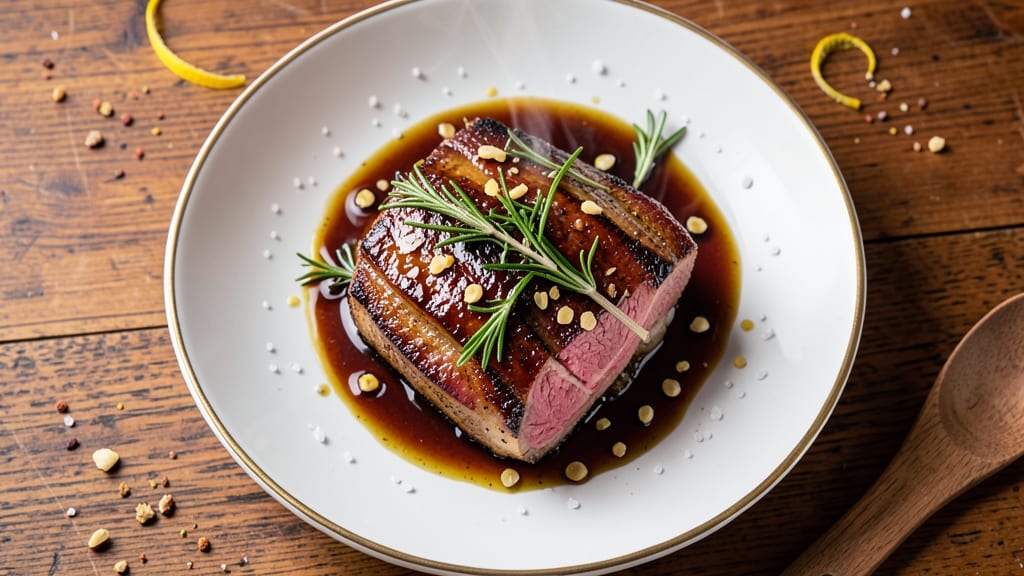
The best ever rack of lamb recipe transforms a restaurant-worthy cut into a home-cooked masterpiece with a fragrant herb crust and perfect pink center.
I first perfected this after years of testing—my Nonna’s stories about Italian Sunday feasts inspired the herb blend, but the secret lies in precise timing and temperature control. This isn’t just another rack of lamb; it’s a dish that commands attention at any table.
The recipe begins with a foolproof herb crust made from Dijon mustard, rosemary, and garlic, which clings beautifully while searing. For cooking, I use a reverse sear method—starting in a low oven to ensure even doneness before finishing in a screaming-hot pan for that coveted crust.
The internal temperature must reach 130°F for medium-rare, then rest for 10 minutes before slicing. Every step is designed to eliminate guesswork while delivering restaurant-quality results.
What you’ll end up with is a luxurious centerpiece—golden-brown crust encasing tender, pink lamb with a glossy red wine reduction that ties every bite together. The aroma alone will have guests gathering before the first slice is served.
This recipe scales beautifully for gatherings or makes an impressive solo dinner when paired with roasted root vegetables or a crisp green salad. Let’s get started on creating your most impressive main course yet.
Confession: I’ve burned more than a few racks in my time, but this method accounts for every variable—from room temperature lamb to precise oven calibration. The key is patience; rushing the rest time is the fastest way to ruin an otherwise perfect dish.
Trust me, the wait is worth it when that first slice comes out with a juicy, pink center and crisp edges. This is the recipe I reach for when I want to impress without stress.
Ingredients for best ever rack of lamb
Luxurious ingredients that transform ordinary into extraordinary—this is your game-changing rack of lamb lineup.
| Ingredient | Amount | Notes |
|---|---|---|
| French-Style Rack of Lamb 🐑 | 1 ½ lb | Frenched, bone-in, fat cap intact |
| Dijon Mustard 🍯 | 2 tbsp | High-quality, smooth texture |
| Fresh Rosemary 🌿 | ½ cup | Finely chopped, organic preferred |
| Garlic Cloves 🧄 | 6 cloves | Peeled, minced into paste |
| Extra-Virgin Olive Oil 🫒 | ¼ cup | Fruity, not bitter |
| Kosher Salt 🧂 | 1 ½ tsp | Diamond Crystal preferred |
| Freshly Ground Black Pepper 🌶️ | 1 tsp | Cracked peppercorns preferred |
| Dry Red Wine 🍷 | ½ cup | Cabernet Sauvignon, room temp |
| Beef Bone Broth 🍲 | ½ cup | Homemade or high-quality store-bought |
| Unsalted Butter 🧈 | 2 tbsp | Cold, cubed for searing |
| Fresh Thyme 🌿 | ¼ cup | Leaves only, stems removed |
| Yellow Onion 🧅 | 1 whole | Thinly sliced, for garnish |
| Fresh Parsley 🌿 | ¼ cup | Chopped, for garnish |
The lamb is non-negotiable—look for a well-marbled frenched rack with a fat cap still attached. Whole Foods or your local butcher will have the best quality. If buying pre-frenched, check for even thickness across the chops. Fresh rosemary and thyme are a must here—dried won’t give that fragrant crust. The Dijon mustard should be smooth, not grainy, and Maille is my go-to brand. For the garlic, roast it first—mix with olive oil, bake at 400°F for 10 minutes, then blend into a paste. That sweetness elevates everything. The red wine? Save the good stuff—this isn’t a cooking wine moment.
No Dijon? Substitute with 1 tbsp whole-grain mustard plus 1 tsp honey—it’s sweeter but works in a pinch. Running low on rosemary? Thyme plus a pinch of oregano mimics that earthy depth. The bone broth can be swapped for chicken broth plus 1 tsp soy sauce for umami. For the wine reduction, if you don’t have red wine, use 1/2 cup beef broth plus 1 tbsp balsamic vinegar. The butter? Full-fat is essential—low-fat won’t brown properly. And that yellow onion? Caramelize it first—sauté in olive oil until golden for extra depth. Every swap should preserve that restaurant-quality aroma.
This dish is all about patience—let the lamb sit at room temp for 30 minutes before cooking. The herb crust keeps for 2 days in the fridge if prepped ahead, but assemble it fresh for maximum flavor. The cooked lamb reheats beautifully—warm in a 300°F oven for 15 minutes with a splash of broth. The wine reduction freezes for 3 months, but it’s best used fresh. Garnish with those caramelized onions and parsley right before serving—the colors pop against the golden crust. Leftovers? Slice thin and serve on crusty bread for sandwiches the next day.
Why You’ll Love This Recipe
- Foolproof Timing: I swear by this method—just 20 minutes of active work, then hands-off roasting while I chop veggies or pour wine. The lamb rests while I set the table, so dinner’s ready when I am.
- Herb-Crusted Magic: That rosemary and Dijon combo? It’s not just flavor—it’s texture. The crust gets caramelized and fragrant, while the inside stays juicy. (Yes, even if I forget to baste it.)
- Weeknight to Date Night: Same recipe, totally different vibes—throw it on a sheet pan for a lazy Tuesday, or dress it up with a red wine reduction for when I’m trying to impress. The lamb’s the star, but it plays any role I need.
- Leftover Luxury: Roast a full rack, carve it, and suddenly I’ve got three days of sandwiches, salads, or pasta toppings. Honestly, the second-day lamb is my favorite—even better than the first.
Step-by-step instructions for herb-crusted, pink-centered Luxury rack of lamb
This method guarantees a restaurant-quality rack of lamb with perfect pink centers and an irresistible herb crust.
Prepare the Herb Crust and Season the Lamb
In a food processor, combine the 0.5 cup fresh rosemary, 0.25 cup fresh thyme, 6 cloves garlic cloves, 1.5 tsp kosher salt, and 1 tsp freshly ground black pepper. Pulse until finely minced but not pasty. Transfer to a small bowl and stir in the 2 tbsp Dijon mustard and 0.25 cup extra-virgin olive oil until a thick paste forms.
Pat the 1.5 lb French-style rack of lamb dry with paper towels—this is crucial for crispy crust formation. Generously rub the herb mixture all over the lamb, pressing it into the meat and fat cap. Let it sit at room temperature for 30 minutes while you prepare the oven. This resting period allows the flavors to penetrate deeply and the crust to adhere perfectly.
Sear the Lamb for Maximum Flavor
Preheat your oven to 425°F. Place the lamb fat-side up on a wire rack set over a rimmed baking sheet. This elevation ensures even cooking and crispy skin. In a separate skillet, melt the 2 tbsp unsalted butter over medium-high heat until foaming. Carefully brush the melted butter all over the lamb, focusing on the fat cap.
Sear the lamb in the same skillet (or use a second one) for 3-4 minutes per side until deeply golden brown. The fat should render beautifully, creating a luxurious crust. Transfer the seared lamb to the prepared baking sheet and place it in the preheated oven. This initial sear locks in juices and builds flavor that will develop during roasting.
Roast to Perfect Medium-Rare
Roast the lamb for 20-25 minutes until the internal temperature reaches 125°F at its thickest point. For accuracy, use a meat thermometer inserted into the thickest part of the meat, avoiding the bone. The exterior should be deeply browned with a crispy texture, while the interior remains beautifully pink and juicy.
Here’s the secret: Remove the lamb from the oven when it hits 125°F—it will carry over to 130°F during resting, giving you that ideal medium-rare finish. If you prefer slightly more done meat, let it rest longer before checking the temperature. The crust should hold its shape when pressed gently, indicating proper doneness.
Create the Red Wine Reduction
While the lamb rests, deglaze the same skillet used for searing with 0.5 cup dry red wine, scraping up all the browned bits with a wooden spoon. Simmer for 3-4 minutes until reduced by half. Add 0.5 cup beef bone broth and continue simmering until the sauce thickens to a glossy consistency—about 5 minutes total. Season with additional kosher salt and black pepper if needed.
The wine reduction captures all the caramelized flavors from the searing process, creating a rich, aromatic sauce that complements the lamb perfectly. Keep this sauce warm until ready to serve, as it will beautifully coat each slice when plated.
Rest and Slice for Maximum Juiciness
Transfer the lamb to a cutting board and tent loosely with foil. Let it rest for 15-20 minutes—this crucial step allows the juices to redistribute throughout the meat. During this time, thinly slice the 1 whole yellow onion and 0.25 cup fresh parsley for garnish.
To slice, cut between each bone to separate the chops, then slice each chop against the grain into ½-inch thick pieces. The meat should be fork-tender with a perfect pink center and juices flowing freely. Arrange the slices on a warm platter, drizzle generously with the red wine reduction, and garnish with the sliced onion and parsley. Serve immediately with roasted vegetables or crusty bread to soak up every delicious drop.
Pro Tips For Making Best Ever Rack Of Lamb
- SEAR IN STAGES: Start with a screaming-hot pan—lamb needs that crust—but don’t walk away. After the first 2 minutes, pull it out, flip, and let the pan cool for 30 seconds before finishing the second side. I learned this the hard way when my first sear turned into a greasy mess instead of a golden crust. Works every time.
- SALT THE LAMB 48 HOURS EARLY: Skip the last-minute salt rush—this isn’t chicken. Wet the rack, then generously coat with kosher salt (about 1 teaspoon per pound) and refrigerate uncovered for 2 days. The salt penetrates deeper, and the crust forms better. Yes, it’s an extra step, but your future self will notice the difference.
- SMASH THE GARLIC: Don’t just mince those cloves—smash them with the flat side of your knife first. This releases more flavor into the mustard and oil. I was skeptical until I tried it; the aroma alone makes the dish taste more luxurious. Bonus: Use the smashed cloves in the pan after searing for extra depth.
- REST IT UNDER FOIL: After roasting, tent the lamb with foil and let it sit for 10 minutes. I know, you want to cut into it immediately, but rushing means dry, stringy meat. The residual heat finishes cooking it perfectly while keeping it juicy. Trust the process—your knife will thank you.
Regional styles of this best ever rack of lamb
French Herb-Crusted Classic
This is the version I grew up dreaming about after Nonna’s stories—where rosemary and garlic form a fragrant crust that crackles when you cut in.
The French technique uses a Dijon mustard base (I swear by Maille) mixed with finely minced fresh herbs and olive oil, pressed directly onto the lamb. The key difference? No breadcrumbs—just pure herb intensity.
I sear the lamb first in a screaming-hot pan with butter until golden, then finish in a 425°F oven until the internal temp hits 125°F. The secret? Room temperature lamb—never cook it straight from the fridge. 🌿
For serving, I always pair this with a red wine reduction made from the same Cabernet Sauvignon used in the crust. Deglaze the pan with ½ cup wine, reduce by half, then finish with ½ cup beef bone broth.
This sauce becomes the star of the plate—glossy, aromatic, and packed with all those caramelized flavors from the sear. Garnish with thinly sliced caramelized onions and fresh parsley for that classic bistro touch.
Middle Eastern Spiced Version
My first experiment with this was after a trip to Istanbul where I fell in love with lamb cooked with sumac and smoked paprika.
For this version, swap the herb crust for a mix of 2 tbsp ground cumin, 1 tbsp sumac, 1 tsp smoked paprika, 1 tsp ground coriander, and ½ tsp cayenne. Mix with 2 tbsp olive oil and rub it all over the lamb.
The spices toast beautifully during searing, creating a deep, earthy crust that’s completely different from the French version. 🌶️
Serve this with a yogurt sauce—mix ½ cup Greek yogurt with 1 tbsp lemon juice, 1 minced garlic clove, ½ tsp salt, and ¼ tsp ground cumin. The cool yogurt cuts through the richness perfectly.
I also love adding toasted pine nuts on top for crunch. This version has a bold, smoky depth that works amazingly with roasted eggplant or a cucumber-yogurt salad on the side.
Italian Rosemary-Garlic Twist
This is my Nonna’s version—simpler but packed with flavor. Instead of Dijon, we use 1 tbsp whole-grain mustard plus 1 tsp honey for sweetness. The crust gets extra rosemary (up to ⅔ cup) and 1 tsp dried oregano for that Italian herb garden flavor.
The lamb is seared in olive oil instead of butter, and the wine reduction gets a splash of dry white wine (like Pinot Grigio) instead of red. 🍷
For serving, I like to add roasted cherry tomatoes and balsamic glaze drizzled over the top. The acidity from the tomatoes and balsamic brightens up the rich lamb perfectly.
This version feels more rustic and homey—ideal for a Sunday family dinner when you want that Italian comfort food vibe without the fuss.
Moroccan Harissa Crust
This is my boldest experiment yet—using 2 tbsp harissa paste (like Bella brand) mixed with 1 tbsp honey and 1 tsp ground cumin as the base for the crust. The harissa adds smoky heat that pairs incredibly with lamb.
I sear the lamb in a cast-iron skillet until the crust is deeply charred in spots, then finish in the oven. The internal temp still needs to hit 125°F, but the harissa makes the lamb taste like it’s been cooking for hours. 🔥
Serve this with Moroccan-style roasted vegetables—carrots, zucchini, and bell peppers tossed in olive oil, cumin, and smoked paprika. The harissa flavor carries through to the plate, creating a full sensory experience.
For a cooling element, add mint yogurt sauce (mix ½ cup yogurt with chopped mint, lemon juice, and salt). This version is not for the faint of heart—it’s spicy, smoky, and completely addictive.
Nutrition facts
Frequently asked questions
How do I choose the perfect rack of lamb for this recipe?
Look for a French-style rack that’s bone-in with the fat cap intact. The chops should be even in thickness (1-inch thick is ideal) and have a vibrant red color. Ask your butcher to french the rack (remove the frill of fat) if it isn’t already done. Avoid lamb that smells gamey or has a grayish tint—freshness is key for that perfect pink center.
Can I make this recipe ahead of time?
The herb crust can be prepared 2 days ahead and stored in the fridge. For the lamb itself, cook it fresh for best results, but you can reheat slices in a 300°F oven for 15 minutes with a splash of broth. The red wine reduction freezes beautifully for up to 3 months—just thaw and reheat gently before serving. The aroma alone will have everyone gathering!
What if my lamb cooks unevenly or has cold spots?
This usually happens when the lamb isn’t at room temperature or the oven isn’t properly calibrated. Always let the lamb sit at room temp for 30 minutes before cooking. For uneven cooking, check your oven with an oven thermometer—many run 25°F hotter or colder than set. If you see cold spots, return the lamb to the oven for 5-10 more minutes at 400°F until fully heated through.
What’s the best way to slice rack of lamb for serving?
First, cut between each bone to separate the chops. Then slice each chop against the grain into ½-inch thick pieces. For presentation, arrange slices fan-style on a platter and drizzle with the red wine reduction. The meat should be fork-tender with a juicy pink center—never slice into dry, overcooked pieces. Garnish with fresh herbs for that restaurant-worthy touch!
What are good side dishes to pair with this rack of lamb?
Classic choices include roasted root vegetables (carrots, parsnips, and beets), crusty bread for soaking up the sauce, or a simple green salad with a citrus vinaigrette. For a more decadent meal, try creamy mashed potatoes or wild rice pilaf. The key is balancing rich flavors with something fresh or hearty.

- Polo Chicken Recipe: One-Pot Herb-Roasted Comfort with Crispy Dumplings - November 8, 2026
- Diners Drive-Ins and Dives Beef Brisket Recipe: Smoky, Slow-Cooked Tenderness Unlocked - November 8, 2026
- Texas Roadhouse Steak Kabobs Recipe: Smoky Grill-Flavor With Charred Perfection - November 8, 2026