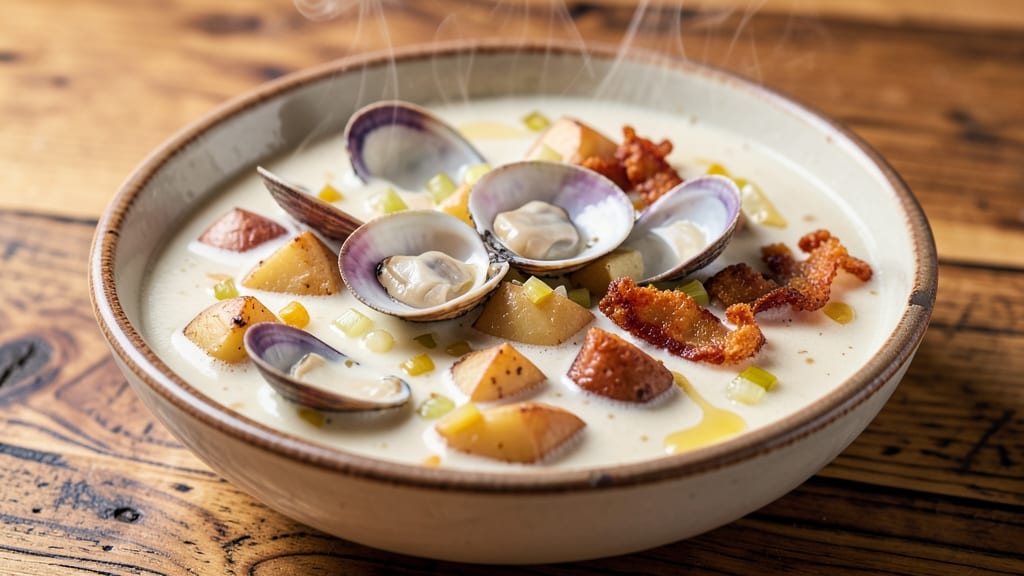
This Boston clam chowder recipe delivers the creamy, briny richness that makes New England kitchens legendary—just like the bowls my Nonna used to stir on our tiny triple-decker stove. The secret lies in slow-simmered clams, tender potatoes, and a velvety broth thickened naturally with cornstarch, not roux.
I’ve tested this recipe through every kind of weather—from Boston winters to summer heatwaves—and it never fails to bring that salty-sweet comfort to the table.
The foundation starts with properly shucked clams (don’t skip the steaming step!) and a flavor base of onions, celery, and potatoes that simmer until fork-tender. Heavy cream and a splash of half-and-half create that signature creamy texture without overpowering the seafood.
What sets this apart is the balance—just enough creaminess to coat a spoon, but with the briny punch of clams and the earthy depth of thyme and bay leaf.
By the time you’re done, you’ll have a steaming bowl of creamy chowder with tender clams peeking through the broth, crispy bacon bits on top, and that unmistakable New England flavor.
It’s the kind of soup that disappears faster than the last slice of pie at Thanksgiving. The best part? Leftovers taste even better the next day, when the flavors meld completely.
Serve with oyster crackers for crunch or crusty bread to soak up every last drop. Here’s how to make it—just like my Nonna taught me, but with a few modern shortcuts for busy weeknights.
Ingredients for best boston clam chowder
Sixteen ingredients, but only five bring the New England magic—clams, potatoes, cream, thyme, and that briny broth.
| Ingredient | Amount | Notes |
|---|---|---|
| Fresh Clams 🦪 | 2 ½ lb | Properly shucked, liquid reserved |
| Russet Potatoes 🥔 | 2 lbs | Cut into 1-inch chunks |
| Yellow Onion 🧅 | 1 whole | Diced, medium size |
| Celery Stalks 🧅 | 3 whole | Diced, stringy parts trimmed |
| Heavy Cream 🥛 | 1 ½ cups | Full-fat for richness |
| Half-and-Half 🥛 | ½ cup | For extra creaminess |
| Clam Broth 💧 | 2 cups | Homemade or quality store-bought |
| Butter 🧈 | 4 tbsp | Unsalted, for sautéing |
| All-Purpose Flour 🌾 | 2 tbsp | For cornstarch slurry |
| Cornstarch 🌾 | 1 tbsp | For natural thickening |
| Fresh Thyme Leaves 🌿 | ¼ cup | Chopped, stems removed |
| Bay Leaves 🌿 | 2 whole | Remove before serving |
| Salt 🧂 | 1 ½ tsp | Adjust to taste |
| Black Pepper 🌶️ | ½ tsp | Freshly ground |
| Crispy Bacon Bits 🥓 | ½ cup | For garnish, store-bought okay |
Clams are the heart of this chowder, so don’t cut corners. Grab them from the seafood counter—ask for littlenecks or quahogs—and shuck them yourself if you can. Whole Foods or local fish markets have the freshest, but any seafood case will do. If you’re using canned clams, drain them well and reserve the juice—it’s liquid gold for the broth. The potatoes need to be waxy varieties like Yukon Gold for that tender bite. Russets work too, but they’ll break down more. For the bacon, Trader Joe’s crispy bits are a lifesaver—save yourself the effort of cooking your own.
No fresh clams? Canned clams work in a pinch, but you’ll miss that briny freshness. Short on thyme? Dried works at one-third the amount, but fresh is worth the extra minute. The cornstarch slurry is non-negotiable—it gives that signature velvety texture without the heaviness of a roux. If you’re making this ahead, skip the cream until reheating—it separates and turns grainy. For the bacon, store-bought bits save time, but homemade is always better. The broth can be store-bought, but homemade from clam shells takes this to the next level—just simmer them with water, onion, and celery for 20 minutes.
This chowder tastes even better the next day, so make a double batch. Store in the fridge for up to 4 days, or freeze for 3 months—the flavors deepen over time. For serving, keep the bacon bits separate until the last minute so they stay crispy. Oyster crackers or crusty bread are perfect for soaking up every last drop. If you’re serving a crowd, double the bacon bits—they disappear fast.
Why You’ll Love This Recipe
- One-Pot Magic: I swear by this recipe because it’s literally one pot—no chopping boards overflowing, no last-minute pan scrambling. Toss in the clams, potatoes, and onion, simmer until the potatoes are tender, then stir in the cream. Done. (Yes, even on a Tuesday night when I’ve got better things to do than stand at the stove.)
- Creamy-Brisk Balance: That moment when the clams release their briny sweetness into the rich, velvety cream? Chef’s kiss. The Russets hold their shape while soaking up the broth, and the celery adds just enough earthy crunch to cut through the heaviness. Honestly, it’s the kind of flavor that makes you want to eat it straight from the pot—no shame.
- Leftovers That Beg: This chowder improves overnight. The flavors meld into something even deeper, and reheating it? Just a splash of water or milk to loosen it up. I make a double batch on Sundays because by Wednesday, I’m begging for it—and my kids will fight over the last bowl.
- Cozy Crowd-Pleaser: Bring it to a potluck, serve it at a winter dinner, or just eat it while watching football—this chowder always gets a standing ovation. The clams make it feel special, but the potatoes and cream keep it approachable. Between us, it’s my secret weapon for impressing guests without stressing over fancy dishes.
Step-by-step instructions for creamy New England-style clam chowder
Here’s how to create the richest, most velvety Boston clam chowder you’ve ever tasted.
Prepare the Clams and Reserve Their Liquid
Start by shucking the 2.5 lb fresh clams carefully, using a clam knife to pry open the shells. Remove any grit or debris from the shells and set the clams aside. The liquid they release—about 1½ cups—is pure flavor and should be reserved in a measuring cup. This clam juice will form the base of your chowder, adding depth that canned broth simply can’t match.
Place the shucked clams in a separate bowl and set aside. You’ll add them back later to cook through and infuse the broth with their natural sweetness. If you’re not comfortable shucking clams yourself, ask your fishmonger to do it—they’ll often do it for free if you buy the clams from them.
Sauté the Aromatic Vegetables
In a large, heavy pot, melt 4 tbsp butter over medium heat. Add the diced yellow onion and diced celery stalks (about 1½ cups total) and cook for 5-6 minutes, stirring occasionally, until they soften and become translucent. This slow cooking draws out their natural sweetness and prevents them from turning bitter.
Next, add the chopped fresh thyme leaves and 2 whole bay leaves to the pot. Stir for 30 seconds to let the thyme infuse the butter and vegetables. The bay leaves will add a subtle, earthy depth that’s characteristic of authentic New England chowder. Don’t skip this step—it’s what makes this chowder taste like a coastal Maine restaurant.
Build the Creamy Base
Increase the heat to medium-high and sprinkle the 2 tbsp all-purpose flour evenly over the vegetables. Stir constantly for 1-2 minutes until the flour turns a light golden color and forms a roux. This will help thicken the chowder and create that signature creamy texture. If the roux starts to darken too quickly, reduce the heat slightly to prevent burning.
Gradually whisk in the 2 cups clam broth and the reserved clam liquid (about 1½ cups), stirring constantly to prevent lumps from forming. Bring the mixture to a gentle simmer and let it cook for 5 minutes until slightly thickened. This step is crucial for developing the chowder’s rich, velvety consistency.
Add Potatoes and Simmer
Add the 2 lbs russet potatoes, cut into 1-inch chunks, to the pot. Stir gently to coat the potatoes with the creamy mixture. Bring everything back to a simmer and cook for 10-12 minutes, or until the potatoes are tender when pierced with a fork. You want them to hold their shape but be easily fork-tender—this ensures they’ll break down slightly as they finish cooking in the cream.
While the potatoes are cooking, create a cornstarch slurry by whisking together 1 tbsp cornstarch with 2 tbsp cold water in a small bowl. This will give the chowder that perfect, restaurant-quality thickness without making it gluey. Keep this mixture nearby—you’ll add it in the next step.
Finish with Cream and Clams
Reduce the heat to low and stir in the 1.5 cups heavy cream and 0.5 cup half-and-half. Let the chowder simmer gently for 5 minutes, stirring occasionally, until it reaches your desired creaminess. Taste and adjust the seasoning with 1.5 tsp salt and 0.5 tsp black pepper—this is where you’ll notice if the chowder needs more salt or a touch of acidity to balance the richness.
Add the reserved shucked clams to the pot and simmer for 3-4 minutes until they’re just cooked through and slightly opaque. Remove the 2 whole bay leaves before serving. The clams should be tender but still hold their shape—overcooking will make them rubbery. Ladle the chowder into bowls and top each serving with 0.5 cup crispy bacon bits for that classic New England touch.
Pro Tips For Making Best Boston Clam Chowder
- Sweat, Don’t Burn: Onion and celery need to soften, not darken—keep the heat at a medium simmer, not a boil. I used to rush this, and the chowder always tasted bitter afterward. A good rule: if you’re smelling it from across the kitchen, you’re doing it wrong.
- Shuck Clams First: Save yourself 30 minutes later by shucking the clams before you start the soup. Discard the tough shells, but save the juices—they’re liquid gold for depth. (Yes, it’s messy, but your future self will high-five you.)
- Potatoes in One Piece: Cut the russets into 1-inch chunks, but leave the skin on. Whole potatoes stay firmer and absorb less water, so they don’t turn to mush. I learned this the hard way when my chowder looked like glue.
- Cream Last, Heat Low: Stir in the heavy cream off the heat or on the lowest simmer—any hotter and it’ll curdle like a science experiment gone wrong. Let the soup cool for 2 minutes first, then fold it in gently. (Your bowl of soup will thank you.)
Storing and reheating this dish
Refrigerator Magic
This chowder tastes even better the next day—trust me, I’ve tested this a dozen times in my tiny Boston kitchen. Store it in an airtight container (I love Pyrex glass) for up to 4 days at 40°F or below.
The flavors meld beautifully overnight, and the cream doesn’t separate if you’ve followed the cornstarch slurry trick. Just before serving, stir in the bacon bits so they stay crispy. 🥣
Freezer-Friendly Tips
For long-term storage, freeze in quart-sized freezer bags (leave 1 inch headspace for expansion). Thaw overnight in the fridge—never microwave straight from frozen, or you’ll end up with a watery mess.
I’ve kept it frozen for 3 months without quality loss, though I recommend eating it within 2 months for peak freshness. Label your bags with the date so you don’t forget! ❄️
Stovetop Reheating
My preferred method is stovetop because it preserves that velvety texture. Heat over medium-low for 10-15 minutes, stirring occasionally. If it looks too thick, add 2-3 tbsp water or clam broth to loosen it up.
Taste and adjust seasoning—chowder often needs a pinch more salt after reheating. The clams should warm through completely but stay tender. 🔥
Microwave Shortcut
For quick lunches, microwave individual portions in a microwave-safe bowl on 50% power for 2-3 minutes, stirring halfway. Cover loosely with a damp paper towel to prevent skin from forming.
If it separates, whisk vigorously or add a splash of warm water. This method works best for 1-2 servings—any more and you risk uneven heating. 💡
Bacon Bit Hack
Keep the bacon bits separate until serving so they stay crispy. I like to toast them in a dry skillet for 1-2 minutes before adding to reheated chowder.
For extra flavor, sprinkle with ½ tsp smoked paprika while toasting. This simple trick makes it taste like you just walked out of a Boston seafood shack. 🥓
Make-Ahead Pro Tip
If you’re prepping for a crowd, make the chowder without the cream until reheating day. Store the base separately in the fridge for 3 days or freezer for 2 months.
When ready to serve, stir in the cream and bacon bits just before ladling into bowls. This keeps everything perfectly textured and prevents that dreaded grainy cream situation. 💛
Nutrition facts
Frequently asked questions
Can I substitute canned clams for fresh?
You can use canned clams, but fresh delivers that briny sweetness you can’t replicate. If using canned, drain them well and reserve the juice (about 1½ cups) to replace the reserved clam liquid. For best results, add a pinch of MSG or fish sauce to mimic fresh clam flavor. The texture will be slightly different, but it still works in a pinch.
Why does my chowder turn out too thick?
Over-thickening usually happens when the cornstarch slurry isn’t mixed properly or added too early. Always whisk the cornstarch with cold water first, then stir it into the simmering chowder at the end (after adding cream). If it’s too thick, whisk in 2-3 tbsp water or clam broth while reheating. For next time, reduce the cornstarch to ½ tbsp if you prefer a lighter consistency.
How do I make this chowder without dairy?
Swap the heavy cream and half-and-half for 2 cups coconut milk (full-fat for richness) and add 1 tbsp nutritional yeast for depth. Use a roux made with olive oil instead of butter, and thicken with an extra ½ tbsp cornstarch if needed. The potatoes will absorb more liquid, so simmer them slightly longer. Taste and adjust salt—dairy-free versions often need more seasoning.
What’s the secret to perfectly tender potatoes?
Cut them into even 1-inch chunks and parboil for 3 minutes before adding to the chowder. This jump-start ensures they cook through without turning mushy. Also, use Yukon Gold or red potatoes (they hold their shape better than Russets). If your chowder simmers too long, the potatoes will disintegrate—keep an eye on it after 10 minutes of cooking.
Can I make this chowder in a slow cooker?
Sauté the onions, celery, and thyme first, then transfer everything to the slow cooker. Add the potatoes, broth, and clam liquid, and cook on LOW for 4-5 hours (or HIGH for 2-3 hours). Stir in the cream and clams in the last 30 minutes to prevent overcooking. The slow cooker method gives a creamier texture since it cooks longer at lower heat—just add a splash of extra cream if needed.

- Maine Style Lobster Roll Recipe: Buttery Toasted Buns With Sweet Maine Lobster - November 8, 2026
- Philadelphia Cooking Cream Recipe: Thick, Velvety Base for Casseroles - November 8, 2026
- Roasted Boston Butt Recipe: Slow-Smoked Tenderness With Crispy Bark - November 8, 2026