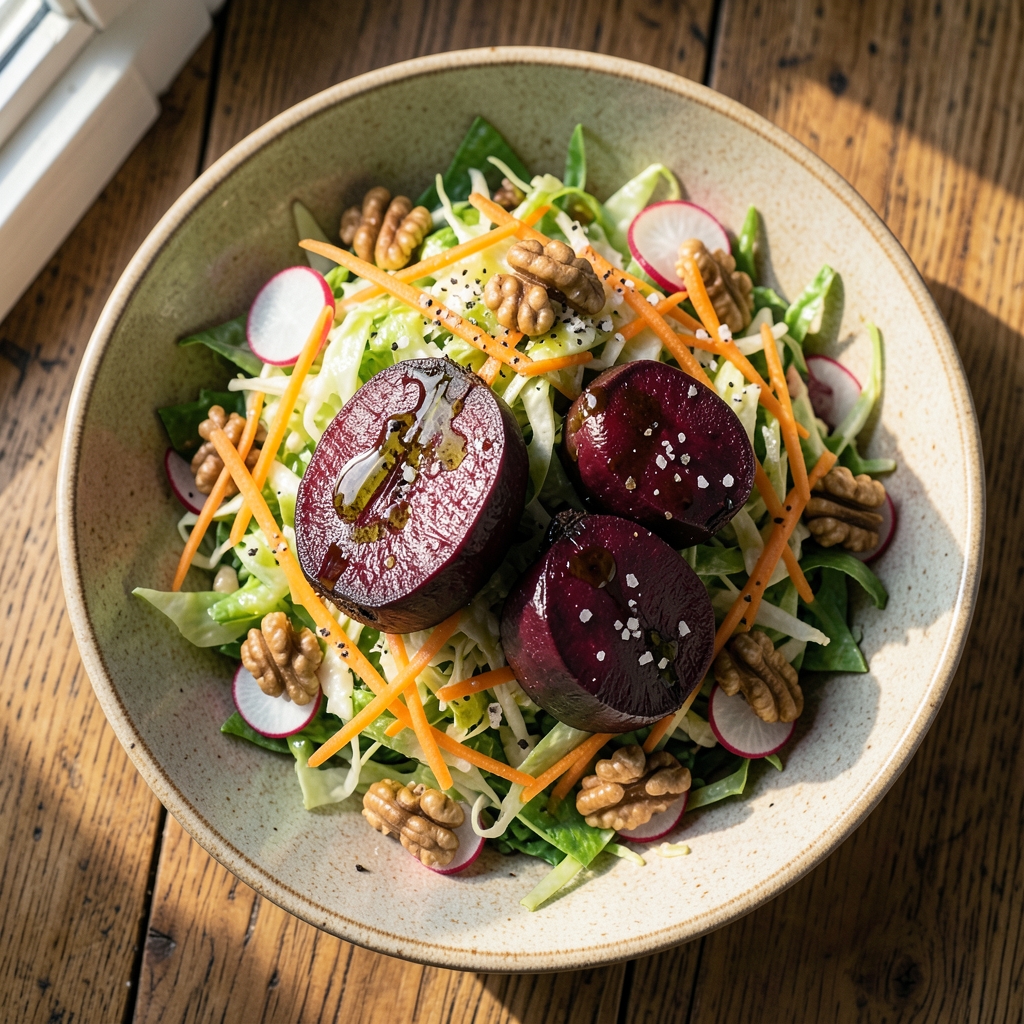
This beet and coleslaw salad recipe transforms humble ingredients into a vibrant, textured masterpiece that balances earthy sweetness with crisp cabbage crunch.
The key lies in properly roasting the beets until tender yet holding their shape, then pairing them with sharp, vinegary coleslaw for a perfect contrast of textures and flavors. I developed this recipe after realizing store-bought coleslaw couldn’t compete with homemade when paired with roasted vegetables.
The beauty of this salad is its versatility—it works as a refreshing side for grilled meats, a hearty vegetarian main with added protein, or a colorful addition to any buffet spread.
The dressing is where the magic happens: a tangy apple cider vinegar base with just enough sweetness to complement the beets’ natural earthiness. For extra crunch, I always include thinly sliced radishes and toasted pecans, though you can customize with whatever you have on hand.
What makes this recipe stand out is how the components come together—roasted beets with their glossy, caramelized edges meet the crisp, slightly sweet coleslaw in each bite. The texture contrast is what elevates this from ordinary salad to something truly special.
Plus, it keeps beautifully in the fridge for up to four days, making it perfect for meal prep.
Ready to create this vibrant, flavor-packed salad? Let’s gather your ingredients and get started with the step-by-step instructions that will guide you to restaurant-quality results at home.
Ingredients for beet coleslaw salad
Roasted beets meet crisp cabbage crunch in this vibrant vegetarian salad masterpiece.
| Ingredient | Amount | Notes |
|---|---|---|
| Medium Beets 🍠 | 4 whole | Roasted until tender, peeled |
| Green Cabbage 🥬 | 4 cups | Shredded, outer leaves removed |
| Carrots 🥕 | 2 medium | Shredded for coleslaw crunch |
| Red Radishes 🍇 | 1 cup | Thinly sliced for extra crunch |
| Pecans 🥜 | ½ cup | Toasted, roughly chopped |
| Extra-Virgin Olive Oil 🫒 | ½ cup | For roasting and dressing |
| Apple Cider Vinegar 🍎 | ¼ cup | For tangy dressing base |
| Maple Syrup 🍯 | 2 tbsp | For natural sweetness |
| Dijon Mustard 🍯 | 1 tbsp | For dressing depth |
| Sea Salt 🧂 | 1 tsp | Kosher preferred for balance |
| Black Pepper 🌶️ | ½ tsp | Freshly cracked for heat |
| Fresh Parsley 🌿 | ¼ cup | Chopped for fresh garnish |
The beets are the star—organic baby beets from the grocery store’s produce section roast evenly and hold their shape beautifully. Whole Foods or Trader Joe’s carry pre-washed baby beets, which saves time. For the cabbage, green cabbage is ideal, but red cabbage adds extra color. Look for heads that are firm and heavy for their size. The radishes should be crisp and vibrant—Earthbound Farm organic radishes stay fresh longer in my experience. Pecans can be found in the baking aisle or bulk section, but Costco’s bulk pecans offer the best price per pound.
No pecans? Toasted walnuts or sunflower seeds work perfectly as a crunchy alternative. The dressing can be adjusted—more vinegar for tang, more maple syrup for sweetness. Substitute balsamic vinegar if apple cider is unavailable. For extra protein, add chickpeas or crumbled feta cheese. The carrots can be baby carrots or regular carrots, but julienne peeler makes quick work of shredding them. Fresh herbs like dill or chives can replace parsley if you prefer a different flavor profile. Always toast your nuts or seeds before adding for maximum flavor.
Store the dressing separately in an airtight container for up to 5 days—it keeps beautifully. The beets and coleslaw components should be stored in separate containers to maintain crispness. This salad reheats well, but it’s best served chilled. Portion into meal prep containers with dressing on the side to keep everything fresh. The dressing can also be used on sandwiches or as a marinade for grilled vegetables. Leftovers keep for 4 days in the refrigerator when stored properly.
Why You’ll Love This Recipe
- No Knife Frenzy: I swear, this salad takes five minutes of chopping—just slice the beets (raw or roasted, your call) and the cabbage into wedges, then let the knife do its thing on carrots and radishes. Pecans? Buy them pre-toasted if you’re lazy. My kids think they’re helping, but honestly, I’m just hiding in the pantry eating the extra radishes.
- Earthy Crunch Magic: That first bite—sweet beets, peppery cabbage, crunchy radishes—it’s like a party in your mouth. The pecans add this unexpected buttery crunch, and the tangy dressing (I use apple cider vinegar + Dijon) ties it all together. Not sweet, not boring—just ridiculously satisfying. My husband finished the bowl before I did, and he’s not even a salad guy.
- Potluck or Picnic Hero: Between us, this is my go-to for anything: summer BBQs, lazy Sunday brunches, or even packed in a jar for work. It holds up for days (yes, really), and no one will guess it’s veggie-packed. Pro tip: Double the dressing and store it separately—just toss when you’re ready. My coworker asked for the recipe twice after I brought it to the office.
- Budget Bright Spot: Beets and cabbage last forever, carrots are cheap, and pecans stretch far when you’re portioning. I made this for eight people last month and spent under $12—plus, the leftovers turn into next-day wraps or grain bowls. No waste, no guilt, just good food. Even my picky mom-in-law ate three helpings. (Okay, fine, she’s not that picky.)
Step-by-step instructions for beet and coleslaw salad
Here’s how to create this vibrant salad with perfectly roasted beets and crisp vegetables.
Roast the Beets Until Tender
Preheat your oven to 400°F. Scrub the 4 whole medium beets clean and wrap each one tightly in aluminum foil. Place them directly on the oven rack or a baking sheet. Roast for 45-50 minutes until they’re fork-tender when pierced with a knife.
I like to test doneness by squeezing gently – they should yield slightly under pressure. Let them cool completely before peeling. The foil makes cleanup easy and helps concentrate their natural sweetness through the roasting process. Once cool, peel off the skins using a paring knife, then coarsely chop the beets into ½-inch pieces.
Prepare the Crunchy Vegetable Base
Remove the outer leaves from the 4 cups green cabbage and quarter it lengthwise. Use a sharp knife to slice it into thin shreds, working from the core outward for even strips. Transfer to a large mixing bowl as you work. Add the 2 medium carrots, peeled and shredded, and the 1 cup thinly sliced red radishes.
For best texture, I recommend using a mandoline slicer for the radishes and carrots – this creates uniform, paper-thin slices that stay crisp. Give everything a quick toss with ½ teaspoon sea salt and ¼ teaspoon black pepper to enhance their natural flavors before assembling the dressing.
Toast the Pecans for Added Crunch
Spread the ½ cup pecans on a dry baking sheet lined with parchment paper. Toast in the same 400°F oven for 8-10 minutes, stirring once halfway, until they’re fragrant and lightly golden. Let them cool completely before roughly chopping them with a chef’s knife.
Watch them carefully – they burn quickly once they start to darken. The toasted pecans add a wonderful nutty contrast to the sweet beets and tangy dressing. I like to chop them just before assembling the salad so they maintain their crisp texture throughout.
Whisk Together the Sweet-Tangy Dressing
In a small bowl, whisk together the ½ cup extra-virgin olive oil, ¼ cup apple cider vinegar, 2 tablespoons maple syrup, and 1 tablespoon Dijon mustard. Season with the remaining ½ teaspoon sea salt and ¼ teaspoon black pepper.
Taste the dressing before using it – you want a balance of sweet, tangy, and savory. If it needs more acidity, add another teaspoon of vinegar. If it needs more sweetness, add another teaspoon of maple syrup. The dressing should coat the back of a spoon but still allow for easy pouring.
Assemble and Garnish the Salad
Add the chopped roasted beets to the vegetable mixture in the bowl. Pour the dressing over everything and toss gently but thoroughly to coat all ingredients evenly. Let the salad sit for 10-15 minutes before serving to allow the flavors to meld together.
Just before serving, sprinkle the toasted pecans and ¼ cup chopped fresh parsley over the top. Serve immediately to maintain the perfect crunch contrast between the tender beets, crisp vegetables, and toasted nuts. This salad keeps well in the refrigerator for up to 2 days, though the radishes may soften slightly over time.
Pro Tips For Making Beet Coleslaw Salad
- ROAST BEETS UNTIL TENDER: I learned this the hard way—beets straight from the oven are still rock-hard if you cut them too big. Slice them into ½-inch chunks (yes, even if they look small) and roast at 400°F for 25-30 minutes, flipping halfway. The edges should crumble when pierced with a fork, not fight you like a stubborn potato.
- SHRED CABBAGE DRY: Wet cabbage turns your coleslaw into a soggy mess. After cutting, toss the wedges in a colander with 1 tablespoon of salt and let them sit for 10 minutes. Then rinse and spin dry in a clean towel—this removes excess water and keeps the texture crisp. (I know, it feels like overkill, but trust me.)
- SLICE RADISHES THIN: Thick radish slices look pretty but chew like rubber. Use a mandoline or sharp knife to cut them paper-thin (about ⅛-inch) so they add crunch without dominating the bite. Skip the peeling—just trim the ends and slice, or you’ll lose flavor.
- TOAST PECANS LOW: Pecans burn faster than you’d think. Spread them in a single layer on a baking sheet and toast at 325°F for 5-7 minutes, stirring once. Watch closely—they’re done when fragrant and just starting to brown, not when they look like charcoal. Cool them completely before adding to the salad.
Common mistakes when making perfect results
Over-Roasting Beets
Beets are delicate when roasted—they can turn mushy and lose their vibrant color if left too long. I’ve ruined more than a few batches by keeping them in the oven past 50 minutes, especially when using larger beets.
The key is testing doneness with a fork: they should pierce easily but still hold their shape. If they’re falling apart, they’ve gone too far. For even cooking, I always wrap them individually in foil to trap moisture and prevent burning. 🌡️
Uneven Cabbage Texture
The cabbage is the backbone of this salad, so shredding it incorrectly can ruin the crunch. Using a dull knife or chopping unevenly leads to some pieces being too thick and others too thin. I recommend a mandoline slicer for consistent, paper-thin shreds—it makes all the difference.
If you don’t have one, use a sharp chef’s knife and work in small batches, keeping the cabbage cold in the fridge while you shred. Never skip the salt before tossing with dressing; it helps soften the cabbage just enough to absorb flavor without losing texture.
Skipping the Resting Time
This is a common mistake that makes all the difference in flavor balance. After tossing the salad with dressing, I always let it sit for 10-15 minutes before serving. This allows the beets to absorb the dressing and the cabbage to soften slightly, creating a harmonious bite.
Skipping this step results in a salad where the dressing pools at the bottom, and the flavors feel disjointed. Patience here is key—trust the process! ⏳
Using Raw or Untoasted Nuts
Toasted pecans add a crucial layer of crunch and nuttiness, but many people overlook this step. Raw pecans taste bland and can make the salad feel flat. Toasting them for just 8-10 minutes at 400°F brings out their natural oils and deepens their flavor.
The mistake? Walking away and letting them burn. Keep a close eye on them, and don’t overcrowd the pan—they need space to crisp. If you’re short on time, a dry skillet over medium heat works too, but the oven gives more even results.
Over-Mixing the Dressing
The dressing is where the magic happens, but over-whisking it can turn it into a thick paste that clumps together. The goal is a smooth, pourable consistency—just enough to coat the back of a spoon. I like to whisk for about 30 seconds, then taste and adjust.
If it’s too thick, add a splash of water or vinegar; if it’s too thin, stir in a little more mustard or maple syrup. The dressing should cling lightly to the vegetables without making them soggy. 💛
Storing Components Together
This is a rookie mistake that kills texture. Storing the beets, cabbage, and dressing together in the fridge causes the cabbage to wilt and the beets to absorb too much moisture, turning the salad into a sad, mushy mess. Always store the components separately in airtight containers.
The dressing can keep for up to 5 days, while the beets and coleslaw should be stored in separate containers for up to 4 days. When ready to serve, toss everything together just before eating to preserve that perfect crunch.
Nutrition facts
Frequently asked questions
Can I make this beet coleslaw salad without roasting the beets?
Roasting brings out the beets’ natural sweetness and tender texture, but you can use steamed or boiled beets instead. Just make sure they’re fully cooked and cooled before mixing. Raw beets won’t work—they’ll be too tough and bitter. For extra flavor, try a quick pan-sear after boiling to caramelize their edges slightly.
How do I keep the cabbage extra crisp for meal prep?
Store the shredded cabbage in an airtight container with a paper towel pressed between layers to absorb moisture. Keep it separate from the beets and dressing until ready to serve. For added crunch, toss with 1 teaspoon lemon juice before storing—it helps preserve freshness. This method keeps cabbage crisp for up to 5 days in the fridge.
What’s the best way to make this salad vegan?
Swap the olive oil for avocado oil and replace the Dijon mustard with vegan mayo or extra maple syrup. For the dressing, use coconut yogurt instead of any dairy-based elements. The recipe already contains naturally vegan ingredients, so these simple swaps make it fully plant-based while keeping all the vibrant flavors intact.
Can I use red cabbage instead of green?
Red cabbage adds beautiful color and a slightly sweeter flavor that pairs perfectly with beets. Just be aware it may stain your hands and cutting board—wear gloves if you’re sensitive to purple stains. The preparation method remains exactly the same, and the texture will be just as crisp when properly shredded.
How can I add protein to this salad?
Try adding ½ cup cooked quinoa, ½ cup chickpeas, or ¼ cup crumbled tofu for plant-based options. For meat eaters, grilled chicken or shrimp work beautifully. Add these components after tossing the salad with dressing to prevent sogginess. The protein should be fully cooked and cooled before mixing to maintain the salad’s freshness.

- Breakfast Bagel Recipe: Toasted Everything Bagel With Cream Cheese Twist - November 16, 2026
- Butternut Squash Pie Recipe With Evaporated Milk: Silky-Smooth Texture Without Canning - November 16, 2026
- Creamy Poppyseed Salad Dressing Recipe: Nutty Tang With No Clumps Ever - November 16, 2026