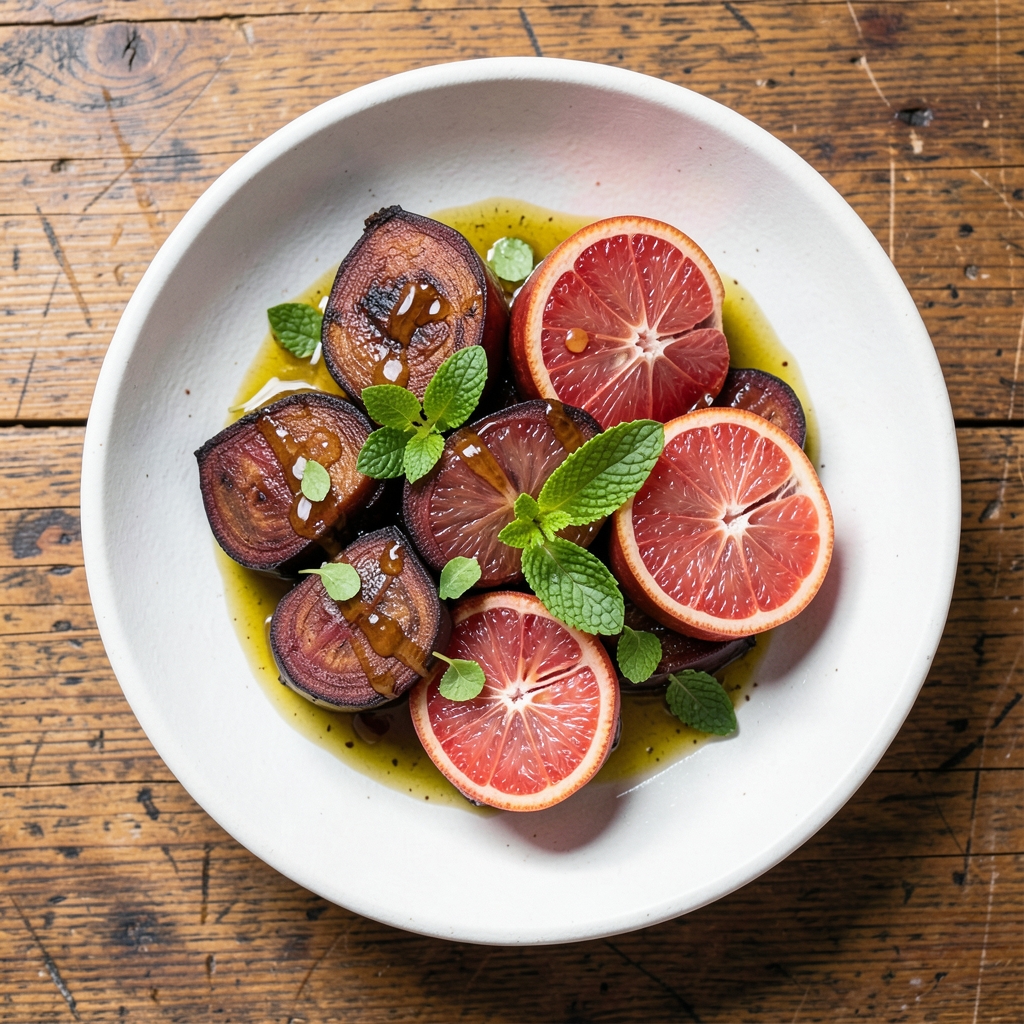
A beet and grapefruit salad transforms simple ingredients into a vibrant, nutrient-packed dish that balances earthy sweetness with bright citrus. This recipe harnesses the natural vibrancy of roasted beets and juicy grapefruit segments to create a visually stunning salad that’s as healthy as it is delicious.
The secret lies in the dressing—a zesty blend of citrus and olive oil—that ties everything together with a perfect sweet-tart harmony.
What makes this salad special is how effortlessly it comes together in just 15 minutes of active prep time. Roasting the beets first enhances their natural sweetness and softens their texture, while fresh grapefruit adds a refreshing pop of acidity.
The combination isn’t just visually striking—it’s packed with antioxidants, fiber, and vitamins, making it a standout for both health-conscious eaters and those craving something bold and fresh.
The result is a salad that’s crisp, juicy, and bursting with color—think deep ruby beets paired with golden grapefruit segments, all glistened with a light citrus dressing.
Garnish with toasted nuts or fresh mint for added texture and flavor, and you’ll have a dish that’s perfect for brunch, lunch, or even as a side for grilled proteins. This isn’t just a salad; it’s a flavor experience that’s impossible to resist.
Whether you’re meal prepping for the week or whipping up a last-minute dish, this beet and grapefruit salad delivers restaurant-quality flavor with minimal effort. The best part? Every bite is a celebration of fresh, seasonal ingredients working together in perfect balance. Let’s get started!
Ingredients for beet and grapefruit salad
Fresh beets, vibrant grapefruit, and a citrusy dressing create this stunning, nutrient-packed salad that’s effortless yet restaurant-worthy.
| Ingredient | Amount | Notes |
|---|---|---|
| Medium Beets 🍠 | 2 whole | Organic preferred, stems trimmed |
| Ruby Red Grapefruit 🍊 | 1 whole | Seedless preferred, peeled and segmented |
| Extra-Virgin Olive Oil 🫒 | ¼ cup | Light, fruity variety for balance |
| Fresh Lemon Juice 🍋 | ¼ cup | Bright, freshly squeezed |
| Maple Syrup 🍯 | 1 tbsp | Pure, grade B for depth |
| Fresh Mint Leaves 🌿 | ¼ cup | Finely chopped for garnish |
| Toasted Walnuts 🥜 | ¼ cup | Lightly toasted for crunch |
| Diamond Crystal Kosher Salt 🧂 | ½ tsp | Fine grain for seasoning |
| Freshly Ground Black Pepper 🌶️ | ¼ tsp | Freshly cracked for heat |
| Avocado Oil 🫒 | 1 tbsp | For roasting beets |
| Balsamic Vinegar 🍷 | 1 tbsp | Aged for depth of flavor |
The beets are the star—look for deep ruby or golden varieties at Whole Foods or your local farmers market for the most vibrant color. Organic beets are ideal, but conventional works too if they’re firm and free of blemishes. The grapefruit should be fully ripe but firm—the redder the better for that perfect sweet-tart balance. Ruby Red or Pink varieties have the best flavor profile. Don’t peel the beets until after roasting—their skins stay intact and add texture. For extra convenience, grab pre-trimmed beets from Trader Joe’s if you’re short on time, but they’ll cost a bit more.
No ruby grapefruit? Pink grapefruit works in a pinch, though it’ll be slightly less vibrant. The dressing can be adjusted too—swap maple syrup for agave if you prefer, or add a pinch of vanilla extract for depth. Fresh mint is non-negotiable for the garnish, but if you’re out, cilantro or basil at half the amount can work. The walnuts can be swapped for pecans or almonds—just toast them until fragrant. For the beets, if you’re roasting a big batch, store them in the fridge for up to 5 days in a sealed container with a paper towel to absorb moisture.
This salad keeps beautifully for 3-4 days in the fridge, though the grapefruit gets juicier over time—drain it well before serving. The dressing separates naturally, so just give it a quick whisk before drizzling. For meal prep, store components separately—beets, grapefruit, and dressing—then assemble when ready to eat. The nuts and mint can be toasted and chopped ahead, then sprinkled fresh. This dish reheats beautifully too—just warm the beets gently in a pan with a splash of water to revive their texture.
Why You’ll Love This Recipe
- No Boil Required: I roast the beets whole—just toss them in olive oil, salt, and a pinch of sugar, then let the oven do the work. No peeling, no mess, and that caramelized sweetness? Chef’s kiss.
- Bright & Balanced: The Ruby Red grapefruit’s tart punch cuts through the earthy beets, while the maple syrup and lemon juice tie it all together like a citrusy hug. It’s sweet, it’s sharp, it’s ridiculously good—no heavy dressing needed.
- Meal Prep MVP: This salad keeps for days in the fridge, making it perfect for busy mornings or lunchboxes. Pack it with whole-grain crackers or grilled chicken for a protein boost—zero last-minute stress.
- Budget Brightener: Beets and grapefruit are affordable, seasonal staples that stretch further than you’d think. A single roast yields multiple servings, and the dressing costs pennies. Fresh, flavorful, and guilt-free? Yes, please.
Step-by-step instructions for beet and grapefruit salad
Transform vibrant beets and ruby grapefruit into a showstopping salad bursting with sweet-tart harmony.
Roast the Beets to Sweet Perfection
Preheat your oven to 400°F and line a baking sheet with parchment paper. Pierce each of the 2 whole medium beets with a fork in several places, then rub them generously with 1 tablespoon avocado oil—this creates a crispy exterior while keeping the interior tender. Place them directly on the baking sheet and roast for 45-50 minutes until they yield easily when pierced with a knife and develop a caramelized exterior.
Here’s the thing—roasting beets at high heat concentrates their natural sugars, transforming their earthy flavor into something almost candy-like. If you prefer extra crispiness, broil for 2-3 minutes at the end, watching closely to prevent burning. Let them cool completely before peeling—this makes the skins slide off effortlessly with a paring knife.
Segment the Grapefruit with Precision
Cut the 1 whole ruby red grapefruit in half crosswise and set each half on a cutting board. Using a sharp chef’s knife, carefully slice between the membranes to release the segments, working from the top down to avoid bitterness from the pith. I like to leave the segments slightly attached at the base—this creates an elegant presentation while keeping the fruit intact.
For maximum freshness, work quickly and keep the grapefruit halves covered with a damp towel to prevent drying. The segments should glisten with natural juices—this is your visual cue that you’re preserving the fruit’s vibrant flavor. Reserve 2 tablespoons of the grapefruit juice for the dressing, as it adds bright acidity that balances the beets’ sweetness.
Whisk Together the Dressing Components
In a small bowl, combine ¼ cup extra-virgin olive oil, ¼ cup fresh lemon juice, 1 tablespoon maple syrup, 1 tablespoon balsamic vinegar, ½ teaspoon diamond crystal kosher salt, and ¼ teaspoon freshly ground black pepper. Whisk vigorously for 30 seconds until emulsified—you’ll notice the mixture thicken slightly as the olive oil and citrus marry together.
Taste and adjust the balance: need more brightness? Add another teaspoon of lemon juice. Too sharp? A touch more maple syrup bridges the gap. The dressing should coat the back of a spoon with a velvety sheen—this indicates proper emulsification. Here’s where the magic happens: the balsamic vinegar adds depth while the pepper provides a subtle heat that cuts through the richness.
Assemble the Salad with Textural Contrast
In a large serving bowl, combine the peeled and cubed roasted beets, grapefruit segments, ¼ cup toasted walnuts, and ¼ cup finely chopped fresh mint leaves. Gently toss everything together with a wooden spoon, being careful not to bruise the grapefruit segments. The walnuts should provide a satisfying crunch that contrasts beautifully with the beets’ creamy texture.
Real talk: the mint adds a refreshing herbal note that elevates this salad from simple to spectacular. Don’t skip the tossing step—this ensures even distribution of all components. For best results, assemble the salad just before serving so the grapefruit maintains its crisp texture and vibrant color.
Dress and Garnish for Maximum Impact
Drizzle the dressing over the salad in a slow, steady stream while gently tossing to coat evenly. Start with 2 tablespoons of the reserved grapefruit juice to help the dressing cling to the ingredients. The salad should glisten with moisture but not appear soggy—this indicates perfect balance between the creamy dressing and fresh components.
For presentation, arrange the salad on a large platter and garnish with additional grapefruit segments and mint leaves. A final sprinkle of ¼ teaspoon freshly ground black pepper adds a subtle heat that enhances all the flavors. Serve immediately while the beets are still warm from roasting and the grapefruit segments are crisp—this is when the salad shines brightest.
Pro Tips For Making Beet And Grapefruit Salad
- ROAST BEETS UNTIL TENDER: Skip the “medium” setting—roast beets at 400°F (200°C) for about 45 minutes, until a knife slides in like butter. Undercooked beets stay tough and bitter; overcooked ones turn to mush. Pierce them first with a fork, then wrap in foil halfway through if your oven runs hot.
- PEEL BEETS WHEN COOL: Let roasted beets sit 10 minutes before peeling—they’ll cool faster and the skins slide off effortlessly. I used to peel them hot and waste time scrubbing stubborn patches. A damp paper towel helps loosen any lingering bits if needed.
- ZEST THE GRAPEFRUIT FIRST: Grate the grapefruit zest before juicing—it adds bright citrus aroma without extra work. Use only the outer layer (no white pith), and save the zest for the dressing instead of tossing it. Trust me, it makes the salad sing.
- BALANCE THE DRESSING: Start with equal parts olive oil, lemon juice, and maple syrup (about 1 tablespoon each), then adjust to taste. The grapefruit’s natural bitterness needs sweetness to soften, but too much syrup makes it cloying. Taste as you go—you can always add more lemon.
Essential equipment for beet and grapefruit salad
Roasting Essentials
For perfect roasted beets, start with a high-quality baking sheet—I recommend All-Clad Stainless Steel for even heat distribution. Line it with parchment paper (like Reynolds Non-Stick) to prevent sticking, especially when caramelizing.
A sharp chef’s knife (I use Mercer Culinary Genesis) is essential for peeling beets after roasting—dull knives make this step frustrating. 🔥
Citrus Prep Tools
Grapefruit segmenting requires precision, so invest in a grapefruit spoon (available at Williams Sonoma) to avoid wasting fruit. For cutting, a sharp 8-inch chef’s knife (like Wüsthof) makes quick work of the membranes.
Keep a small bowl nearby to catch juice—this reserved grapefruit juice is key for the dressing. A microplane (like OXO Good Grips) is perfect for zesting extra grapefruit if you want added brightness.
Dressing Emulsification
The secret to a silky dressing lies in your whisking technique. A balloon whisk (I prefer OXO Good Grips) creates the perfect emulsion faster than a fork. For small batches, a small mixing bowl (like Pyrex Glass) keeps ingredients contained.
Measure liquids precisely with a liquid measuring cup—I use Kitchenaid Stainless Steel for accuracy. A tasting spoon (like Le Creuset) helps monitor seasoning without over-dressing your salad.
Assembly Extras
For textural contrast, toast your nuts in a light-colored baking dish (like Corelle Stoneware) to monitor color. A wooden salad spoon (I love West Elm’s solid oak) prevents bruising grapefruit segments during tossing.
For garnishing, a fine-mesh strainer (like OXO Good Grips) helps drain excess juice from grapefruit segments. A large serving platter (I use Le Creuset Stoneware) elevates presentation—opt for one with a slight lip to contain dressing drizzles.
Budget-Friendly Swaps
No fancy tools? A heavy oven-safe skillet (like Lodge Cast Iron) works for roasting beets. Use a butter knife for peeling instead of a paring knife—just work carefully. For citrus prep, a serrated knife (like Victorinox Fibrox) handles grapefruit well.
Measure liquids with a standard measuring cup and whisk by hand with a fork—it takes longer but works perfectly. The key is focus, not expensive equipment.
Pro Presentation
For restaurant-worthy plating, add a clear glass bowl (like Libbey Crystal) to showcase colors. Use tweezers (I keep Kumon Wooden Tweezers handy) to place grapefruit segments artfully. A small squeeze bottle (like OXO Good Grips) makes dressing application precise.
For extra flair, add edible flowers (like nasturtiums) or citrus twists—both available at Trader Joe’s or local markets. 💫
Nutrition facts
Frequently asked questions
Can I use regular beets instead of ruby red beets?
While ruby red beets offer the most vibrant color, golden or regular beets work perfectly too. The flavor will be slightly earthier, but the sweet-tart balance with grapefruit remains delicious. Just roast them until tender—golden beets may take 5-10 minutes less than ruby varieties.
How do I prevent the grapefruit from getting bitter?
Use a sharp knife and work quickly when segmenting—cut between the membranes to avoid the bitter pith. Cover grapefruit halves with a damp towel while prepping to keep them fresh. For extra insurance, select fully ripe (but firm) grapefruit—they’ll be sweeter and less prone to bitterness.
Can I make this salad ahead of time?
Yes! Store components separately in airtight containers for up to 3 days. Keep the dressing separate until serving to maintain crispness. Reassemble just before eating—this preserves the grapefruit’s texture and vibrant color. The beets can be roasted 1-2 days ahead and stored at room temperature.
What if I don’t have fresh mint?
No problem! Substitute with ½ the amount of fresh basil or cilantro for a different herbal note. For a mint-free version, add a pinch of dried mint or a splash of vanilla extract to the dressing for depth. The salad will still taste amazing—just slightly different.
Is this salad suitable for meal prep?
Perfect for meal prep! Divide the roasted beets, grapefruit segments, and dressing into separate containers. When ready to eat, toss everything together and add fresh mint/nuts. The dressing can be pre-made (stored separately) and whisked before serving. This keeps the salad fresh-tasting for 4-5 days.

- Pizza Perogies Recipe: Cheesy Bites With Crispy Crusts and Saucy Twist - November 8, 2026
- Pizza Cobbler Recipe: Deep-Dish Crust Meets Cheesy Comfort in One Pan - November 8, 2026
- Money Bread Recipe: Buttery Pull-Apart Loaf With Crusty Crunch - November 8, 2026