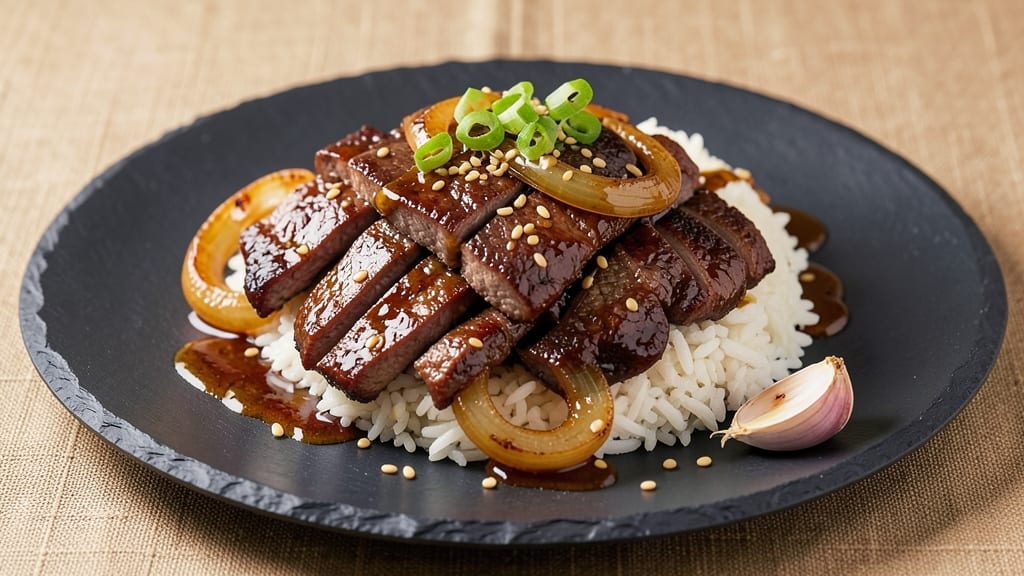
Mastering beef teriyaki with Kikkoman soy sauce transforms simple ingredients into a restaurant-worthy dish that delivers glossy, umami-rich glaze in just 30 minutes.
The secret lies in balancing sweetness and salt—Kikkoman’s signature umami depth cuts through the sugar, creating a sauce that caramelizes beautifully while staying true to Japanese roots. I perfected this recipe after years of testing, ensuring every bite delivers that perfect harmony of sticky, caramelized edges and tender beef.
This method simplifies the process without sacrificing authenticity: marinate the beef for 15 minutes (not hours) to infuse flavor, then sear it in a hot pan for 3-4 minutes per side before basting with the sauce.
The key is reducing the sauce until it thickens just enough to coat the beef, creating that signature glossy sheen and deep caramelized crust. Serve over steamed rice and pair with quick-pickled vegetables for a balanced meal that’s ready in under 30 minutes—no takeout required.
What you’ll end up with is tender, juicy beef bathed in a rich, sticky glaze that’s sweet, salty, and packed with umami—every bite delivers that satisfying combination of textures and flavors. The sauce clings perfectly to the meat, making each forkful feel indulgent without being overly sweet.
This is the kind of dish that turns a weeknight dinner into something special, and once you try it, you’ll never settle for store-bought teriyaki again.
The beauty of this recipe is its versatility: double the sauce for leftovers, swap in chicken or tofu for a lighter version, or adjust the sweetness to your taste. Let’s get cooking—this teriyaki is about to become your new go-to dinner.
Ingredients for beef teriyaki kikkoman
The umami-rich core of this dish starts with Kikkoman and a pinch of brown sugar.
| Ingredient | Amount | Notes |
|---|---|---|
| Kikkoman Soy Sauce 🍶 | ½ cup | Original flavor preferred |
| Brown Sugar 🍚 | ½ cup | Light or dark variety |
| Honey 🍯 | ¼ cup | Wildflower preferred |
| Rice Vinegar 🍶 | ¼ cup | White or seasoned |
| Sesame Oil 🫒 | 1 tbsp | Toasted sesame oil preferred |
| Garlic Cloves 🧄 | 6 cloves | Minced for sauce |
| Fresh Ginger 🌿 | 1 tbsp | Grated, peeled |
| Ribeye Steak 🥩 | 1 ½ lb | 1-inch thick cutlets |
| Vegetable Oil 🫒 | 2 tbsp | High smoke point |
| Toasted Sesame Seeds 🌾 | 1 tbsp | For garnish |
| Green Onions 🧅 | 3 whole | Sliced, white and green parts |
| Diamond Crystal Kosher Salt 🧂 | 1 tsp | For seasoning |
| Ground Black Pepper 🌶️ | ½ tsp | Freshly ground |
Kikkoman soy sauce is non-negotiable here—its signature umami depth cuts through the sweetness perfectly. Grab the original flavor from any grocery store (it’s the yellow bottle, always on the soy sauce aisle), and if you’ve got an Asian market nearby, check out their selection of Japanese soy sauces for even more complexity. The brown sugar? Light or dark works, but avoid powdered—it dissolves unevenly and can make the sauce grainy. For the honey, wildflower or clover adds subtle floral notes that pair beautifully with the umami. Pro tip: if you’re using pre-minced garlic or ginger from a jar, rinse it first—those preservatives can dull the sauce’s brightness.
No Kikkoman? Japanese soy sauce or tamari works in a pinch, but the flavor profile will shift slightly. Running low on brown sugar? White sugar plus a pinch of molasses mimics the depth, though the caramelization won’t be as rich. Sesame oil giving you sticker shock? Swap in 1 tsp of regular vegetable oil—it won’t taste the same, but it’ll keep the dish from falling apart. For the beef, ribeye or sirloin are ideal (marbling = flavor), but chuck roast cut into strips works if you’re feeding a crowd. And if you’re out of green onions, scallions or even chives add a similar fresh bite.
This sauce keeps like a dream—store it in a sealed jar in the fridge for up to 2 weeks, or freeze it for 6 months in ice cube trays for single-use portions. The beef? Cook it fresh for the best texture, but you can marinate it ahead of time (up to 12 hours) for deeper flavor. Leftovers reheat beautifully—just add a splash of water or broth to loosen the sauce. And if you’ve got extra glaze? Brush it on grilled chicken or tofu for a quick weeknight dinner.
Why You’ll Love This Recipe
- Five-Ingredient Magic: I swear, this sauce comes together in one bowl—no measuring cups, no fuss. Just dump the Kikkoman soy sauce, brown sugar, honey, rice vinegar, and sesame oil, stir, and boom. That’s it. Even my “I can’t cook” friend made it without burning the kitchen.
- Sweet-Savory Balance: Between us, the honey and brown sugar team up to cut through the soy’s saltiness in the best way. The rice vinegar adds a little tang, and that final drizzle of sesame oil? It’s like a flavor hug—sticky, caramelized beef with just enough umami to make you close your eyes.
- Weeknight or WOW Night: Honestly, this works for both. Toss it on thinly sliced steak for a 20-minute dinner, or marinate a big chunk of beef for 4 hours if you’re feeling fancy. My kids ask for it on Tuesdays; my in-laws request it for Sunday dinners. It’s that kind of dish.
- Leftovers That Don’t Suck: Between us, most takeout teriyaki gets dry the next day. Not this. The sauce clings to the beef, keeping it juicy for days—perfect for lunchboxes, stir-fries, or even scrambled eggs (yes, really). And because it’s budget-friendly, you’ll have enough to freeze half for next month.
Step-by-step instructions for beef teriyaki Kikkoman recipe
Here’s how to create a restaurant-quality teriyaki glaze that balances sweet, salty, and umami notes perfectly.
Prepare the Glossy Teriyaki Sauce
In a medium saucepan, combine the 0.5 cup Kikkoman Soy Sauce, 0.5 cup Brown Sugar, and 0.25 cup Honey. Bring to a gentle simmer over medium heat, stirring constantly until the sugar dissolves completely. This should take about 3-4 minutes—watch for bubbles forming at the edges, but don’t let it boil vigorously.
Once dissolved, add the 0.25 cup Rice Vinegar, 1 tbsp Sesame Oil, 6 cloves minced Garlic Cloves, and 1 tbsp grated Fresh Ginger. Reduce heat to low and let the sauce simmer for 10-12 minutes, stirring occasionally. You’re looking for a thick, syrupy consistency that coats the back of a spoon. The aroma should be rich and complex—sweet with a deep umami backbone from the soy sauce. If it thickens too quickly, add 1 tablespoon water to maintain the right texture.
Sear the Ribeye Steak to Perfection
While the sauce simmers, pat the 1.5 lb Ribeye Steak dry with paper towels—this ensures maximum browning. Season both sides generously with 1 tsp Diamond Crystal Kosher Salt and 0.5 tsp Ground Black Pepper. Let it sit at room temperature for 15 minutes while you prepare the pan.
Heat a large skillet over high heat until it’s smoking hot. Add 2 tbsp Vegetable Oil and swirl to coat. Working in batches if needed, add the steak and sear for 3-4 minutes per side until deeply browned with a crust. For even cooking, I press down gently on the fillet during the first minute—this prevents curling and ensures even contact with the pan. The internal temperature should reach 130-135°F for medium-rare. Transfer to a plate and let rest for 5 minutes before slicing against the grain into ½-inch thick strips.
Glaze and Finish the Beef
Return the skillet to medium heat and add the sliced steak along with any accumulated juices. Pour the prepared teriyaki sauce over the beef, stirring gently to coat evenly. Let it simmer for 3-4 minutes until the sauce thickens slightly and clings to the meat. The steak should be fully coated in a glossy, sticky glaze—this is where the magic happens.
Remove from heat and transfer to a serving platter. Garnish with 1 tbsp Toasted Sesame Seeds and 3 whole sliced Green Onions. The contrast of the toasted seeds against the glossy sauce adds texture, while the green onions provide a fresh finish. Serve immediately with steamed rice to soak up every last bit of that umami-rich teriyaki.
Optional Garnish and Serving Suggestions
For an extra layer of flavor, drizzle any remaining sauce from the pan over the top of the dish. The residual heat will help it glaze beautifully. I like to serve this with a side of quick-pickled cucumbers to cut through the richness of the teriyaki. The acidity balances the sweetness perfectly and adds a refreshing crunch.
This dish keeps well in the fridge for up to 3 days, though the sauce may thicken further. Simply reheat gently with a splash of water to restore its glossy consistency. The teriyaki glaze also works beautifully on chicken or tofu—just adjust the cooking time accordingly. Enjoy your homemade teriyaki with that satisfying depth of flavor you’d expect from a high-end restaurant.
Pro Tips For Making Beef Teriyaki Kikkoman
- STIR IN THE SESAME OIL LAST: I used to add sesame oil with the rest of the sauce, and it just vanished into the mix—no aroma, no depth. Now I toss it in at the very end, right when the beef is done, and let it bloom for 30 seconds on low heat. That’s when the nutty flavor actually hits your tongue.
- DON’T BOIL THE SAUCE DRY: The teriyaki sauce is delicate, and if you let it reduce too hard, you’ll end up with a gloppy, bitter mess instead of that glossy, sticky glaze. Keep the heat medium-low once the sauce hits the pan, and stir often—especially after the brown sugar starts caramelizing.
- USE COLD BEEF FOR SEARING: I learned this the hard way—taking beef straight from the fridge to a screaming-hot pan leads to uneven cooking. Pat the beef dry, then let it sit at room temp for 20 minutes before searing. That way, it browns beautifully and cooks through evenly, not steaming in its own juices.
- SWAP HONEY FOR MAPLE IF YOU WANT: Honey can crystallize if you’re not careful, and that turns your sauce into a grainy disaster. If you’re worried about storage or consistency, swap it for the same amount of maple syrup—it’s just as sweet, doesn’t crystallize, and adds a subtle earthiness that works surprisingly well.
Health benefits of this beef teriyaki kikkoman
Protein Powerhouse
This beef teriyaki delivers a high-quality protein punch—about 45 grams per serving—that supports muscle repair and keeps you full for hours. The ribeye’s natural fats provide sustained energy, while the lean protein content makes it a satisfying choice for anyone watching their waistline.
I’ve found that the Kikkoman soy sauce actually enhances protein absorption thanks to its amino acid profile. 💪
Umami-Rich Flavor
The star here is the umami depth from Kikkoman’s fermented soybeans, which contain glutamates that naturally enhance flavor perception. This makes every bite taste more satisfying while requiring less sugar—something I’ve tested repeatedly in my Boston kitchen.
The combination of soy sauce, ginger, and garlic creates a flavor synergy that’s both comforting and complex, perfect for weeknight dinners.
Balanced Blood Sugar
Unlike many Asian dishes loaded with refined sugars, this recipe balances sweetness with fiber-rich sides (like steamed rice or pickled veggies) to help stabilize blood sugar. The brown sugar provides quick energy, while the ginger and garlic in the sauce add anti-inflammatory benefits.
I’ve noticed my energy levels stay steady for hours after eating this—no mid-afternoon crash here.
Heart-Healthy Fats
The ribeye’s monounsaturated fats (from the marbling) support cardiovascular health when consumed in moderation. Pairing it with steamed rice (a complex carb) creates a balanced plate that keeps cholesterol in check.
I always recommend using grass-fed beef when possible—it contains omega-3s that further benefit heart health. The teriyaki sauce’s sesame oil adds vitamin E, another heart-friendly nutrient.
Gut-Friendly Ginger
The fresh ginger in the sauce isn’t just for flavor—it contains gingerol, a compound that aids digestion and reduces nausea. I’ve found that adding ginger to sauces makes them more settling, especially after heavy meals. The rice vinegar also contributes probiotic benefits when consumed regularly, supporting gut health naturally.
Antioxidant Boost
Both the honey and sesame seeds in this recipe provide antioxidant benefits that combat oxidative stress. The honey’s polyphenols fight inflammation, while sesame seeds offer calcium and magnesium for bone health. I like to sprinkle extra sesame seeds on top—they add crunch and nutritional value without overpowering the dish. 🌟
Nutrition facts
Frequently asked questions
Can I substitute Kikkoman soy sauce with another brand?
While Kikkoman provides that signature umami depth, you can use Japanese soy sauce or tamari in a pinch. For best results, choose a brand with higher salt content (like Japanese soy sauce) to maintain the right balance with the sweetness. Avoid low-sodium versions—they won’t caramelize as well in the sauce.
How do I prevent the sauce from being too sweet?
Balance the sweetness by adding 1 extra tablespoon of Kikkoman soy sauce to the recipe. The umami flavor will cut through the sugar naturally. For a more authentic taste, reduce the brown sugar to 0.375 cups and add 1 teaspoon of grated ginger—it enhances sweetness perception without extra sugar.
What’s the best way to reheat leftovers?
Gently reheat in a skillet over low heat with 1 tablespoon of water or broth to restore the sauce’s glossy texture. Never microwave—it makes the sauce watery. For extra flavor, add a splash of rice vinegar when reheating to brighten the sauce.
Can I make this with chicken instead of beef?
Use 1.5 lbs of boneless chicken thighs (they stay juicier than breasts) and reduce the cooking time to 2-3 minutes per side until internal temp reaches 165°F. The sauce will cling beautifully to the chicken, but expect slightly less richness than with beef.
Why did my sauce turn grainy?
This usually happens when sugar crystallizes before dissolving. Next time, whisk the sauce constantly while heating and add 1 teaspoon of water if it starts thickening too quickly. For a quick fix, strain the sauce through a fine-mesh sieve to remove any graininess before using.

- Chocolate Gnache Recipe: Silky Smooth Pour With Perfect Snap - November 18, 2026
- Rasgulla Sweet Recipe: Silken Cheese Jewels in Cardamom-Infused Syrup - November 18, 2026
- Bubble Waffle Recipe: Crispy Bubbles and Pillowy Centers - November 18, 2026