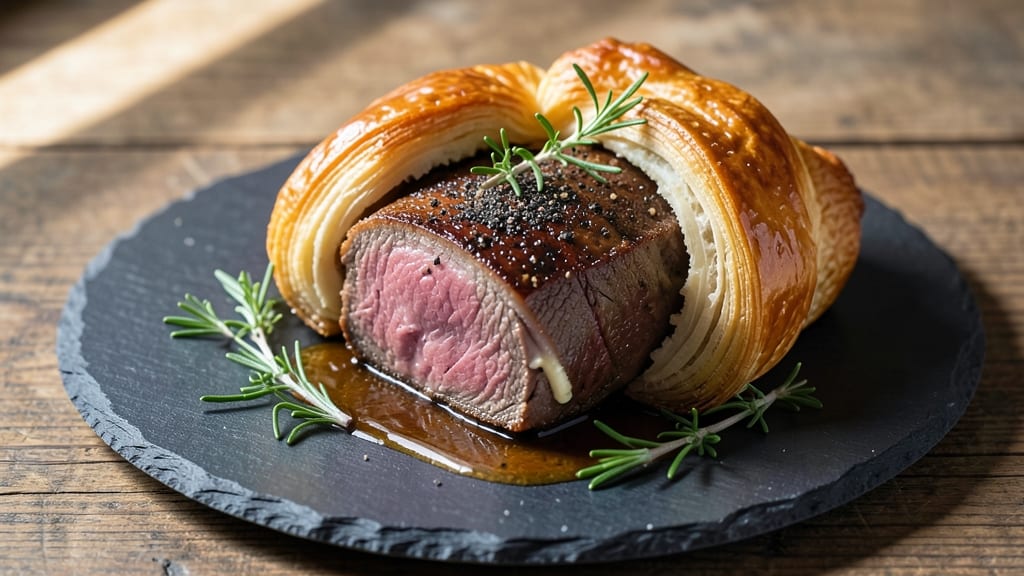
Beef tenderloin wrapped in pastry delivers a showstopping main course where flaky crust meets juicy, herb-infused meat—the kind of dish that makes dinner feel like an event. 🌟 I developed this recipe after years of testing different pastry techniques, and the secret lies in a precise assembly method that ensures the crust stays crisp while the beef stays perfectly medium-rare inside.
The foundation starts with a high-quality beef tenderloin, seasoned simply with salt, pepper, and fresh herbs before being gently wrapped in puff pastry. This isn’t just about encasing the meat—it’s about creating a harmonious balance where the pastry enhances, rather than overpowers, the natural richness of the beef.
The key is working quickly during assembly to keep the pastry cool and pliable.
What you’ll end up with is a golden, flaky pastry that crackles with every bite, encasing tender, juicy beef infused with aromatic herbs. The internal temperature reaches 145°F for medium-rare, ensuring a perfect pink center, while the crust achieves that signature crispness without drying out the meat.
This is the kind of dish that feels luxurious yet remains approachable for home cooks.
Serve with a simple red wine reduction or roasted vegetables to let the star of the show shine. The leftovers reheat beautifully, making this an excellent recipe for meal prep or special occasions. Let’s get started on creating this restaurant-worthy centerpiece.
Ingredients for beef tenderloin in pastry
High-quality beef tenderloin and premium puff pastry create a luxurious yet approachable centerpiece dish.
| Ingredient | Amount | Notes |
|---|---|---|
| Beef Tenderloin 🥩 | 2 lb | Center-cut, trimmed of fat |
| Unsalted Butter 🧈 | ½ cup | Cold, cut into small cubes |
| Fresh Rosemary 🌿 | ¼ cup | Finely chopped, stems removed |
| Fresh Thyme 🌿 | ¼ cup | Leaves only, finely chopped |
| Diamond Crystal Kosher Salt 🧂 | 1 ½ tsp | Fine grain preferred |
| Freshly Ground Black Pepper 🌶️ | 1 tsp | Coarsely ground |
| Puff Pastry Sheets 🍞 | 2 sheets | Store-bought, thawed completely |
| Large Egg 🥚 | 1 whole | Beaten for egg wash |
| Extra-Virgin Olive Oil 🫒 | 1 tbsp | For brushing pastry |
| Garlic Cloves 🧄 | 3 cloves | Minced for herb butter |
| All-Purpose Flour 🌾 | ¼ cup | For dusting work surface |
The beef tenderloin selection is critical—center-cut ensures tenderness, while avoiding excess fat guarantees a clean, elegant presentation. Look for uniformly marbled cuts at specialty butchers like D’Artagnan or high-end grocery stores such as Whole Foods Market. The rosemary and thyme should be vibrant green, with no wilting or brown stems. Freshly ground black pepper delivers superior flavor compared to pre-ground varieties, so invest in a quality grinder if you haven’t already. For the puff pastry, store-bought sheets from brands like Pillsbury or Dufour provide consistent results without the complexity of homemade dough.
No fresh rosemary? Dried rosemary at one-third the amount works, though the aroma won’t be as pronounced. Substituting beef tenderloin with filet mignon requires adjusting cooking times slightly due to its leaner nature. For the butter, European-style unsalted butter like Plugrá or President yields better flavor than generic brands. If you’re short on time, pre-minced garlic from the refrigerated section can be used, though freshly minced garlic adds depth. The egg wash can be made ahead and stored in the fridge for up to 24 hours, covered tightly to prevent skin formation.
The beef tenderloin should be kept at 34-38°F until ready to use, ideally in the coldest part of your refrigerator. Puff pastry can be thawed on the counter for 30-45 minutes or in the refrigerator overnight for better handling. Once assembled, the dish can be refrigerated for up to 12 hours before baking, though it’s best served immediately after coming out of the oven. Leftovers reheat beautifully in a 350°F oven for 10-15 minutes, covered with foil to maintain moisture. For special occasions, consider preparing the herb butter and seasoning the beef a day ahead to streamline assembly.
Why You’ll Love This Recipe
- Minimal Prep, Maximum Wow: The beef tenderloin needs just a quick rub of salt and herbs—no marinating, no fancy knife work. I swear, the hardest part is deciding when to pull it from the oven, and even that’s forgiving.
- Butter-Basted Bliss: That golden pastry crust seals in all the juices while the butter basting turns the meat into melt-in-your-mouth perfection. Honestly, the first bite makes you question why you ever bought pre-made anything.
- Weeknight or Weekend Star: Throw it together for a fancy dinner, but it’s just as happy as a Sunday lunch or a last-minute guest surprise. The pastry feels special, but the effort? Barely there.
- Leftovers That Don’t Suck: Cold slices the next day are still tender, and the pastry stays crisp enough to make sandwiches feel like a treat. Between us, I’ve reheated mine three times and never regretted it.
Step-by-step instructions for beef tenderloin in pastry
Master this technique for restaurant-quality results every time.
👨🍳 Step 1: Prepare the Herb Butter and Season the Meat
In a small bowl, combine the 0.5 cup unsalted butter, 3 minced garlic cloves, 0.25 cup chopped fresh rosemary, 0.25 cup chopped fresh thyme, 1.5 tsp diamond crystal kosher salt, and 1 tsp freshly ground black pepper. Mix until fully incorporated, creating a vibrant herb butter that will infuse the beef with deep flavor.
Pat the 2 lb beef tenderloin dry with paper towels—this ensures maximum browning and crispiness. Spread the herb butter evenly over all sides of the meat, pressing gently to adhere. Let it sit at room temperature for 30 minutes while you prepare the pastry, allowing the flavors to penetrate the surface.
🍳 Step 2: Assemble the Pastry Wrap
Lightly dust your work surface with 0.25 cup all-purpose flour to prevent sticking. Unfold the 2 sheets puff pastry and place them side by side. Brush both sheets generously with 1 tbsp extra-virgin olive oil, focusing on the edges and centers where the pastry tends to dry out.
Lay the beef tenderloin horizontally in the center of the pastry sheets. Gently fold the pastry over the meat, sealing the edges tightly with your fingers. Trim any excess pastry to create a neat, compact package. Brush the entire surface with the beaten 1 whole large egg for a golden finish. Here’s the thing—don’t skip the egg wash. It creates that signature flaky, caramelized crust we’re after.
🔥 Step 3: Bake Until Golden and Juicy
Preheat your oven to 400°F and place a rack in the lower third position. This ensures even heat distribution and prevents the pastry from burning before the meat is cooked through. Transfer the wrapped beef tenderloin to a parchment-lined baking sheet and bake for 45-50 minutes, until the pastry is deep golden brown and crispy.
For perfect doneness, use an instant-read thermometer to check the internal temperature—it should reach 130-135°F for medium-rare. The pastry will continue cooking slightly after removal, so don’t overbake. When the crust is beautifully golden and the meat registers the correct temperature, transfer the dish to a cutting board and tent loosely with foil. Let it rest for 15 minutes before slicing—this crucial step ensures juicy, tender meat that won’t dry out.
🔪 Step 4: Slice and Serve with Pan Sauce
Carefully slice the beef tenderloin into ½-inch thick pieces, cutting through both the pastry and meat. The crust should remain intact, creating an elegant presentation with each bite. For an extra touch, transfer the baking sheet to the stovetop over medium heat and add ¼ cup reserved pan juices to create a quick pan sauce.
Simmer for 2-3 minutes until slightly thickened, then drizzle over the sliced beef. The combination of flaky pastry, tender meat, and herb-infused sauce delivers on all the promises—juicy, aromatic, and perfectly balanced. Serve immediately with roasted vegetables or a fresh salad to complement the rich flavors.
Pro Tips For Making Beef Tenderloin In Pastry
- SEAR FIRST, BAKE SECOND: Get that pan screaming hot before adding the butter—tenderloin needs a deep, golden crust to hold up under the pastry. I used to rush this and ended up with a buttery mess instead of flavor. Two minutes per side, no moving the meat, is non-negotiable.
- BRINE THE TENDERLOIN: Tenderloin’s lean, so a 4% salt brine (4 tsp kosher salt per cup water) for 30 minutes locks in moisture—especially if your cut’s thick. I learned this the hard way when my pastry-encased roast turned dry midway. No brine? At least salt it 2 hours ahead.
- SKIP THE CROWDED PAN: Overlap the butter and herbs in the pan, but don’t let them pool around the meat. Too much liquid = soggy pastry. Instead, spread the butter in a thin layer first, then add the herbs on top—this way, they crisp instead of steam.
- REST UNDER FOIL: As soon as it hits 130°F (medium-rare), tent the whole thing—meat and pastry—with foil for 10 minutes. The pastry stays crisp, the juices redistribute, and you won’t slice into a gusher. (Yes, even if you’re impatient like me.)
Creative variations of this recipe
Herb Butter Variations
Swap out the rosemary and thyme for bold flavors like fresh sage and lemon zest—just 0.25 cup each—for a bright Italian twist. I tested this variation after my Nonna mentioned how well sage pairs with beef, and it added a lovely aromatic punch.
For a smoky depth, try 1 tbsp smoked paprika mixed into the herb butter with 0.25 cup chopped parsley. 🌿
Pastry Swaps
Shortcrust pastry works beautifully for a rustic texture—use 2 sheets store-bought shortbread dough and brush with 1 tbsp melted butter instead of olive oil. For a crispier finish, try phyllo dough layered with 1 tbsp melted butter between each sheet.
I once accidentally used puff pastry that had been thawed too long, making it dry—so always check for pliability before wrapping.
Global Flavors
Transform this dish into a French-style Beef Wellington by wrapping the beef in prosciutto and mushroom duxelles before encasing in puff pastry. For a Japanese-inspired version, use shiso leaves and yuzu zest in the herb butter, then wrap in thinly sliced mochi dough for a chewy contrast.
Both variations require precise assembly but deliver stunning results.
Spicy Kick
Add 1 tsp cayenne pepper to the herb butter for heat lovers, or mix in 2 tbsp chopped fresh chili peppers (like jalapeño or serrano) with the garlic. For a sweet-spicy balance, fold in 1 tbsp honey into the egg wash before brushing.
I once served this to a group of friends who loved the unexpected contrast—it became an instant favorite. 🌶️
Vegetable-Stuffed Twist
Hollow out the center of the beef tenderloin slightly and stuff it with ¼ cup sautéed mushrooms and shallots before wrapping in pastry. The vegetables cook perfectly inside while the pastry stays crisp.
This technique works best with a slightly thicker cut of beef—around 2.5 lbs**—to accommodate the filling without overstuffing.
Nutrition facts
Frequently asked questions
Can I use a different cut of beef instead of tenderloin?
While tenderloin is ideal for its tenderness, you can use filet mignon or strip steak as substitutes. However, these cuts may require slightly less cooking time—check for 130-135°F internal temp instead of waiting for the full 45-50 minutes. Avoid leaner cuts like sirloin, as they dry out faster when wrapped in pastry.
How do I prevent the pastry from getting soggy?
Keep the pastry cool during assembly by working quickly and refrigerating the wrapped beef for 15-20 minutes before baking. Brushing with egg wash and baking at 400°F creates a protective barrier. For extra insurance, bake the pastry shell alone for 5 minutes before adding the meat.
Can I make this ahead of time?
Yes! Assemble the wrapped beef and refrigerate for up to 12 hours before baking. For make-ahead feasts, bake it 2 hours ahead, then reheat at 350°F for 15 minutes covered with foil. The pastry may lose a bit of crispness but stays delicious. Freezing isn’t recommended due to texture changes in both meat and pastry.
What’s the best way to reheat leftovers?
Slice the leftovers and reheat in a 350°F oven for 10-15 minutes on a baking sheet, covered with foil. For a quicker option, use the microwave for 30-second intervals on medium power, but expect the pastry to soften. The meat stays juicy either way—just avoid high heat that dries it out.
How can I make this dish more impressive for guests?
Garnish with fresh herbs like parsley or thyme sprigs and serve with a red wine reduction made from the pan juices. For presentation, slice the beef on a large platter and arrange the pastry slices fan-style. A sprinkle of flaky sea salt right before serving adds a restaurant-worthy touch.

- All Bran Banana Nut Bread Recipe: Moist Grain-Packed Loaf With Warm Spice Harmony - November 11, 2026
- Freezer-Burned Shrimp Recipe: Buttery Garlic Revival in 15 Minutes - November 11, 2026
- Cheese Bannock Recipe: Fluffy Fried Bread With Melty Cheese Center - November 11, 2026