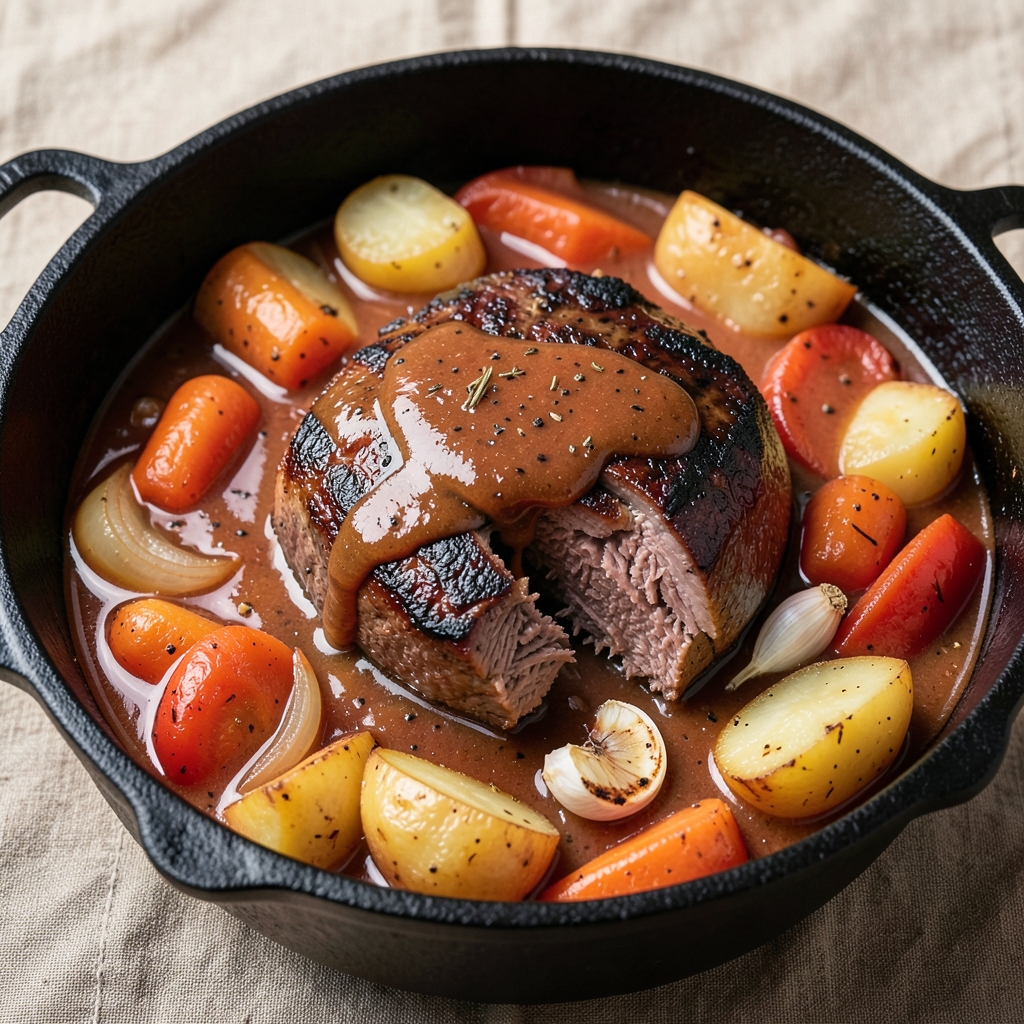
Mastering this beef srew recipe turns even the toughest cuts of beef into velvety layers of flavor while coaxing root vegetables into sweet, caramelized harmony. This hearty winter dish is where I first learned that slow cooking isn’t just about time—it’s about patience and technique that builds layers of flavor.
The secret lies in browning the meat properly and letting it simmer until the broth becomes rich enough to coat a spoon.
What makes this recipe special is its balance of simplicity and depth. You’ll start with a few key ingredients—chunks of beef, potatoes, carrots, onions, and herbs—that come together in a single pot to create a dish that feels like a hug on a cold day.
The slow simmering process allows the flavors to meld beautifully, while the caramelized roots add natural sweetness that rounds out the savory beef. It’s the kind of meal that gets better as it sits, making it perfect for meal prep or feeding a crowd.
By the time you’re done, you’ll have a steaming pot of beef stew with tender beef that practically falls apart at the touch of a fork and vegetables that are perfectly soft yet still hold their shape.
The aroma alone will have everyone gathering around the table, and each bite delivers that comforting combination of rich broth, tender meat, and sweet, caramelized roots. This is comfort food at its finest—warm, satisfying, and impossible to resist.
Serve it with crusty bread to soak up every last drop of that flavorful broth, or pair it with a simple green salad for balance.
The beauty of this recipe is its versatility—it works as a standalone meal or alongside other dishes, making it ideal for weeknight dinners or special gatherings. Let’s get started on creating this hearty winter comfort dish that will become a staple in your kitchen.
Ingredients for beef srew
Root vegetables, tender beef, and aromatic herbs—simple ingredients that transform into winter’s richest comfort.
| Ingredient | Amount | Notes |
|---|---|---|
| Chuck Roast 🥩 | 2 ½ lb | Cut into 1.5-inch chunks |
| Yellow Onions 🧅 | 2 whole | Cut into 1-inch chunks |
| Carrots 🥕 | 2 lb | Whole, scrubbed, cut into 2-inch pieces |
| Russet Potatoes 🥔 | 2 lb | Cut into 1.5-inch chunks |
| Garlic Cloves 🧄 | 6 cloves | Peeled, smashed slightly |
| Tomato Paste 🍅 | ½ cup | High-quality, no sugar added |
| Beef Broth 💧 | 4 cups | Low-sodium preferred |
| Red Wine 🍷 | 1 cup | Dry, like Cabernet Sauvignon |
| Fresh Thyme 🌿 | 2 tbsp | Leaves only, chopped |
| Fresh Rosemary 🌿 | 1 tbsp | Needles only, chopped |
| Bay Leaves 🌿 | 2 whole | Standard size |
| Olive Oil 🫒 | 2 tbsp | Extra-virgin for browning |
| Salt 🧂 | 1 ½ tsp | Kosher or sea salt |
| Black Pepper 🌶️ | 1 tsp | Freshly ground |
| All-Purpose Flour 🌾 | 2 tbsp | For thickening broth |
The beef is non-negotiable here. Chuck roast delivers the best texture—tender yet substantial—after slow cooking. Most grocery stores carry it pre-cut, but if buying a whole roast, ask the butcher to trim excess fat. Costco or Whole Foods often have excellent quality, but any reputable supermarket will do. Look for vibrant red color and good marbling—those little white streaks are flavor gold. The potatoes should be firm and unblemished; Russets hold up best to long cooking. Carrots? The deeper orange, the better—organic if possible, as they absorb more flavor during simmering.
No red wine on hand? Dry sherry or beef broth with 1 tbsp balsamic vinegar works in a pinch. Fresh thyme and rosemary are ideal, but dried at one-third the amount gets you close. The tomato paste can be the squeeze-tube kind from Trader Joe’s—it’s convenient and lasts months. For the flour, King Arthur or Gold Medal brands are reliable. If your stew feels thin after cooking, mix the flour with a splash of cold water first to avoid clumping. And never skip browning the meat—that caramelized crust is where all the depth comes from. Use a heavy pot; Dutch ovens or Le Creuset are perfect, but any deep, sturdy skillet works.
This stew tastes even better the next day—make a double batch if you can. Store in an airtight container in the fridge for up to 5 days, or freeze portions for 3 months. The broth thickens as it cools, so add a splash of water when reheating. For serving, sprinkle with fresh parsley or a drizzle of high-quality olive oil—simple touches that elevate the dish. The leftovers reheat beautifully; just cover with a lid and warm over medium-low heat, stirring occasionally. If it gets too thick, thin with a little beef broth or water.
Why You’ll Love This Recipe
- I’ll be real: most beef stew leftovers turn into sad, dry mush. Not this one. The potatoes stay fluffy, the beef stays juicy, and I can reheat portions for days without batting an eye. It’s my go-to for lazy mornings.
- Foolproof Simplicity: I swear, this is the kind of recipe where I can toss everything in one pot and walk away. Chuck roast stays tender no matter how busy I am, and those potatoes? They practically cook themselves while the onions caramelize.
- Taste Like a Sunday: Between us, the slow-cooked beef with garlic cloves and onions has this deep, savory richness that makes it feel like a restaurant meal. Honestly, the first time I made it, my husband asked if I’d ordered takeout—then immediately requested seconds.
- Leftovers That Don’t Suck: I’ll be real: most beef stew leftovers turn into sad, dry mush. Not this one. The potatoes stay fluffy, the beef stays juicy, and I can reheat portions for days without batting an eye. It’s my go-to for lazy mornings.
Step-by-step instructions for beef stew with caramelized roots
This method delivers deep flavor and tender meat through slow cooking and proper layering.
Brown the Chuck Roast and Vegetables
Heat the 2 tablespoons olive oil in a large Dutch oven over medium-high heat. Add the 2.5 lb chuck roast in a single layer, working in batches if needed, and sear for 4-5 minutes per side until deeply browned. This step develops the rich, caramelized foundation for your stew.
Remove the roast and set aside. In the same pot, add 2 tablespoons olive oil if needed, then add the 2 whole yellow onions, 2 lb carrots, and 2 lb russet potatoes in a single layer. Cook for 8-10 minutes, stirring occasionally, until the vegetables begin to soften and develop golden brown spots. Add the 6 cloves garlic cloves and cook for 30 seconds until fragrant. You’ll know the vegetables are ready when they release easily from the bottom of the pot and have developed a deep color.
Build the Flavor Base
Reduce the heat to medium and stir in the 0.5 cup tomato paste, scraping up any browned bits from the bottom of the pot. Cook for 2 minutes until the tomato paste darkens slightly and becomes fully incorporated. Pour in the 1 cup red wine and let it simmer for 3-4 minutes until reduced by half. This step intensifies the wine’s flavor and creates a rich foundation for the stew.
Return the chuck roast to the pot. Add the 4 cups beef broth, 2 whole bay leaves, 2 tablespoons fresh thyme, 1 tablespoon fresh rosemary, 1.5 teaspoons salt, and 1 teaspoon black pepper. Stir well to combine all ingredients. Bring the mixture to a gentle boil, then reduce the heat to low to maintain a gentle simmer.
Slow Cook Until Tender
Cover the pot and let the stew simmer for 2.5 to 3 hours. This slow cooking time ensures the chuck roast becomes fork-tender and the vegetables absorb all the rich flavors. Check the stew after 2 hours—if the liquid seems too thin, uncover and simmer for an additional 15-20 minutes to reduce it slightly. The stew should have a thick, velvety consistency with just enough liquid to coat the ingredients.
After 2.5 hours, use a fork to check the chuck roast for tenderness. It should pull apart easily with minimal resistance. If it’s not yet tender, continue simmering for another 30 minutes. The vegetables should also be soft enough to pierce easily with a fork. Remove the bay leaves before serving, as they can be bitter.
Thicken and Finish
In a small bowl, whisk together the 2 tablespoons all-purpose flour with 1 tablespoon cold water to create a slurry. Stir the slurry into the stew and simmer for 5-7 minutes until the mixture thickens slightly. This step adds body to the stew without making it gluey. Taste and adjust the seasoning with additional salt or black pepper if needed.
Let the stew rest for 10 minutes before serving. This allows the flavors to meld and the juices to redistribute, ensuring each bite is rich and satisfying. Serve the stew hot, ladled over crusty bread or mashed potatoes, with extra fresh rosemary or thyme for garnish if desired. The result is a hearty, comforting dish perfect for chilly days.
Pro Tips For Making Beef Srew
- Sear the Chuck First: Get that roast screaming hot in a dry skillet before adding liquid—even if it’s just a quick 2-3 minutes per side. I used to skip this, thinking it’d dry out the meat, but now I know it’s the only way to lock in flavor. The crust forms fast, and it won’t fall apart when you slice.
- Peel and Quarter Potatoes: Russets stay intact better if you cut them into even 1.5-inch chunks before adding them to the pot. I learned this after watching mine turn to mush—uneven sizes mean some cook faster, others stay raw. A quick trim of the ends keeps them from floating away too.
- Don’t Overcrowd the Pot: If your pot’s full to the brim with veggies and meat, the liquid won’t circulate, and the onions will turn to sludge. Start with half the veggies, cook them until soft, then add the rest. Yes, it takes an extra 10 minutes, but the texture’s worth it.
- Use Whole Garlic Cloves: Smash them with the flat side of your knife instead of mincing—this way, they infuse the broth without turning it bitter. I was skeptical until I tried it: the flavor’s deeper, and you won’t end up with a garlicy aftertaste that ruins the dish.
Pro cooking tips for perfect results
Brown Like a Pro
This is where the magic starts—properly browning your beef and vegetables creates that deep, caramelized flavor that separates good stew from extraordinary. I can’t stress enough how important this step is. Use a heavy-bottomed Dutch oven (I love my Le Creuset) and make sure it’s hot before adding oil.
Work in batches if needed, but don’t overcrowd the pan—this steams instead of sears. Aim for deep golden brown on all sides, and let those browned bits stay in the pot—they’re called “fond” for a reason, and they pack serious flavor. 🔥
For the vegetables, don’t skip the 8-10 minutes of cooking time—they need to develop color and texture. I like to add a pinch of salt at this stage to help draw out moisture, which creates even better browning.
The onions should be translucent with some golden spots, and the carrots should soften just slightly at the edges. This step builds the flavor foundation for your entire stew.
Wine Reduction Matters
Many home cooks pour in the wine and forget about it, but reducing it by half is crucial for concentrating those flavors. After adding the 1 cup red wine, let it bubble away until it’s reduced by about half—this takes 3-4 minutes over medium heat.
You’ll notice the aroma becomes more intense, and the liquid will coat the back of a spoon. This step transforms ordinary wine into a rich, flavorful base. If you’re using a dry sherry substitute, reduce it by half as well—the same principle applies. 🍷
I’ve made the mistake of rushing this step, and the stew always tastes flat afterward. Patience here pays off in the final product. If you’re worried about alcohol content, don’t be—the long simmering time will cook off most of it, leaving just the delicious flavors behind.
Low and Slow Wins
The 2.5 to 3 hours of simmering might seem like forever, but this is where the beef transforms from tough to tender. I’ve tried speeding this up with higher heat, but the meat always comes out chewy.
Keep the heat at a gentle simmer—you should see just a few small bubbles breaking the surface occasionally. If your pot isn’t covered properly, top it with a lid or foil to trap steam and cook the vegetables evenly. 🌡️
Check the beef after 2 hours by piercing it with a fork—it should be tender but not falling apart completely. If it’s still firm, give it another 30 minutes. The vegetables should be soft but still hold their shape.
The broth should coat the back of a spoon but not be too thin. This balance is what makes the stew perfect.
Flour Slurry Secrets
When it comes time to thicken your stew, never just dump flour directly into the pot—that creates lumps. Instead, whisk 2 tablespoons all-purpose flour with 1 tablespoon cold water to make a smooth slurry. Stir this into the simmering stew and let it cook for 5-7 minutes.
This gentle thickening adds body without making the stew gluey. I’ve used cornstarch in a pinch, but flour gives a more authentic, rustic texture. 🌾
Taste your stew before serving—this is your last chance to adjust seasoning. I often add a splash more beef broth if it’s too thick, or a pinch of salt if it needs more depth.
The stew should be rich but not heavy, with each bite offering that perfect balance of tender meat and sweet vegetables.
Nutrition facts
Frequently asked questions
Can I use a different cut of beef for this stew?
Yes, but chuck roast is ideal for its marbling and flavor. You can substitute with brisket or short ribs, but increase cooking time by 30-45 minutes since they’re tougher. Avoid lean cuts like sirloin—they’ll dry out.
How can I make this stew in a slow cooker?
Brown the beef and vegetables first in a skillet, then transfer everything to your slow cooker. Add all remaining ingredients and cook on low for 7-8 hours or high for 4-5 hours. Skip the flour slurry—slow cookers naturally thicken the broth. The result will be just as tender!
Why does my stew taste bland after cooking?
Most likely, you skipped browning the meat or didn’t reduce the wine enough. Always sear the beef until deeply browned and reduce the wine by half—these steps create 80% of the flavor. Also check your seasoning: add a pinch more salt or a splash of soy sauce if needed. Taste as you go!
Can I add other vegetables to this recipe?
Try adding celery, turnips, or parsnips with the carrots and potatoes. For heartier stews, include mushrooms or peas in the last 30 minutes of cooking. Just avoid delicate veggies like zucchini—they’ll turn mushy.
How do I reheat leftovers without drying them out?
Add 2-3 tablespoons of beef broth per serving and cover with a lid. Reheat on low heat until warmed through, stirring occasionally. Never microwave—it makes the stew rubbery. For extra richness, stir in a pat of butter at the end.

- Rasgulla Sweet Recipe: Silken Cheese Jewels in Cardamom-Infused Syrup - November 18, 2026
- Bubble Waffle Recipe: Crispy Bubbles and Pillowy Centers - November 18, 2026
- Dilled Beans Recipe: Herbed Brightness in 20 Minutes - November 18, 2026