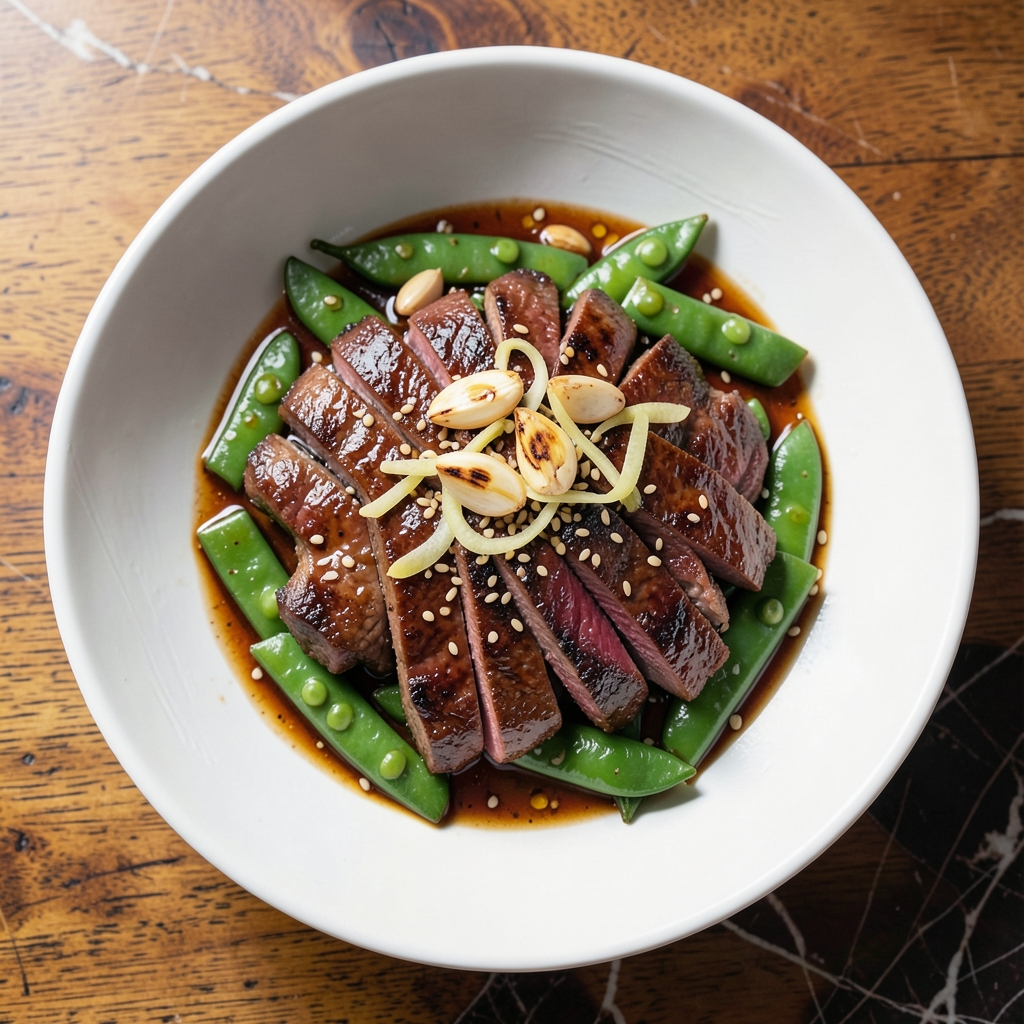
Mastering a beef snow pea stir fry with perfectly tender beef and bright, crisp snow peas transforms weeknight dinners into restaurant-quality meals.
I learned this technique during a Boston winter when I needed something quick yet impressive—no takeout could compete with the aroma of garlic, ginger, and searing beef filling my kitchen. The secret lies in high-heat stir-frying and precise timing to lock in both texture and flavor.
This recipe delivers crisp-tender beef strips and vibrant snow peas in just 20 minutes, all while keeping the sauce glossy and balanced. I use thinly sliced flank steak for quick cooking and a simple soy-ginger sauce that enhances rather than overpowers the natural flavors.
The method is straightforward but demands attention to heat control—too low, and the beef turns tough; too high, and the snow peas stay crunchy while the beef overcooks.
By the time you plate it—steaming rice beneath a mound of stir-fried beef, snow peas, and glistening sauce—you’ll have a dish that’s elegant yet effortless. The contrast of tender beef, bright green peas, and aromatic sauce makes every bite satisfying.
Serve with steamed jasmine rice or noodles to soak up every last drop of that flavorful sauce.
For those who love variations, try adding red bell peppers for sweetness or a splash of oyster sauce for depth. The technique scales easily—double the ingredients for a crowd, or halve for a single serving. Let’s get cooking!
Ingredients for beef snow pea stir fry
Quick stir-fry essentials that deliver restaurant-quality flavor in 20 minutes.
| Ingredient | Amount | Notes |
|---|---|---|
| Flank Steak 🥩 | 1 lb | Thinly sliced against grain |
| Snow Peas 🌱 | 2 cups | Fresh, trimmed and halved |
| Garlic Cloves 🧄 | 4 cloves | Minced, fresh preferred |
| Fresh Ginger 🌿 | 1 ½ tbsp | Finely grated, peeled |
| Soy Sauce 🍶 | ⅓ cup | Low-sodium preferred |
| Sesame Oil 🫒 | 1 tbsp | Toasted, for aroma |
| Vegetable Oil 🫒 | 2 tbsp | High smoke point |
| Honey 🍯 | 1 tbsp | Pure, for balance |
| Rice Vinegar 🍶 | 1 tbsp | White, for brightness |
| Cornstarch 🌾 | 1 tbsp | For velveting beef |
| Salt 🧂 | ½ tsp | Kosher or sea salt |
| Black Pepper 🌶️ | ¼ tsp | Freshly ground |
| Sesame Seeds 🌱 | 1 tbsp | Toasted, for garnish |
The flank steak is non-negotiable here—its lean texture cooks fast and stays tender when sliced against the grain. Trader Joe’s and Whole Foods carry excellent pre-sliced options, but if you’re buying whole, ask the butcher to slice it thinly. Fresh ginger and garlic? Penzeys or your local Asian market have the freshest—look for plump, firm ginger roots and cloves with no green sprouts. Snow peas should be bright green and crisp; avoid any with yellowing pods. The vegetable oil needs a high smoke point—avocado or grapeseed oil works best for searing.
No flank steak? Sirloin or ribeye sliced thin will work, but slice against the grain for tenderness. Short on snow peas? Mangetout or regular peas add sweetness, though the texture differs slightly. Swap sesame oil for toasted peanut oil if you prefer. The cornstarch is key for velveting—don’t skip it. For a vegetarian version, use extra-firm tofu pressed and cubed. The honey and rice vinegar balance the soy sauce perfectly, but maple syrup plus apple cider vinegar works in a pinch. Always taste as you go—adjust vinegar for brightness or honey for sweetness.
Prep ahead by slicing the beef and grating the ginger first—keeps everything ready for the quick cook. The sauce components (soy, honey, vinegar) can be mixed in advance and stored for up to 1 week in the fridge. For leftovers, refrigerate within 2 hours—the stir-fry reheats best gently in a skillet with a splash of water. Garnish with toasted sesame seeds right before serving; they lose crispness when stored. This reheats beautifully for lunches—just add a splash of water to deglaze the pan.
Why You’ll Love This Recipe
- One-Pan Magic: I swear by this for nights when I’m too tired to scrub pots—just the steak, snow peas, and garlic sizzling in one pan. The ginger and soy sauce caramelize right into the beef, so you’re left with minimal cleanup and maximum flavor.
- Umami Bomb: That first bite? The flank steak stays juicy but gets this irresistible crispy edge from the high-heat sear, while the snow peas add a satisfying crunch. Honestly, the balance of salty, sweet, and garlicky is what keeps me coming back.
- Lunchbox Hero: Between us, this is my go-to for meal prep because it reheats like a dream—no soggy snow peas here. Pack it in containers, and you’ve got a lunch that tastes fresh, not like yesterday’s sad leftovers.
- Budget Powerhouse: Flank steak stretches further than you’d think, and snow peas are one of the most affordable veggies out there. I make this for four people for under $15, and somehow, it always disappears faster than I can refill plates.
Step-by-step instructions for beef snow pea stir fry
Let’s create a perfect balance of tender beef and bright, crisp snow peas with this straightforward method.
Prepare the Flank Steak for Velveting
Begin by slicing the 1 lb flank steak thinly against the grain into ¼-inch thick strips. This cut ensures maximum tenderness. In a small bowl, combine the 1 tbsp cornstarch, 0.33 cup soy sauce, 1 tbsp honey, and 1 tbsp rice vinegar. Add the sliced steak to this marinade and toss gently to coat evenly. Let it sit for 15 minutes at room temperature while you prepare the rest of your ingredients.
The cornstarch creates a delicate coating that helps the beef retain moisture while developing a subtle sheen. This velveting technique is what transforms tough flank steak into fork-tender slices. Don’t skip this step—it’s the secret to achieving that perfect texture we’re after.
Build the Flavor Base with Aromatics
Heat 2 tbsp vegetable oil in a large wok or skillet over medium-high heat until shimmering. Add the 4 cloves minced garlic and 1.5 tbsp finely grated fresh ginger, stirring constantly for 30 seconds until fragrant but not browned. This quick cooking preserves their bright flavors without bitterness.
Next, add the 2 cups trimmed and halved snow peas and stir-fry for 2-3 minutes until they begin to soften slightly but still retain their vibrant green color. The high heat ensures they stay crisp rather than becoming mushy. Keep the pan moving constantly—this is where even cooking makes all the difference.
Cook the Beef to Perfect Tenderness
Remove the steak from the marinade, letting any excess drip back into the bowl (don’t discard this!). Add the beef to the wok in a single layer and cook undisturbed for 1-2 minutes until the bottoms develop a golden crust. This initial sear locks in juices while creating flavor. Flip the beef and cook another 1-2 minutes until it reaches 145°F internally and pulls away from the pan easily.
Here’s where precision matters: you want the beef tender but not overcooked. If it releases easily from the pan with a gentle nudge, it’s ready. The cornstarch coating will help it finish cooking perfectly in the final stir-fry. Remove the beef to a clean plate and set aside, tented with foil to keep warm.
Combine and Finish the Stir Fry
Return the wok to high heat and add 1 tbsp sesame oil. Pour in the reserved marinade from the beef bowl and scrape up any browned bits from the bottom with a wooden spoon. Add the cooked beef back to the wok along with the snow peas, tossing everything together for 1-2 minutes until thoroughly heated through and coated in the glossy sauce.
The sesame oil adds that final aromatic punch while the residual heat from the pan finishes cooking the beef to perfect tenderness. Taste and adjust seasoning with 0.5 tsp salt and 0.25 tsp black pepper if needed. The sauce should be just thick enough to coat the beef and peas without being gluey.
Garnish and Serve Immediately
Transfer the beef snow pea stir fry to serving plates and immediately sprinkle with 1 tbsp toasted sesame seeds. These add a satisfying crunch and visual contrast to the dish. Serve while piping hot over steamed jasmine rice or noodles to soak up every last bit of that flavorful sauce.
This stir fry should deliver perfectly tender beef with bright, crisp snow peas in every bite. The sauce should cling beautifully to each component, offering a perfect balance of sweet, salty, and umami flavors. Don’t let it sit too long—this dish is best enjoyed immediately while everything is at its peak texture and temperature.
Pro Tips For Making Beef Snow Pea Stir Fry
- Slice Steak Against the Grain: Flank steak’s stubborn fibers mean chewy bites if you ignore this. Cut the meat after searing, slicing thinly against the grain—about ¼-inch thick—so every bite melts. (Yes, even if your knife skills are shaky, a sharp chef’s knife or meat slicer does the job.)
- Blanch Peas First: Toss snow peas in boiling water for 30 seconds before stir-frying—this softens them just enough to wilt without turning to mush. Drain well and pat dry, or they’ll steam instead of crisp up. (I learned this the hard way when my peas turned into a sad, limp pile.)
- Use Two Stages of Heat: Start flank steak in a screaming-hot pan with oil until it’s browned and crusty (2-3 minutes per side), then drop the heat to medium-high for the rest of the cook. Rushing the sear = gray, rubbery beef; dragging it out = overcooked edges.
- Ginger-Garlic Paste Saves Time: Mince garlic and ginger together into a paste with a splash of water—this keeps them from burning while releasing flavor evenly. (No food processor? A fork works, but you’ll need more elbow grease.) Skip the paste, and you’ll be playing firefighter halfway through.
Pro cooking tips for great beef snow pea stir fry
Wok Heat Control
Your wok’s temperature is the single most critical factor in this stir-fry. I always use a carbon steel wok—it heats up faster and retains heat better than cast iron. Preheat it over high heat for 5 minutes until it’s smoking slightly before adding oil.
If you’re using a skillet, ensure it’s 12-inch minimum—any smaller, and you’ll crowd the pan, leading to uneven cooking. The beef needs that high, consistent heat to sear quickly and stay tender. 🔥
Velveting the Beef
That cornstarch marinade is non-negotiable for tender beef. I learned this trick from my Nonna’s old Italian recipes—she’d use flour for chicken, but cornstarch works better for beef. Let the beef sit in the marinade for exactly 15 minutes—no longer, or it’ll start to toughen.
When you’re ready to cook, don’t drain the marinade—those flavorful juices belong in your sauce. The cornstarch creates a thin, translucent coating that helps the beef cook evenly and stay moist. 💫
Timing the Snow Peas
Snow peas need just enough time to soften slightly—about 2-3 minutes—but they should still have crunch. Overcooking turns them mushy, and that’s a texture crime in stir-fries. I always add them after searing the beef but before the final toss.
If your peas are particularly fresh, you might only need 1-2 minutes—taste test as you go. The goal is that first satisfying crunch with every bite. ⏱️
Deglazing for Flavor
Never ignore those browned bits at the bottom of your wok—they’re packed with flavor! After removing the beef, pour in the reserved marinade and scrape vigorously with a wooden spoon (metal can scratch your wok). This deglazing step creates a richer, more complex sauce.
I like to add a splash of water or white wine at this point if the sauce seems too thick—just enough to loosen it up without diluting the flavors. 🍷
Sesame Oil Finish
The sesame oil should be added at the very end—just before serving. Heat it in the wok for 10 seconds until fragrant, then toss it with the stir-fry. This adds that nuttiness and aroma without overpowering the dish.
If you’re using toasted sesame oil, skip the heating—it’s already flavorful. A little goes a long way, so don’t overdo it. The oil should enhance, not dominate, the dish. 🌟
Resting the Beef
After searing, always rest the beef for 2-3 minutes before combining with the peas. This lets the juices redistribute, ensuring maximum tenderness. I cover it loosely with foil to keep it warm.
If you skip this step, the beef will release juices into the pan, making the final stir-fry soggy. Trust me—this small pause makes a huge difference in texture. ⏰
Nutrition facts
Frequently asked questions
Can I substitute flank steak with another cut of beef?
Yes! Sirloin or ribeye work well, but always slice thinly against the grain for tenderness. Flank steak is ideal because it’s lean and cooks quickly, but avoid tougher cuts like chuck—they won’t tenderize properly in this method.
How do I keep the snow peas crisp instead of mushy?
Cook them for just 2-3 minutes over high heat—they should soften slightly but stay vibrant green. Overcrowding the pan also causes steaming. For extra crunch, add them after searing the beef but before the final toss. Fresh peas need less time than frozen.
What if I don’t have cornstarch for velveting?
Use 1 tbsp all-purpose flour or arrowroot powder instead—they’ll still help tenderize the beef. Just whisk the substitute into the marinade until smooth. The texture won’t be exactly the same, but your beef will still be more tender than without it.
Can I make this stir-fry ahead of time?
Prep the sauce and marinade 1 day ahead, but cook the stir-fry fresh—it’s best served immediately. If reheating leftovers, use a skillet over medium heat with a splash of water to revive the sauce. Store cooked portions for up to 3 days in the fridge.
Why does my beef turn out tough?
Overcooking is the #1 culprit! Keep heat high and cook beef for only 1-2 minutes per side. Also, slice against the grain and use the cornstarch marinade—both prevent toughness. If your beef still feels chewy, it likely overcooked. Use a meat thermometer to check for 145°F internal temp.

- Lamb Shoulder Chops Crock Pot Recipe: Slow-Braised Richness With Fall-Off-Bone Tenderness - November 8, 2026
- Polo Chicken Recipe: One-Pot Herb-Roasted Comfort with Crispy Dumplings - November 8, 2026
- Diners Drive-Ins and Dives Beef Brisket Recipe: Smoky, Slow-Cooked Tenderness Unlocked - November 8, 2026