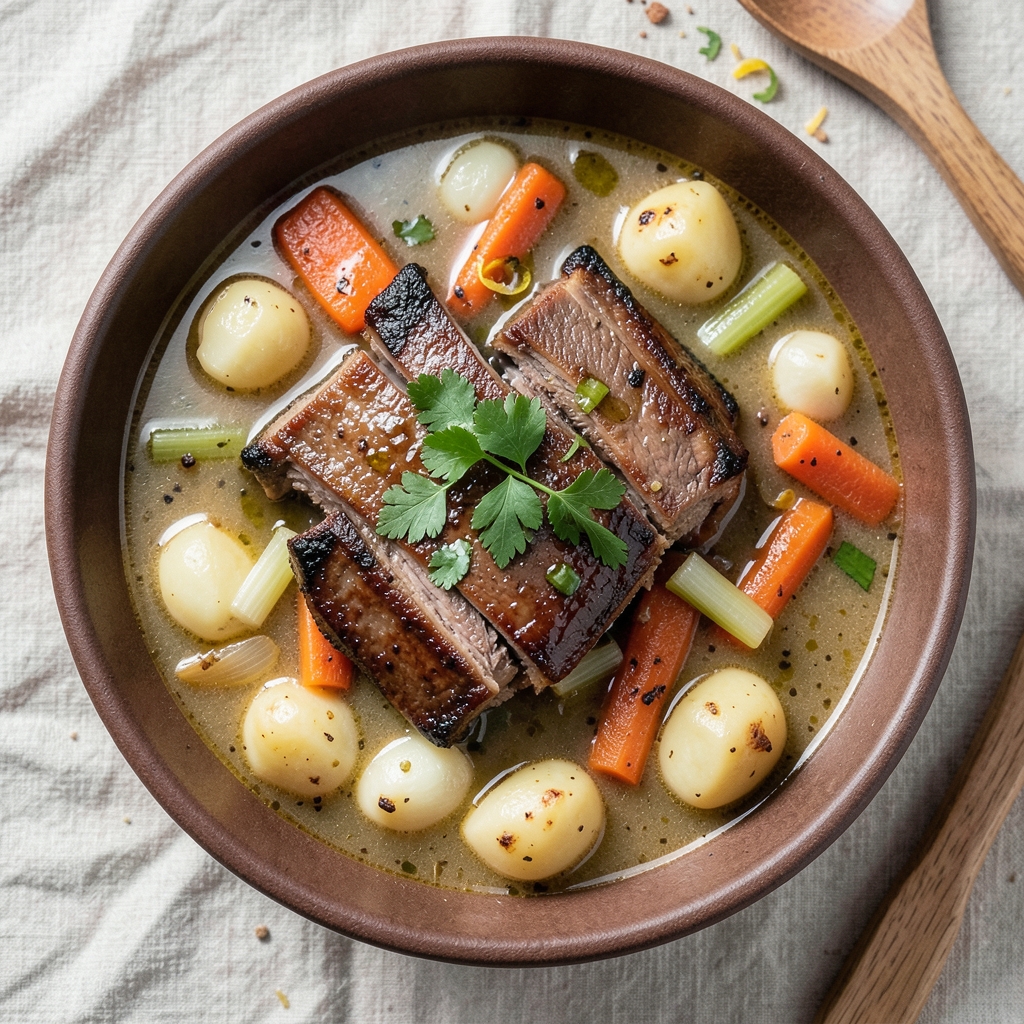
This beef short rib vegetable soup recipe transforms tough cuts into melt-in-your-mouth tenderness while caramelizing root vegetables into sweet, velvety perfection. The secret lies in slow simmering—where beef releases deep, savory richness that blends seamlessly with aromatic vegetables and herbs.
I developed this recipe after years of testing, ensuring every spoonful delivers both hearty satisfaction and balanced nutrition without sacrificing flavor.
The process begins with searing short ribs to develop a flavorful crust, then braising them until fork-tender—a method that infuses the broth with unmatched depth. Carrots, celery, and potatoes caramelize slowly, creating natural sweetness that complements the beef’s richness.
This isn’t just soup; it’s a comforting, restaurant-quality meal that feels like a hug in a bowl.
What sets this apart is the harmony of textures—tender beef, crisp edges on vegetables, and a velvety broth that coats every bite. The recipe includes options for low-sodium stock and vegetable adjustments, making it adaptable to dietary needs while keeping the core flavors intact.
Ready in about 3 hours (with minimal active time), it’s perfect for cozy weeknights or special gatherings.
Serve with crusty bread to soak up every last drop of that deep, savory broth. The garnish of fresh parsley adds a bright finish, balancing the dish’s richness. This soup proves that comfort food can be both indulgent and nourishing—a lesson I’ve perfected over countless batches.
Ingredients for beef short rib vegetable soup
Transform tough short ribs into velvety perfection with these 15 quality ingredients—each playing a key role in depth and texture.
| Ingredient | Amount | Notes |
|---|---|---|
| Beef Short Ribs 🥩 | 3 lb | Bone-in, 1-1.5 inches thick |
| Yellow Onions 🧅 | 2 whole | Medium, roughly chopped |
| Carrots 🥕 | 1 ½ lb | Medium, peeled and cut |
| Celery Stalks 🧆 | 4 whole | Medium, trimmed and chopped |
| Russet Potatoes 🥔 | 2 lb | Medium, peeled and cubed |
| Garlic Cloves 🧄 | 6 cloves | Fresh, minced finely |
| Tomato Paste 🍅 | ½ cup | High-quality, no sugar added |
| Beef Stock 💧 | 6 cups | Low-sodium, homemade preferred |
| Red Wine 🍷 | 1 cup | Bold, dry variety like Cabernet |
| Fresh Thyme 🌿 | 2 tbsp | Leaves only, chopped fine |
| Fresh Parsley 🌿 | ¼ cup | Flat-leaf, chopped for garnish |
| Olive Oil 🫒 | ¼ cup | Extra-virgin, for searing |
| Diamond Crystal Kosher Salt 🧂 | 1 ½ tsp | For seasoning, adjust to taste |
| Freshly Ground Black Pepper 🌶️ | ½ tsp | Coarsely ground |
| Bay Leaves 🌿 | 2 whole | Dried, for infusion |
The beef short ribs are the foundation—bone-in cuts from a trusted butcher yield richer flavor. Look for marbled beef with visible fat; Costco or Whole Foods carry excellent selections. Carrots and potatoes should be firm and unblemished, while celery should be crisp with no yellowing. Fresh thyme and parsley from the produce section (not dried) elevate the dish with bright, herbal notes. For tomato paste, Muir Glen or Rao’s are ideal—avoid brands with added sugar or preservatives. The beef stock can be homemade or a high-quality low-sodium brand like Knudsen or Pacific Foods.
No red wine? Substitute with additional beef stock and 1 tbsp balsamic vinegar for depth. Fresh thyme unavailable? Dried thyme works at one-third the amount, but toast it first in a dry pan for 30 seconds to intensify flavor. Prefer low-carb? Replace potatoes with 1.5 lb cauliflower florets—they’ll soften similarly. For a richer broth, add 1 tbsp Worcestershire sauce when combining liquids. The bay leaves can be omitted if you dislike their flavor, but they add subtle earthiness that complements the beef beautifully.
This soup develops deeper flavor over time—reheat gently on low heat to preserve texture. Store in airtight containers in the fridge for 4-5 days or freeze for up to 3 months. For meal prep, portion into individual containers before freezing—simply thaw and reheat. The broth thickens as it cools, so add 1-2 tbsp water or stock when reheating if needed. Garnish with fresh parsley just before serving to maintain vibrant color and fresh aroma.
Why You’ll Love This Recipe
- One-Pot Magic: I swear by this—dump everything in one pot, walk away, and come back to a meal that smells like home. The short ribs melt into the broth while the potatoes and carrots soften just enough to soak up every last bit of that rich, savory flavor.
- Deep, Rich Payoff: That first bite of tender short rib falling apart in your spoon? It’s worth the wait. The onions and celery build a sweet, caramelized base, while the potatoes add hearty texture—like a hug in a bowl, but way more satisfying.
- Leftovers That Shine: Between us, this soup only gets better the next day. The flavors meld into something even deeper, and reheating it is zero effort—just stir, taste, and adjust. My lazy Sundays now include a big pot of this warming up on the stove.
- Budget-Friendly Feast: Short ribs might sound fancy, but they stretch across multiple meals without breaking the bank. A single batch feeds four for dinner and leaves enough for two more lunches—no sad, wilted leftovers here. Plus, the veggies are cheap staples that make it feel special.
Step-by-step instructions for beef short rib vegetable soup
Transform tough beef short ribs into velvety richness with caramelized vegetables—this method delivers restaurant-quality depth.
Sear the Short Ribs for Maximum Flavor
Pat the 3 lb beef short ribs completely dry with paper towels—this ensures a proper sear. Heat 0.25 cup olive oil in a large Dutch oven over medium-high heat until shimmering. Working in batches if needed, sear the short ribs on all sides for 3-4 minutes per side until deeply browned and crust forms. This step develops the Maillard reaction, creating complex flavors that will infuse the broth.
Remove the seared ribs and set them aside. The browned fond left in the pot will form the base of your soup’s rich foundation. If the fond appears too thick, scrape it up with a wooden spoon to ensure maximum flavor extraction during the braising process.
Build the Aromatic Vegetable Base
In the same Dutch oven, add 2 whole yellow onions, 1.5 lb carrots, and 4 whole celery stalks, all chopped into ½-inch pieces. Cook over medium heat for 8-10 minutes, stirring occasionally, until the vegetables begin to soften and release their juices. This step develops their natural sweetness through caramelization.
Add 6 cloves garlic cloves and 0.5 cup tomato paste, stirring to coat the vegetables. Cook for another 2 minutes until the tomato paste darkens slightly. This creates a flavorful paste that will deepen the soup’s complexity. Pour in 1 cup red wine and scrape up any browned bits from the bottom of the pot—this deglazing step captures all the concentrated flavors.
Braise the Short Ribs and Vegetables
Return the seared short ribs to the pot. Add 6 cups beef stock, 2 whole bay leaves, 2 tbsp fresh thyme, 1.5 tsp diamond crystal kosher salt, and 0.5 tsp freshly ground black pepper. Bring to a gentle simmer—you should see small bubbles breaking the surface, but not a rolling boil. Cover the pot and transfer to a 325°F oven for 2.5 hours. This low-and-slow braising renders fat from the ribs while melting their connective tissue into gelatinous richness.
After 2 hours, check the ribs for tenderness. They should easily pull apart with a fork. If they’re not quite tender, return them to the oven for another 30-45 minutes. The broth should now be deeply colored and rich, with the ribs falling apart effortlessly. This is when you know you’ve achieved the perfect balance of texture and flavor.
Finish with Potatoes and Fresh Herbs
Remove the short ribs from the broth and shred the meat using two forks, discarding any large bones. Return the shredded meat to the pot. Add 2 lb russet potatoes, cut into 1-inch cubes, and simmer uncovered for 20-25 minutes until the potatoes are fork-tender and the broth has thickened slightly. The potatoes should absorb the broth’s rich flavors while adding a satisfying heartiness to the soup.
Stir in 0.25 cup fresh parsley and adjust the seasoning with additional diamond crystal kosher salt or freshly ground black pepper if needed. Taste the broth—it should be deeply savory with a balance of umami from the short ribs, sweetness from the carrots, and acidity from the wine. Serve immediately, garnished with extra parsley, to enjoy the soup at its peak of flavor and texture.
Pro Tips For Making Beef Short Rib Vegetable Soup
- Brown the Ribs First: I learned this the hard way—skipping the sear means flavorless broth. Sear the short ribs in batches over medium-high heat until deep brown (about 4-5 minutes per side), even if it takes time. That crust is where the rich, meaty depth comes from, and it won’t dissolve no matter how long you simmer.
- Cut Potatoes Uniformly: Russet potatoes break apart like sad bread if they’re uneven. Aim for 1.5-inch chunks—big enough to hold shape but small enough to cook through in the same time as the ribs. (Yes, even if you’re impatient like me.) Uneven pieces mean some will turn to mush while others stay rock-hard.
- Don’t Rush the Simmer: After adding the ribs and veggies, bring it to a gentle simmer—no rolling boil. Too much heat toughens the short ribs, and you’ll end up with stringy meat instead of melt-in-your-mouth tenderness. A low simmer (small bubbles, occasional skimming) keeps everything silky.
- Reserve the Broth: Strain the soup before shredding the ribs, then mix the meat back in with just enough broth to coat. This keeps the soup thick and velvety instead of watery. (I know, it sounds weird, but it works—your future self will thank you.) Save the strained broth for another use if you’re feeling extra efficient.
Flavor customization for this dish
Spicy Heat Boost
For a kick, add 1-2 tbsp of smoked paprika or ½ tsp cayenne pepper when searing the short ribs—this infuses the broth with subtle warmth. I also stir in 1-2 slices of chipotle pepper in adobo sauce during the braising phase for smoky depth.
For a spicier finish, top each bowl with crushed red pepper flakes or a drizzle of sriracha-infused olive oil. 🌶️
Herb Variations
Swap out thyme for rosemary or sage to give the soup a more earthy, piney note. I love adding 1 sprig fresh rosemary during the braising phase for a sophisticated aroma.
For a brighter finish, mix 1 tbsp chopped tarragon with the parsley garnish—its anise-like flavor pairs beautifully with the beef. Dried herbs work too, but use half the amount and toast them first.
Umami Depth
Elevate the broth’s richness by adding 1 tbsp soy sauce or 1 tsp fish sauce when combining liquids. I also stir in 1 tbsp Worcestershire sauce for a tangy, savory punch.
For extra umami, add 2-3 dried shiitake mushrooms to the braising liquid—they dissolve and infuse the broth with deep, meaty notes. 💫
Acid Balance
Brighten the soup with 1 tbsp balsamic vinegar or 2 tbsp lemon juice at the end. I often finish with a splash of apple cider vinegar to cut through the richness while adding a subtle sweetness.
For a tangy garnish, top with quick-pickled red onions—thinly slice ½ red onion, soak in ¼ cup vinegar and 1 tsp sugar for 15 minutes before draining.
Sweet Contrast
Add natural sweetness with ½ cup diced apples or pears during the final simmer. I also stir in 1 tbsp honey or maple syrup to balance the savory flavors.
For a caramelized touch, sprinkle 1 tsp brown sugar over the vegetables before adding the broth—it’ll melt into the broth for a subtle sweetness. 🍯
Texture Enhancers
Boost mouthfeel with ½ cup cooked lentils or barley added during the final simmer. For crunch, top with toasted breadcrumbs—toss ¼ cup panko with 1 tbsp olive oil and toast in a dry pan until golden. A sprinkle of crispy fried shallots** adds gourmet flair without overpowering the dish.
Nutrition facts
Frequently asked questions
Why do I need to sear the beef short ribs before braising?
Searing creates a flavorful crust (Maillard reaction) that forms the rich foundation of your soup. This step locks in juices and develops deep, caramelized notes that infuse the broth during braising. Skipping it results in a much milder flavor profile.
Can I use bone-in or boneless short ribs for this recipe?
Bone-in ribs are ideal—they add natural richness to the broth. If using boneless, reduce braising time by about 30 minutes since they cook faster. For maximum flavor, stick with bone-in cuts whenever possible.
How do I know when the short ribs are fully tender?
Ribs are done when they easily pull apart with a fork and the meat separates cleanly from the bone. This typically takes 2-2.5 hours at 325°F. If they’re still tough, extend braising by 30-45 minutes. The broth should be deeply colored and rich.
Can I make this soup in a slow cooker instead of an oven?
Yes! Sear the ribs first, then transfer everything to a slow cooker and cook on low for 8-10 hours or high for 5-6 hours. The texture will be slightly different but still delicious. Just add potatoes during the last 1-2 hours to prevent overcooking.
What if my broth turns out too thin or too thick?
For thin broth, simmer uncovered for 10-15 minutes to reduce. If too thick, stir in ½ cup warm beef stock or water. The ideal consistency coats the back of a spoon but still allows easy stirring. Adjust gradually to avoid diluting flavors.

- Lemon Pound Cake Recipe: Bright Citrus Layers With Buttery Crumb - November 18, 2026
- Spumoni Cake Recipe: Layers of Fruit, Cream, and Chocolate Magic - November 18, 2026
- Chocolate Gnache Recipe: Silky Smooth Pour With Perfect Snap - November 18, 2026