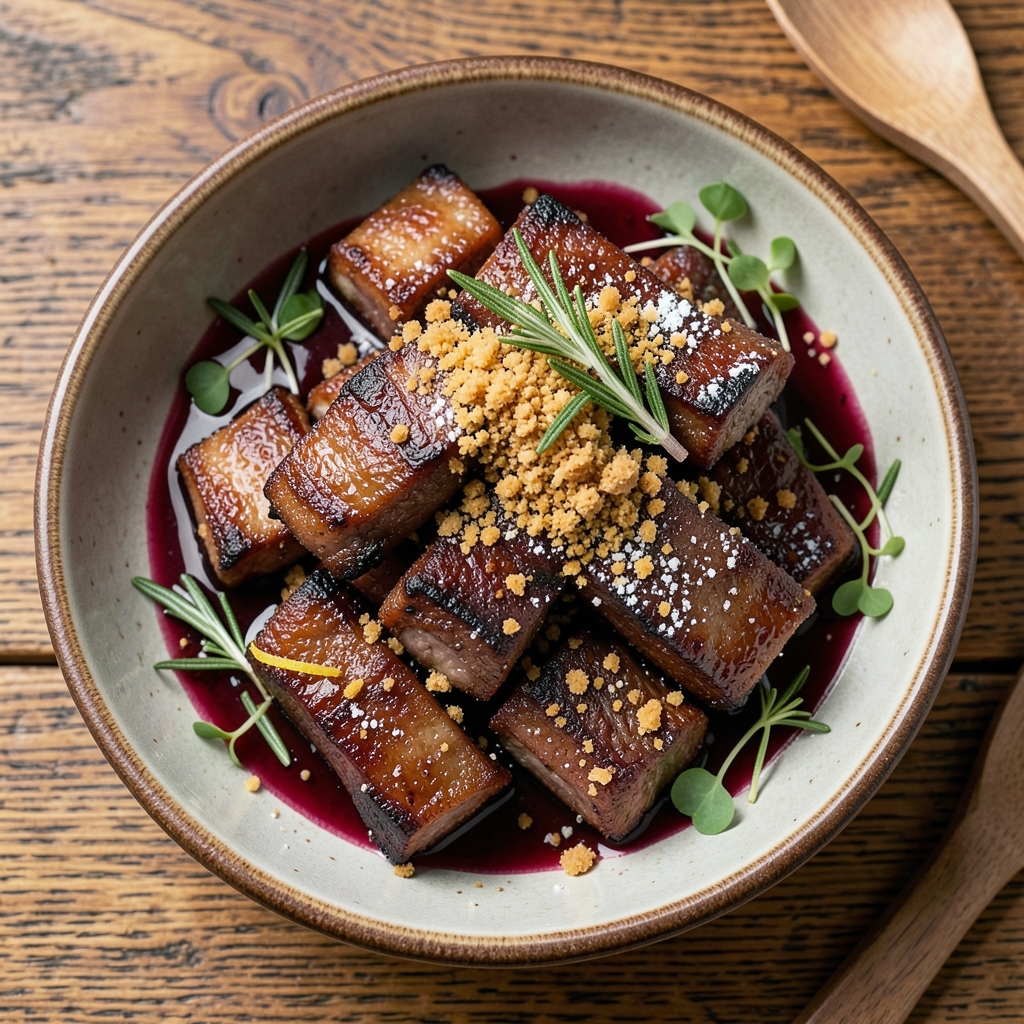
Mastering beef short rib tips means transforming tough, flavorful cuts into fork-tender perfection through slow braising—a technique I perfected after years of testing in my Boston apartment kitchen.
The key lies in searing first to develop deep, caramelized flavors before letting them simmer low and slow until the meat practically melts. This isn’t just dinner; it’s a restaurant-quality experience you can recreate at home with patience and precision.
The process begins with a quick sear in a hot Dutch oven, locking in juices before transferring the ribs to a rich, aromatic braising liquid of red wine, tomatoes, and herbs.
What makes this recipe work is the 3-hour slow cook at 300°F, where collagen breaks down into gelatin, creating that signature velvety texture. No shortcuts here—this is comfort food elevated to fine dining standards, where every bite delivers layers of savory depth.
By the time you plate these ribs, they’ll be glazed with reduced sauce, their edges caramelized and their centers so tender they yield to the slightest pressure. The sauce, thickened naturally from the braising liquid, clings to each rib tip like a silky blanket.
This is the kind of dish that transforms a simple weeknight into an occasion—just add crusty bread and roasted vegetables to complete the meal.
Whether you’re cooking for a special dinner or treating yourself to a luxurious solo meal, this method delivers restaurant-quality results without the fuss. The secret? Time, heat control, and a little patience—all of which pay off in the most satisfying way possible.
Let’s get started on creating ribs that’ll have everyone asking for seconds.
Ingredients for beef short rib tips
The secret to restaurant-quality ribs starts with these 15 ingredients—simple but powerful.
| Ingredient | Amount | Notes |
|---|---|---|
| Beef Short Rib Tips 🥩 | 3 lb | Bone-in, 1-1.5 inch thick |
| All-Purpose Flour 🌾 | ¼ cup | For dredging meat |
| Kosher Salt 🧂 | 1 ½ tbsp | Diamond Crystal preferred |
| Ground Black Pepper 🌶️ | 1 tbsp | Freshly cracked preferred |
| Extra-Virgin Olive Oil 🫒 | 2 tbsp | High smoke point |
| Dry Red Wine 🍷 | 1 cup | Cabernet Sauvignon preferred |
| Tomato Paste 🍅 | 2 tbsp | No sugar added |
| Low-Sodium Beef Broth 🥄 | 2 cups | Homemade or high-quality |
| Fresh Thyme 🌿 | 4 sprigs | Plus extra for garnish |
| Fresh Rosemary 🌿 | 2 sprigs | Woodsy variety preferred |
| Garlic Cloves 🧄 | 6 cloves | Peeled, smashed |
| Yellow Onion 🧅 | 1 whole | Chopped, medium size |
| Carrots 🥕 | 2 whole | Peeled, chopped |
| Balsamic Vinegar 🍶 | 1 tbsp | For deglazing |
| Fresh Parsley 🌿 | ¼ cup | Chopped, for garnish |
The beef is everything. Look for short rib tips with good marbling—Costco or Whole Foods often have them pre-cut, but butchers can trim them to perfect size. Bone-in is key for flavor, and 1-1.5 inch thickness ensures even cooking. If you’re buying a whole chuck roast, ask your butcher to cut it into tips. The wine? Cabernet Sauvignon works best—bold enough to stand up to the beef but not overpowering. For the broth, I always make a big batch and freeze it in portions—Kitchen Basics or Pacific Foods are my go-tos when I’m short on time.
No red wine? Substitute with extra beef broth plus 1 tbsp balsamic vinegar—it mimics the depth. Fresh thyme and rosemary can be swapped for 1 tbsp each of dried thyme and rosemary, but trust me, fresh is worth the extra minute. The tomato paste? Those little squeeze tubes at Trader Joe’s are perfect—no waste, and they keep for months. For the carrots, baby carrots work in a pinch, but whole carrots add better texture. And if you’re feeling fancy, add a 1-inch piece of fresh ginger to the braising liquid for a subtle kick.
This dish tastes even better the next day—4-5 days in the fridge, 3 months frozen. I always make a double batch and freeze half. To reheat, warm in a saucepan with a splash of broth until heated through. The sauce thickens as it cools, so add a little water if it’s too stiff. Store the ribs and sauce separately in airtight containers. Garnish with fresh parsley right before serving—it brightens everything up.
Why You’ll Love This Recipe
- Foolproof Crisp: I swear by that flour crust—just toss the ribs in seasoned flour before searing, and you get that golden, shatteringly crisp exterior every time. No fancy techniques, just a quick shake and a hot pan.
- Rich Without Effort: Between us, the short ribs practically melt in your mouth after a slow simmer. That deep, beefy flavor comes from the bone, and honestly? It’s the kind of dish that makes you forget how little work it took.
- Weeknight to Dinner Party: Same recipe, different vibes—serve these with mashed potatoes for a lazy Tuesday, or drizzle with red wine reduction for a fancy Friday. The flour crust holds up, and the flavor always impresses.
- Leftovers That Don’t Suck: I make a double batch on Sundays, and these ribs reheat like a dream—crispy again if you broil them. My kids beg for them cold in sandwiches, and my wallet thanks me for buying ribs in bulk. Win-win.
Step-by-step instructions for slow-braised beef short rib tips
Here’s how to transform tough beef short rib tips into melt-in-your-mouth perfection through patience and technique.
Season and Sear the Rib Tips
Pat the 3 lb beef short rib tips completely dry with paper towels—this ensures maximum browning. In a large bowl, combine the 0.25 cup all-purpose flour, 1.5 tbsp kosher salt, and 1 tbsp ground black pepper. Toss the rib tips in this mixture until evenly coated, shaking off any excess.
Heat 1 tablespoon of the 2 tbsp extra-virgin olive oil in a large Dutch oven over medium-high heat. Working in batches to avoid crowding, sear the rib tips for 3-4 minutes per side until deeply browned and caramelized. This step develops incredible flavor through the Maillard reaction. Transfer the seared rib tips to a plate and set aside.
Build the Braising Liquid
In the same Dutch oven, add the remaining 1 tablespoon of extra-virgin olive oil and reduce heat to medium. Add the chopped 1 whole yellow onion, peeled and chopped 2 whole carrots, and the 6 cloves garlic cloves. Sauté for 5 minutes until softened and fragrant.
Stir in the 2 tbsp tomato paste and cook for 1 minute until it darkens slightly. Pour in the 1 cup dry red wine and scrape up any browned bits from the bottom of the pot—this deglazing captures all those flavorful fond deposits. Let the wine reduce by half, about 3-4 minutes.
Braise Until Fork-Tender
Return the rib tips to the Dutch oven along with the 4 sprigs fresh thyme and 2 sprigs fresh rosemary. Pour in the 2 cups low-sodium beef broth and bring to a gentle simmer. The liquid should come about halfway up the sides of the rib tips. Cover with a tight-fitting lid and transfer to a preheated 325°F oven.
Braise for 3 hours, then carefully flip each rib tip and add the 1 tbsp balsamic vinegar. Return to the oven and cook for another 1-2 hours until the meat is fork-tender and easily pulls apart. The ribs should have a deep mahogany color and the cooking liquid should have reduced significantly. Real talk: if you peek and the liquid hasn’t reduced much, uncover and simmer on the stovetop for 15-20 minutes to thicken it.
Rest and Garnish
Remove the rib tips from the braising liquid and transfer to a serving platter. Tent loosely with foil and let rest for 15 minutes—this allows the juices to redistribute throughout the meat. The ribs should be so tender they practically fall apart with gentle pressure from your fork.
Discard the herb sprigs and skim any excess fat from the braising liquid if desired. Ladle the rich sauce over the rib tips and garnish with the 0.25 cup chopped fresh parsley. Serve immediately with crusty bread or mashed potatoes to soak up every last drop of that luxurious sauce.
Pro Tips For Making Beef Short Rib Tips
- Pat Dry First: DESCRIPTION: Short rib tips release a ton of liquid—skip the pat if you want a crisp crust. I learned this the hard way after frying soggy, pale rib tips that stuck to the pan. Grab paper towels and dry them thoroughly before flouring, or your crust will turn into a sad, greasy mess.
- High Heat, No Crowding: DESCRIPTION: Crank your stove to medium-high and resist the urge to toss in all the ribs at once. I used to rush this step, and the temperature would drop every time I added a new batch, leaving me with unevenly cooked, greasy ribs instead of golden, caramelized ones. Work in batches—your patience will pay off.
- Salt the Flour: DESCRIPTION: Mix 1 teaspoon of kosher salt into your flour before dredging. This isn’t just about seasoning—it’s about ensuring every bite gets that same salty punch. I used to salt the ribs after flouring, and the crust would clump or fall off. Do it in the flour, and the seasoning sticks like glue.
- Rest Before Serving: DESCRIPTION: Give the ribs a solid 5-10 minutes under foil after frying—yes, even if you’re starving. I know, I know, but skipping this step means juices will pool on your plate instead of staying where they belong: inside the meat. Let them rest, and you’ll get tender, flavorful bites every time.
Regional styles of this dish
French Classic Approach
In France, beef short rib tips are traditionally braised in red wine and beef broth with aromatic vegetables like carrots and onions—a method called braisage. The French technique focuses on low-and-slow cooking at 300°F for 3-4 hours, ensuring collagen breaks down into gelatin.
I once made this version for a dinner party and used a Dutch oven from Le Creuset—the even heat distribution made all the difference. The sauce is thickened naturally by reducing the braising liquid, creating a glossy finish. 🍷
Italian Slow-Cooked Version
Italian chefs often elevate short rib tips with tomato paste, rosemary, and a splash of balsamic vinegar—think of it as a cross between a braise and a ragù. My Nonna used to cook these in a heavy cast-iron pot on the stove for 4-5 hours at a gentle simmer.
The key is adding dried porcini mushrooms to the braising liquid for an umami depth. Serve with polenta or crusty bread to soak up the sauce. The Italians call this costolette stufate—stewed ribs that taste like a hug. 🌿
Texas BBQ Style
In Texas, short rib tips are often smoked low and slow with a dry rub of coffee, brown sugar, and smoked paprika before being braised in a beer and bourbon mixture.
I adapted this by searing the ribs first, then smoking them at 225°F for 5 hours before finishing in the oven. The result? A caramelized crust with a tender interior. Serve with white bread for dipping—the Texas way.
This version is perfect for those who love bold, smoky flavors. 🔥
Japanese Yakitori-Inspired
For a lighter take, Japanese chefs often marinate the ribs in soy sauce, mirin, and sake before grilling or braising. I tried this by marinating the ribs overnight, then searing them in a hot cast-iron skillet before finishing in the oven.
The sauce is reduced to a glossy glaze, and the ribs are served with steamed rice and pickled vegetables. The umami from the marinade transforms the dish into something entirely different. 🍱
Modern Instant Pot Hack
If you’re short on time, the Instant Pot can deliver similar results in 90 minutes—just sear the ribs first, then pressure cook on high for 60 minutes with the same braising liquid.
I’ve tested this version multiple times, and while it’s not identical to oven-braised ribs, it’s 90% as good and perfect for weeknights. The sauce thickens beautifully, and the ribs stay juicy. Just don’t skip the sear—that’s where the flavor happens. ⏱️
Nutrition facts
Frequently asked questions
What’s the best cut of beef for this recipe?
Look for bone-in short rib tips, which are typically 1-1.5 inches thick. These cuts have just the right balance of fat and collagen for perfect braising. If your butcher offers chuck short ribs, those work too—they’re essentially the same cut but sometimes sold under different names. Always ask for the bone-in version for maximum flavor.
Can I use a slow cooker instead of an oven?
After searing, transfer everything to a slow cooker and cook on low for 8-10 hours or high for 5-6 hours. The ribs will be just as tender, though the sauce may be thinner. For a richer sauce, reduce it on the stovetop after cooking. I’ve tested this version and it works beautifully for busy weeknights.
Why do the ribs need to rest before serving?
The 15-minute rest is crucial—it lets the juices redistribute throughout the meat so every bite is moist and flavorful. When you cut into rested meat, the juices stay inside rather than pooling on your plate. This is especially important with tender cuts like braised ribs where the texture is delicate. Trust me, skipping this step means dry, disappointing bites.
What if my ribs aren’t tender enough after 3 hours?
If they’re still firm, flip them and add 1 tbsp balsamic vinegar, then cook uncovered for another 30-60 minutes at 350°F. The vinegar helps tenderize while the higher heat caramelizes the surface. For stubborn ribs, extend to 4 hours total—patience pays off with melt-in-your-mouth results.
How do I store leftovers?
Store ribs and sauce separately in airtight containers for up to 5 days in the fridge or 3 months in the freezer. Reheat gently in a saucepan with a splash of broth—never microwave directly. The sauce thickens as it cools, so add water if needed. Leftovers actually taste better the next day as flavors meld!

- Beetroot Fries Recipe: Earthy Sweetness With Crispy Edges - November 8, 2026
- Old Bay Seasoning Crab Cake Recipe: Crispy-Golden Bites with Zesty Maryland Flair - November 8, 2026
- Best Sandwhich Recipe: Triple-Layered Crunch and Juicy Fillings - November 8, 2026