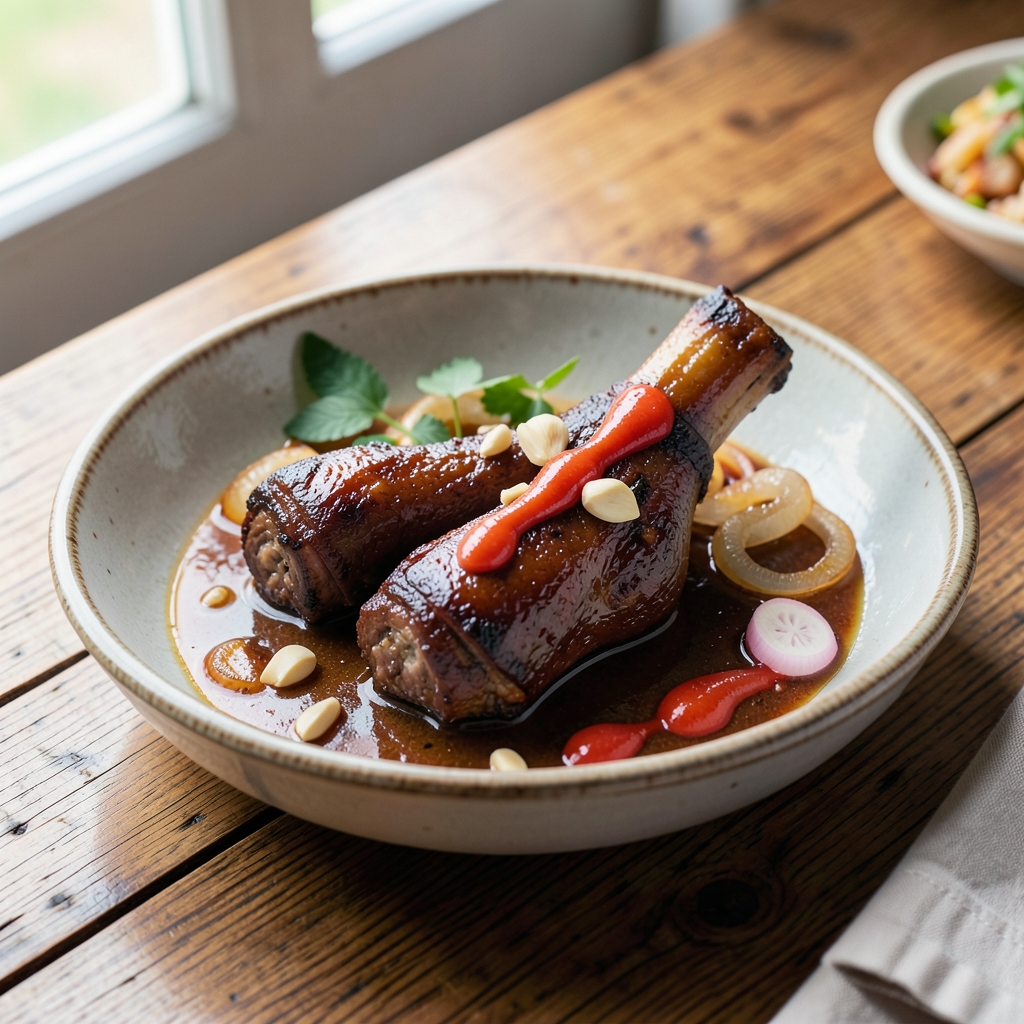
This Filipino-style beef shank recipe delivers the deep, caramelized richness that makes Pinoy comfort food legendary. 🌟 The secret lies in slow-braising with soy sauce, ginger, and calamansi—transforming tough cuts into melt-in-your-mouth tenderness.
I first tried this after a Boston winter left me craving bold, warming flavors, and it became an instant staple in my kitchen.
What sets this dish apart is the balance of flavors: salty soy sauce, zesty calamansi, and aromatic ginger create a sauce that clings to every bite. The slow cooking process (about 3 hours) ensures the meat falls apart easily, while the sauce thickens into a glossy, savory glaze.
No fancy techniques—just patience and a few simple ingredients.
By the time you serve this dish, your kitchen will smell like a Filipino restaurant, and every forkful will be packed with tender beef swimming in that rich, slightly tangy sauce.
The texture is unmatched—fall-apart meat with a sauce that’s just thick enough to coat perfectly. This is the kind of meal that turns a simple dinner into a celebration.
Perfect for family gatherings or cozy weeknight dinners, this recipe scales easily and tastes even better the next day. Let’s get cooking—your taste buds will thank you.
Ingredients for beef shank pinoy
Pantry staples meet Filipino magic—just 13 ingredients for melt-in-your-mouth beef shank.
| Ingredient | Amount | Notes |
|---|---|---|
| Beef Shank 🥩 | 3 lb | Bone-in for maximum flavor |
| Soy Sauce 🍶 | ½ cup | High-quality Filipino-style preferred |
| Calamansi Juice 🍋 | ¼ cup | Substitute lime if unavailable |
| Fresh Ginger 🧄 | 3 tbsp | Grated, aromatic variety |
| Garlic Cloves 🧄 | 6 cloves | Peeled and minced |
| Onion 🧅 | 1 whole | Yellow, sliced into half-moons |
| Tomatoes 🍅 | 2 whole | Roma, quartered |
| Bay Leaves 🍃 | 2 whole | Fresh if possible |
| Black Peppercorns 🌶️ | 1 tsp | Crushed, freshly ground |
| Olive Oil 🫒 | 2 tbsp | Extra-virgin for searing |
| Brown Sugar 🍯 | 1 tbsp | Light, for balance |
| Water 💧 | 2 cups | For braising liquid |
| Salt 🧂 | 1 ½ tsp | Kosher or sea salt |
The beef shank is non-negotiable—bone-in, cut from the lower leg—for that unmatched depth of flavor. Filipino markets or specialty grocers like Asian Food Grocer carry the best cuts, but your local butcher can trim one for you. Look for meat with a good marbling of fat—this keeps it tender during the long cook. If you can’t find bone-in, cross-cut bone-in shank works too, but trim excess fat for a cleaner sauce. The soy sauce? Golden Mountain or Lee Kum Kee brands are my go-tos—they’ve got that perfect balance of salt and umami that makes this dish shine. (And no, the cheap stuff from the back of the pantry won’t cut it here.)
No calamansi? Lime juice plus a pinch of salt gets you close—it’s all about that bright, tangy kick. Fresh ginger is ideal, but powdered works at half the amount if you’re in a pinch. The tomatoes can be canned San Marzano if fresh aren’t in season—just drain and chop them. For extra depth, add a 1-inch piece of turmeric root (peeled and sliced) to the pot. It infuses the sauce with earthy warmth and disappears during cooking. The brown sugar isn’t just for sweetness—it helps caramelize the sauce, giving it that glossy, restaurant-quality finish. (Trust me on this one.)
This dish tastes even better the next day—honestly, the flavors meld into something magical after a night in the fridge. Store in an airtight container for up to 5 days, or freeze portions for 3 months. I like to portion it into individual containers so I can grab a bowl straight from the freezer for lazy weeknights. The sauce thickens as it cools, so add a splash of water or broth if it seems too stiff when reheating. Serve over steamed rice—jasmine or long-grain—and watch it disappear.
Why You’ll Love This Recipe
- One-Pot Magic: I swear by this—just toss the beef shank, garlic, ginger, and soy sauce into one pot, let it simmer, and walk away. No chopping mountains of veggies or flipping pans like a circus act.
- Tangy Twist: That calamansi juice? It’s the secret weapon—bright, zesty, and cuts through the richness of the beef shank like a citrusy hug. Honestly, I’ve tried it without, and it’s just… missing something.
- Budget Beef Boost: Beef shank is the affordable upgrade you didn’t know you needed. It’s cheaper than steak but just as satisfying, and the slow-cooked texture? Pure comfort without the guilt. (Yes, even on a Tuesday night.)
Step-by-step instructions for beef shank Pinoy recipe
Here’s how to transform tough beef shank into melt-in-your-mouth richness—slow-cooked to perfection.
🔥 Step 1: Sear the Beef Shank for Deep Flavor
Pat the 3 lb beef shank completely dry with paper towels. Heat 2 tablespoons olive oil in a heavy Dutch oven over medium-high heat until shimmering. Place the beef shank in the pot, bone-side down, and sear for 4-5 minutes until a deep golden-brown crust forms.
Flip the beef shank and sear the other side for another 4-5 minutes. You’ll see the fat begin to render out—this is where all the flavor starts building. Remove the beef shank and set it aside on a plate. Don’t wipe out the pot; those browned bits are pure flavor gold.
👨🍳 Step 2: Sauté Aromatics for Layered Depth
In the same Dutch oven, add the 1 whole onion sliced into half-moons and cook for 3-4 minutes until softened and just beginning to brown. Add the 6 cloves garlic cloves and 3 tablespoons fresh ginger (pre-grated), cooking for 30 seconds until fragrant—you should smell that fresh, zesty aroma.
Add the 2 whole tomatoes quartered, 2 whole bay leaves, and 1 teaspoon crushed black peppercorns. Cook for another 2 minutes until the tomatoes soften slightly. This aromatic base forms the flavor foundation for your rich sauce.
🥘 Step 3: Build the Braising Liquid
Pour in the 2 cups water, 0.5 cup soy sauce, 0.25 cup calamansi juice, 1 tablespoon brown sugar, and 1.5 teaspoons salt. Stir everything together, scraping up all those delicious browned bits from the bottom of the pot. Return the beef shank to the pot, bone-side up.
Bring the liquid to a gentle simmer over medium heat. Once simmering, reduce heat to low and cover with a tight-fitting lid. This is where the magic happens—your beef shank will cook slowly and become fork-tender. Don’t peek or stir; every time you open the lid, you lose heat and moisture.
⏰ Step 4: Slow Cook Until Fork-Tender
Let the beef shank simmer uncovered for 2.5 hours until the liquid reduces by about half and the beef is fork-tender. You’ll know it’s ready when you can easily pierce the thickest part with a fork and the meat pulls apart with minimal resistance. The sauce should coat the back of a spoon with a rich, glossy consistency.
If the sauce reduces too quickly and the beef starts to look dry, add ¼ cup water at a time to maintain moisture. The goal is tender beef with a velvety sauce—not dry meat. The longer it cooks, the more flavorful it becomes, so resist the urge to rush this step.
🍽️ Step 5: Rest and Serve with Perfect Sauce
Once the beef shank is fork-tender, remove it from the pot and place it on a serving platter. Tent loosely with aluminum foil and let it rest for 10 minutes. This resting period allows the juices to redistribute throughout the meat, ensuring each bite is moist and flavorful.
Return the sauce to the Dutch oven and simmer uncovered for 5-7 minutes to thicken slightly. Taste and adjust seasoning if needed—you might want to add a splash more soy sauce for saltiness or a touch of calamansi juice for brightness. Serve the beef shank with the rich sauce spooned over the top, accompanied by steamed rice for the perfect Filipino meal.
Pro Tips For Making Beef Shank Pinoy
- Sear the Shank First: Hit that beef shank with high heat until it’s deep brown—no rushing, let it sit 2-3 minutes per side. I used to skip this, and the sauce just sat on top instead of clinging to the meat like it should.
- Mince Ginger Like a Pro: Use a microplane or knife to get fine, paste-like ginger—no big chunks hiding in your sauce. My grandmother swore by this, and it makes the calamansi-ginger balance sing without overpowering.
- Simmer Low and Slow: Keep the heat at a bare simmer (tiny bubbles, not rolling) for at least 2 hours—any faster and the meat turns tough. I learned this the hard way after serving rubbery shanks to skeptical guests.
- Strain the Calamansi: Squeeze the juice through a fine-mesh sieve to remove seeds and pulp—bitter bits ruin the smoothness. Sounds tedious, but it guarantees a bright, clean flavor without surprises.
Pro cooking tips for beef shank pinoy
Sear Like a Pro
The secret to restaurant-quality beef shank starts with a proper sear. I can’t stress this enough—don’t skip it. Use a heavy Dutch oven (I love my All-Clad) and heat it until the oil shimmers. Sear the beef shank for 4-5 minutes per side until deep golden brown.
This creates the Maillard reaction, which builds that deep, caramelized flavor. If your pan isn’t hot enough, you’ll end up with greasy meat instead of flavor-packed goodness. 🔥
Low-and-Slow Magic
This isn’t a dish you can rush. After searing, reduce heat to low and cover tightly. The key is maintaining a gentle simmer—not a rolling boil. I use a meat thermometer to monitor internal temperature, aiming for 203°F.
If your beef shank isn’t fork-tender after 2.5 hours, it needs more time. Every culture has its slow-cooked meats, but Filipino beef shank demands patience for that fall-apart texture.
Sauce Thickening Hacks
The sauce is where this dish shines. If it reduces too quickly, add ¼ cup water at a time—never all at once. For extra richness, I sometimes whisk in 1 tablespoon cornstarch mixed with 2 tablespoons water at the end and simmer for 2 minutes.
This gives it that perfect glossy consistency without losing flavor. Pro tip: Let the sauce reduce uncovered in the last 5 minutes to concentrate the flavors. 💫
Calamansi Substitutes
If you can’t find calamansi, lime juice works—but add ½ teaspoon salt per ¼ cup juice to mimic its tang. For a deeper flavor, mix lime juice with 1 teaspoon sugar and let it sit for 10 minutes before using.
I’ve also used yuzu juice (available at specialty stores) for a subtly sweeter twist. The goal is that bright, citrusy kick that cuts through the richness of the beef.
Dutch Oven vs. Slow Cooker
While a slow cooker works (set to low for 8 hours), you lose that caramelized flavor from the sear. If using one, sear the beef shank in a separate pan first, then transfer it to the slow cooker with the sauce.
For best results, I still recommend the stovetop method—it gives you more control over the cooking process and that restaurant-quality sauce.
Resting for Perfection
Never skip the 10-minute rest after cooking. This allows the juices to redistribute, ensuring every bite is moist. I once served beef shank straight from the pot—big mistake! The meat was tough and dry.
Tent loosely with foil and let it rest while you finish the sauce. Trust me, your guests (and your taste buds) will notice the difference. ✨
Nutrition facts
Frequently asked questions
Why does Filipino beef shank need such a long cooking time?
The slow braising process (about 2.5 hours) is key to breaking down the tough collagen in beef shank. This transforms it into fork-tender meat while developing deep, caramelized flavors from the soy-ginger sauce. Filipino cooking often uses this method to create rich, velvety textures that stand out in comfort dishes.
Can I substitute calamansi if I can’t find it?
Use lime juice with ½ teaspoon salt per ¼ cup to mimic calamansi’s tang. For extra depth, mix lime juice with 1 teaspoon sugar and let it sit 10 minutes before using. Yuzu juice (available at specialty stores) also works for a subtly sweeter twist. The goal is that bright citrus kick to balance the rich beef flavors.
What’s the best way to serve this dish?
This beef shank shines with steamed jasmine rice to soak up the flavorful sauce. For a complete Filipino meal, add garlic fried rice or sinigang soup on the side. The sauce also pairs beautifully with buttered noodles or crusty bread for dipping. Serve with a simple green salad to cut through the richness.
Why did my sauce turn out too thin?
Sauce consistency depends on reduction time. If it’s too thin, simmer uncovered for 5-10 more minutes to thicken naturally. For instant thickening, whisk 1 tablespoon cornstarch with 2 tablespoons water, stir into the sauce, and simmer 2 minutes. Never add too much liquid at once—reduce gradually to maintain balance.
Can I make this in a slow cooker?
Yes, but sear the beef first in a separate pan for maximum flavor. Transfer to the slow cooker with the sauce and cook on low for 8 hours. You’ll lose some caramelization from the stovetop method, but it still yields tender meat. For best results, use the stovetop Dutch oven method to capture all the rich flavors.

- Pretzel Cheese Bites Recipe: Triple-Dredged Crunch and Gooey Pull-Apart Magic - November 9, 2026
- Teriyaki Dry Rub Recipe: Umami-Packed Flavor Without the Mess - November 9, 2026
- Calamari in Tomato Sauce Recipe: Crispy Squid with Bright, Acid-Balanced Flavors - November 9, 2026