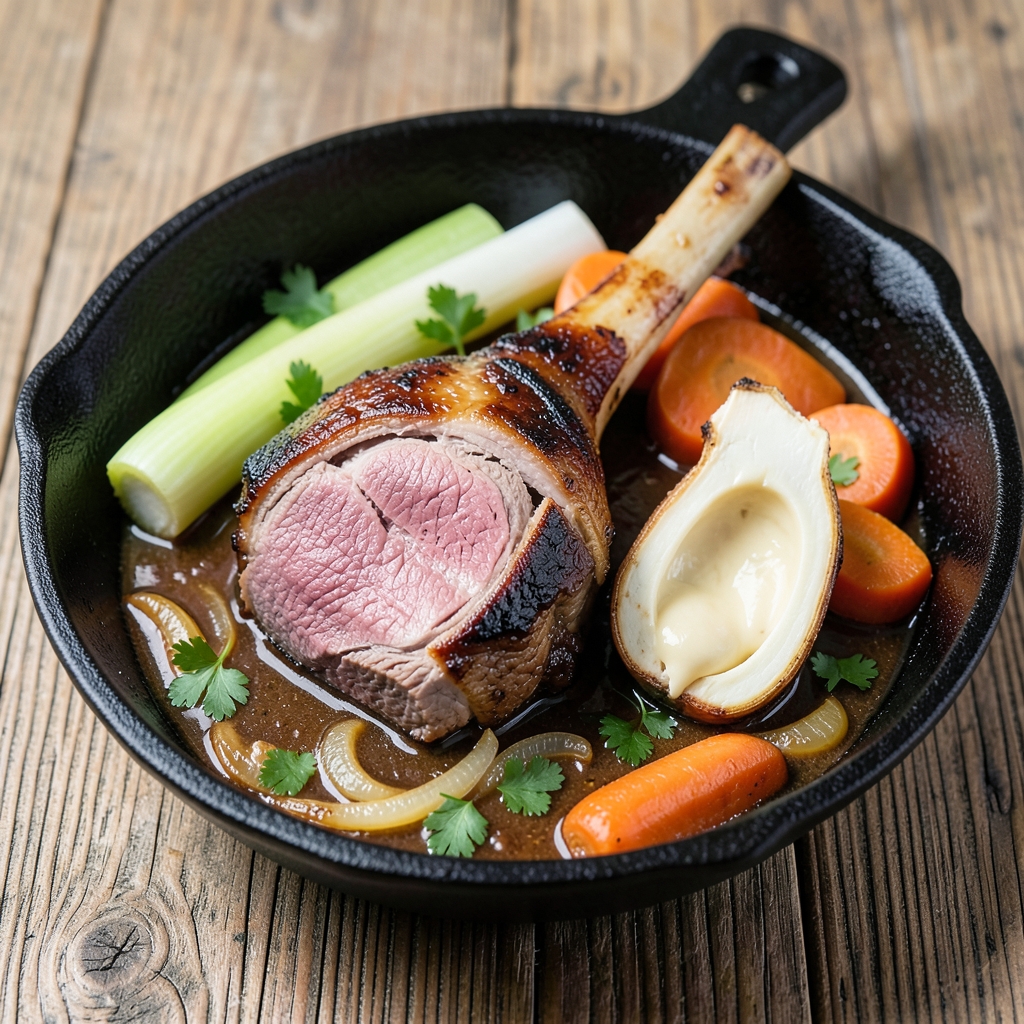
Transforming tough beef shank into melt-in-your-mouth perfection while unlocking the luxurious richness of bone marrow creates a dish that feels like a restaurant centerpiece. This technique—searing the shank until deeply caramelized, then slow-braising it until tender—builds layers of flavor that transform ordinary beef into something extraordinary.
The marrow, extracted at the end, becomes the star of a velvety sauce that ties everything together in a way that feels both rustic and refined.
What makes this recipe special is the contrast between the tender beef and the decadent marrow sauce, which is achieved through precise timing and technique. The slow cooking breaks down collagen for natural richness, while the marrow adds a luxurious depth that elevates the dish from comforting to unforgettable.
It’s the kind of meal that feels like a celebration, even when it’s just a weeknight dinner.
By the time you serve this dish, you’ll have perfectly braised beef shank with a sauce so rich it feels like it’s been simmering for hours. The marrow-infused glaze adds a velvety finish that makes every bite worth savoring.
Pair it with crusty bread to soak up the sauce or serve alongside roasted vegetables for a complete meal that feels restaurant-quality.
This recipe delivers on the promise of deep flavor and satisfying texture, making it perfect for those who appreciate the art of slow cooking. Whether you’re feeding a family or treating yourself to a special meal, the results are always impressive.
Let’s get started on creating this luxurious dish that combines comfort and elegance in every bite.
Ingredients for beef shank bone marrow
The luxurious foundation of this recipe starts with beef shank and marrow, elevated by aromatic vegetables and bold flavors.
| Ingredient | Amount | Notes |
|---|---|---|
| Beef Shank 🥩 | 3 lb | Bone-in, cut into 2-inch pieces |
| Beef Bone Marrow 🦴 | 1 cup | Freshly extracted from shank bones |
| Yellow Onion 🧅 | 1 whole | Chopped into 1/4-inch pieces |
| Garlic Cloves 🧄 | 6 cloves | Smashed, not minced |
| Carrots 🥕 | 2 whole | Cut into 1-inch chunks |
| Celery Stalks 🌿 | 3 whole | Cut into 1-inch pieces |
| Tomato Paste 🍅 | ½ cup | High-quality, not watery |
| Dry Red Wine 🍷 | 1 cup | Bold, like Cabernet Sauvignon |
| Beef Broth 💧 | 3 cups | Homemade or high-quality store-bought |
| Olive Oil 🫒 | ¼ cup | Extra-virgin, for searing |
| Fresh Thyme 🌿 | ¼ cup | Stems removed, leaves chopped |
| Fresh Rosemary 🌿 | ¼ cup | Needles finely chopped |
| Salt 🧂 | 1 ½ tbsp | Kosher or sea salt |
| Black Peppercorns 🌶️ | 1 tbsp | Freshly cracked |
| All-Purpose Flour 🌾 | 1 tbsp | For thickening sauce |
The beef shank is the star—look for cuts with good marbling and visible bone structure. Local butchers often have the freshest options, but Costco or Whole Foods carry high-quality pre-cut shanks. The marrow should be plump and bright yellow, not dried out. For best results, use shanks with marrow bones still attached; if not, purchase marrow separately from specialty butchers. Fresh thyme and rosemary should smell vibrant and piney, not musty. If using dried herbs, reduce to one-third the amount, but fresh is ideal for that restaurant-quality depth.
No red wine? Dry sherry or beef broth with a splash of balsamic works beautifully. Substitute carrots with parsnips or celery root if needed, but keep the same volume. For tomato paste, Trader Joe’s squeeze tubes are perfect—no waste, and they keep for months. If you can’t find fresh thyme or rosemary, dried works at one-third the amount, but the flavor won’t be as bright. The beef broth should be rich and homemade if possible, but high-quality store-bought like Pacific Foods or Kettle & Fire is a solid shortcut. For the flour, all-purpose works, but Wondra instantized cornstarch thickens faster if you’re short on time.
Store the braised shank and sauce in airtight containers for up to 5 days in the fridge, though it tastes even better the next day as flavors meld. The marrow-infused sauce freezes beautifully for up to 3 months, making it perfect for meal prep. Reheat gently on the stove, adding a splash of broth if it thickens too much. For serving, keep the shanks warm in a low oven while you reheat the sauce—this keeps everything velvety and rich. The leftovers make incredible sandwiches or tacos the next day, just drizzle with extra sauce.
Why You’ll Love This Recipe
- One-Pot Magic: I swear by this—just toss the beef shank, marrow bones, onions, and carrots into a single pot, add water, and let it slow-cook. No chopping, no fussing, no extra pans. The marrow practically melts into the broth on its own, and the shank falls apart like it’s been braising all day.
- Rich Without Effort: Between us, the marrow turns the broth into liquid gold—creamy, deep, and ridiculously flavorful. The shank soaks up all that richness until every bite is tender and packed with umami. Honestly, I’ve made simpler dishes that didn’t taste half as good.
- Weeknight to Weekend: This recipe works for a tired Tuesday or a lazy Sunday—same effort, different vibes. Serve it over crusty bread for a quick lunch or plate it with mashed potatoes for a hearty dinner. My college-aged kids grab it straight from the pot, no complaints.
- Budget-Friendly Luxury: Beef shank and marrow bones stretch into multiple meals without breaking the bank. I’ve turned one pot into three lunches, and the leftovers? Even better the next day. It’s the kind of dish that makes you feel fancy while keeping your wallet happy.
Step-by-step instructions for beef shank with bone marrow
This method transforms tough beef shank into melt-in-your-mouth perfection with a velvety marrow-infused sauce.
Sear the Beef Shank for Deep Flavor
Pat the 3 lb beef shank dry with paper towels—removing all moisture ensures a proper sear. Heat the 0.25 cup olive oil in a large Dutch oven over medium-high heat until shimmering. Working in batches if needed, add the beef shank pieces and sear for 4-5 minutes per side until deeply browned. This step develops the rich, caramelized crust that forms the foundation of the dish.
Don’t rush this process. You’re looking for a dark mahogany color and that distinctive searing aroma. Once all pieces are browned, remove them from the pot and set aside. The rendered fat in the bottom of the pot will become the base for your sauce, so don’t wipe it clean.
Build the Aromatic Base with Vegetables and Wine
In the same Dutch oven, add the chopped 1 whole yellow onion, 2 whole carrots cut into chunks, and 3 whole celery stalks cut into pieces. Cook over medium heat for 8-10 minutes until the vegetables begin to soften and release their natural juices. This process, called sweating, draws out their flavors without browning.
Add the 6 smashed garlic cloves, 0.25 cup chopped fresh thyme, and 0.25 cup chopped fresh rosemary. Stir for 1 minute until fragrant. Then pour in the 1 cup dry red wine, scraping up all the browned bits from the bottom of the pot. Let the wine simmer for 3-4 minutes until reduced by half. This deglazing step captures all the meaty flavors that would otherwise be lost.
Simmer the Beef Shank with Bone Marrow
Return the seared beef shank to the pot. Stir in the 0.5 cup tomato paste and sprinkle with 1.5 tbsp salt and 1 tbsp freshly cracked black peppercorns. Pour in the 3 cups beef broth, ensuring the shank pieces are mostly submerged. Bring to a gentle simmer, then reduce heat to maintain a bare bubble at the surface.
Cover the pot and transfer to a preheated 300°F oven. Let it cook for 2.5 hours, turning the shank pieces occasionally. The meat should be fork-tender when pierced. After 2 hours, carefully remove the pot from the oven and use a slotted spoon to transfer the shank pieces to a plate. Skim off any excess fat from the sauce.
Infuse the Sauce with Bone Marrow
Increase the oven temperature to 425°F. Return the pot to the oven and add the 1 cup beef bone marrow. Let it cook uncovered for 10-12 minutes until the marrow begins to melt and the sauce thickens slightly. This step creates the signature rich, velvety texture that makes this dish extraordinary.
Watch the sauce carefully as it reduces. You want it to coat the back of a spoon but still be pourable. If it thickens too quickly, remove from the oven and reduce heat slightly. The marrow should be fully incorporated, creating a glossy, golden sauce that clings beautifully to the beef.
Finish and Serve with Perfect Timing
Return the beef shank to the pot and let it heat through for 2-3 minutes. Stir in 1 tbsp all-purpose flour to thicken the sauce slightly. Taste and adjust seasoning with additional salt and pepper if needed. The sauce should be rich, slightly tangy from the wine, and deeply flavorful from the marrow infusion.
Serve immediately with the beef shank placed on a platter and surrounded by the marrow-infused sauce. The meat should be fork-tender with a crisp exterior, and each bite should deliver that luxurious marrow flavor throughout. This dish pairs beautifully with crusty bread or polenta to soak up every last drop of that incredible sauce.
Pro Tips For Making Beef Shank Bone Marrow
- Sear the Shank First: Hit the shank with a screaming-hot pan—no oil needed, the fat will render. I learned this the hard way when my first batch tasted bland because I rushed the sear; now I let it brown for 8-10 minutes until deep mahogany, even if it means waiting for the pan to recover heat.
- Score the Marrow: Use a sharp knife to cut shallow X’s into the marrow before roasting—it cracks open easier and renders faster. I used to just stab it blindly, but this guarantees even cooking and prevents a dry, chewy center.
- Don’t Crowd the Pot: If you’re braising the shank, use a Dutch oven with just enough liquid to come halfway up the meat. I’ve flooded pans before, and it turns the dish into soup instead of rich, caramelized perfection.
- Save the Onion Water: When dicing onions for the braise, soak the scraps in cold water for 10 minutes, then strain and add the liquid to the pot. It’s got flavor you’d otherwise waste, and it deepens the sauce without extra effort.
Troubleshooting this dish
Marrow Won’t Melt
If your marrow refuses to melt during the final cooking stage, it’s likely because the oven temperature isn’t high enough or the marrow isn’t fresh. I’ve found that 425°F is the sweet spot—any lower and the marrow stays stubborn.
For extra insurance, crack the marrow bones with a mallet before adding them to the sauce, which helps release the marrow faster. If using pre-extracted marrow, ensure it’s at room temperature before adding to the pot. 💡
Beef Too Tough
Undercooked shank is the most common issue, but it’s fixable. If your beef still feels chewy after 2.5 hours at 300°F, it’s likely because the pot wasn’t properly sealed or the oven temperature fluctuated.
Next time, wrap the Dutch oven in a double layer of heavy-duty foil to trap steam and heat more efficiently. For extra tenderness, add 1 cup of water to the pot after the initial 2 hours of cooking, then return to the oven for another 30 minutes.
Sauce Too Thin
If your sauce ends up watery, it’s usually because too much liquid was added or the sauce wasn’t reduced enough. To fix this, simmer the sauce uncovered on the stovetop over medium-low heat for 10-15 minutes, stirring occasionally.
For a quicker fix, mix 1 tbsp cornstarch with 2 tbsp cold water, stir into the sauce, and let it thicken for 2-3 minutes. I’ve also had success adding 1-2 tbsp tomato paste at the end for extra body without altering the flavor. 🥄
Burnt Onions
Burnt onions happen when you crank the heat too high during the sweating stage. To prevent this, keep the heat at medium-low and stir frequently. If your onions start to brown too quickly, reduce the heat further and cover the pot for 2-3 minutes to steam them gently.
For a quick fix, remove the burnt pieces and add ½ cup additional beef broth to balance the flavor. Trust me, this has saved my dinner more than once!
Fat Skimming Struggle
Skimming fat from hot braising liquid can be messy, but a few tricks make it easier. Use a fat skimmer spoon (or a slotted spoon) and work quickly—fat rises to the surface faster when the pot is off the heat.
For stubborn fat, chill the sauce in the fridge for 1 hour, then scoop off the solidified fat from the top. I also like to pour the sauce through a fine-mesh strainer lined with a coffee filter to catch any lingering fat particles. 🧂
Marrow Overcooking
If your marrow turns into a greasy mess instead of a glossy sauce, it’s been cooked too long or at too high a temperature. The ideal time is 10-12 minutes at 425°F.
To salvage overcooked marrow, whisk in 1 tbsp cold butter or 2 tbsp heavy cream to re-emulsify the sauce. For next time, keep a close eye on the sauce and remove the pot from the oven as soon as the marrow begins to melt.
A quick taste test helps—it should be silky, not greasy. 🍴
Nutrition facts
Frequently asked questions
How do I know when beef shank is fully cooked?
The shank should be fork-tender with no resistance when pierced—it should fall apart easily. For best results, cook until the internal temperature reaches 203°F (95°C) in the thickest part. If it’s still slightly chewy, return it to the oven for another 30 minutes covered with extra broth.
Can I substitute bone marrow if I can’t find it?
Yes! Use ½ cup unsalted butter or ¼ cup heavy cream for a similar richness, though the flavor will be milder. For a closer match, blend ½ cup roasted garlic with ¼ cup olive oil and add it during the final reduction. The texture won’t be identical, but it’ll still add depth to the sauce.
What’s the best way to store leftovers?
Store the braised shank and sauce in an airtight container in the fridge for up to 5 days. For longer storage, freeze the sauce separately for up to 3 months. Reheat gently on the stove with a splash of broth to restore its velvety texture. The meat reheats beautifully for sandwiches or tacos the next day!
Do I need a Dutch oven for this recipe?
A Dutch oven is ideal because it traps steam and distributes heat evenly, but a heavy pot with a tight lid works too. If using a shallow pan, add ½ cup extra broth to prevent drying out. For best results, choose a pot that fits your shank pieces snugly—this ensures even cooking and maximum flavor extraction.
How can I make this dish ahead of time?
Prepare the shank up to 2 hours before serving, then refrigerate uncovered to cool. Finish cooking by reheating in the oven at 325°F for 30-45 minutes, adding ¼ cup broth if needed. For the marrow sauce, extract it fresh before serving—it’s best when warm and glossy. This makes it perfect for dinner parties!

- Pretzel Cheese Bites Recipe: Triple-Dredged Crunch and Gooey Pull-Apart Magic - November 9, 2026
- Teriyaki Dry Rub Recipe: Umami-Packed Flavor Without the Mess - November 9, 2026
- Calamari in Tomato Sauce Recipe: Crispy Squid with Bright, Acid-Balanced Flavors - November 9, 2026