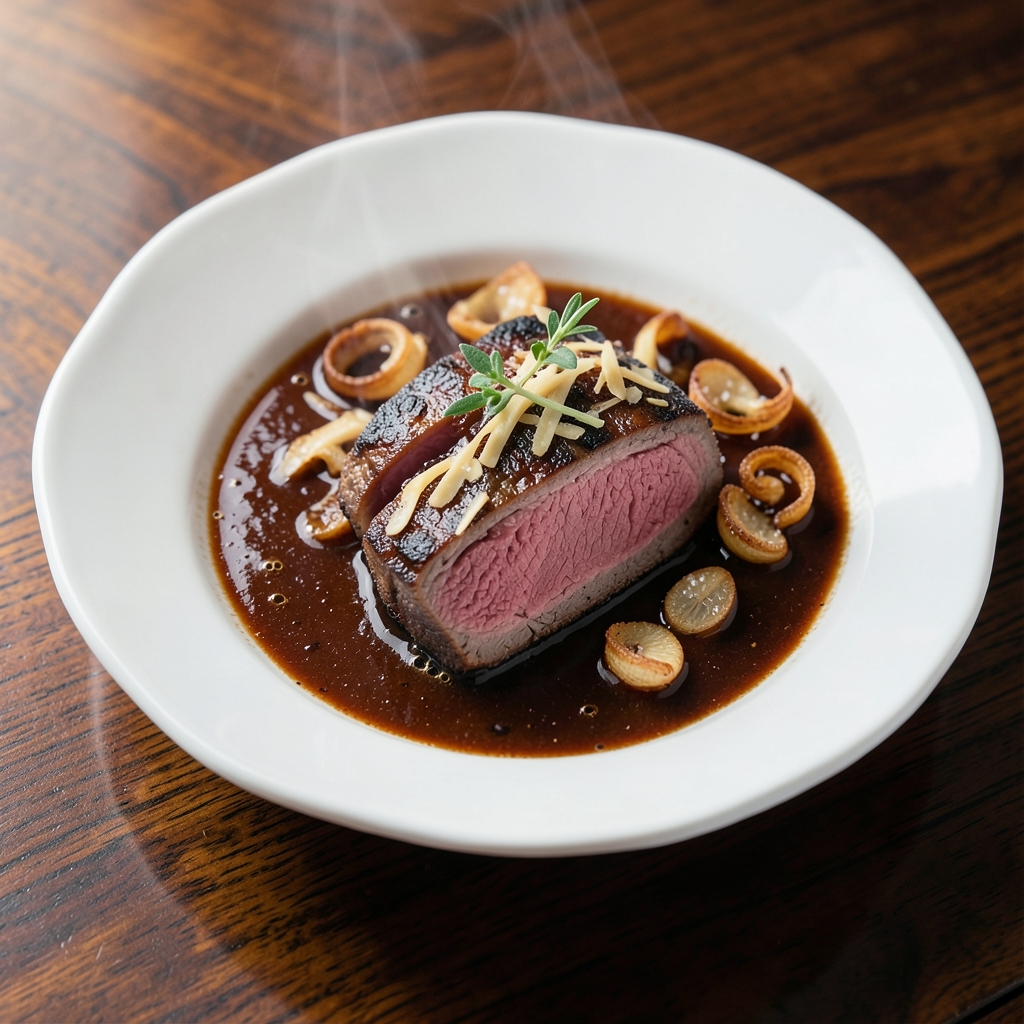
Mastering a beef demi-glace recipe transforms ordinary roasts into showstopping centerpieces—this rich, velvety sauce reduces hours of simmering into a few key techniques. The secret lies in building flavor through a dark roux, wine reduction, and slow stock reduction, creating depth that elevates any protein.
I developed this version after years of testing, ensuring professional results without requiring a restaurant kitchen.
This sauce begins with a classic dark roux—equal parts butter and flour cooked until deep brown—then deglazed with red wine to dissolve the browned bits. Beef and veal stock simmer for hours, reducing into a concentrated, glossy sauce with bone marrow adding unmatched richness.
The process demands patience, but the reward is a sauce so luxurious it turns weeknight dinners into special occasions.
What you’ll achieve is a glossy, velvety sauce with a complex balance of umami, acidity, and sweetness—perfect for drizzling over steaks, roasted meats, or even pasta. The texture clings beautifully to proteins, delivering every layer of flavor with each bite.
Optional variations like mushrooms, herbs, or a touch of mustard let you customize it to your taste while keeping the foundation foolproof.
Ready in about 3 hours but requiring minimal active time, this demi-glace keeps well in the fridge for up to 5 days or freezes perfectly for future use.
Whether you’re preparing for a dinner party or simply want to elevate your cooking, this sauce delivers restaurant-quality results at home. Let’s get started!
Ingredients for beef demi
Nine essential ingredients transform simple pantry staples into restaurant-worthy beef demi-glace.
| Ingredient | Amount | Notes |
|---|---|---|
| Unsalted Butter 🧈 | 1 cup | Cold, cut into tablespoon pieces |
| All-Purpose Flour 🌾 | 1 cup | Sifted for smooth roux |
| Dry Red Wine 🍷 | 2 cups | Bold variety like Cabernet Sauvignon |
| Beef Stock 🥩 | 4 cups | Homemade or high-quality store-bought |
| Veal Stock 🥩 | 2 cups | Adds depth to beef flavor |
| Beef Bone Marrow 🦴 | ½ cup | For unmatched richness |
| Shallots 🧅 | 2 whole | Minced for aromatic base |
| Garlic Cloves 🧄 | 4 cloves | Peeled and smashed |
| Fresh Thyme Sprigs 🌿 | 2 whole | Leaves only for infusion |
| Diamond Crystal Kosher Salt 🧂 | 1 ½ tsp | Adjusts final seasoning |
The butter and flour form the foundation—your dark roux needs patience. European-style butter like Plugrá or Kerrygold adds richer flavor, but any good unsalted works. For the flour, King Arthur or Bob’s Red Mill are ideal—they create a smoother roux. The wine matters too: bold, dry reds like Cabernet Sauvignon (none of that fruity Merlot nonsense) extract the best color and depth. Beef and veal stock should be homemade if possible—store-bought brands like Kitchen Basics or Swanson work in a pinch, but homemade has that unmatched depth. Bone marrow? Ask your butcher for the knobby ends—they’re often free or cheap, and the flavor difference is night-and-day.
No red wine? Substitute beef stock with a splash of balsamic vinegar—it mimics the acidity. Fresh thyme out of season? Dried works at one-third the amount, but the flavor won’t be as bright. Short on shallots? Two yellow onions, finely minced, do the trick. The bone marrow can be tricky to find—substitute with an extra tablespoon of butter if needed, though it won’t be as luxurious. For a quicker version, use store-bought demi-glace concentrate (like Maillard or Chef de Cuisine) and reduce it with stock. The roux is non-negotiable though—skimp here, and your sauce will taste flat.
This sauce keeps beautifully—up to 5 days refrigerated in an airtight container with a thin layer of oil on top to preserve the color. For longer storage, freeze in ice cube trays—perfect for single-use portions. Reheat gently on low, stirring constantly to prevent scorching. The flavor actually improves after the first day as the sauce mellows. I always make a double batch: one for immediate use, one to freeze for future dinners. A little goes a long way—1/4 cup per pound of meat is my go-to ratio.
Why You’ll Love This Recipe
- Pantry Magic: This recipe uses things I already have—no last-minute grocery runs. Butter, flour, wine? That’s it for the base. The beef and veal stock add depth without extra effort, and honestly, the red wine makes me feel like I’m cooking for company even when I’m not.
- Rich Umami Bomb: The slow reduction of wine and stock into a glossy, caramelized sauce? That’s where the magic happens. The butter and flour create a velvety finish, and the deep, savory notes from the stocks stick with you. It’s the kind of flavor that makes you pause mid-bite—like a hug in sauce form.
- Weeknight Workhorse: I’ve used this to elevate simple steak dinners, tossed it with pasta for a fancy-feeling meal, or even drizzled it over mashed potatoes. It’s my go-to when I don’t want to think too hard but still crave something restaurant-worthy. (Yes, even on a Tuesday night.)
- Leftovers That Don’t Let You Down: This sauce only gets better after a day or two—it thickens up just right and tastes even more concentrated. I’ll make a big batch, freeze half, and pull it out later for a quick weeknight dinner. No sad, watery leftovers here; just pure, flavor-packed convenience.
Step-by-step instructions for beef demi-glace
This method delivers a velvety, restaurant-quality demi-glace with deep umami richness.
Create the Roux Foundation
In a heavy-bottomed saucepan, melt the 1 cup unsalted butter over medium-low heat. Once fully melted, add the 1 cup all-purpose flour all at once. I use a wooden spoon to whisk continuously for 3-4 minutes until the mixture reaches a medium brown color—this is crucial for developing the sauce’s signature depth of flavor.
The roux should smell toasty and nutty, with no raw flour taste remaining. If it browns too quickly, reduce the heat slightly. This step forms the backbone of your demi-glace, so don’t rush it—properly browned roux creates that unmistakable caramelized flavor. Once golden brown, immediately add the 2 cups dry red wine to prevent further browning.
Deglaze and Infuse Flavors
Pour in the 2 cups dry red wine and whisk vigorously to incorporate all the browned bits from the roux. Let the mixture simmer gently for 5-7 minutes until reduced by half. You’ll notice the alcohol aroma dissipating as the wine concentrates into a syrupy consistency.
While the wine reduces, add the 2 whole minced shallots, 4 smashed garlic cloves, 2 whole fresh thyme sprigs, and 0.5 cup beef bone marrow. The bone marrow will melt into the sauce, adding incredible richness. Stir occasionally for 5 minutes until the shallots become translucent and the garlic releases its aromatic oils. This infusion layer builds the complex flavor profile that sets demi-glace apart from simpler sauces.
Build the Stock Base
Gradually whisk in the 4 cups beef stock and 2 cups veal stock, ensuring no lumps form. Bring the mixture to a gentle simmer over medium heat and allow it to cook uncovered for 45-60 minutes. You want the sauce to reduce by about half its volume, thickening significantly as it concentrates.
During this time, skim off any foam that rises to the surface with a spoon. This ensures a smooth, velvety texture in your final sauce. The reduction process is where the magic happens—the flavors meld together, creating that signature demi-glace depth. You’ll know it’s ready when the sauce coats the back of a spoon and has reduced to about 3 cups total.
Season and Strain
Remove the sauce from heat and stir in the 1.5 tsp diamond crystal kosher salt. Taste and adjust the seasoning—this is your chance to balance the flavors before straining. The sauce should be rich, slightly sweet from the bone marrow, with bright acidity from the wine.
Strain the sauce through a fine-mesh sieve into a clean saucepan, pressing gently on the solids to extract maximum flavor. Discard the solids. For an ultra-smooth finish, you can strain it again through cheesecloth. The final consistency should be thick enough to coat the back of a spoon but still flow freely when poured. This velvety texture is what makes demi-glace perfect for drizzling over meats or reducing further for glaze applications.
Pro Tips For Making Beef Demi
- WHISK THE ROUX FAST: Dump the flour into cold butter all at once and hit it with the whisk like you’re mad—high heat melts the butter faster, and you’ll avoid lumps if you don’t linger. I used to baby this step, and my roux always turned into a sad, greasy paste. Now? Smooth, nutty, and ready in 3 minutes.
- DEGLaze WITH WINE FIRST: Pour the red wine in before scraping up browned bits—it cuts through the residue better than stock ever will. I learned this after scraping half my pan’s flavor into the trash. The wine also adds depth before the stock even hits the pot.
- SIMMER LOW AND LONG: Once the stock comes to a boil, drop the heat to a gentle simmer—no bubbles breaking the surface. I used to rush it, and my demi-glace turned cloudy and weak. Patience here makes the difference between a rich sauce and a sad one.
- STRAIN TWICE FOR CLEAR SAUCE: Use a fine-mesh strainer and a coffee filter lined in the second strainer—it catches the last bits of flour grit. I skipped this once and served a sauce with texture. Now? Silky smooth every time. (Yes, it’s extra work, but no one notices your effort.)
Best sauces and condiments for beef demi
Classic Pairings
This demi-glace shines brightest with beef tenderloin or ribeye steak, where its velvety richness clings beautifully to the meat’s surface. I serve it over herb-crusted filet mignon for a restaurant-worthy centerpiece—just drizzle ¼ cup of the warm sauce over the sliced steak and garnish with fresh thyme.
For something unexpected, try it with roasted duck breast or pork chops, where the sauce’s depth complements the gamey richness. 🍖
Vegetable Enhancers
Add sautéed mushrooms (like cremini or shiitake) to the sauce during the final 10 minutes of reduction for an earthy twist. I also love tossing cooked eggplant parmesan or roasted Brussels sprouts in the warmed sauce—its glossy texture makes everything taste luxurious.
For a lighter option, drizzle over grilled asparagus with a sprinkle of Parmesan cheese.
Pasta Perfection
Thin the sauce with a splash of beef stock or white wine to create a perfect demi-glace sauce for pasta. I toss it with fettuccine or tagliatelle, adding a handful of sautéed spinach and crispy pancetta for contrast.
For a vegetarian version, use mushroom stock instead of beef and add wild mushrooms—it’s surprisingly rich. The sauce’s depth elevates even simple spaghetti to gourmet status. 🍝
Garnish Game-Changers
A final touch of black pepper or crushed red pepper flakes adds a subtle kick, while fresh parsley or tarragon brightens the flavors. For extra elegance, I drizzle a thin layer of truffle oil (just ½ teaspoon) over the finished dish—it amplifies the sauce’s umami notes.
A sprinkle of toasted breadcrumbs adds crunch when serving over roasted meats. These small details take your dish from good to extraordinary.
Unexpected Uses
Don’t limit this sauce to proteins! Use it as a dipping sauce for spring rolls or fried dumplings, or brush it on grilled vegetables like zucchini or bell peppers before roasting.
I even add a spoonful to mashed potatoes for a decadent twist—just mix 2 tablespoons of warmed sauce into every 2 cups of potatoes. The possibilities are endless once you’ve mastered this versatile base. 💡
Nutrition facts
Frequently asked questions
Can I make this demi-glace without bone marrow?
Yes, but your sauce will lose some of its signature richness. Substitute the ½ cup bone marrow with an extra 2 tablespoons unsalted butter or 1 tablespoon beef fat during the reduction stage. The flavor won’t be identical, but it’ll still be delicious—just slightly less luxurious. For a vegetarian version, use vegetable stock and olive oil instead of bone marrow.
How do I prevent my roux from burning?
Keep the heat medium-low and stir constantly with a wooden spoon. If the roux starts to smoke or darken too quickly, immediately reduce the heat to low and continue whisking. A properly cooked roux should be medium brown (like peanut butter) with no burnt bits. Patience is key—rushing this step is the #1 cause of bitter-tasting sauces.
Can I make this sauce in a slow cooker?
While possible, it’s not ideal for a proper demi-glace. Slow cookers can’t control the reduction process precisely enough to achieve the right consistency. For best results, use a heavy-bottomed saucepan on the stovetop. If you’re short on time, you can make the roux and wine reduction on the stove, then transfer everything to a slow cooker on low for 4-5 hours—just stir occasionally to prevent scorching.
What’s the best way to store leftover demi-glace?
Store in an airtight container in the fridge for up to 5 days. For longer storage, freeze in ice cube trays (perfect for single-use portions) or in small jars with plastic wrap pressed directly on the surface to prevent ice crystals. Thaw overnight in the fridge and reheat gently on low heat, stirring constantly. The flavor actually improves after the first day as the sauce mellows.
How can I adjust the thickness of my finished sauce?
If your sauce is too thick, whisk in 1 tablespoon warm stock at a time until it reaches your desired consistency. For a thicker sauce, simmer uncovered for an additional 10-15 minutes to reduce further. The ideal texture should coat the back of a spoon but still flow freely when poured. For immediate use, you can also thin it with a splash of red wine or beef stock while reheating.

- Old Bay Seasoning Crab Cake Recipe: Crispy-Golden Bites with Zesty Maryland Flair - November 8, 2026
- Best Sandwhich Recipe: Triple-Layered Crunch and Juicy Fillings - November 8, 2026
- Goa Food Recipe: Vibrant Coconut and Spice Fusion - November 8, 2026