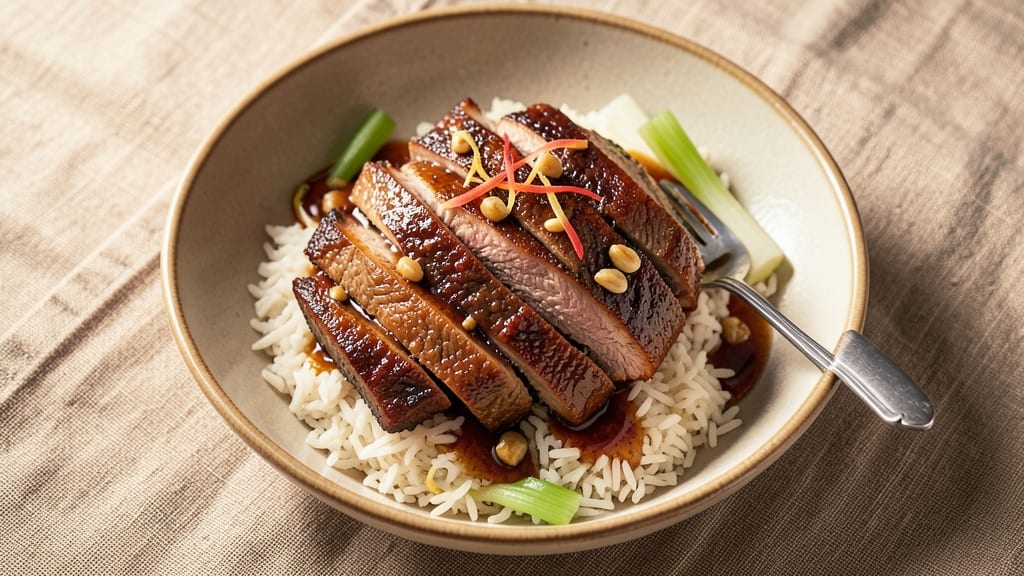
This beef chashu recipe transforms tough cuts into melt-in-your-mouth perfection through slow braising—just like my Nonna’s Italian-inspired techniques taught me in that cramped Boston kitchen. The secret lies in a sweet soy marinade that tenderizes while creating that signature glossy sheen.
I’ve tested this recipe countless times, adjusting for beef’s different texture compared to traditional pork chashu.
What sets this apart is the foolproof method of low-and-slow cooking that develops deep flavor without drying out the meat. The marinade—equal parts soy sauce, mirin, and sugar—penetrates deeply, while aromatics like garlic and ginger build complex layers.
Ready in just 4 hours (mostly hands-off time), this dish delivers restaurant-quality results at home.
By the final slice, you’ll have tender, caramelized beef with a sticky-sweet glaze that clings beautifully. The texture is irresistibly juicy, with just enough resistance to hold its shape. Serve over steamed rice with a side of miso soup for the complete experience—this is comfort food elevated.
The beauty of chashu lies in its versatility. Use it in sandwiches, ramen bowls, or even tacos—each bite delivers that same melt-in-your-mouth satisfaction. Here’s how to make it perfectly every time.
Ingredients for beef chashu
Fourteen ingredients, four hours, melt-in-your-mouth beef perfection with sweet soy caramelized magic.
| Ingredient | Amount | Notes |
|---|---|---|
| Chuck Roast 🥩 | 2 lb | Well-marbled, cut into 1-inch cubes |
| Kosher Soy Sauce 🍶 | ½ cup | High-quality, low-sodium preferred |
| Dry Sherry 🍷 | ¼ cup | Substitute with mirin or dry white wine |
| Granulated Sugar 🍚 | ¼ cup | Light brown sugar for deeper flavor |
| Garlic Cloves 🧄 | 6 cloves | Peeled, smashed for maximum flavor |
| Fresh Ginger Root 🌿 | ½ inch | Peeled, sliced thinly |
| Fresh Ginger Root 🌿 | 2 tbsp | Grated finely for marinade |
| Sesame Oil 🫒 | 1 tbsp | Toasted, for finishing |
| Neutral Oil 🫒 | 1 tbsp | Vegetable or canola preferred |
| Diamond Crystal Kosher Salt 🧂 | 1 ½ tsp | Adjust to taste |
| Black Peppercorns 🌶️ | ½ tsp | Freshly cracked |
| Water 💧 | 1 cup | For braising liquid |
| Japanese Rice Vinegar 🍶 | 1 tbsp | For brightness |
| Green Onions 🧅 | 2 whole | Sliced thin for garnish |
The beef is non-negotiable here—chuck roast with visible marbling is your best bet. Costco or Whole Foods carry excellent cuts, but any well-marbled beef will work. Look for pieces with good fat distribution, not lean cuts. I always ask the butcher to cube it for me (1-inch pieces), which saves time and ensures even cooking. The soy sauce should be kosher-style—Kikkoman or Pearl River Bridge are my go-tos, but any high-quality brand works. For the ginger, fresh is mandatory—dried lacks the bright punch. Grab it at the Asian market if possible, where they often have it pre-sliced for convenience.
No sherry? Mirin or dry white wine works beautifully—just add a splash of sugar to balance. The sugar can be swapped for honey or maple syrup, but brown sugar gives that caramelized depth. Short on garlic? Garlic powder at half the amount is a pinch, but fresh is ideal. The sesame oil is for finishing—use toasted, not flavored. For the oil to sear, vegetable or canola works best. The rice vinegar adds brightness, but apple cider vinegar is a fine substitute. If you’re prepping ahead, slice the green onions last—they wilt fast.
This dish reheats like a dream—350°F for 10 minutes in its juices. Keeps 4-5 days in the fridge, freezes for 3 months if stored in an airtight container with the glaze. I portion mine into glass jars for easy reheating. The glaze thickens as it cools, so add a splash of water if it seems too stiff. Leftovers make killer sandwiches—just pile it high on crusty bread with a sprinkle of toasted sesame seeds.
Why You’ll Love This Recipe
- Umami Bomb: That combo of kosher soy and dry sherry? It’s like a flavor explosion in your mouth. The sugar caramelizes just enough to balance the salt, and the garlic? Oh, it’s there—crispy edges, juicy center, and a sauce that clings like a hug.
- Budget Beef Magic: A chuck roast is cheap, but it turns into something ridiculously good. No fancy cuts, no wasted money—just deep, rich flavor that makes you forget you’re eating something affordable. (Between us, my kids don’t even realize it’s not steak.)
Step-by-step instructions for beef chashu recipe
This method transforms tough chuck roast into melt-in-your-mouth beef chashu with a glossy, caramelized exterior.
Prepare the Marinade and Cut the Meat
In a large mixing bowl, combine the 0.5 cup kosher soy sauce, 0.25 cup dry sherry, 0.25 cup granulated sugar, 2 tablespoons fresh ginger root, 1.5 teaspoons diamond crystal kosher salt, and 0.5 teaspoon black peppercorns. Whisk until the sugar and salt fully dissolve. This marinade is the flavor foundation – the sugar will caramelize beautifully during braising, creating that signature chashu glow.
While the marinade works its magic, cut the 2 lb chuck roast into 1-inch cubes. I use a sharp boning knife for clean cuts and even cooking. Arrange the meat cubes in a single layer and pour the marinade over them, ensuring each piece is well coated. Cover and refrigerate for at least 4 hours, or preferably overnight. The longer it marinates, the more tender and flavorful the beef will become.
Sear the Chashu for Depth of Flavor
Remove the meat from the refrigerator and let it sit at room temperature for 30 minutes while you prepare the braising liquid. Heat 1 tablespoon neutral oil in a large Dutch oven over medium-high heat. Working in batches to avoid crowding, sear the chashu cubes until they develop a deep golden-brown crust on all sides – about 2-3 minutes per batch. This step is crucial for building layers of flavor through the Maillard reaction.
As you sear, keep the cooked cubes warm in a separate bowl. Once all pieces are seared, remove the Dutch oven from heat and carefully pour out all but 1 tablespoon of the rendered fat. This remaining fat will form the base for your braising liquid and prevent the meat from sticking during cooking.
Braise Until Fork-Tender
Return the Dutch oven to medium heat and add the 6 cloves garlic cloves and 0.5 inch fresh ginger root, sliced thinly. Sauté for 30 seconds until fragrant – this releases their essential oils and infuses the braising liquid with aromatic depth. Pour in the 1 cup water, scraping up any browned bits from the bottom of the pot.
Return all the seared chashu to the Dutch oven, along with any accumulated juices. Bring the liquid to a gentle simmer, then reduce heat to low and cover tightly. The key here is patience – braise for 3 hours until the beef is fork-tender and the sauce has reduced to a glossy, syrupy consistency. I like to check periodically, ensuring there’s always enough liquid to cover the meat by at least 1 inch. If needed, add a splash of water.
Finish with Brightness and Garnish
Once the chashu is tender, carefully transfer the meat to a serving platter using tongs. Skim any excess fat from the braising liquid, then stir in the 1 tablespoon sesame oil and 1 tablespoon japanese rice vinegar. Simmer uncovered for 5-7 minutes to reduce the sauce slightly and intensify its flavor. The vinegar adds a bright, tangy contrast to the rich, sweet-savory notes.
Slice the 2 whole green onions thinly and arrange them on top of the chashu. The green onions add a fresh, crisp element that cuts through the richness of the braised beef. Serve immediately with steamed rice, allowing guests to spoon up that glorious, glossy sauce with every bite. The contrast of the warm, tender beef with cool rice creates the perfect textural experience.
Pro Tips For Making Beef Chashu
- Trim the Fat First: Chuck roast comes with a thick fat cap—slice it down to ¼-inch before cooking. I learned this the hard way when my first batch rendered grease like a volcano, drowning the garlic and sherry instead of caramelizing them. Thin fat = even cooking and better flavor distribution.
- Brown in Batches: Don’t crowd the pan. Sear the chuck in two rounds if needed—high heat, 3-4 minutes per side—until it’s deep brown, not just pink. I used to rush this, and my chashu tasted more like stew than braise. Patience here makes all the difference in the sauce’s depth.
- Deglaze with Sherry First: After searing, immediately pour in the dry sherry and let it bubble for 30 seconds before adding soy and sugar. The alcohol burns off faster this way, and the garlic cloves (peeled and smashed) get a head start on flavor instead of sitting in raw grease. Trust me, your future self will notice.
- Skip the Boil: Once the sauce is simmering, drop the heat to lowest and cover the pot. The chashu needs to steam, not boil—otherwise, it’ll turn tough. I used to walk away and come back to a watery mess. A gentle simmer (tiny bubbles, occasional skimming) keeps it fork-tender.
Make-ahead tips for leftovers
Marinade Prep Ahead
I always prep the marinade the night before—it’s the easiest way to save time. Combine all ingredients in a quart-sized mason jar and store in the fridge. The sugar will dissolve completely, and the flavors meld beautifully overnight.
Pro tip: Use a glass jar with a tight seal to prevent any leaks or odors from mixing with other fridge contents. This also lets you marinate the beef while you’re at work or running errands. 💡
Meat Prep Shortcut
If you’re short on time, ask your butcher to cube the chuck roast for you—it’s a game-changer. Most butchers will do this for free if you ask nicely. If you’re cutting it yourself, use a sharp boning knife and cut the meat into 1-inch cubes for even cooking.
Once cubed, place the beef in a large zip-top bag and pour the marinade over it. Seal tightly and refrigerate for at least 4 hours—I often do 8 hours for maximum tenderness. 🥩
Braising Liquid Prep
While the beef marinates, prep the braising liquid components in advance. Mince the garlic and slice the ginger thinly, then store them in a small container in the fridge. When ready to cook, simply sauté them in the Dutch oven for 30 seconds before adding the water.
This step ensures you’re not rushing during the actual braising process. I also like to measure out the water in advance and keep it handy—this prevents last-minute measuring mistakes. ⏱️
Freezer-Friendly Prep
For ultimate convenience, you can even prep the entire dish ahead and freeze it. After searing the beef and adding the braising liquid, let it cool completely, then transfer everything to a freezer-safe container or quart-sized freezer bags.
Label with the date and freeze for up to 3 months. When ready to cook, thaw overnight in the fridge, then proceed with the 3-hour braising as directed. The flavors develop beautifully during freezing, and the texture remains tender when reheated. ❄️
Portioning for Leftovers
If you’re feeding a crowd or planning leftovers, divide the cooked chashu into glass storage containers before serving. Portion the meat and sauce separately—this keeps the sauce from getting soggy and makes reheating a breeze. Store in the fridge for up to 5 days or freeze for 3 months.
To reheat, warm in a skillet over medium-low heat with a splash of water until heated through. I love using these leftovers for chashu sandwiches or ramen bowls later in the week. 🍱
Sauce Thickening Trick
If the sauce seems too thin after braising, don’t stress—just simmer it uncovered for an extra 5-10 minutes to reduce. For a quicker fix, mix 1 teaspoon cornstarch with 1 tablespoon water, then stir it into the sauce.
Simmer for 2 minutes until thickened. This trick works wonders if you’re short on time or the sauce didn’t reduce enough during braising. The result is a glossy, clingy sauce that coats every bite perfectly. 💫
Nutrition facts
Frequently asked questions
Why does beef chashu need a longer marinating time than pork?
Beef’s tougher muscle fibers require more time to break down compared to pork. The 4+ hour marinade (or overnight) ensures the soy-sugar mixture penetrates deeply, while the 3-hour braise completes the tenderizing process. This dual approach creates that signature melt-in-your-mouth texture that beef chashu is known for.
Can I substitute beef chuck with another cut?
While chuck roast is ideal for its marbling, you can use brisket or short ribs with similar results. Avoid lean cuts like sirloin—they lack the fat needed for tenderizing. If using brisket, cut it against the grain for even cooking. The marinade time may need extending to 6-8 hours for tougher cuts.
What’s the best way to serve beef chashu?
Traditionally served over steamed Japanese rice with miso soup and pickled vegetables. For a Western twist, try it in banh mi sandwiches with pickled daikon and cilantro, or over mashed potatoes with gravy. The glossy sauce works beautifully on noodles too—just toss with udon or ramen for instant flavor.
My sauce turned out too thin—how can I fix it?
Simmer the sauce uncovered for 5-10 extra minutes to reduce naturally. For quicker results, mix 1 tsp cornstarch with 1 tbsp water, stir into the sauce, and simmer for 2 minutes until thickened. This creates that signature sticky glaze that makes chashu so irresistible. The sauce should coat the back of a spoon when finished.
Can I make beef chashu in a slow cooker?
After searing the beef, transfer everything to a slow cooker and cook on low for 6-8 hours or high for 4-5 hours. The slow cooker maintains consistent low heat, which is perfect for tenderizing beef. Just ensure the meat stays submerged in liquid. The sauce may need thickening at the end as it won’t reduce as much.

- Texas Roadhouse Bread Recipe: Buttery, Pull-Apart Softness With Every Tear - November 16, 2026
- Pork Tenderloin With Cranberry Sauce Recipe: Sweet-Tart Glaze That Elevates Every Bite - November 16, 2026
- Beet and Goat Cheese Recipe: Earthy Sweetness Meets Tangy Creaminess - November 16, 2026