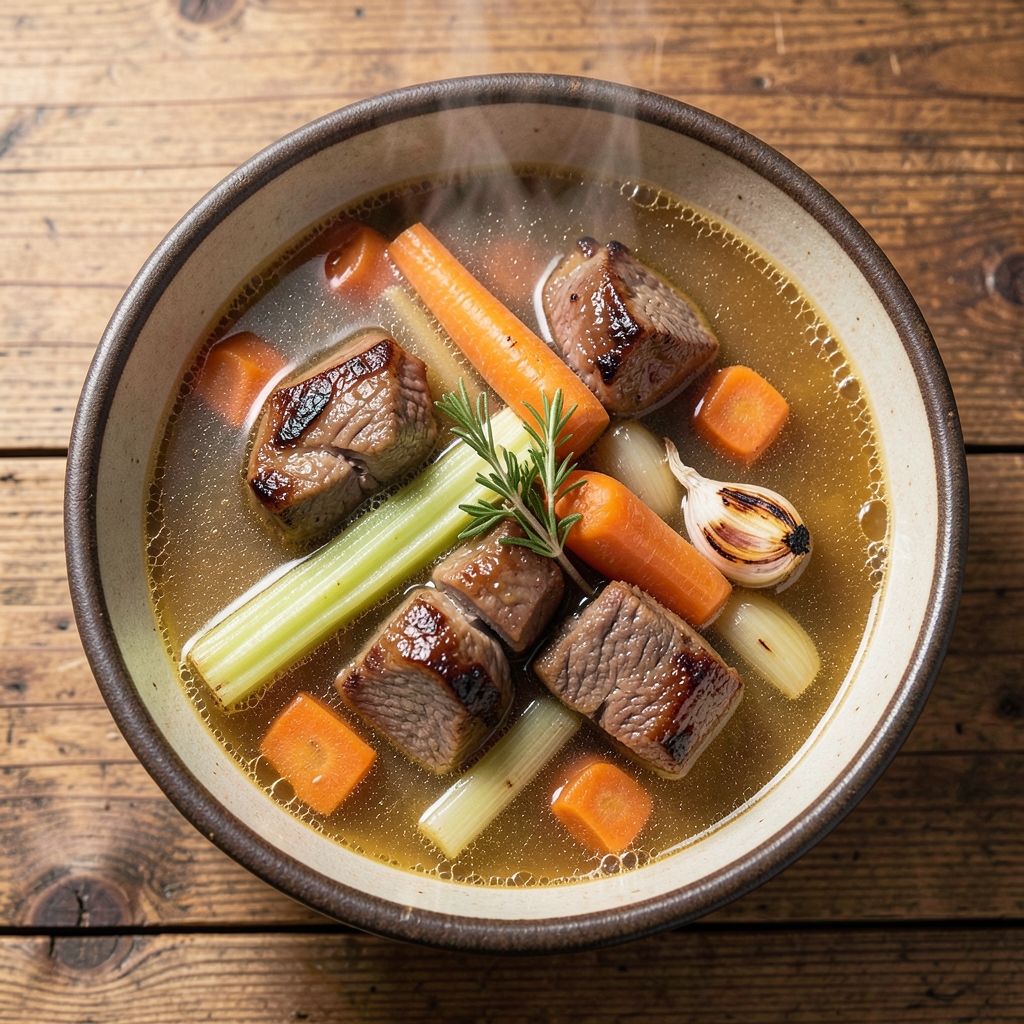
This beef bouillon soup recipe delivers deep, umami-rich flavor in one pot—simpler than you might think, with just patience and the right technique. This recipe transforms simple ingredients into a hearty, aromatic soup with layers of savory depth that will make your kitchen smell like a cozy European bistro.
I’ve refined this method over years of testing, ensuring every spoonful delivers that perfect balance of meaty richness and comforting warmth.
The secret lies in slow simmering, which allows the beef to tenderize and infuse the broth with maximum flavor. We’ll use a combination of beef bones, aromatic vegetables, and herbs to build a complex base, then finish with tender beef chunks and fresh parsley for brightness.
Unlike store-bought versions, this homemade soup develops a depth of flavor that’s impossible to replicate—think velvety texture, robust umami, and just the right amount of seasoning.
What you’ll end up with is a restaurant-quality soup that’s rich yet balanced, with tender beef that practically melts in your mouth and a broth so flavorful it’ll have everyone asking for seconds.
The best part? It’s a one-pot meal, meaning minimal cleanup and maximum satisfaction. Whether you’re feeding a family or meal prepping for the week, this recipe delivers comfort in every bowl.
Ready to make soup that tastes like it simmered all day? Let’s get started with ingredients that are easy to find and techniques that guarantee success—no fancy equipment required. The result will be worth every minute of simmering time.
Ingredients for beef bouillon soup
Simple ingredients that build restaurant-quality depth in one aromatic pot.
| Ingredient | Amount | Notes |
|---|---|---|
| Beef Bones 🦴 | 2 lb | Marrow-rich for extra flavor |
| Beef Chunks 🥩 | 1 ½ lb | Chuck roast, cut into 1-inch pieces |
| Yellow Onion 🧅 | 1 whole | Chopped, medium size |
| Carrots | 3 medium | Peeled, cut into 1-inch chunks |
| Celery Stalk 🥬 | 3 whole | Chopped, including leaves |
| Garlic Cloves 🧄 | 6 cloves | Peeled, smashed |
| Tomato Paste 🍅 | 2 tbsp | High-quality, no sugar added |
| Dried Thyme 🌿 | 1 tbsp | Or 1 tbsp fresh thyme leaves |
| Dried Parsley 🌿 | 1 tbsp | For finishing |
| Bay Leaves 🍃 | 2 whole | Remove before serving |
| Black Peppercorns 🌶️ | 1 tsp | Crushed, not ground |
| Salt 🧂 | 1 ½ tsp | Kosher or sea salt |
| Water 💧 | 8 cups | Enough to cover ingredients |
| Fresh Parsley 🌿 | ¼ cup | Chopped, for garnish |
| Extra-Virgin Olive Oil 🫒 | 2 tbsp | For sautéing vegetables |
The beef bones are the flavor foundation—look for marrow-rich cuts at your butcher or Costco for the best results. Chuck roast for the beef chunks delivers that melt-in-your-mouth texture, and most grocery stores carry it pre-cut. For the vegetables, organic carrots and celery from the store’s produce section work perfectly, but if you’re feeling fancy, hit up a farmers market for even fresher produce. The tomato paste should be thick and vibrant—Mutti or Barilla brands are my go-to for consistent quality. Dried herbs lose potency quickly, so if your thyme or parsley smells stale, it’s time to replace them.
No beef bones? Substitute with 2 lbs beef shank for similar depth, though the broth will be slightly less rich. Fresh thyme or parsley? Use one-third the amount of dried. The tomato paste can be swapped for 1 cup crushed tomatoes if you prefer, though it will dilute the umami slightly. For a quicker version, beef bouillon cubes can replace half the water (1 cube per 4 cups water), but homemade always tastes better. If you’re short on time, pre-chopped mirepoix from the grocery store’s frozen section works in a pinch—just thaw and drain well.
This soup tastes even better the next day as flavors meld. Store in an airtight container in the fridge for up to 5 days or freeze portions for 3 months. For meal prep, I double the recipe and freeze half—just thaw overnight in the fridge before reheating. The broth thickens as it cools, so add a splash of water when reheating. Garnish with fresh parsley right before serving to keep it vibrant. Leftovers reheat beautifully on the stove or in the microwave, though stove-top reheating preserves texture better.
Why You’ll Love This Recipe
- Soup in a Skillet: I swear by this—just toss beef bones, chunks, and a rough chop of onion, carrots, and celery into a pot with water. No fancy prep, no stress, and the bones do all the work while you sip wine (or tea, no judgment).
- Rich Without the Fuss: That first sip? Pure umami gold. The beef bones melt into the broth, turning it into something deep and savory, while the carrot and celery add natural sweetness. Honestly, it’s the kind of flavor that makes you pause mid-spoonful.
- Leftovers That Shine: Make a big batch—this soup only gets better the next day. I freeze portions for lazy Mondays, and reheating it? Just add a splash of water and a minute of simmering. No sad, watery leftovers here.
- Budget-Buster Magic: Beef bones and chunks stretch into a whole meal for pennies. Between us, this is how I feed my family hearty, satisfying food without breaking the bank. Plus, the veggies? They’re the cheap, crunchy heroes no one skips.
Step-by-step instructions for beef bouillon soup
This method delivers restaurant-quality depth with minimal effort—focus on technique, not timing.
Prepare the Bones and Sear the Meat
Preheat your oven to 375°F. Rinse the 2 lb beef bones thoroughly under cold water to remove any impurities, then pat them completely dry with paper towels. Place them in a large Dutch oven or heavy pot and roast for 45 minutes. This step caramelizes the bone surfaces, intensifying flavor.
While the bones roast, heat 2 tablespoons extra-virgin olive oil in the same Dutch oven over medium-high heat. Add the 1.5 lb beef chunks and sear on all sides until deeply browned (5-6 minutes total). Remove the meat and set aside. The browned bits will form the base of your rich bouillon.
Sauté Vegetables and Build the Base
In the same Dutch oven (with all those flavorful browned bits), add the chopped 1 whole yellow onion, 3 medium carrots, and 3 whole celery stalks. Cook over medium heat for 8-10 minutes, stirring occasionally, until the vegetables soften and the onion becomes translucent. Add the 6 cloves smashed garlic cloves and cook for another 30 seconds until fragrant.
Stir in the 2 tablespoons tomato paste and cook for 1 minute to remove its raw taste. Sprinkle in the 1 tablespoon dried thyme, 1 tablespoon dried parsley, 2 whole bay leaves, 1 teaspoon crushed black peppercorns, and 1.5 teaspoons salt. Stir well to coat the vegetables completely—this ensures even flavor distribution throughout the soup.
Simmer the Bouillon for Maximum Flavor
Return the seared beef chunks to the Dutch oven along with the roasted bones. Pour in 8 cups water, ensuring all ingredients are submerged. Bring to a rolling boil over high heat, then immediately reduce to a gentle simmer. Cover partially and cook for 3-4 hours, skimming any foam or impurities that rise to the surface with a ladle.
After 3 hours, check the broth consistency—it should be deep amber and rich. If it’s too cloudy, continue simmering uncovered for another 30 minutes to allow impurities to settle. The meat should be fork-tender and easily pull away from the bones. Here’s the thing—don’t rush this step. The longer it simmers, the more collagen breaks down into gelatin, creating that velvety texture we’re after.
Strain and Finish the Soup
Using a fine-mesh strainer or cheesecloth, carefully strain the broth into a clean pot, pressing gently on the solids to extract maximum flavor. Discard the bones and vegetables. Return the strained broth to the heat and bring to a gentle simmer. Taste and adjust seasoning—you might need an additional ½ teaspoon salt or ¼ teaspoon black pepper to balance the flavors.
Garnish each serving with 2 tablespoons chopped fresh parsley just before serving. The bright parsley cuts through the richness of the bouillon while adding a final touch of freshness. Serve immediately with crusty bread to soak up every last drop of that umami-packed liquid gold.
Pro Tips For Making Beef Bouillon Soup
- BLANCH BONES FIRST: I learned this the hard way—skip it, and your broth will taste like a butcher shop. Parboil the beef bones for 10 minutes in salted water before adding them to the pot. This loosens dirt and impurities so they don’t cloud your broth later.
- CHAR THE VEGETABLES: Don’t just simmer the onion, carrots, and celery—they need color. Sear them in oil over medium-high heat until the onions turn deep gold and the carrots caramelize slightly. This builds flavor that raw veggies can’t match.
- SKIP THE BOILING POINT: Your soup doesn’t need to roar like a volcano. Keep the heat low enough to maintain a gentle simmer (tiny bubbles, not rolling). Boiling wastes time and makes the broth bitter—your bones will render flavor just fine at 180°F.
- USE THE BONE FRAGMENTS: After you pull the beef chunks, crush the leftover bone shards with a rolling pin and toss them back in. They’re packed with marrow and collagen—more flavor, zero extra effort. (Yes, even if it looks like you’re making a crime scene.)
Wine and beer pairings for this beef bouillon soup
Red Wine Classics
A bold red wine like Chianti Classico from Tuscany is my go-to pairing for this beef bouillon soup. Its bright acidity and notes of cherry, dried herbs, and subtle earthiness cut through the soup’s richness while complementing the umami depth.
Look for a 2020-2022 vintage with at least 12% alcohol—brands like Castello di Volpaia or Ruffino deliver consistent quality. Serve slightly chilled (60-65°F) to enhance its refreshing contrast against the warm soup. 🍷
Full-Bodied Reds
For those who prefer deeper flavors, a Syrah/Shiraz from the Rhône Valley or Australia offers perfect harmony. Try Guigal Côte-Rôtie for its smoky, blackberry notes that mirror the soup’s caramelized beef essence.
Alternatively, a Malbec from Argentina—like Catena Zapata—brings rich plum and spice that stand up to the soup’s robust profile. These wines should be served at 65-68°F to preserve their complexity.
Crisp White Options
If you prefer white wine, an oaked Chardonnay from Burgundy or California shines here. Seek out Louis Latour Montrachet for its buttery texture and citrus undertones that balance the soup’s heartiness.
For a lighter option, Viognier from Condrieu—like Domaine Alain Graillot—adds floral notes that refresh the palate. Serve whites at 48-52°F to maintain their crispness.
Beer Pairings
A dark lager like Paulaner Salvator or Ayinger Celebrator works beautifully with this soup. Their malty sweetness and caramel notes enhance the beef’s richness without overpowering it. For craft beer lovers, a Belgian-style dubbel—such as Westmalle Dubbel—offers a balanced sweetness and spice that complements the umami.
Serve beers at 45-50°F to highlight their depth.
Non-Alcoholic Choices
For a non-alcoholic option, sparkling apple cider like Martinelli’s adds a crisp, fruity contrast to the soup’s savory profile. Alternatively, a chilled hibiscus iced tea (brew hibiscus flowers with honey and lemon) provides tartness that cleanses the palate. Both options should be served ice-cold to enhance their refreshing qualities. 💧
Nutrition facts
Frequently asked questions
Can I make this beef bouillon soup without beef bones?
For a quicker version, substitute the bones with 2 lbs beef shank or 2 beef bouillon cubes (dissolved in 4 cups water). The flavor will be slightly less deep, but still rich and satisfying. The key is to simmer the meat longer to extract maximum flavor—aim for 2-3 hours instead of 3-4 hours.
How do I know when the beef is fully tender?
The beef is done when it easily pulls apart with a fork and no longer feels stringy. For best results, check after 2.5 hours of simmering. Insert a fork into the largest piece—if it slides in smoothly, it’s ready. If not, give it another 30-60 minutes. Overcooking can make it dry, so monitor closely toward the end.
Can I make this soup in an Instant Pot or slow cooker?
Yes! For an Instant Pot, sear the bones and meat first, then add all ingredients and pressure cook for 90 minutes (natural release). In a slow cooker, follow the same steps but cook on low for 8 hours or high for 5 hours. The texture will be slightly different (less gelatinous), but still delicious. Just don’t skip the skimming step—it removes impurities that can make the broth cloudy.
Why does my soup taste bland?
Blandness usually means the broth didn’t develop enough flavor. First, check your seasoning—add more salt or black pepper to taste. If it still lacks depth, try adding a 1 teaspoon Worcestershire sauce or a splash of red wine at the end. For future batches, don’t rush the simmering time—3-4 hours is key for maximum umami. The bones must break down completely to release their collagen.
Can I freeze this soup for later?
Yes, it freezes beautifully! Let the soup cool completely, then store in an airtight container for up to 3 months. For best texture, thaw overnight in the fridge before reheating. Avoid microwave reheating—use the stovetop on low heat instead. Stir occasionally and add a splash of water if it thickens too much. The flavors actually improve after freezing!

- Scarpetta Spaghetti Recipe: Garlicky Bread Crumbs for Ultimate Comfort - November 8, 2026
- Amish Strawberry Bread Recipe: Buttery Swirls and Fragrant Vanilla Notes - November 8, 2026
- Fried Fish With Tomato Sauce Recipe: Crispy Bites in Zesty Red Sauce - November 8, 2026