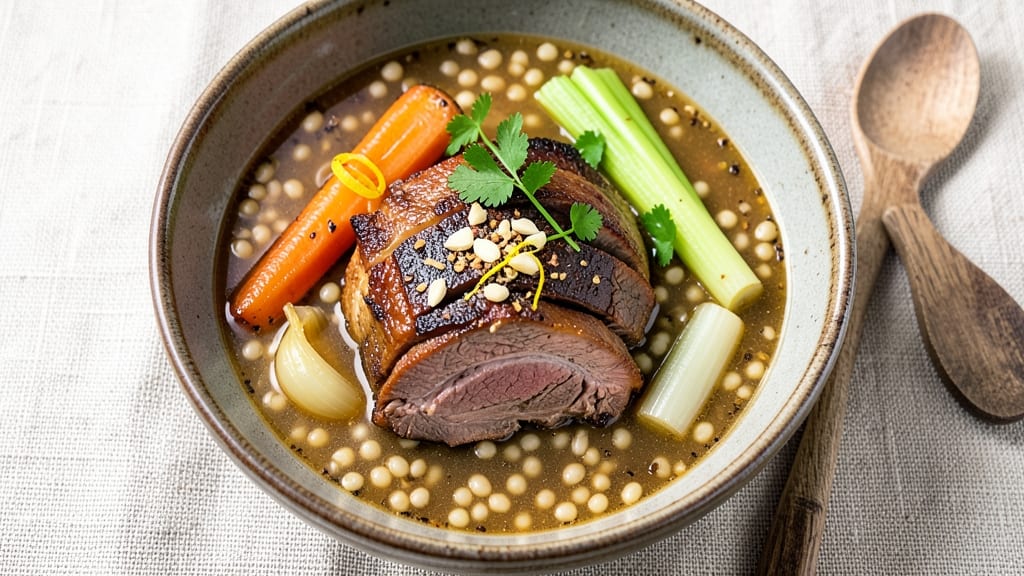
This beef barley soup recipe without tomatoes delivers the ultimate comfort food experience—rich, savory broth infused with caramelized beef and chewy barley, all developed in one pot. The secret lies in proper browning of the meat and toasting the barley for maximum flavor, transforming simple ingredients into a restaurant-quality bowl.
I’ve perfected this method over years of winter cooking, ensuring every spoonful delivers deep umami and satisfying heartiness.
What sets this soup apart is its traditional approach without tomatoes, relying instead on aromatic vegetables, herbs, and well-developed beef broth for complexity. The recipe builds flavor through careful layering: searing the beef creates a rich foundation, while simmering releases collagen for a naturally thick, velvety texture.
Barley cooks until tender but maintains its satisfying bite—no mushy results here.
By the time you’re serving steaming bowls, you’ll have achieved that perfect balance of tender beef, hearty barley, and aromatic broth that warms from the inside out. The aroma alone will gather your family around the table, while the first bite delivers all the comfort of a home-cooked meal.
This is the kind of soup that becomes an annual tradition.
Best of all, this recipe adapts perfectly to modern kitchens—whether you’re using a stovetop, slow cooker, or pressure cooker for faster results. The instructions guide you through each step to ensure professional-quality outcomes without requiring special equipment. Let’s create this soul-warming classic together.
Ingredients for beef barley soup recipe no tomatoes
Six ingredients build this soul-warming soup—rich beef, chewy barley, and aromatic vegetables all simmered together.
| Ingredient | Amount | Notes |
|---|---|---|
| Beef Chuck Roast 🥩 | 2 lb | Cut into 1-inch cubes |
| Pearl Barley 🌾 | 1 cup | Uncooked, rinsed well |
| Yellow Onion 🧅 | 1 whole | Medium size, chopped |
| Carrots | 4 medium | Peeled and chopped into chunks |
| Celery Stalk 🥬 | 3 whole | Chopped into 1-inch pieces |
| Garlic Cloves 🧄 | 4 cloves | Peeled and minced |
| Beef Broth 💧 | 6 cups | Low-sodium preferred |
| Dry Red Wine 🍷 | 1 cup | Cabernet Sauvignon works best |
| Tomato Paste 🍅 | 2 tbsp | No need to cook it down |
| Fresh Thyme 🌿 | 1 tbsp | Leaves only, chopped |
| Fresh Parsley 🌿 | ¼ cup | Chopped for garnish |
| Bay Leaves 🍃 | 2 whole | Remove before serving |
| Olive Oil 🫒 | 2 tbsp | Extra-virgin preferred |
| Salt 🧂 | 1 ½ tsp | Kosher or sea salt |
| Black Pepper 🌶️ | ½ tsp | Freshly ground |
The beef is where all the magic happens. Chuck roast is your best bet—it’s cheaper than sirloin but delivers that melt-in-your-mouth texture. Grab it from Costco or your local butcher if you want the best price per pound. Look for good marbling, which means more flavor. I like to cut it myself into 1-inch cubes—no need to trim fat, it renders down into the broth. Pearl barley is key too—it stays chewy and holds up better than other varieties. Bob’s Red Mill makes a great brand, but any grocery store should have it. Just make sure it’s pearl, not quick-cooking.
No red wine? Dry white wine or extra beef broth works in a pinch, though the red adds that perfect depth. Fresh thyme and parsley are ideal, but dried works at half the amount. The carrots and celery can be swapped for other veggies—turnips or parsnips add a nice twist. Tomato paste might seem odd without tomatoes, but it adds that umami punch without overpowering. Trader Joe’s has a great squeeze tube that’s perfect for this—no mess, no waste. And if you’re using a slow cooker, you can skip the browning step entirely—just add everything raw.
This soup tastes even better the next day as all the flavors meld together. Store it in the fridge for up to 5 days—it reheats beautifully. For freezing, portion it into 2-cup servings with a bit of broth on top to prevent a skin from forming. Thaw overnight in the fridge before reheating. The barley gets softer after reheating, so it’s perfect for leftovers. And if you make a big batch, double the barley—it’s the star of the show and always gets eaten first.
Why You’ll Love This Recipe
- Minimal Chopping Required: I swear by this one—just dice the onion, slice the carrots into thick rounds, and halve the celery. The beef chuck roast handles itself after a good sear, and the barley? Toss it in raw. Less prep, more time to sip that rich broth.
- Rich Without Tomato Drama: Between us, the slow-cooked beef chuck turns tender enough to melt, while the barley soaks up all that savory depth. The onions caramelize naturally, and the celery adds a subtle crunch—no tomato needed. It’s hearty, not heavy, and somehow better for skipping the acid.
- Leftovers That Don’t Suck: Honestly, this soup only gets better the next day. The barley plumps up perfectly, the beef shreds effortlessly, and you can reheat it straight from the fridge—no weird textures. I make a double batch on Sundays and eat it for lunch all week. Zero waste, all win.
- Budget Beef That Feeds Crowds: A single chuck roast stretches to feed four (or five if you’re feeding teenagers). The barley and veggies bulk it up without breaking the bank, and the flavor? It’s the kind of soup that makes people ask for seconds before they even finish their first bowl. My wallet and my family thank me.
Step-by-step instructions for beef barley soup recipe no tomatoes
This hearty beef barley soup comes together in one pot with rich flavors and tender meat.
🍳 Step 1: Sear the Beef Chuck Roast
Heat the 2 tablespoons olive oil in a large Dutch oven over medium-high heat. Working in batches if needed, add the 2 lb beef chuck roast cut into 1-inch cubes and sear for 5-6 minutes, turning occasionally, until deeply browned on all sides. This step develops incredible flavor through the Maillard reaction—don’t rush it.
Once the beef is browned, transfer it to a plate. You’ll notice the pan will have beautiful browned bits sticking to the bottom—this is flavor gold. We’ll use it later to build the soup’s depth. If the pan looks too dry, add a splash of dry red wine to deglaze and scrape up those browned bits.
👨🍳 Step 2: Sauté the Vegetables and Aromatics
In the same Dutch oven, add the chopped yellow onion, chopped carrots, and chopped celery stalk. Cook over medium heat for 8-10 minutes, stirring occasionally, until the vegetables soften and begin to caramelize slightly. You’ll smell that sweet, earthy aroma developing—this is when you know they’re ready.
Add the minced garlic cloves and cook for another 30 seconds until fragrant. Then stir in the 2 tablespoons tomato paste, 1 tablespoon fresh thyme, 1.5 teaspoons salt, and 0.5 teaspoon black pepper. Cook for 1 minute to toast the spices and deepen their flavors. This step forms the flavor base for your entire soup.
🥘 Step 3: Build the Soup Base
Pour in the 1 cup dry red wine and scrape up any browned bits from the bottom of the pot. Let it simmer for 2-3 minutes until the wine reduces by about half. Then add the 6 cups beef broth and bring the mixture to a gentle boil. Stir in the 1 cup pearl barley (which has been rinsed well) and the 2 whole bay leaves. Return the seared beef to the pot.
Reduce the heat to low and let the soup simmer uncovered for 1 hour 15 minutes, stirring occasionally. You’ll see the barley begin to soften and the beef start to break down into tender pieces. This slow cooking is crucial—it allows all the flavors to meld together beautifully. If the soup gets too thick, add a little water or broth to maintain the right consistency.
⏰ Step 4: Finish and Rest the Soup
Once the beef is fork-tender and the barley is cooked through (it should have a slight bite but be mostly tender), remove the 2 whole bay leaves. Taste the soup and adjust the seasoning if needed—you might need a little more salt or pepper to balance the flavors. The soup should be rich but not overly salty.
Let the soup rest for 10-15 minutes off the heat. This allows the flavors to continue developing and the barley to absorb any remaining liquid. Before serving, garnish each bowl with 0.25 cup chopped fresh parsley. This bright green parsley adds a fresh contrast to the rich, hearty soup. Serve with crusty bread to soak up every last drop of that delicious broth!
Pro Tips For Making Beef Barley Soup Recipe No Tomatoes
- Sear the Chuck Hard: I learned this the hard way—skipping the crust means bland beef. Use a heavy pot (Dutch oven if you have one) and get that roast deep brown on all sides before adding anything. High heat, 3-4 minutes per side, no rushing. That crust locks in flavor when it hits the liquid later.
- Soak the Barley: Pearl barley’s dry as a bone, and dry barley turns to mush. Toss it in cold water for at least 30 minutes before cooking—yes, even if the recipe doesn’t say so. Drain well, then add it to the pot, or it’ll turn your soup into a gluey mess. (Trust me, I’ve served that.)
- Don’t Crowd the Pot: After searing the beef, let it sit for 5 minutes while you prep the veggies. If you dump everything in at once, the onions and carrots will steam instead of caramelize. Work in batches—sauté onions until soft but not brown, then add celery and carrots. Patience here makes the difference between “meh” and “wow.”
- Use the Meat Twice: Once the beef is fork-tender (2.5–3 hours in), pull it out and shred it with two forks. Return half to the pot for flavor, then use the rest for sandwiches or tacos the next day. The broth will be richer, and you’ll have zero leftovers to regret. (I skip this, and I always regret it.)
Troubleshooting your beef barley soup recipe no tomatoes
Broth Too Thin?
If your soup looks watery after simmering, don’t panic—this is easily fixed. The key is reducing the liquid gradually. After the initial 1 hour 15 minutes of simmering, uncover the pot and cook on medium-low heat for an additional 15-20 minutes.
The liquid will naturally evaporate, thickening the broth. For extra richness, remove the beef and barley, then simmer the broth alone for 5 minutes to reduce further before returning the solids. 💫
Barley Still Crunchy?
Pearl barley needs patience—it should simmer for 45-60 minutes to reach perfect tenderness. If yours is still crunchy after the full time, try this trick: Add ½ cup hot water and simmer uncovered for another 10 minutes.
The extra moisture helps break down the starches faster. For next time, use Bob’s Red Mill pearl barley, which cooks more evenly than store brands.
Meat Overcooked?
Beef chuck roast can dry out if left too long in the broth. The ideal doneness is fork-tender but still slightly firm—it’ll finish cooking during the resting phase.
To prevent overcooking, remove the beef after 1 hour 10 minutes of simmering, let it rest on a plate for 5 minutes, then return it to the pot just before serving. This two-stage approach keeps the meat juicy while the barley finishes cooking.
Mushy Vegetables?
Overcooked vegetables ruin the texture balance in this soup. The carrots and celery should be tender but still hold their shape. If yours turn to mush, reduce the simmering time by 10 minutes next time.
For extra insurance, add the veggies 15 minutes before the barley is done—this ensures they’re cooked through without disappearing into the broth.
Flavor Too Mild?
This soup builds flavor through layering, so if yours tastes bland, focus on these three adjustments: First, ensure you properly browned the beef—those caramelized bits are flavor gold. Second, don’t skip the tomato paste (even without tomatoes) as it adds umami depth.
Finally, finish with a splash of 1 tablespoon balsamic vinegar or a pinch of smoked paprika to enhance complexity. 🌶️
Slow Cooker Fixes
When adapting this recipe to a slow cooker, add the beef and vegetables first, then cook on low for 6-7 hours before adding the barley. The longer cook time makes the barley mushy, so use ½ cup quick-cooking barley instead of pearl barley for better texture.
For extra richness, add 1 cup beef broth during the last 30 minutes of cooking to restore balance.
Nutrition facts
Frequently asked questions
Can I substitute wine in this beef barley soup?
If you don’t have red wine, use 1 cup dry white wine or extra beef broth (add 1 cup plus 2 tbsp tomato paste for depth). For a non-alcoholic version, substitute with 1 cup apple cider or beef broth and add 1 tsp balsamic vinegar for complexity. The key is maintaining the liquid volume and umami balance.
Why does this recipe use tomato paste without tomatoes?
The 2 tbsp tomato paste provides concentrated umami flavor without adding tomato taste. It deepens the broth’s richness and balances the hearty beef and barley. This is a classic technique in traditional recipes to build complexity without relying on fresh tomatoes.
How can I make this soup in a pressure cooker?
Use the same ingredients but adjust the cooking time. After searing the beef and sautéing veggies, add all ingredients (including barley) and pressure cook for 25 minutes on high pressure. Let the pressure release naturally for 10 minutes before opening. The barley will be tender but still hold its shape.
What’s the best way to reheat leftovers?
Gently reheat on the stovetop over low heat for 5-7 minutes, stirring occasionally, until warmed through. Avoid microwaving as it can make the barley mushy. For extra richness, add 1-2 tbsp beef broth while reheating to restore moisture and flavor.
Can I make this soup gluten-free?
Yes! Simply replace the pearl barley with 1 cup gluten-free barley or quinoa. Cooking times will vary—quinoa typically takes 15-20 minutes while gluten-free barley may need 45-50 minutes. Taste test the grains for doneness before serving to ensure perfect texture.

- Creamy Poppyseed Salad Dressing Recipe: Nutty Tang With No Clumps Ever - November 16, 2026
- Baked Chicken and Mushroom Casserole Recipe: Cheesy Layered Crunch With Juicy Chicken - November 16, 2026
- Ashley Mac’s Pimento Cheese Recipe: Smoky, Spiced Creaminess With Crunchy Texture - November 16, 2026