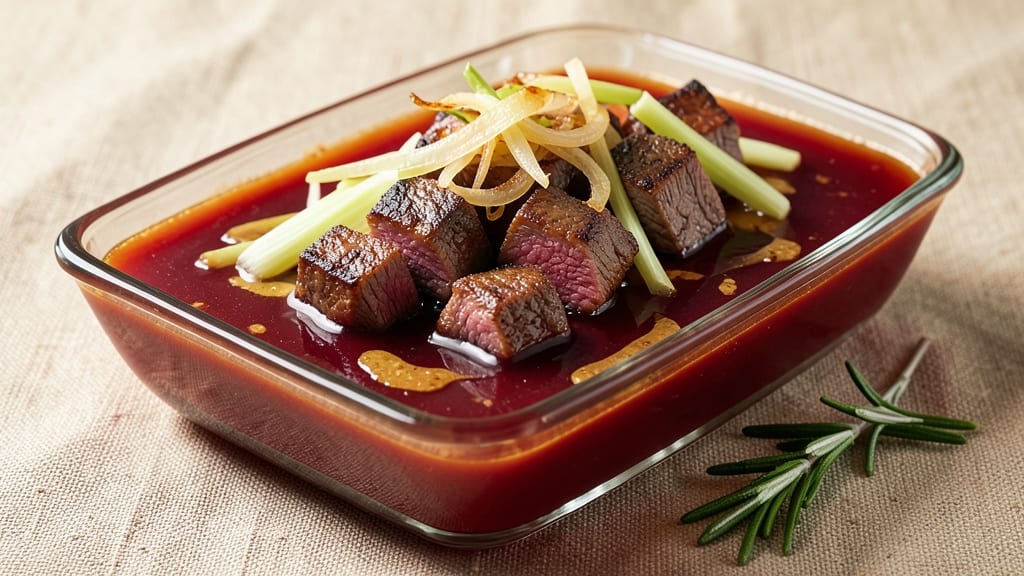
This beef aspic recipe transforms humble beef into a showstopping centerpiece that combines rich meat flavors with delicate gelatinous texture.
The process begins with searing beef to develop deep, caramelized notes before simmering it in aromatic broth until tender—where precision in timing and temperature creates the perfect foundation for that signature wobble. I’ve refined this technique over years of testing, ensuring home cooks achieve restaurant-quality results without specialized equipment.
The key to success lies in balancing the gelatin extraction with flavor concentration. After skimming impurities from the reduced broth, we incorporate gelatin to create a silky, translucent setting agent that binds everything together.
Chilling the aspic properly is non-negotiable—this determines whether your slices hold their shape or dissolve into a puddle. For modern cooks, I’ve streamlined the method while preserving the traditional elegance that makes aspic a staple in classic French cuisine.
What you’ll end up with is a dish that’s equal parts impressive and comforting: slices of tender beef suspended in a glossy, flavorful gelatin that melts gently on the tongue. The contrast between the firm meat and delicate broth creates an experience that’s both visually stunning and deeply satisfying.
Serve it at room temperature with mustard, cornichons, or a simple vinaigrette to complement its rich meatiness.
This recipe works beautifully as a main course for special occasions or as an elegant appetizer when sliced into delicate strips. The method scales effortlessly, making it ideal for holiday gatherings or when you want to elevate a dinner party with minimal fuss.
Let’s create something truly memorable in your kitchen.
Ingredients for beef aspic
Sixteen ingredients transform simple beef into restaurant-worthy aspic perfection.
| Ingredient | Amount | Notes |
|---|---|---|
| Beef Chuck Roast 🥩 | 2 lb | Trimmed of excess fat, cut into 1-inch cubes |
| Yellow Onion 🧅 | 1 whole | Medium size, peeled and halved |
| Carrot 🥕 | 2 whole | Medium size, peeled and roughly chopped |
| Celery Stalk 🌿 | 3 whole | Trimmed, cut into 2-inch pieces |
| Garlic Cloves 🧄 | 4 cloves | Peeled, lightly crushed |
| Dry White Wine 🍷 | 1 cup | Sauvignon Blanc or Pinot Grigio |
| Beef Broth 💧 | 4 cups | Low-sodium, homemade preferred |
| Unflavored Gelatin Powder 🧴 | 1 oz | High-quality, like Knox brand |
| Fresh Parsley 🌿 | ¼ cup | Chopped, for garnish |
| Extra-Virgin Olive Oil 🫒 | 2 tbsp | For searing beef |
| Dijon Mustard 🍯 | 1 tbsp | For serving, optional |
| Salt 🧂 | 1 ½ tsp | Kosher or sea salt |
| Black Peppercorns 🌶️ | 1 tsp | Freshly cracked |
| Bay Leaf 🌿 | 2 whole | For broth infusion |
The beef is non-negotiable—chuck roast delivers the best texture and flavor. Grab it from the butcher counter if possible, where they can trim it for you (or do it yourself with a sharp knife). Costco or Whole Foods usually carry pre-trimmed chuck, which saves time. Look for pieces with good marbling—this fat renders beautifully and adds richness to the broth. If you can’t find chuck, sirloin or flank steak work in a pinch, but they’ll be leaner and less tender. The aromatic vegetables (onion, carrot, celery) form the flavor base—the classic mirepoix trio—so don’t skip them even if you’re short on time.
No white wine? Dry vermouth or apple cider vinegar works in a bind, though wine adds depth. For the broth, homemade is ideal, but a high-quality low-sodium store-bought version (like Kitchen Basics) gets you 90% there. The gelatin powder must be unflavored—Knox brand dissolves perfectly without graininess. Fresh parsley is best for garnish, but dried parsley at half the amount works if you’re in a hurry. The Dijon mustard is optional but highly recommended—it cuts through the richness beautifully. If you can’t find it, whole-grain mustard is a decent substitute.
This aspic keeps beautifully—up to 5 days in the fridge once set, and 3 months frozen. For freezing, portion it into ramekins or loaf pans before chilling, then wrap tightly with plastic. To serve, unmold onto a platter and let sit at room temperature for 15-20 minutes before slicing. The slices hold their shape perfectly when chilled but soften slightly at room temp—ideal for elegant appetizers. Garnish with fresh parsley and a drizzle of mustard for that restaurant touch.
Why You’ll Love This Recipe
- One-Pot Magic: The chuck roast and veggies all simmer together—no chopping frenzy, no separate pans. I just toss in the onion, carrot, celery, and garlic, then let the broth work its magic while I sip wine and pretend I’m a fancy chef.
- Rich, Deep Umami Bomb: That slow-cooked beef releases flavors you won’t get anywhere else—the caramelized onion and garlic seeping into the broth, the meat so tender it falls apart. Honestly? It’s the kind of taste that makes you pause mid-bite and go, “Damn.”
- Budget Stretch King: A chuck roast is cheap, and the veggies? Basic pantry staples. I’ve fed six people for under $15 with this, and they all ask for seconds. Between us, that’s a win I’ll take every time.
Step-by-step instructions for beef aspic with rich gelatinous texture
Here’s how to create a velvety, meat-infused aspic that captures all the deep flavors of slow-cooked beef.
Sear the Beef and Build the Flavor Base
Heat a large Dutch oven over medium-high heat and add the 2 tablespoons extra-virgin olive oil. Once shimmering, add the 2 lb beef chuck roast cut into 1-inch cubes in a single layer, letting them sear undisturbed for 3-4 minutes until deeply browned on all sides. This caramelization forms the foundation of your aspic’s rich flavor.
Transfer the seared beef to a plate and set aside. In the same pot, add the halved yellow onion, chopped carrots, celery stalks, and lightly crushed garlic cloves. Sauté for 5-6 minutes until the vegetables soften and release their aromatic oils. Deglaze the pot with the 1 cup dry white wine, scraping up all the browned bits from the bottom—this is pure flavor you don’t want to lose.
Simmer the Broth and Infuse the Gelatin
Pour in the 4 cups beef broth, add the 2 whole bay leaf, 1.5 teaspoons salt, and 1 teaspoon freshly cracked black peppercorns. Return the beef to the pot, bring to a gentle boil, then reduce heat to low and simmer uncovered for 2-2.5 hours. You’re looking for the beef to become fork-tender and the broth to reduce slightly, intensifying its depth.
While the broth simmers, sprinkle the 1 ounce unflavored gelatin powder evenly over the surface. Let it bloom undisturbed for 5 minutes—this activates the gelatin without clumping. The broth should now have a slightly cloudy appearance, indicating the gelatin has fully incorporated. Strain the mixture through a fine-mesh sieve into a clean pot, pressing on the solids to extract every last bit of flavor.
Set the Aspic with Precision
Skimming off any remaining fat from the strained broth, return it to medium heat and warm gently until the gelatin fully dissolves—you’ll see the mixture become completely clear and glossy. Taste and adjust seasoning if needed, then carefully pour the hot liquid into a 6-cup aspic mold or shallow dish. Let it cool at room temperature for 1 hour before refrigerating.
Chill the aspic for at least 4 hours or overnight until fully set. The texture should be firm enough to hold its shape when gently shaken, with a delicate jiggle in the center. For serving, invert onto a platter and garnish with the chopped fresh parsley. The Dijon mustard can be served on the side for those who enjoy a tangy contrast to the rich beef flavors.
Serve with Confidence
Slice the aspic into neat portions using a hot knife—dip the blade in hot water between cuts to ensure clean edges. The result should be a glossy, wobbling center with pockets of tender beef and vegetables throughout. Serve immediately with crusty bread or alongside roasted vegetables to balance the richness.
This aspic keeps beautifully for 3-4 days refrigerated, making it perfect for meal prep. The gelatinous texture transforms simple beef into an elegant centerpiece that’s both impressive and comforting. The key is patience—rushing the chilling process will leave you with a grainy, unsatisfying result. Trust the process, and you’ll have a showstopping dish that tastes even better than it looks.
Pro Tips For Making Beef Aspic
- SKIM THE FAT FIRST: That thick layer of beef fat on your chuck roast? Don’t toss it—render it first in a cold pot over medium heat. I learned this the hard way when my first batch turned greasy and weak; the fat adds body and flavor that water alone can’t replicate. Let it melt slowly, then remove it with a spoon before adding liquids.
- CHOP VEGETABLES UNIFORM: Roughly chopped onions, carrots, and celery won’t disappear—they’ll just sit there looking sad. Cut them into even ½-inch pieces so they cook down completely and infuse the broth. (Yes, it takes 10 extra seconds, but your aspic won’t taste like a soup strainer missed its job.)
- STRAIN TWICE, PATIENCE PAYS: After simmering, strain the broth through a fine-mesh sieve and then a cheesecloth-lined colander. The second strain removes the last of the grit that’ll make your aspic cloudy. I used to skip this, and my gel would always look murky—now it’s clear and elegant. (Save the veggie pulp for stock.)
- CHILL GRADUALLY, NO SHOCK: Pour the hot broth into your mold, then pop it in the fridge—but don’t slam the door. Let it sit at room temp for 10 minutes first, then refrigerate. Rapid cooling makes the gel break apart like overworked dough. (I know, it’s tempting to rush, but trust the process.)
Creative variations of beef aspic
Classic French Terrine
Transform your aspic into a rustic French terrine by pressing the cooked beef mixture into a loaf pan lined with cheesecloth instead of using gelatin. After chilling for 6 hours, unmold onto a platter and slice into thick portions.
The texture will be more compact but equally flavorful—perfect for holiday gatherings where presentation matters. Garnish with chopped parsley and cornichons for that authentic bistro touch. 🥖
Smoked Beef Aspic
For a smoky twist, add 2 tbsp smoked paprika and 1 chipotle pepper in adobo to the broth during simmering. After setting, slice and serve with a smoked gouda cheese spread on crusty bread.
The smoky depth pairs beautifully with the aspic’s richness, creating a dish that feels both rustic and refined. Use a smoker box for even more aroma if you have one. 🔥
Vegetable-Inspired Aspic
Swap half the beef for mushrooms and asparagus—sauté 1 lb cremini mushrooms and 1 bunch asparagus with the mirepoix before adding to the broth. The earthy flavors blend perfectly with the gelatin, creating a vegetarian-friendly version that still delivers that satisfying wobble.
Garnish with thinly sliced radishes for freshness and crunch. 🌱
Spiced Moroccan Variation
Infuse the broth with 1 tsp ground cumin, 1 tsp coriander, and ½ tsp cinnamon while simmering. Add 1 diced apple and 1 orange peel strip for brightness.
Serve with harissa sauce and toasted almonds for a dish that transports you to a Moroccan marketplace. The spices add warmth that contrasts beautifully with the cool aspic texture. 🌶️
Herb-Infused Aspic
Boost the herbal profile by adding 2 sprigs thyme, 2 sprigs rosemary, and 1 sprig fresh tarragon to the broth. Strain before setting to avoid herb bits.
Garnish with chopped chives and lemon zest for a bright, herbaceous finish. This lighter variation works wonderfully as an appetizer or light main course. 🌿
Game Aspic Adaptation
Replace the beef with venison or duck breast for a gamey twist. Use wild game broth and add 1 tbsp juniper berries and 1 bay leaf to the broth.
The rich, earthy flavors of game elevate the aspic to a luxurious centerpiece. Serve with blackberry compote to balance the intensity. 🦌
Nutrition facts
Frequently asked questions about beef aspic
Why does my aspic turn cloudy instead of clear?
Cloudiness usually means the gelatin didn’t fully dissolve or the broth had impurities. Always strain the broth through a fine-mesh sieve and warm it gently after blooming the gelatin. Skim fat thoroughly and avoid stirring vigorously once the mixture cools—this disturbs the setting process. For extra clarity, chill the aspic in the fridge for 6+ hours instead of rushing it.
Can I use powdered gelatin instead of sheet gelatin?
Powdered gelatin (like Knox brand) works perfectly—just follow the package ratio (typically 1 tbsp powder per cup of liquid). Bloom it in cold water for 5 minutes first, then whisk into warm broth. The key difference is powder dissolves faster but requires precise measurement. Sheet gelatin (like unflavored agar) needs blooming in cold liquid for 10 minutes before melting.
How do I prevent the aspic from shrinking when unmolding?
Run a thin, wet knife around the edges of the mold before unmolding to release it cleanly. Chill the aspic in the fridge (not freezer) to avoid cracking. For extra insurance, dip the mold in warm water for 10 seconds before inverting. If it still shrinks, your gelatin ratio might be too low—try 1.5 oz gelatin per 4 cups broth next time.
What’s the best way to reheat leftover aspic?
Never microwave it—this makes the gelatin turn rubbery. Instead, place slices in a shallow dish and warm in the oven at 300°F for 10-15 minutes until just heated through. For a quick fix, cover with a damp paper towel and microwave for 10 seconds on low power, then let rest 1 minute before serving. The texture will be softer but still delicious.
Can I make aspic without wine or broth?
Yes, but the flavor will be less complex. Replace wine with apple cider vinegar or extra stock**, and use a high-quality bouillon cube (like Knorr) if you don’t have homemade broth. For gelatin, ensure your liquid reaches 160°F to fully activate the powder. The texture will still set, but the depth of flavor will be more subtle.

- Diners Drive-Ins and Dives Beef Brisket Recipe: Smoky, Slow-Cooked Tenderness Unlocked - November 8, 2026
- Texas Roadhouse Steak Kabobs Recipe: Smoky Grill-Flavor With Charred Perfection - November 8, 2026
- King Arthur Fluffy Dinner Rolls Recipe: Buttery Pillowy Layers in 10 Minutes - November 8, 2026