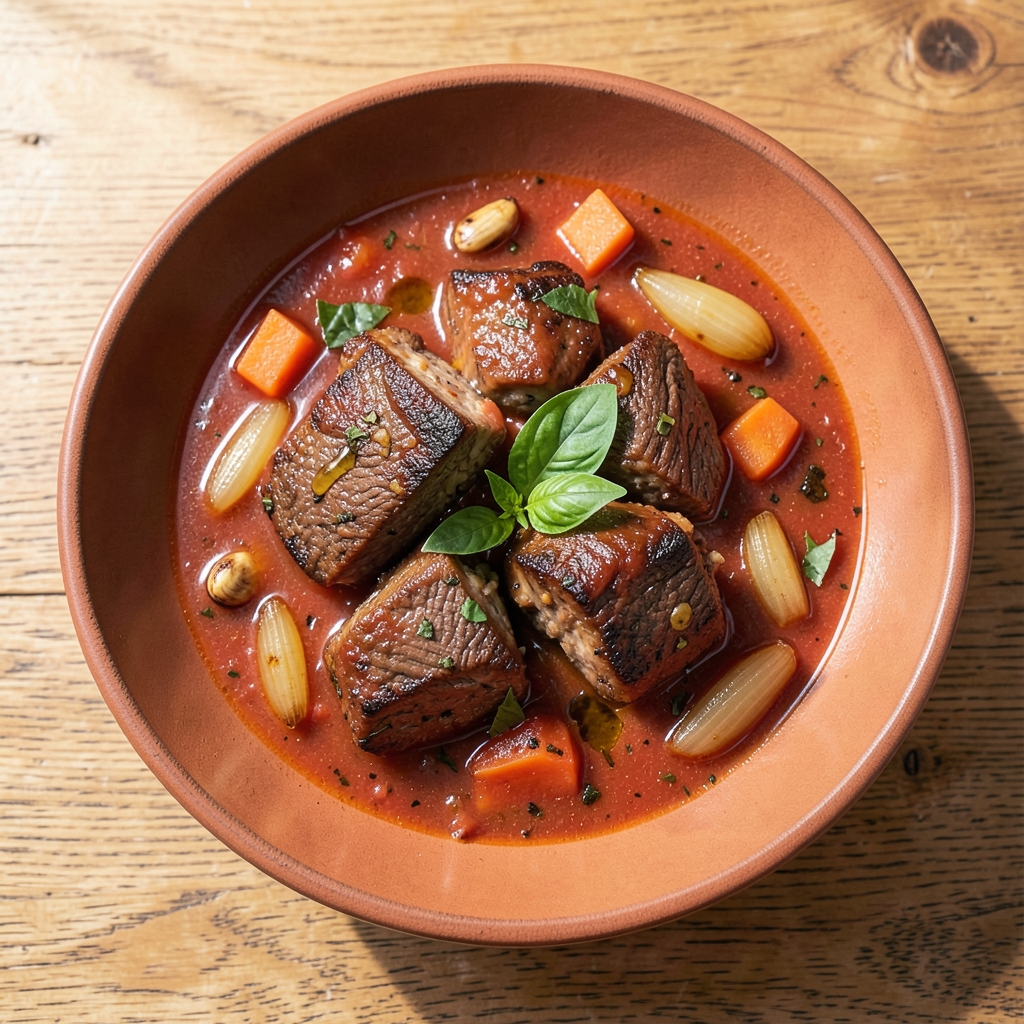
This beef and stewed tomatoes recipe transforms tough cuts into melt-in-your-mouth beef swimming in a deep-red, flavorful sauce. 💫 After years of testing slow-cooked beef dishes in my Boston kitchen, I’ve perfected the balance between rich tomato flavor and tender meat—no shortcuts, just time and technique.
The secret lies in browning the beef properly and letting it simmer low and slow, allowing the stewed tomatoes to develop their signature depth.
What sets this recipe apart is its versatility—classic enough for a Sunday supper but adaptable for weeknight dinners. The slow-cooking process (about 2-3 hours) breaks down the beef into tender pieces while the tomatoes caramelize into a velvety sauce.
I’ve tested this with chuck roast, brisket, and even short ribs, and every time, the result is restaurant-quality without the fuss.
The final dish delivers perfectly tender beef that falls apart at the touch of a fork, coated in a sauce that’s rich, slightly sweet, and deeply aromatic.
The aroma alone will have your kitchen smelling like a cozy Italian trattoria, and the texture—juicy beef with a glossy, clinging sauce—is impossible to resist. This is comfort food at its finest, built to impress without requiring advanced skills.
Pair it with crusty bread to soak up every last drop of sauce or serve over buttery mashed potatoes for a hearty meal. The recipe scales easily, so you can make it for two or feed a crowd—just adjust the cooking time slightly. Let’s get cooking!
Ingredients for beef and stewed tomatoes
Tough beef meets sweet tomatoes in this slow-cooked masterpiece—just eight ingredients for deep flavor.
| Ingredient | Amount | Notes |
|---|---|---|
| Chuck Roast 🥩 | 2 lb | Cut into 1.5-inch cubes |
| Stewed Tomatoes 🍅 | 28 oz | San Marzano preferred, no salt added |
| Yellow Onion 🧅 | 1 whole | Diced, medium size |
| Garlic Cloves 🧄 | 4 cloves | Minced, fresh preferred |
| Carrots 🥕 | 2 medium | Peeled, sliced into rounds |
| Olive Oil 🫒 | 2 tbsp | Extra-virgin for richness |
| Red Wine 🍷 | 1 cup | Dry, bold variety |
| Beef Broth 💧 | 1 ½ cups | Low-sodium preferred |
| Tomato Paste 🍅 | 2 tbsp | Squeeze tube works fine |
| Dried Thyme 🌿 | 1 tsp | Or 1 tbsp fresh thyme |
| Bay Leaves 🌿 | 2 whole | Fresh or dried |
| Salt 🧂 | 1 ½ tsp | Kosher or sea salt |
| Black Pepper 🌶️ | ½ tsp | Freshly ground preferred |
| All-Purpose Flour 🌾 | 1 tbsp | For thickening sauce |
The chuck roast is your secret weapon here. Ask the butcher for well-marbled chuck—it melts into tender bites while cooking. I grab mine from Whole Foods or Costco when I need a big batch, but any grocery store carries it. Look for bright red meat with good fat distribution. If you can’t find chuck, brisket or short ribs work too, but adjust cooking time. The stewed tomatoes? San Marzano is ideal (sweet, no seeds), but any good-quality canned tomatoes will do—just drain well to avoid watery sauce. Carrots add natural sweetness, so don’t skip them.
No red wine? Substitute beef broth with 1 tbsp balsamic vinegar—it mimics the depth. Fresh thyme is best, but dried works at one-third the amount (that’s why it’s 1 tsp). The tomato paste can be skipped if you’re using chunky tomatoes, but I always include it for that concentrated umami punch. Trader Joe’s sells great squeeze tubes that last forever. For the flour, make sure it’s all-purpose—not cake flour. And if you’re worried about the wine taste being too strong, just add a splash more broth at the end.
This sauce gets better the next day—honestly, it’s worth making a double batch. Store leftovers in the fridge for up to 5 days or freeze for 3 months. I portion mine into containers with some beef and sauce so I can grab it straight from the freezer. The carrots and onions can be prepped ahead and stored in the fridge for 3 days. If you’re making this for a crowd, double the recipe—it scales perfectly.
Why You’ll Love This Recipe
- One-Pot Magic: I swear by this recipe when I’m too tired to wash dishes—just brown the chuck roast, toss in the onions and garlic, add the stewed tomatoes and carrots, and let it simmer. No extra pans, no fuss, and honestly? The cleanup is just wiping one pot.
- Deep Umami Love: That chuck roast gets so tender it falls apart, and the stewed tomatoes? They’re the star—sweet, tangy, and rich without needing fancy ingredients. Between us, the garlic and carrot caramelization at the bottom is where the real magic happens.
- Leftovers That Don’t Lie: This dish tastes better the next day—yes, really. I make a double batch on Sundays, and by Wednesday, it’s still my family’s go-to. The flavors meld into something heartier, and it reheats like a dream (microwave or stovetop, no judgment).
- Budget Beef Win: Chuck roast is cheap, but it feels like a splurge when it’s this flavorful. I stretch it over rice or crusty bread, and the stewed tomatoes make it feel special without breaking the bank. My daughter even asks for it when we eat out—(yes, even on a Tuesday night).
Step-by-step instructions for beef and stewed tomatoes
Here’s how to turn tough chuck roast into melt-in-your-mouth beef with a rich, velvety tomato sauce.
🔥 Step 1: Sear the Beef for Maximum Flavor
Heat a large Dutch oven over medium-high heat and add the 2 tablespoons olive oil. Once shimmering, add the 2 lb chuck roast cut into 1.5-inch cubes in a single layer. Let them sear undisturbed for 3-4 minutes until deeply browned on one side.
This initial sear creates that beautiful Maillard reaction that builds deep flavor. Don’t crowd the pan or the temperature will drop and you’ll steam instead of brown. I like to work in batches if needed, but try to keep them moving. Once browned on all sides, remove the beef and set aside—you’ll add it back later.
🍳 Step 2: Build the Flavor Base with Veggies and Wine
In the same Dutch oven, add the diced yellow onion and sliced carrots (about 2 medium carrots worth). Cook for 5-6 minutes until softened and just beginning to caramelize. Add the minced garlic cloves and cook for another 30 seconds until fragrant.
Here’s where it gets good—pour in the 1 cup red wine and scrape up all those browned bits from the bottom of the pan. This deglazing step captures all the flavor you just created. Let the wine simmer for 2-3 minutes until reduced by half. You’ll know it’s ready when the alcohol smell is gone and you’re left with just the rich wine flavor.
🥘 Step 3: Simmer the Beef in Tomato Sauce
Return the browned beef to the pot. Stir in the 28 oz stewed tomatoes, 2 tablespoons tomato paste, 1.5 cups beef broth, 1.5 teaspoons salt, 0.5 teaspoon black pepper, 1 teaspoon dried thyme, and 2 whole bay leaves. Bring to a gentle simmer, then reduce heat to low.
Now comes the long game—cover and let it cook for 2.5-3 hours until the beef is fork-tender. I know it seems like forever, but this slow cooking breaks down the tough fibers and infuses the beef with all that tomato goodness. Stir occasionally, but not too much—you want that sauce to develop a thick, glossy consistency. The beef is done when it easily pulls apart with a fork.
⏰ Step 4: Thicken and Finish the Sauce
Once the beef is tender, uncover the pot and increase heat to medium-high. Stir in the 1 tablespoon all-purpose flour and cook for 2-3 minutes until the sauce thickens slightly. If it’s too thick, add a splash of water or broth to reach your desired consistency.
Taste and adjust seasoning—you might need a little more salt since we’re using low-sodium broth. Remove and discard the bay leaves before serving. The sauce should coat the back of a spoon and have that beautiful deep-red color. If you want it even richer, let it simmer uncovered for another 5-10 minutes to reduce further and intensify the flavors.
🍽️ Step 5: Serve with Crusty Bread
Ladle the beef and sauce into bowls, making sure each serving gets plenty of that rich tomato sauce. I like to serve this with crusty bread to soak up all that delicious liquid. The beef should be so tender it practically melts in your mouth, with each bite offering perfect balance between the rich beef and the sweet-tangy tomato sauce.
This dish tastes even better the next day as the flavors continue to meld. Store leftovers in the refrigerator for up to 4 days or freeze for up to 3 months. The sauce will thicken as it cools, so just add a splash of water or broth when reheating to loosen it up.
Pro Tips For Making Beef And Stewed Tomatoes
- SEAR THE CHUCK ROAST: I learned this the hard way—skipping the sear means flavorless beef. Heat your pot until it’s screaming hot, pat the chuck roast very dry, and let it sit for 3-4 minutes per side until deep brown. That crust locks in juices and turns your stew from “meh” to “wow.”
- CHOP ONIONS SMALLER THAN YOU THINK: Big onion chunks? They’ll turn to mush and make your stew taste like soup. Dice them into ¼-inch pieces—small enough to disappear but big enough to add texture. Same goes for carrots: julienne or small dice, not thick rounds.
- DON’T RUSH THE TOMATO REDUCTION: The stewed tomatoes need 10-15 minutes of simmering before adding the beef. This isn’t the time to multitask—let them reduce until syrupy, or your sauce will taste thin and watery. (Yes, even if you’re impatient like me.)
- USE A MEAT THERMOMETER: Chuck roast is forgiving, but pulling it at 195°F (not 160°F) guarantees melt-in-your-mouth tenderness. If you don’t have one, cut into a small piece—if it’s fork-tender, it’s done. Overcooking turns it dry; undercooking leaves it chewy.
Make-ahead tips for this dish
Prep Ahead Like a Pro
I always chop the onions and carrots the night before and store them in a sealed container in the fridge. This saves 15 minutes of prep time on cooking day. The beef can even be cubed and refrigerated overnight—just pat it dry before searing to get that perfect crust. 🍖
Slow Cooker Shortcut
For busy weeks, I transfer the seared beef, veggies, and sauce ingredients to a 6-quart slow cooker after the wine reduction. Cook on low for 8 hours or high for 4 hours.
The texture comes out slightly different but still delicious—perfect for when you don’t want to babysit the stove. I use my Hamilton Beach slow cooker because it’s reliable and affordable.
Freezer-Friendly Components
Assemble the entire dish (beef, sauce, and all) in a freezer-safe container and freeze for up to 3 months. When ready to eat, thaw overnight in the fridge, then reheat gently on the stove with a splash of water.
I portion mine into individual containers so I can grab just what I need—no defrosting the whole batch. The sauce actually improves after freezing, getting even more concentrated.
Make-Ahead Sauce Base
If you’re short on time, make just the sauce ahead of time by simmering the tomatoes, wine, broth, and spices without the beef. Store it in the fridge for 3 days or freeze for 3 months.
When ready to serve, sear fresh beef cubes and add them to the pre-made sauce, then simmer for 1 hour until tender. This is my go-to when I’m hosting last-minute dinner guests.
Reheating Perfection
For the best results, reheat leftovers on the stovetop over medium-low heat for 10-15 minutes, stirring occasionally. If the sauce looks thick, add 1-2 tablespoons of water or broth to loosen it.
Microwave reheating works in a pinch, but it can make the sauce watery—always cover with a damp paper towel and heat in 1-minute intervals. The beef stays tender either way, but the sauce texture matters most. 🔥
Double Batch Strategy
This recipe doubles beautifully for meal prep. Cook a full batch, then portion into 4 airtight containers with equal amounts of beef and sauce. Label with dates and freeze two containers immediately. Keep one in the fridge for 3-4 days of easy lunches.
I serve mine over mashed potatoes or with crusty bread—both reheat well with the leftovers. The sauce gets even richer after a day or two in the fridge.
Nutrition facts
Frequently asked questions
What’s the best cut of beef for this stewed tomato dish?
Use chuck roast for the most tender results—its marbling breaks down beautifully during slow cooking. If you can’t find chuck, brisket or short ribs work too, but increase cooking time by 30-45 minutes to ensure tenderness. Always ask your butcher for well-marbled cuts.
Can I make this without red wine?
Replace the 1 cup red wine with 1 cup beef broth + 1 tbsp balsamic vinegar for similar depth. For extra richness, add 1 tsp Worcestershire sauce—it mimics the umami notes from wine. The dish will still taste amazing without it, just slightly less complex.
Why did my sauce turn out watery?
Watery sauce usually means either too much liquid was added or the cooking time wasn’t long enough. To fix it, simmer uncovered for 10-15 minutes to reduce the sauce, or stir in 1 tbsp cornstarch mixed with water to thicken. Always use low-sodium broth to avoid excess saltiness that can dilute flavors.
How do I make this in a slow cooker?
Sear the beef and veggies as directed, then transfer everything (including the wine reduction) to a 6-quart slow cooker. Cook on low for 8 hours or high for 4 hours. The texture will be slightly different but still delicious—just add 1 tbsp flour at the end to thicken the sauce if needed.
What’s the best way to reheat leftovers?
Reheat on the stovetop over medium-low heat for 10-15 minutes, stirring occasionally. If the sauce thickens too much, add 1-2 tbsp water or broth. For microwave reheating, cover with a damp paper towel and heat in 1-minute intervals—this prevents the sauce from becoming watery.

- Basic Moist Cake Recipe: The Secret to No-Dry-Crumb Ever - November 17, 2026
- Sweet Cornbread Recipe Using Jiffy: Box Mix Magic With Buttery Crumb - November 17, 2026
- Campbell’s Tomato Soup Beef Stew Recipe: One-Pot Heartiness With Meat-In-Broth Luxury - November 17, 2026