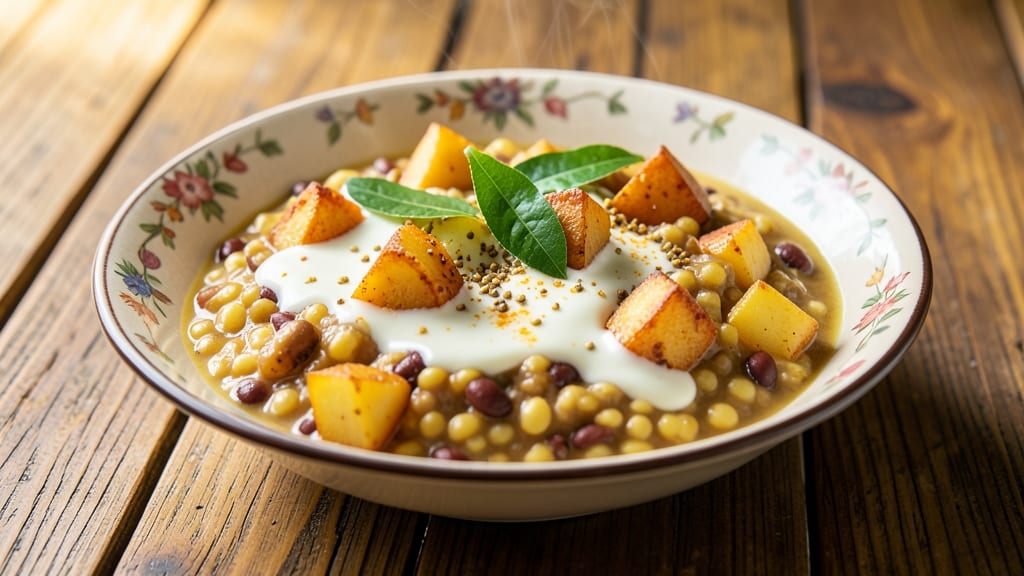
This beans kootu recipe brings the heart of South Indian home cooking to your table with its rich coconut-lentil gravy and tender spiced potatoes. The dish is more than just a side—it’s a flavorful journey through tradition, where every spoonful tells a story of slow-simmered spices and aromatic coconut milk.
I first discovered kootu while helping my neighbor prepare for a family gathering, and it quickly became a staple in our rotation.
The magic lies in the layers of flavor: toasted spices like mustard seeds and curry leaves form the aromatic base, while turmeric and chili powder add depth. The potatoes soften into the gravy, absorbing all the rich coconut and lentil flavors, creating a dish that’s both hearty and comforting.
This recipe delivers restaurant-quality results with simple ingredients and a method that’s easy to follow, even for beginners.
By the time you’re done, you’ll have a thick, velvety stew that pairs perfectly with steamed rice or crispy appalam. The aroma alone will have everyone gathered around the table, and the taste—savory, slightly sweet, and spiced just right—will make this dish a new favorite.
The best part? It’s vegetarian, protein-packed, and versatile enough to serve as a main dish or side.
Serve it warm with a side of coconut chutney or a sprinkle of fresh cilantro for extra brightness. This recipe is perfect for meal prep, too—it tastes even better the next day as the flavors meld together. Let’s bring the warmth of South Indian cuisine into your kitchen.
Ingredients for beans kootu
Simple ingredients that transform into a rich, aromatic South Indian classic.
| Ingredient | Amount | Notes |
|---|---|---|
| Yellow Moong Dal 🍚 | 1 cup | Split variety preferred |
| Red Lentils 🍚 | ½ cup | Rinsed thoroughly |
| Russet Potatoes 🥔 | 2 medium | Peeled, cubed evenly |
| Fresh Coconut Milk 🥥 | 1 ½ cups | Full-fat, canned preferred |
| Mustard Seeds 🌶️ | 1 tbsp | Brown or yellow variety |
| Curry Leaves 🌿 | ¼ cup | Fresh, lightly crushed |
| Dried Red Chilies 🌶️ | 3 whole | Broken into pieces |
| Asafoetida 🧂 | ⅛ tsp | Pinch for aroma |
| Turmeric Powder 🌿 | ½ tsp | Freshly ground preferred |
| Ginger 🌿 | 1 inch | Fresh, grated |
| Garlic Cloves 🧄 | 4 cloves | Peeled, minced |
| Coconut Oil 🫒 | 2 tbsp | For tempering |
| Salt 🧂 | 1 ½ tsp | Adjust to taste |
| Fresh Cilantro 🌿 | ¼ cup | Chopped, for garnish |
| Vegetable Stock 💧 | 1 ½ cups | Low-sodium preferred |
The coconut milk is non-negotiable here—full-fat canned brands like Thai Kitchen or Goya work best for that creamy texture. Look for yellow moong dal at Indian grocery stores like Patel Brothers or Apna Bazaar—it’s sweeter and holds its shape better than red lentils alone. Fresh curry leaves are a game-changer, but dried curry leaf powder works in a pinch (use half the amount). For the potatoes, Russets stay firm during cooking—avoid waxy varieties like Yukon Gold. Toast your spices low and slow in coconut oil to wake up their flavors.
No fresh curry leaves? Dried curry leaf powder at one-third the amount gets you close, though it lacks that authentic aroma. Running low on coconut milk? Coconut cream plus a splash of water mimics the consistency. The red lentils can be swapped for toor dal if that’s what you have, but they’ll break down faster. For extra richness, stir in 1 tbsp of cashew paste at the end—it blends right in. The ginger and garlic can be pre-minced from the jar if you’re short on time, but fresh is always better. Asafoetida is the secret ingredient—don’t skip it, even if you’re new to South Indian cooking.
This keeps beautifully for 4-5 days in the fridge, with flavors deepening overnight. Portion into containers with a layer of coconut milk on top to preserve freshness. Freezes for 3 months—just thaw and reheat gently on low. I always make a double batch because it reheats even better than fresh. Garnish with cilantro right before serving, as it wilts quickly. Serve with steamed rice and a side of crispy appalam for the full experience.
Why You’ll Love This Recipe
- I’ll be real: this recipe costs next to nothing. Moong dal and red lentils are cheap staples, potatoes are versatile, and coconut milk adds richness without breaking the bank. Plus, leftovers? They’re my favorite—taste just as good the next day.
- Foolproof Stovetop: I swear by this one—just soak the moong dal and red lentils overnight, then simmer everything together. No fancy equipment, no stress. The potatoes melt into fluffy perfection while the spices bloom in the coconut milk.
- Coconut Cream Magic: That first spoonful of fresh coconut milk swirled into the dish? Pure comfort. The creaminess balances the earthy lentils and the slight crunch of mustard seeds—it’s like a hug in a bowl.
- Lunchbox Legend: Between us, this is my secret weapon for school lunches or office meals. The flavors only get better after reheating, and the potatoes stay hearty enough to fill you up. Pack it in a jar, and you’ve got a stress-free, no-fuss meal.
Step-by-step instructions for South Indian coconut lentil stew
Here’s how to create this comforting, aromatic dish with perfectly balanced flavors.
Pressure Cook the Lentils and Potatoes
Rinse the 1 cup yellow moong dal and 0.5 cup red lentils thoroughly under cold water until the water runs clear. In a pressure cooker, combine the lentils, 2 medium peeled and cubed russet potatoes, 1.5 cups vegetable stock, 0.5 tsp turmeric powder, and 1.5 tsp salt. Add 1 cup water to reach the pressure cooker’s maximum fill line.
Cook on medium-high heat until the pressure builds up, then reduce to low heat and cook for 4 whistles. Let the pressure release naturally for 10 minutes before opening. The lentils should be soft but not mushy, and the potatoes should be tender enough to mash slightly with a fork. If the mixture is too thick, add 2-3 tablespoons of water to achieve a smooth, gravy-like consistency.
Temper the Spices
In a small pan, heat 2 tablespoons coconut oil over medium heat. Add 1 tablespoon mustard seeds and let them splutter for 30 seconds. Add the 3 broken dried red chilies and 0.125 tsp asafoetida, stirring constantly for 10 seconds until fragrant.
Quickly add 0.25 cup curry leaves and 1 inch grated ginger, cooking for 20 seconds until the curry leaves turn dark green. Remove from heat and stir in 4 minced garlic cloves, letting them cool slightly. This tempering step adds depth of flavor that can’t be achieved any other way.
Combine and Simmer
Pour the tempered spices into the cooked lentil mixture and stir well to combine. Add 1.5 cups fresh coconut milk and bring to a gentle simmer over medium-low heat. Stir occasionally for 10-12 minutes until the mixture thickens slightly and the coconut milk is fully incorporated.
Taste and adjust seasoning with additional salt if needed. The stew should have a creamy texture with distinct flavors of coconut, lentils, and spices. If it becomes too thick, add 2-3 tablespoons of water to reach your desired consistency.
Finish and Garnish
Remove from heat and let the stew cool for 5 minutes. Garnish with 0.25 cup chopped fresh cilantro just before serving. The cilantro not only adds freshness but also brightens the rich flavors of the coconut and spices.
Serve hot with steamed rice or appam for an authentic South Indian meal experience. The combination of tender lentils, creamy coconut, and aromatic spices creates a dish that’s both comforting and satisfying. This recipe makes 4 generous servings, perfect for sharing with family or friends.
Pro Tips For Making Beans Kootu
- Pressure-Cook Lentils First: Split the yellow moong dal and red lentils separately in the pressure cooker for 2-3 whistles—this prevents the lentils from turning mushy when combined later. I learned this the hard way after ending up with a gluey mess that needed extra water to fix.
- Peel Potatoes Roughly: Skip the perfect peeling—just scrub russet potatoes under running water, then use a knife to remove any stubborn spots. The extra skin adds texture and flavor without changing the dish’s creaminess.
- Temper Mustard Seeds Slow: Let mustard seeds sizzle in oil for 30 seconds before adding curry leaves—this ensures they pop fully and release their aroma. Rushing this step makes them taste flat, like you forgot them entirely.
- Blend Coconut Milk Last: Add fresh coconut milk only after the beans and potatoes are fully cooked, then simmer for 5 minutes to let the flavors meld. Dumping it in early dilutes the spices and weakens the dish’s richness.
Pro cooking tips for this recipe
Spice Tempering Mastery
This is where the magic happens—tempering your spices correctly transforms your kootu from good to extraordinary. Heat 2 tbsp coconut oil in a small pan until shimmering, then add 1 tbsp mustard seeds and let them pop like tiny fireworks for 30 seconds.
This step should be loud—if it’s silent, your oil isn’t hot enough. I use a 10-inch nonstick skillet for this because it gives me better control over the heat. 🔥
Potato Texture Secrets
Your potatoes should be tender but still hold their shape—think “fork-mashable” rather than completely falling apart. If they’re too firm after pressure cooking, add 1 more whistle with ½ cup extra water. If they’re mushy, it’s a sign you used waxy potatoes like Yukon Gold.
Stick with Russets—they’re the gold standard for this dish. The perfect potato texture is what keeps the gravy from turning gluey.
Coconut Milk Consistency
Here’s my foolproof method for avoiding a watery mess: After adding the coconut milk, simmer uncovered for 10-12 minutes on medium-low heat. Stir frequently with a wooden spoon—the coconut milk will thicken as it absorbs the lentil flavors.
If it still looks thin, whisk in 1 tbsp cornstarch mixed with 2 tbsp water until smooth. I’ve ruined this step before by simmering too aggressively, so keep that heat gentle.
Asafoetida Substitution
Don’t have asafoetida? No problem—this is one of those ingredients where a good substitute can actually work better. Use ½ tsp garlic powder plus ¼ tsp onion powder for a similar umami punch. Or try ¼ tsp celery salt—it’s not identical, but it adds that savory depth.
The key is to add it with the mustard seeds so it gets properly toasted. I keep a small jar in my spice drawer now after realizing how often I use it in South Indian dishes.
Garnish Like a Pro
Fresh cilantro isn’t just for decoration—it’s the finishing touch that makes your kootu sing. Chop ¼ cup cilantro right before serving and sprinkle it over the top while the dish is still hot. This releases the essential oils and brightens all the rich coconut and spice flavors.
Pro tip: Use a sharp chef’s knife and cut it at a slight angle to get more leaf surface area. I also like to add a final pinch of salt right when serving—it makes the flavors pop even more.
Make-Ahead Pro Tips
This dish actually tastes better the next day as the flavors meld together. Let it cool completely, then store in an airtight container in the fridge for up to 5 days.
When reheating, add 2-3 tbsp water and simmer gently on low heat for 10 minutes—never microwave it or you’ll break the emulsion. I like to reheat it in the same pot I cooked it in, as it helps maintain even heat distribution.
For freezing, portion into quart-sized containers and freeze for up to 3 months**. Thaw overnight in the fridge before reheating. ✨
Nutrition facts
Frequently asked questions
What makes beans kootu different from other South Indian lentil dishes?
Beans kootu stands out because it combines lentils with potatoes in a rich coconut gravy, creating a heartier texture than most lentil stews. The key difference is the spice tempering with mustard seeds, curry leaves, and asafoetida—which adds layers of aroma that other dishes often skip. Unlike dal or sambar, this version uses yellow moong dal for creaminess and potatoes for body, making it a complete meal.
Can I make beans kootu without a pressure cooker?
If you don’t have a pressure cooker, use a heavy-bottomed pot and simmer the lentils and potatoes for 30-40 minutes with 2 cups of water instead of pressure cooking. Stir occasionally to prevent sticking, and add extra stock if needed. The texture will be slightly different but still delicious. For extra tenderness, you can even steam the potatoes first before adding them to the lentils.
How do I adjust the spice level for kids or sensitive palates?
Reduce or omit the dried red chilies entirely, and use ½ tsp mild powdered chili instead. For extra safety, remove the seeds from the chilies before adding them to the oil. The asafoetida can also be skipped—it’s the most potent flavor here. Always taste the final dish and adjust salt or coconut milk to balance flavors without adding heat.
What are the best sides to serve with beans kootu?
This dish pairs perfectly with steamed basmati rice or appam (South Indian rice pancakes) for the full experience. For a lighter option, try coconut chutney or a simple mango pickle to cut through the richness. In my Boston kitchen, I’ve even served it with crusty sourdough bread for a fusion twist—it works surprisingly well!
Why did my beans kootu turn out too thick or too thin?
Thick consistency? You likely simmered too long or didn’t add enough liquid. Thin? The coconut milk wasn’t fully incorporated or you rushed the simmering. For fixes: Thin with 2-3 tbsp warm water or coconut milk, or thicken with 1 tbsp cornstarch mixed with water. The ideal texture should coat the back of a spoon but still be pourable. Always simmer uncovered on medium-low heat for even thickening.

- Old Fashioned Hot Spiced Apple Cider Recipe: Cozy Spice Infusion for Winter Nights - November 9, 2026
- Tuna Steak Recipe: Seared Rare With Buttery Crisp Edges - November 9, 2026
- Coconut Macaroons Recipe: Chewy Centers and Toasted Coconut Crunch - November 9, 2026