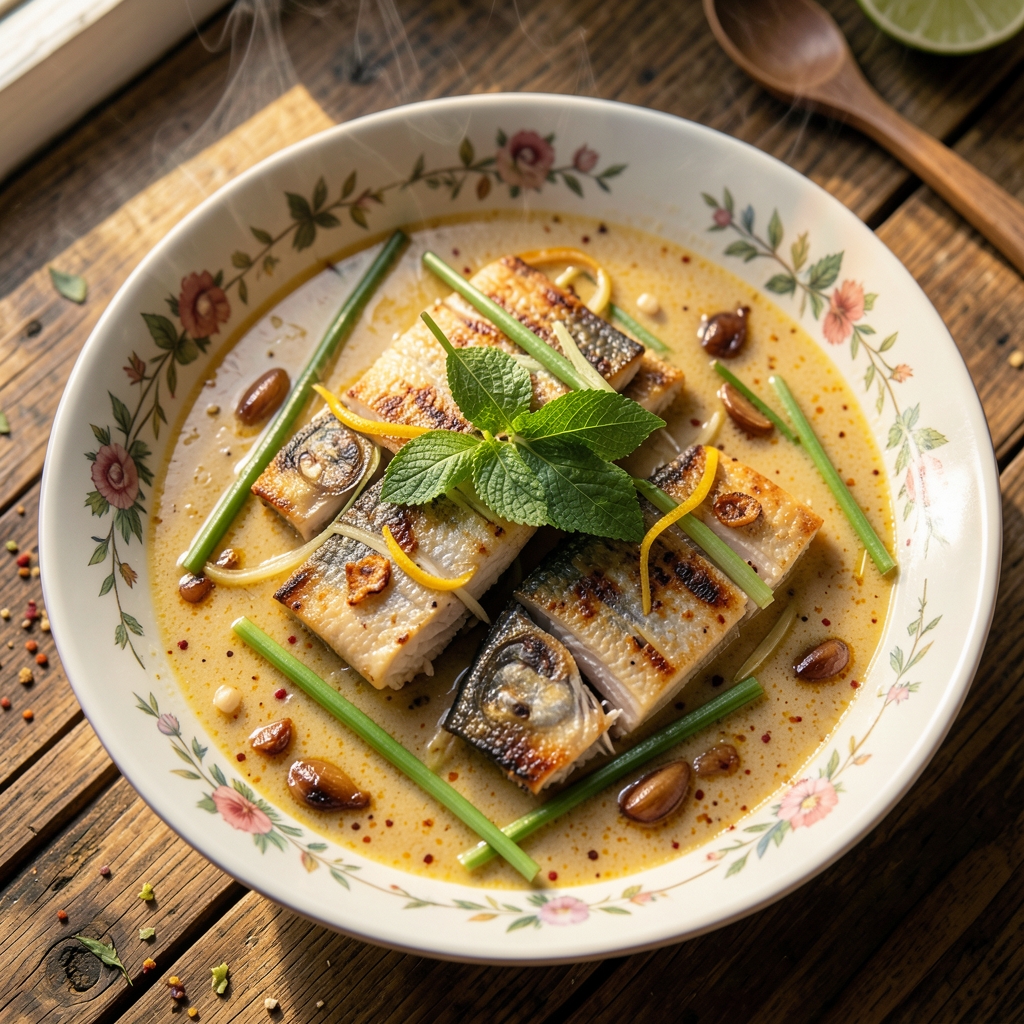
This fragrant basa fish soup recipe transforms simple ingredients into a deeply aromatic dish that captures the essence of Southeast Asian comfort food. The secret lies in the slow-simmered broth, where lemongrass and galangal infuse the liquid with bright, citrusy notes that linger long after the first sip.
I perfected this recipe after years of experimenting with regional variations—each element, from the fish to the herbs, plays a critical role in creating that perfect balance of richness and freshness.
The foundation of any great basa fish soup is the broth, which requires patience and precision. You’ll start by gently simmering aromatic ingredients like lemongrass, galangal, and kaffir lime leaves to extract their essential oils without overpowering the dish.
The fish, poached just until tender, absorbs these flavors while maintaining its delicate texture, ensuring every bite delivers both substance and elegance. This isn’t just a soup—it’s a flavor experience that transforms an ordinary meal into something extraordinary.
By the time you serve this soup, your kitchen will be filled with an intoxicating aroma that draws everyone to the table. The broth will be clear yet deeply flavorful, the fish perfectly tender with just a hint of firmness, and the herbs adding layers of complexity.
Garnish with fresh cilantro and lime wedges to brighten the dish further, and you’ll have a restaurant-quality meal that’s both comforting and refined. Whether you’re feeding a family or hosting a dinner party, this recipe delivers professional results with minimal fuss.
Pair it with steamed jasmine rice or crusty bread to soak up every last drop of that fragrant broth. The beauty of this recipe lies in its versatility—adjust the spice level to suit your taste, or add vegetables like bell peppers and mushrooms for extra texture.
The key is confidence in the process, knowing that each step builds toward a harmonious, deeply satisfying dish. Let’s get started on creating your own fragrant masterpiece.
Ingredients for basa fish soup
Simple ingredients, bold flavors—this fragrant basa fish soup delivers restaurant-quality aroma at home.
| Ingredient | Amount | Notes |
|---|---|---|
| Basa Fish Fillets 🐟 | 1 ½ lb | Fresh, skinless, cut into 4 pieces |
| Lemongrass Stalks 🌿 | 4 whole | Bruised, bottom 3 inches only |
| Galangal Slices 🌿 | 2 pieces | About 2-inch slices, peeled |
| Kaffir Lime Leaves 🍃 | 4 whole | Fresh, torn into large pieces |
| Shallots 🧅 | 6 whole | Peeled, thinly sliced |
| Garlic Cloves 🧄 | 6 cloves | Peeled, smashed |
| Thai Chili Peppers 🌶️ | 2 whole | Seeds removed for mild heat |
| Coconut Milk 🥥 | 1 can | Full-fat, 13.5 oz can |
| Fish Sauce 🍶 | 2 tbsp | Red Boat brand preferred |
| Sugar 🍯 | 1 tbsp | White granulated |
| Vegetable Oil 🫒 | 2 tbsp | Neutral high smoke point |
| Fresh Cilantro 🌿 | ¼ cup | Chopped, for garnish |
| Lime Wedges 🍋 | 4 whole | For serving |
| Jasmine Rice 🍚 | 1 ½ cups | Uncooked, for serving |
| Salt 🧂 | 1 tsp | Kosher or sea salt |
The broth is where the magic happens, so don’t cut corners on the aromatics. Lemongrass and galangal are the stars—find them at Asian markets or the international aisle at Whole Foods. Look for stalks that are firm and green (no brown spots) and galangal that’s pale yellow with no mold. Kaffir lime leaves can be tricky to find fresh, but Trader Joe’s usually carries them. If you can’t find galangal, ginger at half the amount works in a pinch, though it won’t be identical. The fish? Basa is the perfect mild, flaky choice—ask your fishmonger for fillets already cut for soups.
No fish sauce? Soy sauce plus a pinch of sugar mimics the umami, though it won’t be quite the same. Short on coconut milk? Heavy cream or half-and-half adds richness, but the broth will be less authentic. Chili peppers giving you pause? Skip them entirely—the soup will still be delicious. For the shallots, yellow onions work too, but shallots have a sweeter, more delicate flavor. The coconut milk should be full-fat for that creamy finish—light versions won’t cut it. And if you’re feeling adventurous, swap half the coconut milk for coconut cream for extra decadence.
This soup tastes even better the next day—make extra if you can. Store the broth and fish separately in the fridge for up to 3 days, then reheat gently. The aromatics can be prepped ahead and kept in the fridge for 2 days before simmering. For serving, I always steam jasmine rice while the soup cooks—it’s the perfect vessel for soaking up every last drop of that fragrant broth. Garnish with cilantro and lime right before serving, or the lime will make the broth turn. Trust me on that one.
Why You’ll Love This Recipe
- I swear by this trick: just bruise the lemongrass and galangal with the side of a knife—no mincing, no mess. The shallots go in whole if you’re lazy (I often am), and the fish fillets stay intact while absorbing that aromatic broth.
- No-Chop Needed: I swear by this trick: just bruise the lemongrass and galangal with the side of a knife—no mincing, no mess. The shallots go in whole if you’re lazy (I often am), and the fish fillets stay intact while absorbing that aromatic broth.
- Herb Bomb Flavor: That combo of kaffir lime leaves and galangal? It’s like a citrusy, peppery hug in a bowl. The basa stays tender but flaky, soaking up every layer of flavor without falling apart—honestly, it’s the kind of taste that makes you pause mid-sip.
- Leftovers That Beg: This soup only gets better the next day. The flavors meld into something richer, and reheating it? Just add a splash of water and a squeeze of lime. My kids actually ask for it for lunch—no complaining, just seconds.
Step-by-step instructions for basa fish soup with lemongrass and galangal
Aromatic broth meets delicate fish in this vibrant Southeast Asian-inspired dish. Here’s how to build layers of flavor from scratch.
Prepare the Aromatic Base
Heat the 2 tablespoons vegetable oil in a large pot over medium heat. Add the 6 whole shallots and 6 cloves garlic cloves, cooking for 3-4 minutes until the shallots soften and turn translucent. This foundational step unlocks all the flavor—don’t rush it.
Add the 4 whole lemongrass stalks (bruised bottoms only), 2 pieces galangal slices, and 2 whole Thai chili peppers (seeds removed). Stir gently and cook for another 2 minutes until the galangal releases its citrusy aroma. You’ll notice the pot filling with fragrant steam—this is your first indication the flavors are melding beautifully.
Build the Fragrant Broth
Pour in the 1 can coconut milk and bring to a gentle simmer. Add the 2 tablespoons fish sauce and 1 tablespoon sugar, stirring to dissolve completely. The broth should smell rich and complex—like a mix of coconut cream and tropical spices.
Tear in the 4 whole kaffir lime leaves and simmer for 10 minutes on low heat. This slow cooking allows the galangal and lemongrass to infuse their flavors without turning bitter. I like to taste the broth at this stage—it should be savory with a hint of sweetness from the sugar.
Cook the Jasmine Rice
While the broth simmers, rinse the 1.5 cups jasmine rice under cold water until the water runs clear. This removes excess starch that would make the rice mushy. In a separate pot, bring 3 cups water to a boil, add the rice and 1 teaspoon salt, then reduce heat to low. Cover and cook for 15 minutes without stirring—this steaming method gives you perfectly fluffy grains.
Real talk: Don’t peek at the rice while it cooks. Every time you lift the lid, you release steam and potentially overcook the rice. Trust the timing and let it develop those delicate floral notes that make jasmine rice special.
Add the Fish and Finish
Gently add the 1.5 lb basa fish fillets (cut into 4 pieces) to the simmering broth. Cook for 8-10 minutes until the fish is opaque and flakes easily with a fork. The fish should be just cooked through—not overdone or it’ll turn rubbery.
Remove the fish and set aside. Skim off any foam that rises to the surface, then return the broth to a gentle simmer. Add the cooked rice and stir gently to combine. The rice should absorb some of the fragrant broth, creating a perfect balance between the two components.
Serve with Fresh Garnishes
Ladle the soup into bowls, placing each piece of fish prominently. Garnish with 0.25 cup chopped fresh cilantro and serve with 4 whole lime wedges on the side. The bright acidity of the lime cuts through the richness of the coconut milk, balancing the entire dish.
This soup delivers on all the promises: fragrant lemongrass and galangal broth, tender fish, and perfectly cooked rice. The secret lies in the slow infusion of aromatics and the careful timing of each component. Serve immediately while the fish is still warm and the flavors are at their peak.
Pro Tips For Making Basa Fish Soup
- Blister the Shallots: Char them in a dry pan first—just 2-3 minutes over medium-high heat until blackened and fragrant. This deepens the soup’s aroma without overpowering the broth, and I’ve found it cuts down on the need for extra salt later. (Yes, even if you’re impatient like me, don’t rush this part.)
- Pound the Galangal: Smash the galangal slices with the flat side of your knife before adding them to the pot. It releases more oil and flavor into the broth—like waking up a lazy spice. Skip this, and your soup will taste like it’s missing something.
- Simmer, Don’t Boil: Once the broth is going, keep it at a gentle simmer—tiny bubbles breaking the surface, not a rolling boil. Basa fish turns rubbery fast if you let it rage, and you’ll lose all that delicate lemongrass and lime leaf perfume. Trust me, lower heat = better fish.
- Tear the Lime Leaves: Don’t chop them—tear the kaffir lime leaves by hand into rough pieces. It releases more citrusy oils into the broth without turning it bitter. (And yes, even if it looks messy, it works.)
Wine and beer pairings for this dish
Light White Wine
For this fragrant basa fish soup, I always reach for a crisp Sauvignon Blanc from New Zealand or a Pinot Grigio from Italy. The bright acidity and citrus notes in these wines mirror the lemongrass and galangal flavors in the broth, creating a perfect harmony.
Look for a bottle with 12-13% ABV—something like Cloudy Bay Sauvignon Blanc or Santa Margherita Pinot Grigio will complement the dish beautifully without overpowering it. 🍷
Creamy Beer Pairing
If you prefer beer, a Belgian-style witbier like Hoegaarden or Stella Artois works wonderfully. The subtle citrus and spicy notes in these beers enhance the soup’s aromatic profile. For something richer, try a German Helles Lager—its malty sweetness balances the broth’s complexity.
Just avoid heavy stouts or IPAs, as they could clash with the delicate flavors of the fish and herbs.
Rosé for Balance
A dry Provence rosé offers a refreshing contrast to the creamy coconut milk and spicy aromatics. The floral and fruity notes in a Whispering Angel or Miraval rosé elevate the dish without competing.
Serve it slightly chilled (45-50°F) to highlight its crispness against the warm soup. This pairing is perfect for a summer dinner when you want something light yet sophisticated.
Non-Alcoholic Options
For a non-alcoholic match, I recommend sparkling lime soda like San Pellegrino Limon or a homemade ginger-lime spritzer. Mix equal parts sparkling water with fresh lime juice and a touch of honey for a refreshing sip that complements the soup’s brightness.
Alternatively, coconut water adds a subtle tropical note that ties into the dish’s coconut milk base. 💧
Regional Wine Twist
If you’re feeling adventurous, try a Thai-inspired red wine like Cabernet Sauvignon from Thailand’s Bualuang Winery. The wine’s dark fruit and earthy undertones pair surprisingly well with the galangal and lemongrass. Decant it for 30 minutes to soften its tannins, then serve at 60°F for the best experience.
This pairing works especially well if your soup includes a touch of heat from Thai chili peppers.
Nutrition facts
Frequently asked questions
Can I substitute basa fish with another type?
Swai or catfish work well as budget-friendly alternatives, though basa’s mild flavor and firm texture make it ideal. For a richer taste, try cod or halibut, but reduce cooking time by 2-3 minutes since they cook faster than basa. Avoid flaky fish like tilapia—they fall apart too easily in broth.
How do I know when the fish is perfectly cooked?
The fish is ready when it turns opaque and flakes easily with a fork. It should reach an internal temperature of 140°F—use a meat thermometer for precision. Overcooking by even 1 minute turns it rubbery, so start checking at 8 minutes of simmering.
What if I can’t find galangal or lemongrass?
No problem! Use ginger (1 tsp) for galangal and extra lime zest (1 tbsp) for lemongrass. For depth, add 1 cinnamon stick or 2 star anise pods—remove them before serving. The broth will still be aromatic, just with a slightly different profile.
Can I make this soup spicier?
Add 1 extra Thai chili pepper (seeds in for heat) or ½ tsp chili flakes when simmering the broth. For smoky depth, stir in ½ tsp smoked paprika with the fish sauce. Adjust to taste—start with ½ tsp extra and increase gradually.
How long does leftovers keep, and how do I reheat?
Store leftovers in an airtight container for up to 3 days in the fridge. Reheat gently on low heat with a splash of water to prevent drying. Never microwave—it ruins the fish texture. The flavors actually improve after 24 hours as the broth melds further!

- Costco Tri-Tip Steak Recipe: Smoky Grill Marks and Buttery Crust - November 8, 2026
- Maine Style Lobster Roll Recipe: Buttery Toasted Buns With Sweet Maine Lobster - November 8, 2026
- Philadelphia Cooking Cream Recipe: Thick, Velvety Base for Casseroles - November 8, 2026