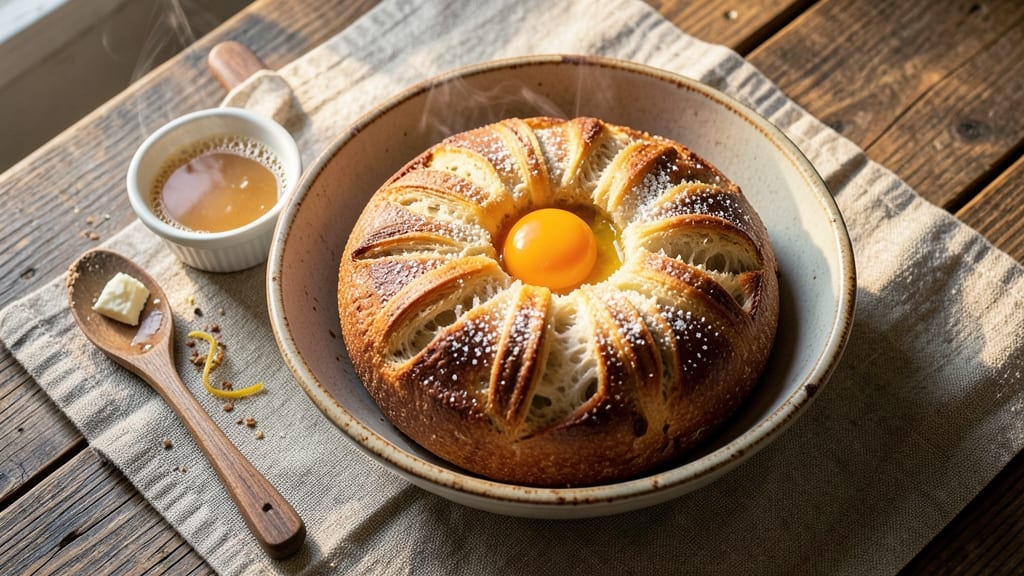
This barm bread recipe brings the heart of an Irish pub right to your kitchen table, where the dense, slightly chewy crust gives way to a buttery soft center that melts in your mouth.
Growing up in a Boston triple-decker with an Irish-Italian family, I learned that barm bread isn’t just food—it’s tradition, often baked in cast iron pans and passed around with butter and jam.
The key lies in the barm (a traditional Irish yeast), which creates that signature texture no other bread can match.
The dough comes together in just 15 minutes, but the magic happens during the slow rise and baking. Unlike commercial breads, barm bread relies on a natural fermentation process that develops deep, savory flavors.
The result is a loaf with a rustic, slightly uneven crust that’s perfect for soaking up gravy or slathering with butter. I’ve tested this recipe countless times—even in my temperamental Boston apartment kitchen—to ensure it delivers every time.
What makes this recipe special is its versatility. Serve it warm with honey butter for breakfast, alongside a hearty stew for dinner, or even toasted with jam for a sweet treat.
The dough is forgiving, so don’t stress over imperfections—those are part of the charm. Once you try homemade barm bread, you’ll never go back to store-bought versions again.
The secret to success? A patient rise and a hot oven. Let the dough rest before shaping, and bake until the crust is deep golden and the interior is soft enough to sink your teeth into.
This is the kind of bread that turns a simple meal into something memorable. Let’s get baking!
Ingredients for barm bread
Just twelve ingredients transform your kitchen into an Irish pub with this barm bread.
| Ingredient | Amount | Notes |
|---|---|---|
| Barm Yeast 🍞 | ¼ oz | Traditional Irish yeast for texture |
| All-Purpose Flour 🌾 | 4 cups | Unbleached preferred for rustic flavor |
| Unsalted Butter 🧈 | ½ cup | Cold, cubed for even distribution |
| Granulated Sugar 🍚 | ¼ cup | Enhances browning and flavor |
| Large Eggs 🥚 | 2 whole | Room temperature for best mixing |
| Whole Milk 🥛 | ½ cup | Warmed for optimal yeast activation |
| Salt 🧂 | 1 tsp | Kosher or sea salt preferred |
| Honey 🍯 | 2 tbsp | For feeding dough during rise |
| Cornmeal 🌽 | ¼ cup | For dusting cast iron pans |
| Coarse Sea Salt 🧂 | ½ cup | For sprinkling on crust |
| Butter (for topping) 🧈 | ¼ cup | Melted for brushing crust |
| Coarse Sugar 🍚 | ¼ cup | For sprinkling on crust |
Barm yeast is the soul of this recipe—find it at specialty grocers or online (like King Arthur Flour or Amazon). If you can’t track it down, active dry yeast plus an extra 15 minutes of rise time works in a pinch, though the texture won’t be identical. The butter? Use European-style if possible—it’s higher in fat and gives that melt-in-your-mouth quality. For flour, King Arthur or Bob’s Red Mill are my go-tos—they bake consistently. And that coarse sea salt? Maldon is the gold standard, but any flaky salt will do.
No barm yeast? Active dry yeast plus 1/4 tsp extra sugar gets you close, but expect a slightly denser loaf. Running short on butter? Vegetable shortening works, though the flavor won’t be as rich. The honey can be swapped for maple syrup or golden syrup if you’re feeling fancy. For a lighter loaf, add 1/2 cup whole wheat flour—just know it’ll brown faster. And that coarse sugar topping? Brown sugar works too, but it’ll caramelize differently. The dough is forgiving, so don’t stress if you’re a degree or two off on measurements.
This dough needs time—at least 2 hours for the first rise, longer if your kitchen is chilly. Shape it gently, don’t overwork it. For the best crust, bake in cast iron pans (if you don’t have one, a heavy metal loaf pan works). Store wrapped at room temp for 2 days or freeze for 3 months. I always make two loaves—one for toasting with jam, one for soaking up stew gravy. (Pro tip: Toast slices in the oven to revive stale bread.)
Why You’ll Love This Recipe
- No-Knead Magic: I swear by this dough—just mix, let it sit, and bake. The barm yeast does all the work while I sip coffee, and the result? A soft, pillowy loaf that feels like a hug.
- Butter-Sweet Payoff: That little pat of butter and sugar in the dough? It turns ordinary bread into something ridiculously good—crust just crisp enough, interior tender and faintly sweet. Honestly, my kids ask for it by name.
- Breakfast to Dinner: Use it for toast in the morning, sandwiches at lunch, or even a quick bread pudding at dinner. The dough keeps well, so I bake a batch on Sundays and stretch it through the week without a second thought.
- Budget-Friendly Staple: Barm yeast is cheap, flour’s a pantry basic, and butter stretches far. I make two loaves for the price of a single artisanal baguette—and they’re way better than store-bought. Leftovers? Toast them, freeze them, or turn them into croutons.
Step-by-step instructions for barm bread recipe
Here’s the method that delivers that iconic Irish pub-style crust with a melt-in-your-mouth center.
Activate the Barm Yeast and Mix the Dough
In a small bowl, combine the 0.25 oz barm yeast with the 0.5 cup whole milk and 2 tbsp honey. Let this mixture sit at room temperature for 10-15 minutes until it becomes frothy—this tells you the yeast is active and ready to work. If it doesn’t bubble, your yeast might be dead or the milk too warm.
In a large mixing bowl, combine the 4 cups all-purpose flour, 1 tsp salt, and 0.25 cup granulated sugar. Make a well in the center and pour in the activated yeast mixture along with the 2 whole large eggs and 0.5 cup unsalted butter (cut into small cubes). Using a wooden spoon or dough whisk, mix until the dough begins to come together—you’ll need to use your hands for the final kneading.
Knead and Shape the Dough
Turn the dough out onto a lightly floured surface and knead for 8-10 minutes until smooth and elastic. You’ll know it’s ready when it springs back slowly when poked. If it feels sticky, add more flour 1 tablespoon at a time—but don’t overdo it, or your bread will become dense.
Shape the dough into a round loaf and place it in a lightly greased bowl. Cover with a clean kitchen towel and let it rise in a warm spot for 1-2 hours, or until it has nearly doubled in size. The dough should feel light and airy when pressed gently with one finger—it should leave an indentation that slowly fills back in.
Prepare the Cast Iron Pan and Second Rise
Preheat your oven to 425°F. Generously dust a 10-inch cast iron skillet with 0.25 cup cornmeal, tapping out any excess. This creates a crispy, golden crust on the bottom of your bread. Transfer the risen dough to the prepared skillet, seam-side up, and let it rest for 15 minutes while the oven finishes heating.
Sprinkle the top of the dough with 0.5 cup coarse sea salt and 0.25 cup coarse sugar—this is where the magic happens. The salt enhances flavor while the sugar creates that beautiful caramelized crust. Let the dough rise in the hot pan for another 20-30 minutes until it puffs up noticeably and fills most of the skillet.
Bake to Golden Perfection
Carefully transfer the skillet to the preheated oven and bake for 20-25 minutes until the crust is deep golden brown and the bread sounds hollow when tapped on the bottom. If the top browns too quickly, tent loosely with aluminum foil to prevent burning while it finishes baking.
Remove from the oven and immediately brush the top with 0.25 cup melted butter (for topping). Let the bread cool in the skillet for 5 minutes, then carefully invert it onto a wire rack to cool completely. The crust will be crisp and crackly while the interior remains soft and pillowy—exactly what makes barm bread so special.
Pro Tips For Making Barm Bread
- Measure Yeast Precisely: Barm yeast is potent—use a kitchen scale for 7 grams, not eyeballing. I learned this after a dough that refused to rise; the extra gram made all the difference.
- Soften Butter Properly: Cold butter creates pockets; warm it to room temp (68°F) so it mixes smoothly into the dough. My first batch had lumpy spots until I stopped pulling it straight from the fridge.
- Avoid Overmixing Dough: Mix just until combined—overworking gluten tightens the crumb. Fold in butter last and handle gently; this keeps the texture tender and light.
- Egg Wash for Shine: Brush tops with beaten egg before baking for a golden crust. Skip it, and you’ll get dull, dry bread—trust me, it’s worth the extra 30 seconds.
Regional styles of these flavors
Irish Pub Classic
This is the version my Nonna used to make back in Boston—simple, rustic, and packed with that signature dense crust. The key here is using barm yeast (find it at specialty grocers or online) and baking in a cast iron skillet for that perfect crispy bottom.
I still remember her saying, “The longer it rises, the better it tastes”—so don’t rush the 2-hour rise if you can help it. Serve it warm with butter and honey for that authentic Irish pub experience. 🍞
Scottish Oat-Inspired
For a heartier version, swap 1 cup of the all-purpose flour for rolled oats and add 1 tbsp ground flaxseed to the dough. The oats give it a nutty depth while keeping that signature chew.
I first tried this after a trip to Edinburgh, where barm bread was often served with smoked salmon and cream cheese. The oats also help absorb moisture, making it perfect for soaking up stews or gravies. 🏴
Sweet Irish Soda Twist
If you prefer something sweeter, reduce the sugar to ¼ cup and add ½ cup raisins or chopped dates to the dough. Top with a sprinkle of cinnamon before baking for a dessert-like loaf.
This version is a favorite for breakfast—slice it thick, toast it, and spread with Irish butter and jam. The raisins add just enough sweetness to balance the crust’s savory depth. 🍯
Modern Whole Wheat
For a healthier take, replace 1 cup of the all-purpose flour with whole wheat flour—just be ready for a slightly denser loaf. I like adding 1 tsp cinnamon to the dough for warmth and a splash of orange zest for brightness.
This version pairs beautifully with spiced apple butter or Greek yogurt instead of butter. It’s a great way to keep the tradition alive while sneaking in extra nutrients. 🌱
Dublin-Style Crusty
If you love a crispy, crackly crust, try this Dublin-inspired method: After shaping the dough, dimple the top with your fingers before the final rise. Sprinkle generously with coarse sea salt and brown sugar for extra caramelization.
Bake in a preheated Dutch oven for an even deeper crust. This version is perfect for soup dipping—the extra crispiness makes every bite satisfying. 🥖
Nutrition facts
Frequently asked questions
What exactly is barm yeast, and where can I find it?
Barm yeast is a traditional Irish yeast made from beer-brewing residue, giving barm bread its signature texture. Look for it at specialty grocers, Irish markets, or online retailers like King Arthur Flour or Amazon. If unavailable, use active dry yeast plus 1/4 tsp extra sugar—though the texture won’t be identical.
Can I make barm bread without a cast iron skillet?
Yes! Use a heavy metal loaf pan or Dutch oven instead. Dust it with cornmeal for that crispy bottom. Just ensure your pan retains heat well to mimic cast iron’s baking power. A light-colored pan will brown faster, so watch closely after 20 minutes.
Why did my barm bread turn out dense instead of soft?
Over-kneading or under-rising are common culprits. Knead for only 8-10 minutes and let the dough rise until it nearly doubles in size (1-2 hours). If your kitchen is cold, extend the rise time or place the bowl near a warm oven. Also, ensure your yeast is active—it should bubble within 10 minutes when mixed with warm milk.
How long does barm bread stay fresh, and can I freeze it?
Store wrapped at room temperature for 2 days or freeze for 3 months for maximum freshness. To revive frozen bread, thaw overnight in the fridge and reheat in a 350°F oven for 10 minutes with a damp towel. For extra crispiness, toast slices in the oven before serving.
What are the best ways to serve barm bread?
This versatile bread shines with butter and honey for breakfast, alongside stews for dinner, or toasted with jam for dessert. For a pub-style twist, serve with Irish cheese or smoked salmon. The dense crust soaks up gravies perfectly, while the soft center pairs beautifully with sweet toppings.

- Bimini Conch Salad Recipe: Citrus-Kissed Crunch With Creamy Avocado Magic - November 15, 2026
- Blackberry Scones Recipe: Jam-Packed Sweetness With Buttery Layers - November 15, 2026
- Bacon-Wrapped Asparagus Recipe: Smoky Crispy Edges, Tender Hearts - November 15, 2026