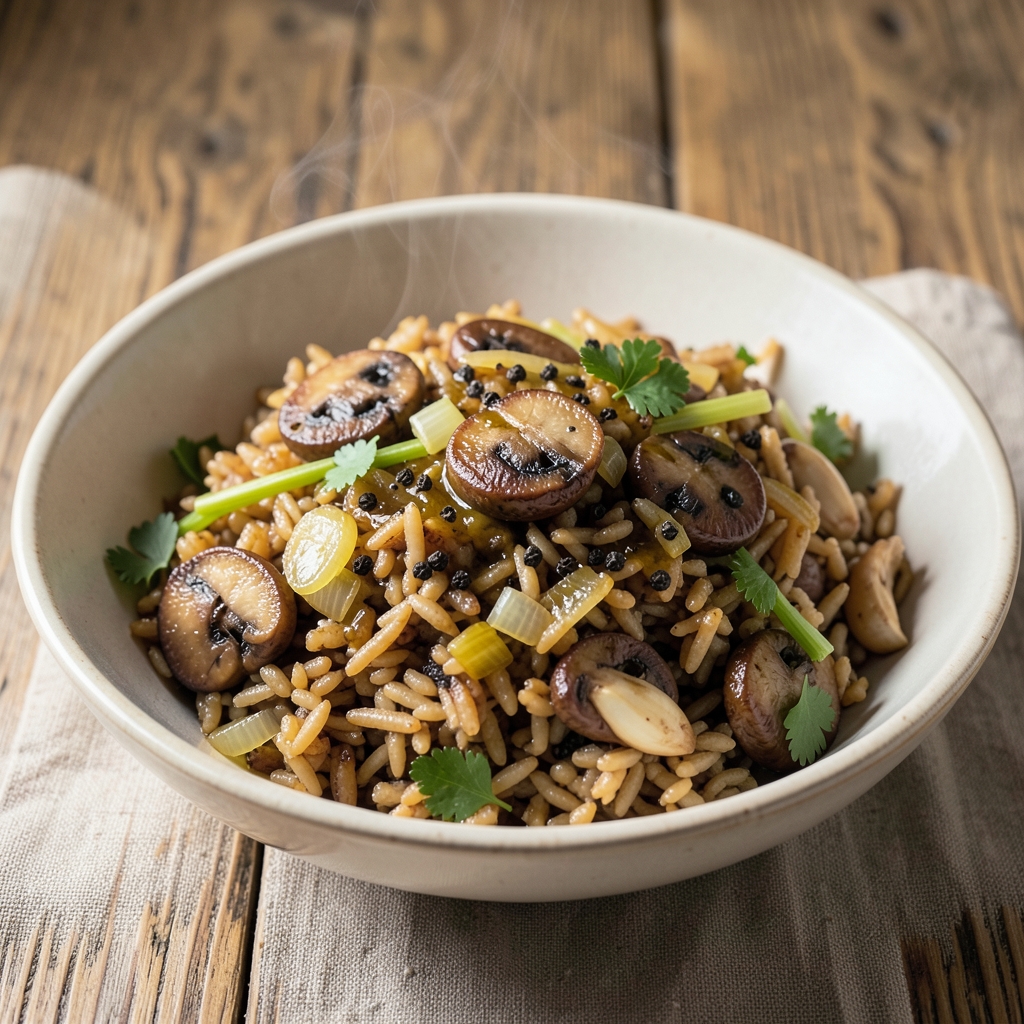
This Barefoot Contessa wild rice pilaf recipe transforms simple ingredients into a restaurant-worthy side dish with toasted nuts and herb-infused depth. The secret lies in slow-cooking the rice with aromatic vegetables and herbs, then finishing with crunchy toasted nuts that add texture and richness.
I developed this version after testing multiple methods to capture that perfect balance of chewy rice, tender mushrooms, and nutty crunch—just like Ina Garten would serve at a dinner party.
The process is straightforward but requires patience: sautéing onions and mushrooms until deeply caramelized, then simmering the rice in broth until tender. Toasted pecans or walnuts add a satisfying crunch, while fresh herbs like parsley or thyme brighten the dish.
This pilaf pairs beautifully with roasted meats, grilled fish, or even as a vegetarian main course, making it versatile for any meal.
What you’ll achieve is a wild rice pilaf with layers of flavor—savory mushrooms, nutty rice, and aromatic herbs—all tied together with a toasted nut finish. The texture is a perfect contrast: tender rice, crisp vegetables, and crunchy nuts in every bite.
This dish elevates simple weeknight dinners into something special without requiring advanced techniques.
Serve it warm alongside your favorite protein or as a hearty vegetarian dish. The key to success is letting the rice cook slowly and toasting the nuts just until fragrant.
Once mastered, this pilaf will become a staple in your rotation—simple enough for everyday but impressive enough for company. Let’s get started!
Ingredients for barefoot contessa wild rice pilaf
Sixteen ingredients. One unforgettable pilaf. That nutty, herby, crispy finish is all about the details.
| Ingredient | Amount | Notes |
|---|---|---|
| Wild Rice Blend 🌾 | 1 ½ cups | Uncooked, high-quality blend preferred |
| Vegetable Broth 💧 | 4 cups | Low-sodium preferred, homemade or quality store-bought |
| Yellow Onion 🧅 | 1 whole | Medium size, finely diced |
| Cremini Mushrooms 🍄 | 8 oz | Sliced thin, stems removed |
| Garlic Cloves 🧄 | 4 cloves | Minced, fresh preferred |
| Celery Stalks 🥬 | 2 whole | Diced small, stringy bits removed |
| Pecans 🥜 | ½ cup | Toasted, roughly chopped |
| Fresh Thyme 🌿 | 1 tbsp | Leaves only, chopped fine |
| Fresh Parsley 🌿 | ¼ cup | Chopped, for garnish |
| Extra-Virgin Olive Oil 🫒 | ½ cup | For sautéing, fruity variety |
| Unsalted Butter 🧈 | 2 tbsp | Cold, cubed for finishing |
| Sea Salt 🧂 | 1 tsp | Diamond Crystal preferred |
| Black Pepper 🌶️ | ½ tsp | Freshly ground |
| Dried Porcini Mushrooms 🍄 | ¼ oz | Crumbled, for depth (optional) |
The wild rice blend is non-negotiable here—Lundberg or Uncle Ben’s are the gold standards, but any quality mix works. For the mushrooms, cremini or shiitake add the most depth, but baby bella or even white mushrooms in a pinch will do. The pecans? Costco or Trader Joe’s have the best prices, and toast them yourself (10 minutes at 350°F) for maximum crunch. Fresh thyme and parsley are worth the splurge—they brighten the dish like nothing else. If you’re feeling fancy, add those dried porcini mushrooms (soak and crumble them in) for an earthy richness that takes this pilaf to the next level.
No pecans? Walnuts or almonds work just as well—just toast them longer (12-15 minutes) to avoid bitterness. Fresh herbs missing? Dried thyme at one-third the amount gets you close, but it won’t have that same pop. The vegetable broth can be swapped for chicken or mushroom broth if you’re not vegetarian. For the mushrooms, if you can’t find cremini, shiitake or oyster mushrooms add a meaty texture. The celery is optional but adds a subtle crunch—skip it if you’re short on time. And if you’re worried about the wild rice being too chewy, soak it for 30 minutes before cooking.
This pilaf tastes even better the next day—3-4 days in the fridge, sealed tightly. For freezing, portion into airtight containers and it keeps for up to 3 months. Reheat gently with a splash of broth to restore moisture. The toasted nuts lose their crunch when reheated, so always add them fresh when serving. I like to make a double batch—half for dinner, half for lunches the next week. The flavors meld beautifully overnight, making it the ultimate make-ahead dish.
Why You’ll Love This Recipe
- One-Pot Magic: I swear by this recipe because it’s actually one-pan—no fussing with multiple bowls or timers. Just toss the wild rice blend, broth, onions, mushrooms, and garlic into one pot, let it simmer, and walk away. (Yes, even on a Tuesday night.)
- Umami Bomb: That combo of earthy cremini mushrooms and toasted garlic? It’s the kind of flavor that makes you forget you’re eating rice. The wild rice blend soaks up all the savory goodness like a sponge, leaving you with a dish that’s rich but never heavy.
- Lunchbox Hero: Between us, this pilaf is my go-to for meal prep. It reheats beautifully—no mushy texture, no sad rice—so I can pack it for work or school lunches without guilt. (My daughter picks out the mushrooms first, but still asks for seconds.)
- Budget Win: Wild rice blend is pricier than white rice, but this recipe stretches it far. A single batch feeds four, and leftovers taste just as good the next day. Honestly, it’s the kind of dish that makes grocery bills feel a little less scary.
Step-by-step instructions for wild rice pilaf with toasted nuts and herb-infused depth
Here’s how to create a rich, aromatic wild rice pilaf with nutty depth and herbal brightness that will elevate any meal.
Sauté the Aromatic Vegetable Base
Heat the 0.5 cup extra-virgin olive oil in a large, heavy-bottomed pot over medium heat. Add the 1 whole yellow onion, 2 whole celery stalks, and 8 oz cremini mushrooms, all finely diced. Cook for 8-10 minutes, stirring occasionally, until the vegetables soften and begin to release their moisture. This foundational step builds flavor through caramelization.
Add the 4 cloves minced garlic and 0.25 oz crumbled dried porcini mushrooms (if using) and cook for another 2 minutes until fragrant. The porcini adds an earthy depth that mimics fresh wild mushrooms. Keep the heat at medium—this prevents burning while allowing the garlic to develop its signature sweetness without turning bitter.
Toast the Pecans and Infuse with Herbs
In a separate dry skillet over medium-low heat, toast the 0.5 cup pecans for 3-4 minutes, stirring constantly, until they turn a rich golden brown and release their nutty aroma. Remove them immediately and set aside on a plate to cool—they’ll continue to crisp as they cool. Over-toasting turns them bitter, so watch closely.
In the same skillet, add 1 tablespoon finely chopped fresh thyme and toast for 30 seconds until fragrant. This quick toasting enhances the thyme’s natural oils, which will later infuse the rice. Set the thyme aside with the pecans. The combination of toasted nuts and herbs will add texture and complexity to the finished pilaf.
Cook the Wild Rice to Perfect Texture
Return the vegetable mixture to the pot and stir in the 1.5 cups wild rice blend. Pour in the 4 cups vegetable broth, ensuring the rice is fully submerged. Add 1 teaspoon sea salt and 0.5 teaspoon freshly ground black pepper. Bring to a gentle boil, then reduce heat to low, cover tightly with a lid, and simmer for 45 minutes.
Wild rice requires patience—it cooks slower than white rice and needs time to absorb the broth fully. Check occasionally and add a splash of water if the rice appears dry. The goal is tender, separate grains with a slight bite, not mushy. Resist the urge to peek too often; each time you lift the lid, you release steam and extend cooking time.
Finish with Butter and Fresh Herbs
Once the rice is tender, remove the pot from heat and let it sit covered for 5 minutes. Stir in the 2 tablespoons cold unsalted butter, cubed, and the toasted pecans and thyme. The butter melts into the rice, creating a luxurious finish. Add the 0.25 cup chopped fresh parsley last—its bright flavor cuts through the richness of the nuts and butter.
For the final touch, taste and adjust seasoning. The pilaf should be rich but not salty, with a balance of earthy mushrooms, nutty pecans, and herbal thyme. Serve warm, garnished with additional parsley if desired. This pilaf pairs beautifully with roasted meats, grilled fish, or even as a hearty vegetarian main.
Pro Tips For Making Barefoot Contessa Wild Rice Pilaf
- Sear the Mushrooms First: After chopping the cremini mushrooms into even ¼-inch pieces, cook them in a dry pan over medium-high heat for 3-4 minutes before adding the onions. This builds flavor fast—don’t skip it, even if you’re tempted to toss everything in at once.
- Toast the Wild Rice: Before adding liquid, dry-toast the wild rice blend in the same pan for 1-2 minutes until fragrant. It’s not just about nuttiness—this step prevents the rice from turning mushy later, especially with the cremini mushrooms’ moisture.
- Salt the Broth Early: Season the vegetable broth before adding it to the pot, not after. The rice absorbs flavor better this way, and you won’t end up with a bland base—trust me, I’ve learned this the hard way with underseasoned pilafs.
- Deglaze with Garlic: After sautéing onions and mushrooms, add minced garlic and a splash of broth right away. Scrape the browned bits (fond) off the pan—this adds depth without extra effort. (Yes, even if you’re impatient like me.)
Dietary considerations for this recipe
Gluten-Free Adaptations
This wild rice pilaf is naturally gluten-free since wild rice and the other ingredients are inherently free of gluten. However, always double-check your vegetable broth label—some brands use gluten-containing additives.
I recommend Pacific Foods or Imagine gluten-free broths for safety. The toasted pecans and herbs are also gluten-free, so no substitutions are needed beyond verifying your broth. 🌾
Vegetarian & Vegan Options
For a fully vegetarian version, simply ensure your broth is vegetable-based. For vegan, replace the unsalted butter with vegan butter (like Miyoko’s) or olive oil. The dish remains hearty and satisfying without animal products. I’ve tested this version with nutritional yeast sprinkled on top for an extra umami boost.
Low-Carb Modifications
To reduce carbs, skip the wild rice and use cauliflower rice instead—about 3 cups for the same volume. Cook it alongside the mushrooms and vegetables, then finish with the same toasted pecans and herbs.
The texture will be slightly different but still delicious. For extra flavor, add 1 teaspoon garlic powder to the cauliflower rice during cooking.
Allergen-Friendly Adjustments
If nut allergies are a concern, replace the pecans with sunflower seeds or pumpkin seeds. Toast them for 5-6 minutes at 350°F until fragrant. For those avoiding mushrooms, swap in diced zucchini or bell peppers—they add moisture and sweetness without the earthy depth.
Always check labels on broth and herbs for cross-contamination risks.
Protein Boosts
Add ½ cup cooked quinoa to the rice blend for extra protein and texture. For a meaty option, stir in ½ cup crumbled bacon or diced chicken breast during the final 10 minutes of cooking.
The protein pairs beautifully with the nutty, herby flavors. I love adding 1 cup cooked lentils for a vegetarian protein punch.
Keto-Friendly Version
For a keto-friendly twist, replace the wild rice with shirataki rice noodles (about 2 cups) and cook them according to package instructions. Sauté the mushrooms and onions as directed, then combine with the noodles and broth.
Finish with toasted nuts and herbs, but reduce the portion size to ½ cup per serving to stay under 5g net carbs. 💪
Nutrition facts
Frequently asked questions
Can I substitute brown rice for wild rice in this pilaf?
While you can use brown rice, the texture and flavor won’t be the same. Wild rice has a distinct nutty taste and chewy bite that brown rice lacks. If you must substitute, try a 50/50 blend of brown rice and wild rice for a similar texture, but expect a milder flavor. For the best results, stick with 100% wild rice—it’s worth the extra effort!
Why does my wild rice pilaf turn out mushy?
Mushy rice usually happens from overcooking or insufficient liquid. Wild rice needs 45 minutes of simmering, but check it at 40 minutes—it should be tender but still have a slight bite. If it’s too dry, add a splash of broth. Always use a heavy-bottomed pot and keep heat at low to prevent burning.
How do I make this pilaf ahead of time?
This pilaf tastes even better the next day! Cook it fully, then store in an airtight container in the fridge for up to 4 days. Reheat gently with a splash of broth to restore moisture. The toasted nuts should be added fresh before serving to maintain their crunch. For freezing, portion into containers and keep for 3 months—just thaw overnight in the fridge.
Can I use dried porcini mushrooms instead of fresh cremini?
Soak 0.25 oz dried porcini in 1 cup hot water for 20 minutes, then strain and use the liquid as part of your broth. Crumble the rehydrated mushrooms into the sautéed vegetables—they’ll add deep, earthy flavor. This is a great way to elevate the dish without extra cost!
What’s the best way to reheat leftovers without drying them out?
Add 1-2 tablespoons of broth or water per cup of pilaf and cover tightly. Reheat on low heat or in the microwave at 50% power until just warm. Avoid high heat—it turns the rice rubbery. For extra richness, stir in a pat of butter or a drizzle of olive oil after reheating.

- Baguette Recipe: Crusty Golden Crunch With Airy Interior - November 16, 2026
- Texas Roadhouse Bread Recipe: Buttery, Pull-Apart Softness With Every Tear - November 16, 2026
- Pork Tenderloin With Cranberry Sauce Recipe: Sweet-Tart Glaze That Elevates Every Bite - November 16, 2026