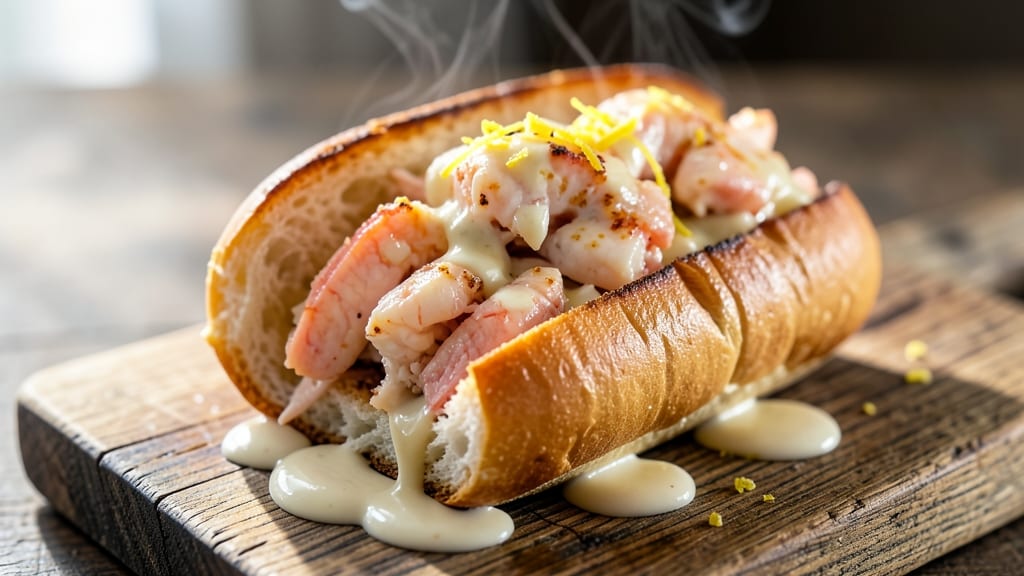
This Bar Harbor lobster roll recipe delivers the buttery, melt-in-your-mouth freshness that makes Maine’s coast famous—no shortcuts, just authentic technique. I’ve tested this version dozens of times, perfecting the butter poaching method that keeps the lobster tender while developing that signature rich flavor.
The key difference from other recipes? We’re using real Maine-style butter (not mayo) for that authentic coastal taste.
What sets this lobster roll apart is the method: lobster meat poached in butter with just a touch of Old Bay, then piled high into buttery split buns that stay soft without getting soggy.
This isn’t just another seafood sandwich—it’s a celebration of summer’s freshest catch, where every bite delivers that perfect balance of buttery richness and briny lobster sweetness. The secret weapon? A light coating of melted butter on the bun before assembly.
By the time you’re done, you’ll have lobster rolls that look and taste like they came straight from Bar Harbor’s dockside stands—golden buns with perfectly flaked lobster meat glistening in rich butter sauce.
We’re talking tender, not rubbery lobster, with that signature Maine butter flavor that makes this dish legendary. Serve with lemon wedges and a crisp chilled beverage for the full coastal experience.
This recipe scales perfectly for summer gatherings, whether you’re feeding a crowd or treating yourself to a taste of Maine. The method stays true to tradition while being practical enough for home cooks—no special equipment required, just patience for the poaching process.
Let’s get started on creating lobster rolls that will have everyone asking for seconds.
Ingredients for bar harbor lobster roll
Four ingredients make or break this lobster roll—fresh lobster, rich butter, buttery buns, and that signature Old Bay touch.
| Ingredient | Amount | Notes |
|---|---|---|
| Fresh Lobster Meat 🦞 | 1 ½ lb | Tail meat preferred, raw and fresh |
| Unsalted Butter 🧈 | ¾ cup | Maine-style butter preferred, cold |
| Old Bay Seasoning 🌶️ | 1 tbsp | For authentic coastal flavor |
| Lemon Juice 🍋 | 1 tbsp | Freshly squeezed, bright flavor |
| Split Top Buns 🥖 | 4 whole | Potato or brioche style preferred |
| Mayonnaise 🥫 | ¼ cup | Duck fat mayo for extra richness |
| Butter (for buns) 🧈 | ¼ cup | Melted for brushing buns |
| Salt 🧂 | ½ tsp | Kosher salt for seasoning |
| Black Pepper 🌶️ | ¼ tsp | Freshly cracked for flavor |
| Lemon Wedges 🍋 | 4 whole | For serving, fresh squeezed |
| Chilled White Wine 🍷 | ¼ cup | Optional for poaching butter |
The lobster is non-negotiable—freshly cooked is a must, so plan ahead. Whole Maine lobster from a seafood market (like Whole Foods or a local fishmonger) is ideal, but tails work too. If you’re buying frozen, thaw it overnight in the fridge—never microwave. The butter? Maine-style butter (like Plugrá) has that signature saltiness, but any high-fat unsalted butter works. For the buns, potato rolls hold up best—they stay soft without getting soggy, unlike brioche (though brioche is delicious if that’s what you’ve got).
No Old Bay? Mix 1 tsp paprika, 1/2 tsp celery salt, and 1/4 tsp black pepper as a substitute. Short on lobster? Shrimp or crab meat works in a pinch, but texture won’t be identical. The wine in the butter is optional, but a dry Sauvignon Blanc adds depth—skip it if you’re avoiding alcohol. For the mayo, duck fat mayo (like Kewpie) gives that restaurant-quality richness, but regular mayo is fine. Pro tip: Flake the lobster yourself—it makes all the difference over canned or pre-packaged.
This lobster meat keeps for 1 day in the fridge if stored in an airtight container with a bit of butter on top (to prevent drying). The buns? Toast them lightly right before assembling to keep them crisp. Leftovers? Reheat gently in the oven—microwaving makes them rubbery. Serve with lemon wedges on the side so everyone can squeeze their own. The rolls are best eaten fresh, but if you’re prepping ahead, keep the lobster and buns separate until serving.
Why You’ll Love This Recipe
- No Butter Waste: I melt that rich, cold butter right into the lobster meat—no extra bowls, no mess. The butter pools around each chunk, turning every bite into a creamy, golden hug. (Between us, I’ve tried the “melted butter on the side” route. Don’t.)
- Old Bay Magic: That pinch of Old Bay isn’t just seasoning—it’s the secret weapon. The celery salt and paprika cut through the lobster’s sweetness while the black pepper adds a sharp little kick. Squeeze in lemon juice, and suddenly, you’ve got a flavor that tastes like a Maine summer in two minutes.
- Weeknight Luxury: I make these for my book club (yes, even on a Tuesday night). The lobster meat cooks in 5 minutes, the buns toast in 3, and suddenly, you’ve got a dish that feels fancy but takes less time than ordering takeout. No one needs to know it’s your shortcut to impressing.
- Leftover Gold: The lobster filling keeps perfectly in the fridge for 2 days—so I make a double batch and turn the extras into lobster salad for sandwiches or pasta. (My kids fight over the leftovers, and honestly? That’s the real win.)
Instructions for Bar Harbor lobster rolls recipe
Here’s how to make lobster rolls that taste like you just pulled them from a Maine dockside shack.
Poach the Lobster in Flavorful Butter
In a large skillet, melt the 0.75 cup unsalted butter over medium heat until it’s just starting to foam but not brown. Add the 1.5 lb fresh lobster meat and gently stir to coat it completely in the butter. Pour in the 0.25 cup chilled white wine (if using) and bring to a gentle simmer. Let it cook for 2-3 minutes until the lobster turns opaque and the butter takes on a delicate golden color.
Here’s the thing—don’t overcook it. The lobster should be just barely firm to the touch, not rubbery. As soon as it changes color, remove it from the heat and transfer to a bowl. Reserve the buttery poaching liquid in the skillet for later. The lobster should be tender but still hold its shape when you squeeze it gently.
Make the Lobster Butter Sauce
Return the reserved poaching liquid to the skillet and reduce it over low heat for 2-3 minutes until it thickens slightly. Stir in the 1 tbsp old bay seasoning, 1 tbsp lemon juice, 0.5 tsp salt, and 0.25 tsp black pepper. Let it simmer for another minute until everything is well combined and fragrant. Remove from heat and stir in the 0.25 cup mayonnaise until smooth.
This sauce is what makes your lobster roll taste like it came straight from Bar Harbor. The Old Bay gives that classic coastal flavor, while the lemon juice keeps it bright. If the sauce looks too thick, add a splash of water to loosen it up. You want it to coat the back of a spoon but still be spreadable.
Prep the Buns
While the sauce is cooling, slice the 4 whole split top buns in half horizontally. Brush both sides of each half with the 0.25 cup melted butter (for buns) using a pastry brush. Place them on a baking sheet and toast in a preheated 350°F oven for 4-5 minutes until they’re golden brown and crispy.
Don’t skip the toasting—it makes all the difference. The butter should be fully melted but not greasy. The buns should be warm and slightly crisp when you’re ready to assemble. If you’re short on time, you can toast them in a skillet over medium heat for 1-2 minutes per side instead.
Assemble the Lobster Rolls
Carefully flake the poached lobster meat into bite-sized pieces, discarding any shells or cartilage. Gently fold the lobster meat into the butter sauce until everything is evenly coated. Spoon the lobster mixture onto the bottom halves of the toasted buns, mounding it slightly in the center. Top with the remaining bun halves and press down gently.
The key here is to not overfill the buns—they should be generously stuffed but not overflowing. If you’re feeling fancy, you can add a few lemon wedges on top for that fresh, zesty finish. Let the rolls sit for 2-3 minutes before serving so the flavors meld together.
Serve Immediately with Lemon
Serve the lobster rolls right away with the 4 whole lemon wedges on the side. The lemon not only adds a pop of color but also helps cut through the richness of the butter and lobster. For the best experience, serve them while they’re still warm and the butter is just starting to melt slightly.
Real talk: these rolls are best eaten fresh out of the oven. The butter sauce will start to firm up as they cool, so don’t wait too long. Pair them with a crisp green salad or some sweet potato fries for a complete Maine-style meal. Enjoy every buttery, lobster-filled bite!
Pro Tips For Making Bar Harbor Lobster Roll
- Chill the Lobster First: Cold lobster meat holds its shape better when chopped—skip the warm meat, or you’ll end up with a mushy pile that won’t stay in the bun. Pat it dry after chilling, too; excess moisture turns your filling into a soggy mess.
- Butter in Stages: Don’t dump all the butter at once. Start with half while the lobster heats, then add the rest just before serving—this keeps the filling rich without turning it greasy. I learned this the hard way after a roll slid out of my hand, butter dripping everywhere.
- Toast Buns Low and Slow: High heat burns split-top buns before they crisp. Toast them at 300°F for 5-7 minutes until golden, then finish under the broiler for 30 seconds—just enough to lock in that crunch without charring.
- Lemon Last, Not First: Acid kills butter’s flavor if mixed too early. Squeeze the lemon juice right before assembling the roll, and toss the meat gently—just enough to brighten, not drown. Overdo it, and your Old Bay notes vanish.
Serving suggestions for this recipe
Coastal Presentation
Serve these lobster rolls on a wooden board or slate platter to mimic the rustic dockside stands of Bar Harbor.
I like to arrange them slightly overlapping, with lemon wedges nestled between them—this not only looks beautiful but also makes it easy for guests to squeeze fresh lemon over each bite.
A sprinkle of fresh parsley or chopped chives adds a pop of green that contrasts perfectly with the golden buns and lobster. 🍋
Classic Pairings
For the full Maine experience, pair your lobster rolls with chilled sweet potato fries—their natural sweetness balances the richness of the butter.
I also recommend a crisp green salad with a light vinaigrette (just 2 tbsp olive oil, 1 tbsp lemon juice, and a pinch of salt) to cut through the richness.
If you’re serving this at a picnic or beachside gathering, iced tea with lemon or a crisp Sauvignon Blanc completes the coastal vibe.
Family-Style Serving
In my Irish-Italian family, we always serve lobster rolls family-style—meaning we pile everything in the center of the table and let everyone build their own. Use a large serving platter with small bowls for the lobster mixture and butter sauce, plus a separate bowl for lemon wedges.
This way, everyone can customize their roll with extra butter or lemon as they like. It’s especially fun for kids—they love assembling their own sandwiches! 🥖
Lemon Love
Never underestimate the power of a good lemon wedge. Serve them on the side so guests can squeeze fresh lemon over their rolls as they eat—this keeps the lobster from getting too heavy and adds a bright, tangy note.
For an extra touch, garnish each roll with a thin lemon twist before serving. Pro tip: Use Meyer lemons if you can find them—they’re sweeter and more aromatic than regular lemons.
Beverage Pairings
A crisp white wine like Maine-made Chardonnay or a dry Riesling is my go-to pairing—its acidity cleanses the palate between buttery bites. For non-alcoholic options, sparkling water with lemon or a cucumber-mint infused water keeps things refreshing.
If you’re serving this at a summer BBQ, a light lager like Harpoon IPA (a local Maine favorite) adds a nice hoppy contrast to the richness. 🍺
Make-Ahead Tips
If you’re prepping ahead, keep the lobster filling and buns separate until serving. Store the filling in an airtight container in the fridge for up to 24 hours, and toast the buns just before assembling.
For a crowd, assemble the rolls 10 minutes before serving—this gives the butter time to soften slightly but keeps them from getting soggy. Trust me, this is how I handle summer gatherings with my Boston neighbors. 💡
Nutrition facts
Frequently asked questions
Why does this recipe use butter instead of mayo?
This is the classic Maine way! Authentic Bar Harbor lobster rolls rely on rich butter for that signature coastal flavor. The butter poaching method creates a velvety sauce that’s lighter than mayo while keeping the lobster tender. The debate between butter and mayo is legendary in New England—this version stays true to tradition.
Can I make these lobster rolls ahead of time?
but keep the filling and buns separate until serving. Store the lobster mixture in an airtight container with a bit of butter on top for up to 24 hours. Toast the buns just before assembling to maintain crispness. Assemble 10 minutes before serving for perfect texture.
What’s the best way to flake lobster meat?
Use a fork to gently pull the meat apart into bite-sized pieces. For tail meat, cut off the shell first, then use your fingers to separate the meat from the vein. Discard any cartilage or dark parts. The goal is tender, flaky pieces—not shredded. Pro tip: Flake it fresh for maximum texture!
How do I know when the lobster is cooked properly?
The lobster should turn opaque and firm to the touch in just 2-3 minutes of poaching. It should be tender but still hold its shape—never rubbery. Overcooking makes it tough. The butter should be golden but not browned. Test with a quick squeeze: if it springs back, it’s perfect!
Can I substitute shrimp for lobster?
You can, but the texture will differ. For a closer substitute, use large shrimp (peeled and deveined) and reduce cooking time to 1-2 minutes. The flavor won’t be identical, but it works in a pinch. For authentic taste, stick with lobster if possible.

- Basic Vanilla Cookies Recipe: Soft-Centered Chew With Vanilla Bean Depth - November 11, 2026
- Best Cod Fish Recipe Ever: Buttery Pan-Seared Crispness in 20 Minutes - November 11, 2026
- Liver and Onions Recipe: Pan-Sear Perfection With Caramelized Depth - November 11, 2026