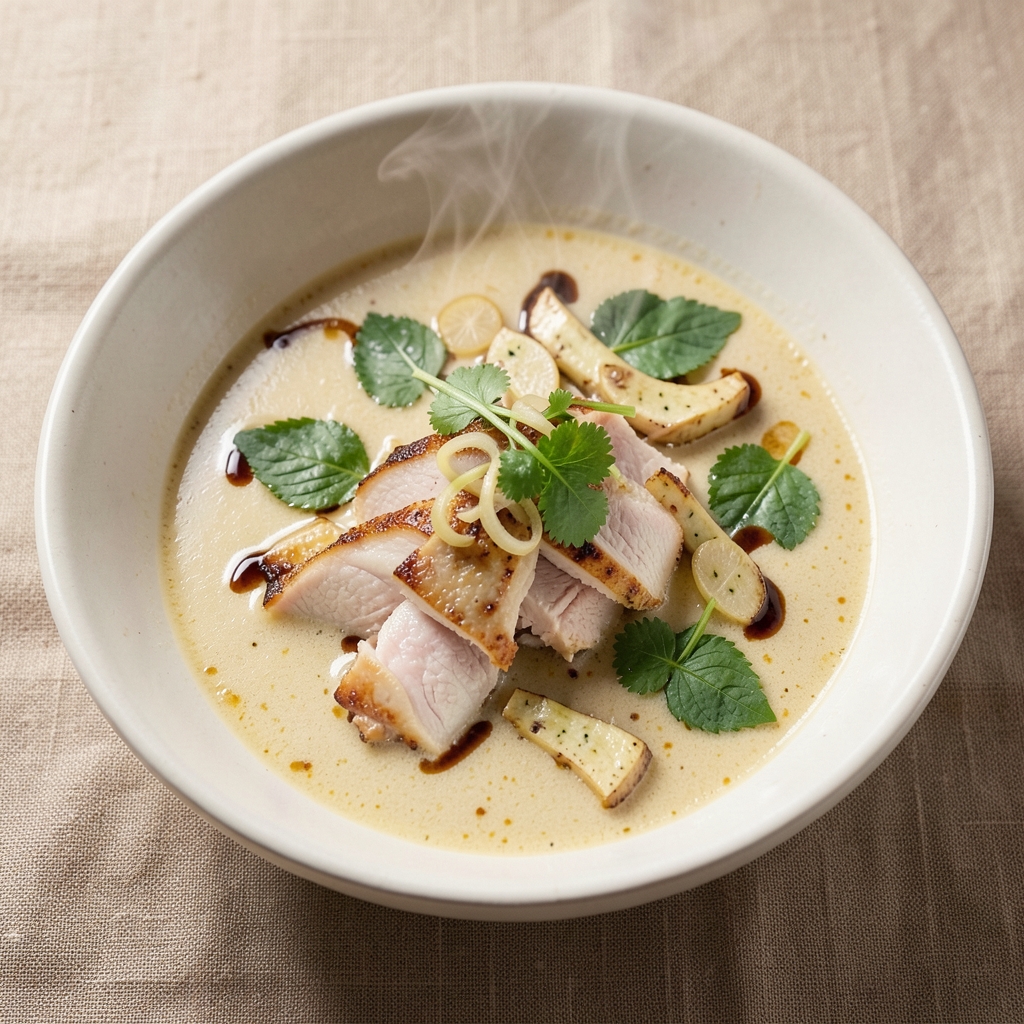
This Bangkok soup recipe transforms your kitchen into a bustling Thai street stall with its lemongrass-kissed coconut broth that’s both aromatic and deeply comforting. The balance of tangy, spicy, and creamy flavors comes together through precise techniques—like toasting spices and simmering the broth just right—that make all the difference.
I’ve perfected this version to deliver authentic taste without requiring specialized equipment, so you can recreate the magic of Bangkok in your own pot.
The foundation of any great Bangkok soup is the broth, where fragrant lemongrass, galangal, and kaffir lime leaves infuse the coconut milk with layers of complexity.
What sets this recipe apart is the two-stage simmering process: first building the aromatic base, then carefully blending in the coconut milk to avoid curdling. This method ensures a velvety texture that coats every spoonful while maintaining the bright, herbal notes that define Thai cuisine.
By the time you’re done, you’ll have a steaming bowl of soup with tender chicken or mushrooms swimming in that golden coconut broth, garnished with fresh herbs and a squeeze of lime.
The aroma alone will have everyone gathering around the table, while the first sip delivers that perfect harmony of spice, tang, and creaminess. This is the kind of dish that feels like a hug in a bowl—warm, inviting, and impossible to resist.
Whether you’re making Tom Kha Gai with coconut milk or a lighter Tom Yum with lime, this recipe adapts beautifully to your preferences. The techniques here work for both versions, so you can experiment with what your family enjoys most. Let’s get started on creating your own taste of Bangkok.
Ingredients for bangkok soup
These aromatic ingredients transform your kitchen into a bustling Bangkok street stall.
| Ingredient | Amount | Notes |
|---|---|---|
| Chicken Breast 🍗 | 1 ½ lb | Boneless, skinless, cut into bite-sized pieces |
| Coconut Milk 🥥 | 1 ½ cups | Full-fat for creaminess, well-stirred |
| Lemongrass 🌿 | 1 whole | Fresh, tough outer leaves removed |
| Galangal Root 🍃 | 3 oz | Fresh, peeled and sliced thin |
| Kaffir Lime Leaves 🍋 | 4 whole | Fresh, torn into large pieces |
| Fish Sauce 🐟 | 2 tbsp | Red Boat preferred for authenticity |
| Lime Juice 🍋 | ½ cup | Freshly squeezed, about 4 limes |
| Coconut Aminos 🥢 | 2 tbsp | Or sub with soy sauce in pinch |
| Garlic Cloves 🧄 | 6 cloves | Peeled and lightly smashed |
| Thai Chili Peppers 🌶️ | 4 whole | Adjust for spice preference |
| Shallots 🧅 | 3 whole | Peeled and thinly sliced |
| Cilantro 🌿 | ½ cup | Fresh, chopped for garnish |
| Fresh Thai Basil 🌿 | ¼ cup | Or sub with regular basil |
| Vegetable Oil 🫒 | 1 tbsp | For toasting aromatics |
| Salt 🧂 | 1 tsp | Diamond Crystal kosher preferred |
The galangal and lemongrass are non-negotiable for authentic flavor—look for fresh roots at Asian markets, not the dried powder. Thai Kitchen or 99 Ranch usually stock them. If you can’t find galangal, ginger at half the amount works in a pinch, though it won’t be identical. The kaffir lime leaves add that signature citrusy aroma—freeze extras in a bag for future recipes. For coconut milk, full-fat is essential—the lighter versions won’t give that velvety texture. I always buy the 13.5 oz cans from Thai brands at Trader Joe’s for the best flavor.
No fish sauce? Soy sauce plus a splash of Worcestershire gets you close, though it won’t be identical. Running short on Thai chilies? Bird’s eye chilies or serrano peppers work, but adjust quantity—they’re hotter. The shallots can be swapped for red onion, though shallots have a milder sweetness. For the coconut aminos, soy sauce plus a pinch of sugar is a decent backup. Fresh herbs matter here—dried basil won’t cut it for the Thai basil. If you must use dried, double the amount and toast it lightly in the oil first.
This soup tastes even better the next day—make extra and store it in the fridge for up to 4 days. The broth thickens as it cools, so add a splash of water when reheating. Freezes beautifully for 3 months—portion into containers for quick lunches. The fresh herbs should be added just before serving, so store them separately in the fridge. If you’re making this ahead, keep the herbs and lime juice separate until the last minute to preserve their brightness.
Why You’ll Love This Recipe
- One-Pot Magic: I swear by this—just toss everything into a single pot, simmer, and walk away. No chopping boards full of scraps, no multiple pans. The galangal and lemongrass infuse the broth so deeply, you’ll forget how little effort it took.
- Flavor Explosion: That first sip? Creamy coconut milk meets bright citrus from the kaffir lime leaves, with a hint of ginger-like heat from the galangal. It’s the kind of soup where every spoonful tastes like a mini vacation—no heavy spices, just balance.
- Weeknight Workhorse: Between us, this is my go-to when I’m exhausted but still want something special. Serve it over rice with quick-pickled veggies, or let it stand in as a standalone meal. Even my picky-eating partner asks for seconds—(yes, even on a Tuesday night).
- Leftovers That Shine: The broth gets richer overnight, honestly. Reheat it gently, and it’s even better the second day—perfect for lunchboxes or a lazy Sunday. And because it’s chicken and coconut-based, it’s budget-friendly without tasting cheap. My freezer’s always stocked with portions.
Step-by-step instructions for lemongrass-kissed coconut broth magic
Here’s how to craft this aromatic Thai masterpiece with layers of bright, complex flavors.
Toast Aromatics for Deep Flavor Foundation
Heat the 1 tablespoon vegetable oil in a heavy pot over medium heat. Add the 3 whole shallots and 6 cloves garlic cloves, cooking for 3-4 minutes until the shallots turn golden and fragrant. This toasting step develops their natural sweetness and removes any bitterness.
Next, add the 4 whole Thai chili peppers and 3 oz galangal root (sliced thin), cooking for another 2 minutes until the galangal softens slightly. The galangal will release its piney, citrusy aroma—this is your flavor anchor. Keep the heat at medium to prevent burning these delicate ingredients.
Build the Lemongrass-Coconut Base
Add the 1 whole lemongrass (tough outer leaves removed) cut into 2-inch pieces, and the 4 whole kaffir lime leaves torn into large pieces. Stir for 1 minute to allow the lemongrass to release its citrusy oils. You’ll notice the broth immediately brightens in color and aroma.
Pour in the 1.5 cups coconut milk and bring to a gentle simmer over medium-low heat. The coconut milk should coat the back of a spoon but not boil vigorously. Simmer for 5 minutes to infuse the flavors without curdling. This is where the soup’s signature creamy depth begins to develop.
Cook the Chicken Until Tender
Add the 1.5 lb chicken breast cut into bite-sized pieces. Increase heat to medium-high and bring to a boil. Once boiling, reduce to medium-low and simmer for 12-15 minutes, turning the chicken occasionally, until it reaches 165°F internally and is no longer pink in the center.
Remove the chicken with a slotted spoon and set aside. The broth should now have a rich, golden hue with visible aromatics floating in it. If the broth looks too thin at this point, you can reduce it slightly by simmering uncovered for 2-3 minutes—this concentrates the flavors beautifully.
Season and Finish the Broth
Return the chicken to the pot and stir in the 2 tablespoons fish sauce, 2 tablespoons coconut aminos, and 1 teaspoon salt. Add the 0.5 cup lime juice and let the soup simmer for 3-4 minutes to allow all the flavors to meld together. Taste and adjust seasoning—you want a balance of salty, sweet, sour, and umami.
Here’s the thing—this broth should be vibrant and aromatic, not bland. If it needs more depth, add a splash more fish sauce or a pinch of salt. The coconut milk should be fully incorporated but not separated, creating a velvety texture that coats the back of your spoon.
Garnish and Serve with Fresh Herbs
Remove the lemongrass pieces and kaffir lime leaves (they’ve done their job). Stir in the 0.5 cup chopped cilantro and 0.25 cup chopped fresh Thai basil just before serving. These herbs add freshness and visual appeal that balances the rich coconut broth.
Ladle the soup into bowls and serve immediately. Each spoonful should deliver layers of flavor: the creamy coconut milk, the bright citrus from lemongrass and lime, the piney galangal, and the umami from fish sauce and coconut aminos. The chicken should be tender enough to flake easily with a fork, soaking up all that flavorful broth.
Pro Tips For Making Bangkok Soup
- Char Chicken First: DESCRIPTION: Slice the chicken breast thin—paper-thin—before searing. I learned this the hard way: thick pieces turn rubbery in the coconut milk, no matter how long you simmer. A sharp knife and a steady hand (or a meat tenderizer) save you from dry, sad chicken.
- Bruise the Galangal: DESCRIPTION: Smash the galangal with the flat side of your knife before slicing—don’t just chop it. This releases its oils and aroma, making the soup actually taste like Thailand instead of just “mildly spiced.” (Yes, even if it looks like you’re trying to make a pulp.)
- Simmer, Don’t Boil: DESCRIPTION: Keep the heat low enough that the coconut milk steams gently—no bubbles breaking the surface. I used to rush it, and the soup would split into greasy layers. A slow simmer keeps the creaminess intact and the flavors melded.
- Toast the Kaffir Lime: DESCRIPTION: Lightly dry-toast the kaffir lime leaves in a hot pan for 10 seconds per side before adding them to the broth. It deepens their citrusy punch without bitterness. (Skip this, and your soup will taste like it’s missing something—trust me.)
Make-ahead tips for leftovers
Broth Prep Ahead
Make the aromatic base up to 2 days in advance—simmer the shallots, garlic, galangal, lemongrass, and kaffir lime leaves in 1.5 cups coconut milk for 10 minutes, then cool completely. Store in an airtight container in the fridge.
When ready to finish, simply reheat gently over low heat (don’t boil) and add the chicken, fish sauce, and lime juice. This shortcut preserves the complex flavors while saving you time on cooking day. 🌿
Herb Storage Hack
Fresh herbs like cilantro and Thai basil wilt quickly when stored in broth. Keep them separate in a damp paper towel-lined container in the fridge. For longer storage (up to 5 days), blend them with a splash of water into a paste, then freeze in ice cube trays.
Add 1-2 cubes directly to your hot soup when serving—this preserves their vibrant flavor better than pre-chopping. 💫
Chicken Prep Shortcut
Save time by pre-cooking the chicken separately. Poach the 1.5 lb chicken breast in 2 cups water with 1 tsp salt for 12 minutes until fully cooked (165°F), then chill in ice water. Shred or slice it before adding to the broth.
This method ensures perfectly tender chicken without overcooking it in the soup. Store pre-cooked chicken in the fridge for up to 3 days or freeze for 2 months. ⏰
Freezer-Friendly Strategy
This soup freezes beautifully for 3 months—just omit the fresh herbs and lime juice before freezing. Assemble everything except those ingredients, then cool completely before transferring to freezer-safe containers.
When reheating, add the herbs and lime juice fresh. For the best texture, thaw overnight in the fridge before reheating gently on the stovetop. 🧊
Batch Cooking Tips
Double the recipe for easy meal prep—this soup tastes even better the next day as flavors meld. Use a 6-8 quart stockpot to accommodate the larger batch. Divide into 4-6 portions in airtight containers for quick lunches.
Label with the date and reheat individual servings in a pot with 2 tbsp water to restore creaminess. The broth will thicken slightly when reheated, so adjust with a splash of water or coconut milk if needed. 🍲
Garnish Prep Station
Set up a garnish station with all your toppings ready to go. Keep chopped cilantro, Thai basil, Thai chilies, and lime wedges in small bowls at the table. This makes serving faster and keeps the herbs fresh.
For extra flair, toast 2 tbsp crushed peanuts in a dry pan for 2 minutes and sprinkle on top—it adds a delightful crunch that balances the creamy broth. 🌶️
Nutrition facts
Frequently asked questions
What’s the key difference between Tom Kha Gai and Tom Yum?
Tom Kha Gai is creamy with coconut milk, offering a rich, velvety texture and milder spice, while Tom Yum is tangy, spicy, and broth-based. This recipe actually bridges both styles—use the full coconut milk for Tom Kha Gai or reduce it to ½ cup and add ½ cup water for a lighter Tom Yum version. The aromatic base (lemongrass, galangal) works for both!
Can I make this soup vegetarian?
Swap the chicken for shitake mushrooms or tofu (pressed and pan-seared first). Boost umami with 1 tbsp mushroom powder or 1 extra tbsp fish sauce> (or soy sauce for vegan). The broth’s flavors will still shine—just adjust seasoning to taste after cooking.
Why did my coconut milk separate?
This happens when coconut milk boils vigorously or sits too long at high heat. To fix it, whisk in 1 tbsp cold water or ½ cup reserved broth> while stirring constantly over low heat until smooth. For prevention, always simmer coconut milk gently (never boil) and add it after toasting aromatics.
How spicy should this soup be?
The recipe uses 4 whole Thai chilies for mild heat—adjust to taste! For medium spice, remove seeds and membranes; for fiery, keep seeds in or add 1 extra chili. Pro tip: Toast chilies in oil for 30 seconds> first to mellow their heat slightly while enhancing flavor.
Can I use dried lemongrass or galangal?
Fresh is ideal for authentic flavor, but in a pinch, use ½ tsp dried lemongrass> (not the same as culinary lemongrass powder) and 1 tsp grated ginger> for galangal. The texture and aroma won’t be identical, but it works for a quick version. For best results, find fresh at Asian markets—they’re worth the trip!

- Calamari in Tomato Sauce Recipe: Crispy Squid with Bright, Acid-Balanced Flavors - November 9, 2026
- Restaurant Style Home Fries Recipe: Crispy Potato Wedges With Herb-Infused Oil - November 9, 2026
- Alligator Bread Recipe: Crunchy Herb-Crusted Bites with Creamy Center - November 9, 2026