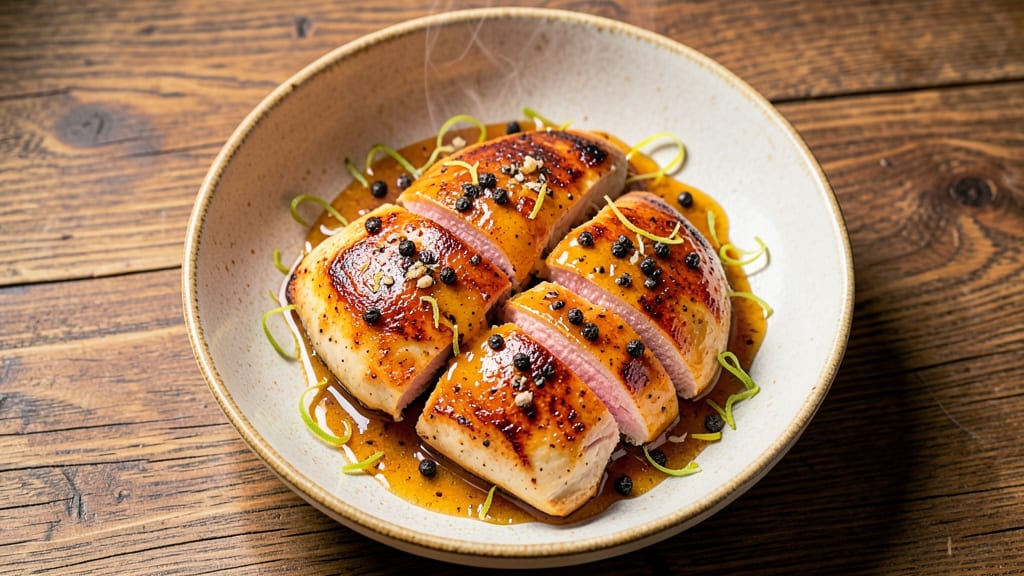
This baked citrus chicken recipe transforms ordinary weeknight dinners into vibrant, restaurant-worthy meals with just a few bright ingredients. The secret lies in balancing zesty citrus glaze—sweet and tangy—with tender, juicy chicken that practically falls apart.
I perfected this technique after years of testing, ensuring every bite delivers that perfect harmony of acidity and richness.
What makes this recipe stand out is its simplicity: minimal prep, 30 minutes in the oven, and a glaze that requires no fancy equipment. Whether you use orange, lemon, or grapefruit, the citrus works its magic by tenderizing the chicken while adding a glossy, caramelized finish.
The key is basting—just a few times during baking—to lock in moisture and deepen the flavor.
By the time it emerges from the oven, your chicken will be golden, juicy, and bursting with citrus aroma, ready to be paired with roasted vegetables or a fresh salad.
The glaze clings beautifully, adding a bright contrast to the savory meat. This is the kind of dish that elevates everyday meals without requiring extra effort.
Serve with a sprinkle of fresh herbs or a side of quinoa to round out the plate. The technique is foolproof, and the results are always impressive—perfect for impressing guests or treating yourself to something special. Let’s get started!
Ingredients for baked citrus chicken
Bright citrus glaze meets tender chicken in this restaurant-worthy weeknight dish.
| Ingredient | Amount | Notes |
|---|---|---|
| Boneless, Skinless Chicken Breast 🍗 | 1 ½ lb | Evenly sized cutlets for consistent cooking |
| Fresh Orange Juice 🍊 | ½ cup | From navel or Valencia oranges |
| Fresh Lemon Juice 🍋 | ¼ cup | Brightens the citrus flavor profile |
| Honey 🍯 | ¼ cup | Wildflower preferred for floral notes |
| Extra-Virgin Olive Oil 🫒 | 2 tbsp | Light fruity variety for balance |
| Garlic Cloves 🧄 | 4 cloves | Minced for aromatic depth |
| Fresh Ginger 🌿 | 1 tbsp | Finely grated for zing |
| Diamond Crystal Kosher Salt 🧂 | 1 ½ tsp | For seasoning and glaze |
| Ground Black Pepper 🌶️ | ½ tsp | Freshly cracked for piquancy |
| Fresh Thyme Leaves 🌿 | ¼ cup | Chopped for herbal brightness |
| Orange Zest 🍊 | 1 tbsp | Bright citrus aroma booster |
| Unsalted Butter 🧈 | 2 tbsp | Melted for basting |
The chicken breast quality is non-negotiable—opt for air-chilled cuts from Whole Foods or your local butcher for superior tenderness. Organic chicken often has better flavor, though conventional works fine. For even cooking, pound the breasts to ¼-inch thickness using a meat mallet. The citrus glaze relies on freshly squeezed juice—avoid bottled varieties, which lack the same vibrant acidity. Navel oranges provide a sweeter juice, while Meyer lemons add floral complexity. When selecting honey, local varieties offer unique flavor profiles that elevate the glaze.
No fresh thyme? Dried thyme at one-third the amount suffices, though fresh delivers superior aroma. Substituting grapefruit juice for orange requires halving the quantity to maintain balance. For a vegetarian option, chickpea or tofu cutlets work when marinated overnight. The glaze can be prepped 24 hours ahead—store in an airtight container in the fridge. Ginger’s heat can be reduced by using ½ the amount if preferred. For a sweeter glaze, increase honey to ⅓ cup while reducing citrus juice by 2 tbsp.
Fresh citrus glaze keeps 3 days refrigerated in a sealed container. The chicken reheats beautifully—5 minutes at 350°F restores moisture. For meal prep, store components separately: glaze in a jar, chicken in a sealed container. Freeze glaze for 3 months in ice cube trays for portion control. Thyme leaves can be frozen in oil for up to 6 months. Always bring chicken to room temperature before baking for even cooking—this takes 20 minutes in the fridge.
Why You’ll Love This Recipe
- No-Fuss Marination: I swear by the 10-minute marinade trick—just toss the chicken in orange juice, lemon juice, honey, and olive oil while I chop veggies. The citrus cuts through the prep work, so you’re not standing there stirring for ages.
- Zesty Brightness: That honey-orange-lemon glaze? It’s the kind of flavor that makes you pause mid-bite. The chicken stays juicy inside with a sticky, slightly caramelized crust—like a cross between a restaurant dish and something you’d make on a lazy afternoon.
- Lunchbox Hero: Between us, this is my go-to for meal prep. Slice it up, pack it with greens or crackers, and it holds together for days. Honestly, my kids would rather eat this cold than their usual sad sandwiches—no complaints from me.
- Budget Win: Chicken breast gets a bad rap for being expensive, but this recipe stretches it further than you’d think. The citrus and honey make it feel special without breaking the bank, and leftovers reheat like a dream. (Yes, even on a Tuesday night.)
Step-by-step instructions for baked citrus chicken
This method delivers tender, juicy chicken with a vibrant citrus glaze that balances sweet and tangy notes perfectly.
Prepare the Citrus Glaze Mixture
In a medium bowl, combine the 0.5 cup fresh orange juice, 0.25 cup fresh lemon juice, 0.25 cup honey, 2 tbsp extra-virgin olive oil, 1 tbsp orange zest, 1.5 tsp diamond crystal kosher salt, and 0.5 tsp ground black pepper. Whisk vigorously until the honey fully dissolves and the mixture becomes smooth and glossy. This glaze is the heart of the dish—its balance of acidity and sweetness creates that signature brightness.
Next, add the 4 minced garlic cloves and 1 tbsp finely grated fresh ginger to the glaze mixture. Stir well to incorporate these aromatic ingredients completely. The garlic and ginger will infuse the glaze with depth while the citrus components maintain their vibrant character. Let this mixture sit at room temperature while you prepare the chicken—this allows the flavors to meld slightly before application.
Season and Sear the Chicken Cutlets
Slice the 1.5 lb boneless, skinless chicken breast into four even cutlets, each about ½-inch thick. Place them between two sheets of plastic wrap and pound gently with a meat mallet until uniformly thin—this ensures even cooking. Pat each cutlet dry with paper towels to remove any excess moisture, which is crucial for achieving a proper sear.
Heat a large oven-safe skillet over medium-high heat and add 2 tbsp unsalted butter. Once the butter foams, add the chicken cutlets and cook for 2-3 minutes per side until they develop a golden-brown crust. You’ll know they’re ready to flip when they release easily from the pan. Remove the skillet from heat and carefully transfer the cutlets to a plate, leaving any rendered butter in the pan.
Apply Glaze and Bake to Perfection
Return the skillet to the stovetop over medium heat and pour in the citrus glaze mixture. Stir continuously for 1-2 minutes until the glaze begins to thicken slightly and coat the back of a spoon. This step ensures the glaze adheres properly to the chicken during baking. Transfer the skillet to a 400°F preheated oven and place the chicken cutlets back into the pan, spooning glaze generously over each piece.
Bake for 12-15 minutes until the internal temperature reaches 165°F and the edges are caramelized with a glossy sheen. The glaze should bubble and darken slightly, creating a beautiful contrast against the golden chicken. For extra richness, sprinkle the 0.25 cup chopped fresh thyme leaves evenly over the top during the last 2 minutes of baking—this adds herbal brightness that complements the citrus perfectly.
Rest and Serve with Confidence
Remove the skillet from the oven and let the chicken rest on a wire rack for 5 minutes. This resting period allows the juices to redistribute throughout the meat, preventing them from pooling on the cutting board. The glaze will continue to thicken slightly as it cools, creating an even more concentrated citrus flavor.
Serve immediately with the glaze spooned over each cutlet. The chicken should be tender with a juicy interior and a crisp, caramelized exterior. Each bite delivers a harmonious blend of citrus brightness, honeyed sweetness, and herbal depth. Pair with steamed vegetables or a fresh citrus salad to complete the meal—this dish shines when its vibrant flavors are complemented by equally bright accompaniments.
Pro Tips For Making Baked Citrus Chicken
- USE THICKER CUTS: Skinless chicken breast dries out fast in citrus marinades. If you’re using thin-cut breasts, pound them to an even ½-inch thickness—no thicker, or they’ll stay raw inside. I learned this the hard way when my center slices stayed gray after 30 minutes at 375°F.
- STRAIN THE JUICE: Fresh orange and lemon juice has pulp that clumps and burns. Strain it through a fine-mesh sieve before mixing with honey and olive oil—this keeps your glaze smooth and prevents bitter spots. (Yes, even if you’re in a hurry.)
- COOK LOW AND SLOW: Bake at 325°F instead of cranking the oven to 375°F. The citrus glaze needs time to caramelize, and the chicken stays juicy without drying out. I used to rush it at high heat and ended up with sticky, undercooked centers.
- ADD A PINCH OF SALT TO THE MARINADE: The citrus and honey combo can taste flat if you skip this. A ¼ teaspoon of salt in the marinade (before mixing with chicken) balances the sweetness and cuts through the acid. Sounds small, but it makes a real difference—especially if you’re using low-sodium honey.
Flavor customization for this baked citrus chicken
Sweet vs. Tangy Balance
Adjust the citrus-to-honey ratio to suit your taste. For a more tangy profile, increase lemon juice by 1 tbsp and reduce honey by 1 tbsp. For a sweeter glaze, swap in Meyer lemon juice (naturally sweeter) or add 1 tbsp maple syrup.
I find Valencia orange juice adds subtle sweetness while maintaining acidity—perfect for balancing the dish. 🍯
Spicy Citrus Kick
Add 1 tsp chili crisp or ½ tsp cayenne pepper to the glaze for heat. For smoky depth, infuse the olive oil with 1 minced chipotle pepper (seeds removed) by heating it for 2 minutes before adding to the glaze.
This works especially well with grapefruit juice—the bitterness pairs beautifully with the smoky-spicy notes. 🌶️
Herbal Variations
Swap thyme for rosemary (½ cup chopped) for an earthier flavor, or add 1 tbsp chopped cilantro for a fresh, almost Mexican-inspired twist. For a Mediterranean touch, include 1 tsp dried oregano in the glaze.
Fresh herbs should always be added during the last 2 minutes of baking to preserve their aroma. 🌿
Citrus Swaps
Try blood orange juice for a berry-like sweetness or yuzu juice (if available) for a floral, almost tropical note. Lime juice adds a sharper tang—use it in place of lemon but reduce by 1 tbsp to avoid overpowering the dish.
For a winter variation, combine cranberry juice with orange juice for a festive twist. 🍊
Umami Boost
Enhance the glaze with 1 tbsp soy sauce or 1 tsp fish sauce for depth. For a vegetarian option, add 1 tsp miso paste to the glaze mixture. These umami-rich additions work especially well with ginger and garlic, creating a complex flavor profile that balances the citrus brightness. 💡
Texture Contrast
Add toasted sesame seeds or crushed pistachios for crunch after baking. For a creamy contrast, drizzle with 1 tbsp reduced balsamic glaze before serving. The acidity of the citrus glaze pairs beautifully with the richness of balsamic, adding another layer of complexity to each bite. ✨
Nutrition facts
Frequently asked questions
Can I use chicken thighs instead of breasts for this recipe?
Chicken thighs work beautifully with a longer baking time of 20-25 minutes at 375°F. Their higher fat content makes them more forgiving and adds extra richness to the citrus glaze. Just reduce the baking time by 5-7 minutes if you prefer them juicier.
How do I prevent the chicken from drying out?
Keep the chicken moist by basting with extra glaze every 5 minutes during baking. Pounding the breasts to ¼-inch thickness ensures even cooking, and letting them rest for 5 minutes after baking locks in juices. For extra insurance, add 1 tbsp butter to the baking dish.
What’s the best citrus to use if I don’t have oranges?
Try grapefruit juice for tartness or Meyer lemon juice for sweetness. Blood oranges add berry-like depth, while yuzu (if available) brings floral notes. Always balance with honey—reduce citrus by 1 tbsp if using sharper varieties like lime.
Can I make this recipe ahead of time?
Yes! Prepare the glaze up to 3 days ahead and store it in an airtight container. For the chicken, marinate it overnight (up to 24 hours) for deeper flavor. Reheat gently at 350°F for 5 minutes to restore moisture. The glaze thickens when chilled, so thin with 1 tsp water before reheating.
Why does my glaze turn watery during baking?
This happens when the citrus juice isn’t reduced enough before baking. Simmer the glaze on the stovetop for 2-3 minutes until slightly thickened before transferring to the oven. Adding 1 tsp cornstarch to the glaze mixture can also help stabilize it.

- Classic Shortbread Recipe: Buttery Layers That Melt in Your Mouth - November 9, 2026
- Zucchini Cottage Cheese Recipe: Herb-Infused Creamy Bites in 20 Minutes - November 9, 2026
- Miso Eggplant Recipe: Umami Bomb With Silky Texture and Crispy Edges - November 9, 2026