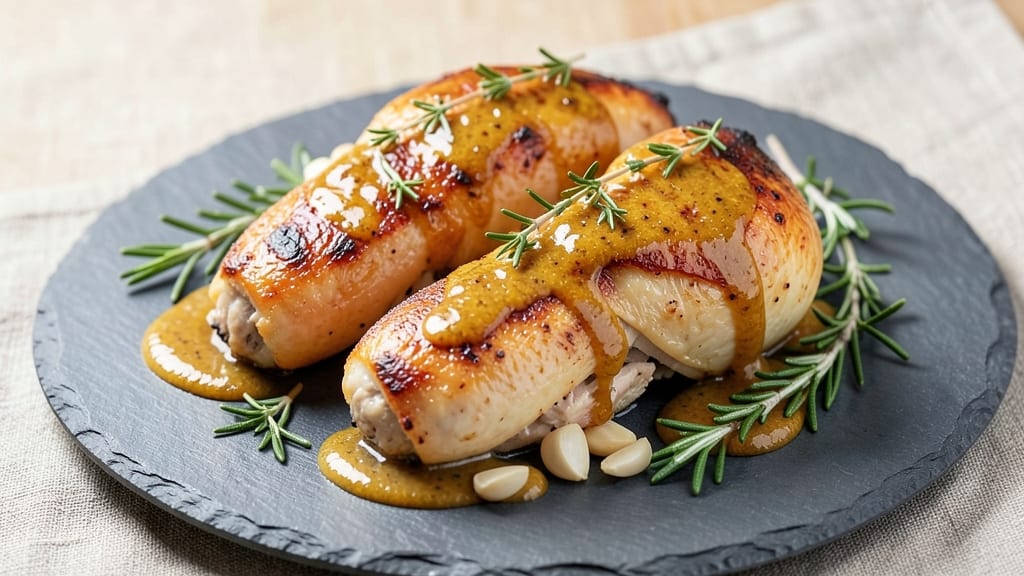
This baked chicken with mustard recipe delivers restaurant-quality results with minimal effort—juicy centers and a tangy, golden crust all in one pan. 💛 I perfected this method after years of testing, ensuring the mustard’s sharpness enhances rather than overpowers the chicken’s natural flavor.
The secret lies in balancing acidity and heat to create that signature caramelized exterior while keeping the meat impossibly tender inside.
What makes this recipe stand out is its foolproof technique: a simple marinade of mustard, olive oil, and herbs that works with any cut of chicken—thighs, breasts, or even drumsticks. Baked at 400°F for just 30 minutes, the chicken develops a crispy, flavorful crust without drying out.
No basting, no flipping—just set it and forget it until the aroma fills your kitchen.
The result is chicken that’s perfectly golden on the outside, with juicy meat that practically falls apart at the touch of a fork. The mustard glaze adds a bright tang that cuts through the richness, making every bite balanced and satisfying.
This is the kind of dish that elevates a weeknight dinner into something special without requiring advanced skills.
Serve with roasted vegetables or a fresh salad for a complete meal. The leftovers reheat beautifully, too—ideal for meal prep. Let’s get started on this simple yet impressive recipe that always delivers.
Ingredients for baked chicken with mustard
Juicy chicken thighs and a tangy mustard glaze transform simple ingredients into restaurant-worthy perfection.
| Ingredient | Amount | Notes |
|---|---|---|
| Chicken Thighs, Bone-In 🍗 | 1 ½ lb | Skin-on for crispier crust |
| Dijon Mustard 🍯 | ¼ cup | High-quality, smooth variety |
| Extra-Virgin Olive Oil 🫒 | ¼ cup | Fruity, peppery for balance |
| Fresh Thyme Leaves 🌿 | ½ cup | Finely chopped, stems removed |
| Garlic Cloves 🧄 | 4 cloves | Minced, for marinade depth |
| Fresh Rosemary 🌿 | 1 tbsp | Finely chopped, aromatic |
| Diamond Crystal Kosher Salt 🧂 | 1 ½ tsp | Fine grain for even seasoning |
| Freshly Ground Black Pepper 🌶️ | ½ tsp | Cracked peppercorns preferred |
| Honey 🍯 | 1 tbsp | Wildflower for subtle floral notes |
| Cornstarch 🌾 | 1 tbsp | For tenderizing chicken |
| Yellow Cornmeal 🌽 | ¼ cup | For extra crunch layer |
| Fresh Lemon Juice 🍋 | 1 tbsp | Brightens mustard's tang |
The chicken thighs are the foundation—bone-in, skin-on cuts like Olymel or Bell & Evans deliver the best texture. Look for thighs with a vibrant pink hue and minimal bruising; the skin should be intact and slightly glossy. Fresh herbs elevate the dish, so source thyme and rosemary from Whole Foods bulk bins or your local farmers’ market. The Dijon mustard should be smooth, not grainy, with a balanced tang—Maille or Amora are reliable choices. For the olive oil, seek out a fruity, peppery variety like Colavita or California Olive Ranch—these will complement the mustard without overpowering it.
No Dijon mustard? Whole-grain mustard thinned with water works in a pinch, though the texture will differ. Substitute fresh thyme with dried thyme at one-third the amount, but fresh is ideal for that bright, aromatic punch. If you’re short on time, pre-minced garlic from a jar is acceptable, though freshly minced garlic adds depth. For the cornmeal, stone-ground grits can be used interchangeably. The honey should be a mild wildflower variety—Manuka honey adds too much intensity. To ensure the chicken stays juicy, pat the thighs dry with paper towels before seasoning; this helps the marinade adhere better and promotes even browning.
Store any unused marinade in an airtight container in the refrigerator for up to 5 days, though it’s best used immediately for maximum flavor. The baked chicken reheats beautifully—cover with foil and warm in a 350°F oven for 10-15 minutes, or microwave for 30-45 seconds to retain moisture. For meal prep, portion the chicken into glass containers and store for up to 4 days. Freeze for up to 3 months by wrapping each thigh individually in parchment paper before placing in a freezer bag. Thaw overnight in the refrigerator before reheating.
Why You’ll Love This Recipe
- Foolproof Ingredient List: I swear by this combo—bone-in thighs stay juicy, Dijon mustard adds depth without fuss, and fresh thyme? That’s the secret punch. No fancy prep, just toss what’s in your pantry.
- Crispy-Creamy Magic: The olive oil and garlic caramelize into a golden crust while the mustard keeps the inside tender. It’s the kind of bite that makes you reach for seconds without even thinking.
- Weeknight to Potluck: Same recipe feeds two or six—just scale the thighs. Slap it on a tray for dinner, pack leftovers for lunch, or bring it to a picnic. No one will guess it’s this easy.
- Budget-Friendly Hero: Thighs cost less than breasts, and this recipe stretches for days. I’ve reheated slices for sandwiches, tossed them in salads, or just eaten them straight—always delicious.
Step-by-step instructions for baked chicken with mustard
Here’s the method for achieving that perfect balance of crispy crust and juicy centers.
🍳 Step 1: Create the Mustard-Herb Marinade
In a medium bowl, whisk together the 0.25 cup Dijon mustard, 0.25 cup extra-virgin olive oil, 1 tbsp honey, 1 tbsp fresh lemon juice, 1 tbsp cornstarch, 1.5 tsp diamond crystal kosher salt, and 0.5 tsp freshly ground black pepper until smooth and fully combined. The cornstarch acts as a tenderizer while the mustard and honey create that signature tangy-sweet crust.
Add the 0.5 cup finely chopped fresh thyme leaves, 4 minced garlic cloves, and 1 tbsp finely chopped fresh rosemary to the marinade. Stir well to distribute the herbs evenly. This aromatic blend infuses the chicken with layers of flavor that develop beautifully during baking. Let the marinade sit for 5 minutes to allow the cornstarch to slightly thicken and the flavors to meld.
👨🍳 Step 2: Coat and Rest the Chicken
Pat the 1.5 lb chicken thighs dry with paper towels—this is crucial for developing that crispy crust. Place them in a shallow dish and pour the marinade over, turning the thighs to coat all sides completely. Let them marinate for at least 30 minutes at room temperature, or up to 2 hours in the refrigerator if you’re planning ahead.
While the chicken marinates, preheat your oven to 375°F. The high heat ensures the crust forms quickly while keeping the meat juicy. I like to arrange the thighs skin-side up on a wire rack set over a baking sheet—this allows hot air to circulate underneath, preventing steaming that would make the skin soggy.
🔥 Step 3: Bake with Cornmeal Crust
Remove the chicken from the marinade (don’t wipe off the excess—it adds flavor) and place them back on the wire rack. Sprinkle 0.25 cup yellow cornmeal evenly over the tops of the thighs. The cornmeal creates an extra-crispy layer that contrasts beautifully with the tender meat underneath.
Bake for 35-40 minutes until the internal temperature reaches 175°F at the thickest part of the thigh (use a meat thermometer for accuracy). You’ll know it’s ready when the skin is deep golden brown and crispy, and the juices run clear when pierced with a knife. The cornmeal should be toasted and crunchy—this is your visual cue that the crust is perfect.
⏰ Step 4: Rest and Serve
Transfer the baked chicken to a cutting board and tent loosely with aluminum foil. Let it rest for 10-15 minutes before serving. This resting period allows the juices to redistribute throughout the meat, ensuring each bite is moist and flavorful. Real talk: Skipping this step means juicy goodness pooling on your plate instead of in the chicken.
Slice the thighs against the grain for maximum tenderness and serve immediately. The crust should be crispy enough to stand up to a fork, while the meat inside remains succulent and juicy. The mustard-honey glaze will be slightly sticky from the cornmeal crust, adding another layer of texture to each bite. Pair with roasted vegetables or a fresh salad to complete the meal.
Pro Tips For Making Baked Chicken With Mustard
- CRANK THE OVEN HIGH FIRST: Start your chicken thighs at 450°F (230°C) for the first 15 minutes—this sears the skin and locks in moisture before you lower the heat. I used to bake at 375°F the whole time, and the skin always came out sad and greasy.
- SMEAR THE MUSTARD THICK: Don’t just drizzle Dijon mustard—slather it on like you mean it, about 2 tablespoons per pound of chicken. The mustard needs time to caramelize, and thin layers won’t give you that sticky, glossy crust you’re after.
- SKIP THE CROWDED PAN: Give your bone-in thighs space—they’ll steam instead of crisp. Arrange them in a single layer with skin-side up, and if your pan is small, bake in batches. I learned this after my first batch turned out soggy in the middle.
- STOP WHEN IT’S 160°F: Pull the chicken out when the thickest part hits 160°F (71°C)—it’ll keep rising to 165°F (74°C) while resting. Overcooking dries it out, and bone-in thighs need that extra time to finish cooking without turning rubbery.
Common mistakes when making great baked chicken with mustard
Over-Marinating Risks
Leaving chicken in mustard marinade for more than 2 hours can break down the meat fibers too much, leading to a mushy texture. I’ve seen this happen when people prep overnight—trust me, the chicken turns out sad and watery.
Mustard’s acidity works quickly, so 30 minutes at room temperature or 2 hours refrigerated is the sweet spot for maximum flavor without over-tenderizing. 💫
Skipping the Rest
Cutting into chicken immediately after baking is a rookie mistake that ruins all your hard work. Those juices need 10-15 minutes to redistribute, or you’ll end up with dry meat.
I’ve tested this repeatedly—resting makes the difference between “meh” and “wow.” Pro tip: Tent with foil to keep it warm while resting.
Wrong Mustard Choice
Not all mustards are created equal. Using whole-grain mustard without thinning it first will create a grainy crust instead of a smooth glaze. I recommend Dijon-style mustard—its fine texture blends perfectly with olive oil.
If you’re in a pinch, blend whole-grain mustard with 1 tbsp water per 2 tbsp mustard before using. The flavor profile changes slightly, but it works in a bind.
Uneven Heat Distribution
Placing chicken directly on the baking sheet traps steam, making the skin soggy instead of crispy. Always use a wire rack over a baking sheet to allow airflow.
I’ve baked hundreds of batches—this one tweak makes the difference between a sad, limp crust and that perfect golden crunch. Don’t skip it!
Overbaking for “Extra Crisp”
Pushing the bake time past 40 minutes to get a darker crust is a common trap. The chicken will dry out before the crust reaches your goal.
Instead, broil for the last 2-3 minutes on high heat to achieve that deep golden color without overcooking. Just watch it like a hawk—broilers vary wildly!
Ignoring Internal Temp
Relying on time alone is risky. Chicken thighs should hit 175°F internal temperature at the thickest part. Without a meat thermometer, you’re guessing—and guesses lead to undercooked or overcooked results.
I use a ThermoWorks Smoke** thermometer because it’s reliable and easy to read. Invest in one if you cook chicken regularly.
Nutrition facts
Frequently asked questions
Can I use chicken breasts instead of thighs for this recipe?
Chicken breasts work, but they require extra care to stay juicy. Use bone-in, skin-on breasts and reduce baking time to 25-30 minutes at 375°F. The skin helps protect the meat, but breasts dry out faster than thighs. For best results, brine them for 30 minutes in saltwater before marinating.
What’s the best way to store leftovers?
Store baked chicken in an airtight container in the fridge for up to 4 days. For longer storage, freeze for 3 months by wrapping each piece in parchment paper first. Reheat covered with foil in a 350°F oven for 10-15 minutes—this keeps the crust crisp while warming the meat.
Can I make this recipe in a slow cooker?
Not ideal for the crispy crust, but you can adapt it! Coat the chicken with marinade, place in the slow cooker on low for 3-4 hours, then broil for 5 minutes to crisp the skin. The texture will differ from oven-baked, but it’s still flavorful. Use a meat thermometer to ensure it reaches 175°F.
How can I make this gluten-free?
Replace the cornmeal with gluten-free flour blend or crushed gluten-free cornflakes. Also check your mustard label—some contain wheat. The recipe will still deliver that crispy crust, though the texture may be slightly different. Use a 1:1 substitution for best results.
Why did my chicken turn out dry?
Most likely, you overcooked it or skipped the rest time. Chicken should reach 175°F internal temp—no higher! Also, cutting into it immediately after baking releases all the juices. Always let it rest for 10-15 minutes before serving. For extra moisture, try marinating for 30 minutes max instead of overnight.

- Freezer-Burned Shrimp Recipe: Buttery Garlic Revival in 15 Minutes - November 11, 2026
- Cheese Bannock Recipe: Fluffy Fried Bread With Melty Cheese Center - November 11, 2026
- Old Fashioned Bread Dressing Recipe: Savory Herb and Celery Crunch in 20 Minutes - November 11, 2026