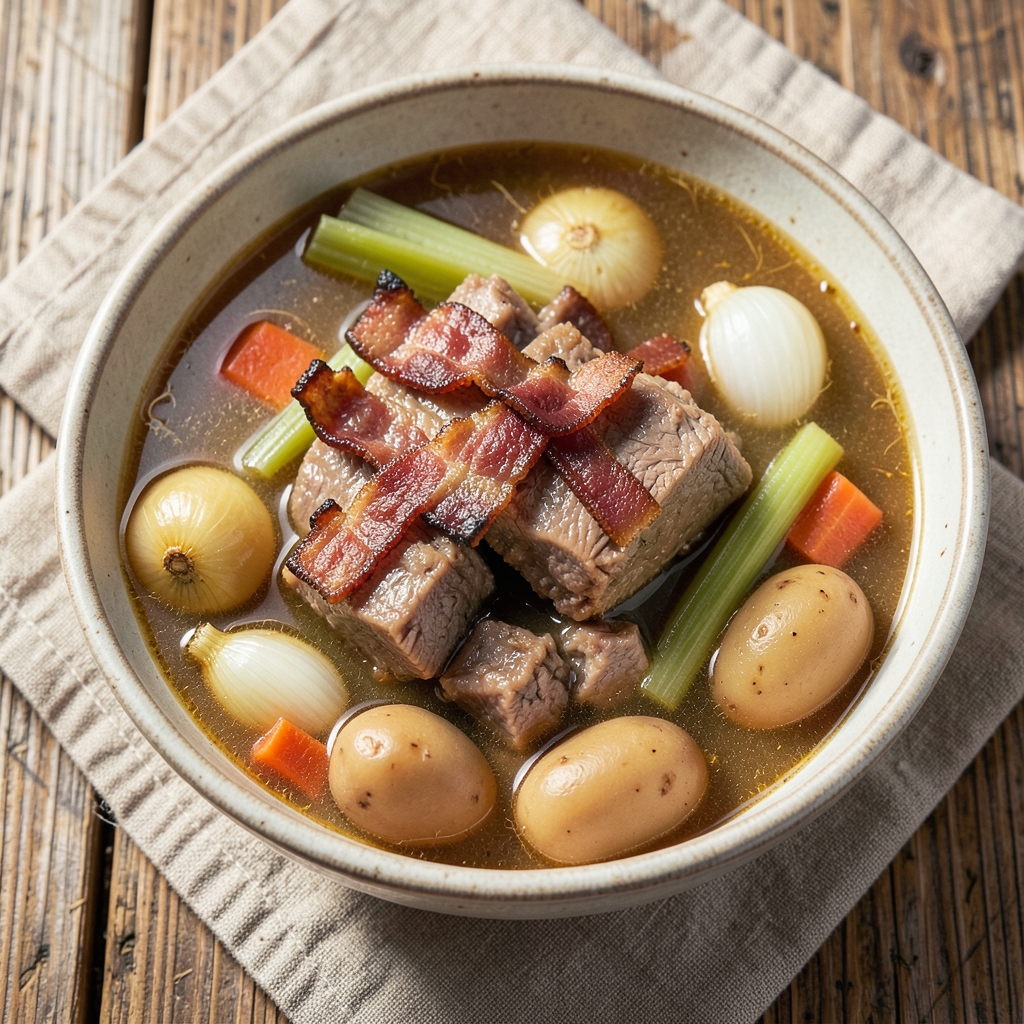
Transforming simple ingredients into a rich, smoky bacon hock soup starts with patience and precision—a slow-simmered broth that extracts unmatched depth from every bone.
This recipe delivers restaurant-quality results by focusing on two key techniques: rendering bacon fat for flavor and simmering the hock until it falls apart, creating a broth so velvety it coats your spoon.
The secret lies in balancing traditional methods with modern umami enhancers like soy sauce and mushrooms, ensuring each bite carries both rustic charm and refined complexity.
What sets this soup apart is its versatility—it works as a hearty main dish or a comforting side, depending on how you serve it. The process begins with browning bacon and onions to build a flavorful base, then simmering the hock for hours until tender.
Vegetables like carrots, celery, and potatoes add natural sweetness and texture, while herbs like thyme and bay leaves infuse the broth with aromatic warmth. The result? A soup that’s deeply satisfying, with a rich, smoky undertone that lingers long after the last spoonful.
By the time you serve this soup, you’ll have a golden, bubbling pot of flavor—crisp vegetables floating in a velvety broth, with tender hock that practically melts in your mouth.
The bacon adds a salty crunch, while a touch of cream or a sprinkle of parsley at the end elevates it to something truly special. Whether you’re feeding a crowd or treating yourself to a cozy meal, this recipe delivers restaurant-quality comfort without the fuss.
Pair it with crusty bread for dipping or a simple green salad to balance the richness. The beauty of this soup is its ability to adapt—add a splash of vinegar for brightness, a handful of greens for freshness, or even a dollop of sour cream for creaminess.
Let’s get started on creating a soup that tastes like home, made better.
Ingredients for bacon hock soup
Pantry staples meet smoky sophistication—just 15 ingredients for soul-warming perfection.
| Ingredient | Amount | Notes |
|---|---|---|
| Bacon Hock 🥓 | 2 lbs | Pork hock with skin on |
| Heavy Bacon 🥓 | 1 ½ lbs | Thick-cut for crispiness |
| Yellow Onions 🧅 | 2 whole | Medium size, sliced |
| Carrots 🥕 | 4 medium | Peeled, cut into chunks |
| Celery Stalks 🥬 | 6 whole | Trimmed, chopped |
| Russet Potatoes 🥔 | 3 medium | Peeled, cubed |
| Garlic Cloves 🧄 | 6 cloves | Minced for depth |
| Fresh Thyme 🌿 | ½ ounce | Or 2 tbsp dried |
| Bay Leaves 🌿 | 2 whole | Remove before serving |
| Mushrooms 🍄 | 8 oz | Cream or shiitake |
| Soy Sauce 🍶 | 2 tbsp | For umami depth |
| Apple Cider Vinegar 🍎 | 1 tbsp | Brightens flavors |
| Heavy Cream 🥛 | ½ cup | Optional for richness |
| Salt 🧂 | 2 tsp | Adjust to taste |
| Black Pepper 🌶️ | 1 tsp | Freshly ground |
The hock is the heart of this soup. Look for pork hocks with skin still attached—the fat renders beautifully during cooking. Most butcher shops carry them, but Costco or Whole Foods often stock them too. If you can’t find hock, pork shank works in a pinch, though the texture will differ slightly. The bacon? Thick-cut is key—it crisps up perfectly while rendering fat for the broth. For mushrooms, cremini or shiitake add the most earthy flavor, but any variety will work. Buy them fresh if possible, but pre-sliced from the store saves time.
No soy sauce? Worcestershire sauce at half the amount works, though it’ll be slightly tangier. Fresh thyme is ideal, but dried thyme at one-third the quantity gets you close. The vinegar can be swapped for lemon juice, but apple cider adds a subtle sweetness that pairs beautifully with the smokiness. For a vegetarian twist, mushroom stems and hearts of palm can replace the hock, though the broth will be lighter. The potatoes should be medium-sized—they hold their shape better during the long simmer.
This soup tastes even better the next day—make a double batch if you can. Store in the fridge for 4-5 days or freeze for up to 3 months. I like to portion it into containers so I can grab a bowl straight from the freezer. The broth thickens as it cools, so add a splash of water when reheating. Garnish with fresh parsley or extra crispy bacon bits before serving—trust me on this.
Why You’ll Love This Recipe
- One-Pot Magic: I swear by this—just toss everything in a Dutch oven, simmer, and walk away. The bacon hock and heavy bacon render their own fat, so you don’t even need extra oil. Honestly, the only chopping is the onions, carrots, and celery, and I do that while watching TV.
- Rich, Deep Umami: That bacon hock? It’s the star—slow-cooked until the meat falls off the bone, melting into the broth with a flavor so bold it turns simple veggies into something extraordinary. The crispy bacon on top adds a salty crunch that makes every spoonful irresistible.
- Weeknight Workhorse: Between us, this is my go-to for busy nights—feed a crowd or save leftovers for days. The broth thickens beautifully, so it reheats like a dream, and the flavors only get better the next day. (Yes, even on a Tuesday night.)
- Budget-Friendly Feast: Bacon hock and heavy bacon stretch further than you’d think, turning a few dollars into a hearty meal. I’ll be real: my grocery bill stays low, but my family’s bellies stay full. Plus, the veggies are cheap staples—no fancy ingredients needed.
Step-by-step instructions for bacon hock soup
Here’s how to transform humble ingredients into rich, smoky soup with layers of flavor.
Render the Bacon and Build the Flavor Base
In a large Dutch oven, lay out the 1.5 lbs heavy bacon in an even layer. Cook over medium-low heat for 15-20 minutes, stirring occasionally, until the fat renders out and the bacon becomes crispy. This process should yield about 3 cups of bacon fat—don’t drain it, as this golden liquid forms the soup’s foundation.
Once the bacon is crisp, remove it from the pot with a slotted spoon and set it aside on paper towels to drain. In the same pot, add the 2 whole yellow onions, 4 medium carrots (cut into chunks), and 6 whole celery stalks (trimmed and chopped). Cook the vegetables for 8-10 minutes, stirring occasionally, until they begin to soften and the onions turn translucent. This step develops the soup’s aromatic base and ensures the vegetables don’t overcook later.
Brown the Bacon Hock and Add Aromatics
Increase the heat to medium-high and carefully add the 2 lbs bacon hock to the pot. Sear the hock on all sides until it develops a deep brown crust—this step is crucial for building rich, meaty flavor. Once browned, reduce the heat to medium-low, add 2 cups of water, and bring the mixture to a gentle simmer.
Add the 6 cloves garlic cloves (minced), 0.5 ounce fresh thyme, and 2 whole bay leaves to the pot. Let the soup simmer gently for 30 minutes, skimming off any foam that rises to the surface. This initial simmer helps extract collagen from the bones, which will later thicken the soup naturally. The aroma should fill your kitchen—this is where the magic begins.
Simmer the Vegetables and Potatoes
After the initial simmer, add the 3 medium russet potatoes (peeled and cubed) and 8 oz mushrooms to the pot. Stir gently to combine, then add 2 tbsp soy sauce and 1 tbsp apple cider vinegar. These ingredients add umami depth and a subtle tang that brightens the rich flavors. Return the soup to a simmer and cook uncovered for 1 hour to 1 hour 15 minutes, or until the vegetables are tender and the potatoes can be easily pierced with a fork.
Here’s the thing—don’t rush this step. The longer the vegetables simmer, the more their flavors meld with the meaty broth. If the soup reduces too much before the vegetables are tender, simply add hot water in ½ cup increments to maintain the proper liquid level. The goal is a thick, velvety broth with tender vegetables and fall-off-the-bone meat.
Finish with Cream and Crispy Bacon
Once the vegetables are tender, carefully remove the bacon hock from the pot and set it aside to cool slightly. Strain the broth through a fine-mesh sieve into a clean pot, pressing gently on the solids to extract as much flavor as possible. Discard the solids, but save the bacon hock for later—you’ll use it to shred the meat.
Return the strained broth to the pot and stir in the 0.5 cup heavy cream. Simmer gently for 5 minutes to warm through and allow the cream to blend smoothly into the soup. Season with 2 tsp salt and 1 tsp black pepper, adjusting to taste. The soup should be rich and flavorful, with a velvety texture that coats the back of a spoon.
Shred the Meat and Serve
While the soup simmers, use two forks to shred the meat from the bacon hock, discarding any remaining bone fragments. Stir the shredded meat back into the pot and add the reserved crispy bacon. The combination of tender meat and crispy bacon bits adds texture and depth to every spoonful. Taste the soup one final time and adjust the seasoning if needed—this is your chance to perfect the balance of flavors.
Ladle the soup into bowls and serve immediately, garnished with additional crispy bacon if desired. The aroma alone will draw everyone to the table, and the first bite will deliver a symphony of smoky, savory, and umami flavors. This soup tastes even better the next day, so plan to make extra—it’s the kind of dish that disappears quickly.
Pro Tips For Making Bacon Hock Soup
- CRISP THE HOCK FIRST: Skip the slow simmer start—sear the bacon hock in a hot pot until the fat renders and the meat turns golden brown. This locks in flavor and cuts the cooking time later. (Yes, it’ll look messy, but that’s how you know it’s working.)
- CUT ONIONS IN HALVES LONGWISE: Slice yellow onions into thick half-moons instead of mincing them. They’ll soften evenly without turning to mush, and you’ll actually taste them in the soup. I learned this the hard way after serving a batch where the onions disappeared into oblivion.
- DON’T RUSH THE SIMMER: Let the soup bubble gently at a low boil—no aggressive rolling. High heat makes the bacon hock tough and the broth cloudy. Aim for 2–3 hours minimum, stirring occasionally to prevent sticking. (Your future self will notice the difference.)
- SALT THE WATER LIBERALLY: Add 2 tablespoons of salt to the pot before submerging the bacon hock. It seasons the meat from the start and balances the richness. I used to add salt later, and the flavor always felt flat—like I’d missed a step. (This isn’t optional.)
Flavor customization for this dish
Smoky Heat Boost
For a deeper smoky flavor, add 1 tbsp smoked paprika or ½ tsp liquid smoke to the broth while simmering. I like to sprinkle ½ tsp cayenne pepper at the end for a subtle kick—just enough to wake up your taste buds without overpowering the rich bacon notes. 🌶️
Creamy Variations
Swap the heavy cream for ½ cup coconut milk for a dairy-free option that still adds velvety richness. If you prefer extra creaminess, stir in ¼ cup sour cream at the end—it adds tangy depth that balances the smokiness beautifully. For a lighter touch, use ½ cup Greek yogurt instead.
Umami Upgrade
Boost the savory depth by adding 1 tbsp fish sauce or 1 tsp miso paste to the broth during the final 30 minutes of simmering. These ingredients amplify the bacon’s natural umami without overpowering the dish.
I also love adding 1 oz dried shiitake mushrooms (rehydrated) for an extra earthy punch.
Vegetable Swaps
For a heartier texture, replace potatoes with 3 cups diced sweet potatoes—they add natural sweetness that pairs perfectly with the smoky flavors. If you prefer greens, stir in 2 cups chopped kale or spinach during the last 5 minutes of cooking.
The heat will wilt them just enough to maintain texture.
Herb Infusions
Swap thyme for 1 sprig fresh rosemary or 1 tsp dried sage for a more earthy, piney note. For a brighter finish, add 1 tbsp fresh parsley or cilantro at the end—it cuts through the richness while adding freshness.
I also like tossing in ½ tsp dried marjoram for a subtle floral touch.
Spicy Kick Options
Add 1-2 slices of jalapeño (seeds removed) while simmering for a mild heat that mellows as the soup cooks. For a fierier version, stir in 1 tsp gochujang (Korean chili paste) during the final 10 minutes—it adds a sweet-spicy complexity that’s addictive. 🔥
Nutrition facts
Frequently asked questions
What makes bacon hock different from regular bacon?
Bacon hock is a pork leg joint (including the foot) that’s cured and smoked, while regular bacon comes from pork belly. The hock adds deep, meaty flavor and connective tissue that creates a rich, gelatinous broth when slow-cooked. The skin-on version renders fat for extra richness, making it perfect for soups. Think of it as the “backbone” of flavor in this recipe!
Can I substitute pork shank for bacon hock?
Yes, but with adjustments! Pork shank has less fat and connective tissue, so you’ll need to add 1 extra cup of water to the broth and simmer for 30-45 minutes longer to achieve the same tenderness. The flavor will be slightly leaner, but still delicious. For best results, use 2 lbs pork shank instead of hock.
How do I know when the bacon hock is fully cooked?
The hock is done when it falls apart easily with a fork and the meat shreds cleanly from the bone. This typically takes 2-2.5 hours of simmering. The broth should also be deep golden with a velvety texture—if it’s still cloudy, keep simmering another 15-20 minutes. Patience here makes all the difference!
Can I make this soup in a slow cooker?
Brown the bacon and hock first in a skillet, then transfer everything to the slow cooker. Add 4 cups water (instead of 2) and cook on low for 8 hours or high for 5-6 hours. The longer cook time works perfectly with the slow cooker’s gentle heat. Just remember to strain the broth afterward for the best texture.
Why does my soup taste too salty?
Bacon and soy sauce can pack a salty punch! If your soup tastes too salty, try adding 1 cup extra water or broth and simmering for 10 minutes to dilute the flavor. For a quick fix, stir in ½ cup heavy cream or coconut milk—the fat helps balance the saltiness. Taste as you go to adjust gradually.

- Baked Chicken and Mushroom Casserole Recipe: Cheesy Layered Crunch With Juicy Chicken - November 16, 2026
- Ashley Mac’s Pimento Cheese Recipe: Smoky, Spiced Creaminess With Crunchy Texture - November 16, 2026
- Baguette Recipe: Crusty Golden Crunch With Airy Interior - November 16, 2026