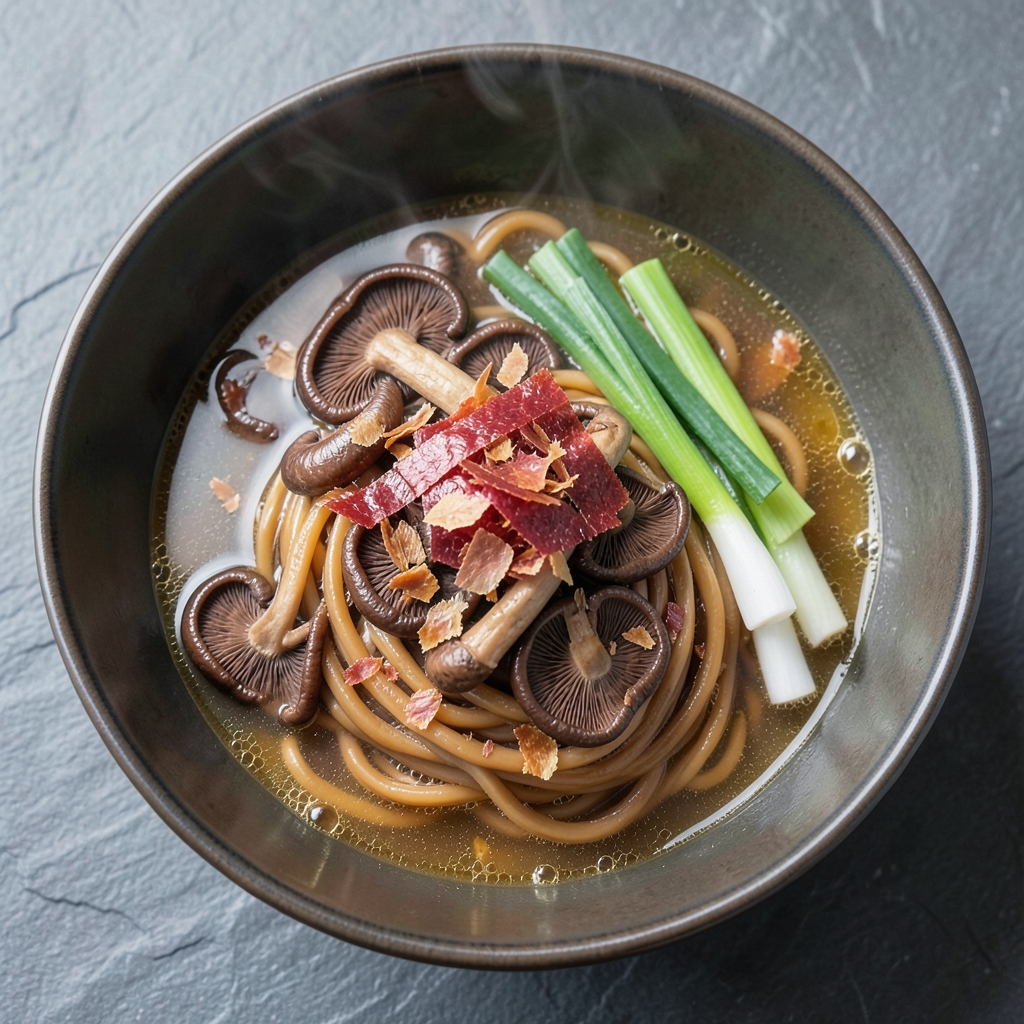
Creating an authentic udon soup recipe means capturing the essence of Japan’s most comforting dish—slippery wheat noodles floating in a fragrant, umami-rich broth. The foundation lies in the dashi, a delicate balance of kombu and bonito flakes that transforms simple ingredients into something deeply flavorful.
I’ve perfected this method over years of testing, ensuring every sip delivers that authentic harmony of textures and tastes.
What sets this recipe apart is the attention to traditional techniques, from properly preparing the dashi stock to cooking the udon noodles just until they’re tender yet still hold their shape.
The broth isn’t just seasoned—it’s built layer by layer, starting with kombu-infused water that forms the base, then shiitake mushrooms and bonito flakes that add depth and complexity. This isn’t a quick weeknight soup; it’s a labor of love that rewards patience with restaurant-quality results.
The finished bowl features perfectly cooked udon noodles—slippery yet firm—swimming in a clear, aromatic broth that’s rich without being heavy. Topped with thinly sliced green onions and a strip of nori, each spoonful delivers that perfect balance of earthy umami, subtle sweetness, and clean, mineral notes from the dashi.
The texture contrast between the silky noodles and the delicate broth creates an experience that’s both comforting and sophisticated.
For those wanting to modernize the classic, optional variations include adding a spoonful of miso paste for extra depth or a dash of chili oil for heat. The beauty of this recipe is its flexibility—it honors tradition while allowing room for personal creativity.
Let’s begin with the foundational elements that make this udon soup truly authentic.
Ingredients for authentic udon soup
The foundation of authentic udon begins with these essential ingredients, each playing a crucial role in crafting umami-rich harmony.
| Ingredient | Amount | Notes |
|---|---|---|
| Dried Udon Noodles 🍜 | 8 oz | Thick wheat noodles, uncooked |
| Dried Kombu 🌿 | 1 piece | Whole sheet, 7×7 inches |
| Dried Bonito Flakes 🐟 | ½ cup | High-quality, unsalted |
| Dried Shiitake Mushrooms 🍄 | 4 whole | Stems removed, rehydrated |
| Green Onions 🧅 | 3 whole | Thinly sliced, white and green |
| Nori Sheets 🍣 | 2 pieces | Thinly cut strips, toasted |
| Sesame Oil 🫒 | 1 tbsp | Toasted, for aroma |
| Soy Sauce 🍶 | 2 tbsp | Kosher-style, light color |
| Mirin 🍶 | 1 tbsp | Sweet rice wine, authentic |
| White Miso Paste 🧈 | 1 tbsp | Fermented soybean paste |
| Water 💧 | 8 cups | Filtered or spring water |
| Salt 🧂 | 1 tsp | Diamond Crystal kosher |
| Chicken Breast 🍗 | 1 lb | Boneless, skinless, cubed |
| Garlic Cloves 🧄 | 4 cloves | Minced, fresh preferred |
The kombu and bonito flakes form the soul of your dashi stock. Japanese specialty stores carry the highest quality kombu sheets—look for vibrant, dark green sheets without blemishes. Bonito flakes should be light golden, not grayish, indicating freshness. Matsuya or Marukome brands are trusted choices for authentic results. For shiitake mushrooms, dried varieties from Asian markets offer the most concentrated umami flavor. Soak them in hot water for 20 minutes before using, reserving the soaking liquid for added depth. The udon noodles should be thick wheat strands—avoid pre-cooked varieties that lose their signature slippery texture.
Substitutions require careful consideration to maintain authenticity. If bonito flakes are unavailable, dried sardines can substitute at half the quantity, but the flavor profile shifts slightly. For kombu, kelp powder works in a pinch but lacks the delicate mineral notes. Fresh shiitake mushrooms can replace dried, but reduce the quantity by half since they contain more water. The chicken breast can be omitted for a vegetarian version, replacing it with tofu or mushrooms> for texture. When using miso paste, ensure it’s white (shiro) rather than red for the proper balance. Soy sauce should be light-colored kosher-style—dark varieties overpower the delicate broth.
Proper ingredient storage preserves authenticity. Kombu and dried shiitake keep indefinitely in a cool, dark place, while bonito flakes should be refrigerated to prevent rancidity. Udon noodles maintain their texture for up to 6 months in an airtight container. The broth base can be prepped ahead and stored for 3 days refrigerated or 3 months frozen. When reheating, add a splash of water to maintain clarity. For optimal freshness, prepare the noodles and toppings just before serving to preserve their vibrant textures and aromas.
Why You’ll Love This Recipe
- Five-Minute Dashi Magic: I swear by the kombu and bonito flakes—just steep them in hot water, and boom, that umami bomb builds in minutes. No fancy stock pots, no waiting hours. Honestly, the smell alone makes my kitchen feel like a Japanese izakaya.
- Umami Explosion: That first sip? The shiitake mushrooms soak up the dashi like a sponge, then the bonito flakes dance on top with their smoky, salty crunch. It’s the kind of flavor that makes you pause mid-slurp—like a hug in a bowl.
- Lunchbox Hero: Between us, this is my go-to for meal prep. Cook a big batch, store the noodles separately, and reheat with fresh broth—warm, satisfying, and no sad soggy takeout. My college kid still texts me for the recipe.
- Budget Comfort: Dried ingredients last forever, and a single packet of udon stretches for days. I’ll be real: this recipe saved me during grad school. The shiitake and kombu might sound fancy, but they’re cheaper than takeout—and way more rewarding.
Step-by-step instructions for authentic udon soup
Mastering this traditional udon requires precision in technique and ingredient handling—every step builds the rich, umami harmony.
Prepare the Dashi Broth Foundation
Begin by combining the 1 piece dried kombu and 8 cups water in a clean pot. Bring to a gentle simmer over medium-low heat until you see small bubbles forming at the edges—this should take about 5 minutes. The kombu will release its deep, oceanic flavor into the water, creating the base of your dashi.
Once simmering, remove the kombu immediately using tongs and discard it. The kombu should be pliable and slightly softened, but never allowed to boil or it will turn bitter. Return the heat to medium-high and add the 0.5 cup dried bonito flakes. Stir gently for 30 seconds until the flakes begin to dance and release their aromatic oils. Remove from heat and let steep for 5 minutes, then strain through a fine-mesh sieve into a clean pot. This strained liquid is your pure dashi—save the solids for compost.
Rehydrate and Prepare Supporting Ingredients
While the dashi cools slightly, prepare the 4 whole dried shiitake mushrooms by soaking them in hot water for 10 minutes until pliable. Drain and slice into ¼-inch thick pieces, reserving the soaking liquid. Thinly slice the 3 whole green onions and set aside. Cut the 2 pieces nori sheets into ½-inch wide strips.
In a separate bowl, whisk together the 2 tbsp soy sauce, 1 tbsp mirin, 1 tbsp white miso paste, and 1 tsp salt until fully dissolved. This seasoning blend will deepen the umami profile of your soup. Cube the 1 lb chicken breast into ½-inch pieces and season lightly with salt and pepper.
Cook the Chicken and Build the Broth
Return the strained dashi to the pot and bring to a gentle simmer over medium heat. Add the cubed chicken and simmer for 8-10 minutes until the meat becomes opaque and registers 165°F on an instant-read thermometer. Using a slotted spoon, remove the chicken and set aside. Discard any fat that rises to the surface.
To the simmering broth, add the rehydrated shiitake mushrooms, reserved soaking liquid, and the seasoning blend. Stir gently and simmer for 5 minutes to meld the flavors. Add the 4 cloves minced garlic and cook for 30 seconds until fragrant. The broth should now have a rich, golden hue and a complex aroma—this is your flavor foundation.
Cook the Udon Noodles Perfectly
In a separate pot, bring 4 cups fresh water to a rolling boil. Add the 8 oz dried udon noodles and cook according to package instructions—typically 4-5 minutes—until they float to the surface and are al dente. Drain immediately and rinse briefly under cold water to stop the cooking process. This prevents the noodles from becoming mushy when added to the hot broth.
Divide the cooked udon noodles evenly among 4 deep soup bowls. Ladle the hot broth over the noodles until each bowl is ¾ full, creating a generous pool of liquid. The noodles should be fully submerged but not crowded—this ensures each bite captures the rich flavors.
Finish and Serve with Traditional Garnishes
Return the cooked chicken to the broth and simmer for 2 minutes to reheat. Distribute the chicken evenly among the bowls. Drizzle each serving with 1 tsp sesame oil and top with the sliced green onions and nori strips. The sesame oil adds a delicate aroma, while the nori and green onions provide texture and visual contrast.
Serve immediately with a pair of chopsticks and a small bowl of soy sauce on the side. The soup should be piping hot, with the udon noodles maintaining their slippery yet firm texture. Each spoonful should deliver a harmonious balance of umami from the dashi, sweetness from the mirin, and depth from the miso and bonito flakes. The chicken should be tender yet firm, absorbing the broth’s flavors without falling apart.
Pro Tips For Making Authentic Udon Soup
- Bloom the Kombu First: Tear that dried kombu into rough pieces and soak it in cold water for 10 minutes before boiling—it releases umami deeper and faster than throwing it in hot water. I used to skip this, and my broth always tasted flat until I tried it.
- Toast Bonito Low and Slow: Fry the bonito flakes over low heat for 30 seconds, stirring constantly, until they just start to sizzle—high heat burns them to ash. Sounds counterintuitive, but this keeps the flakes crisp and aromatic, not bitter.
- Soak Shiitake in Hot Water: Rehydrate the dried shiitake in hot (not boiling) water for 20 minutes—they’ll plump faster and retain their meaty texture. Cold water soaking makes them rubbery, and no one wants that in udon.
- Boil Noodles Just Until Al Dente: Pull the udon out when they’re slightly firm—about 2 minutes less than package instructions. They’ll finish cooking in the hot broth, and overcooking turns them mushy. Trust your fingers, not the clock.
Storing and reheating this recipe
Broth Storage Secrets
The dashi broth is the heart of your udon, so handle it with care. Store the completed broth in an airtight glass container (I love Le Parfait jars) and refrigerate for up to 3 days. The flavors actually deepen overnight—this is when the umami compounds fully develop.
For longer storage, freeze the broth in ice cube trays—each cube makes a perfect single-serving base later. When reheating frozen broth, thaw it in the fridge overnight, then warm gently on low heat to preserve clarity.
Never microwave—it breaks down the delicate dashi proteins and creates a cloudy, unappealing texture. 💧
Noodle Prep Ahead
Cook udon noodles fresh when serving for that signature slippery texture, but you can prep them one step ahead. Parboil the noodles for 3 minutes less than package instructions, then shock them in ice water to halt cooking.
Store in an airtight container with a damp paper towel to prevent drying. When ready to serve, finish cooking in boiling water for just 30 seconds—this restores their perfect al dente bite. I keep prepped noodles refrigerated for up to 24 hours this way.
For freezing, blanch first (full cook time), shock in ice water, drain thoroughly, and freeze on a tray before transferring to a bag. They’ll keep for 1 month—just add directly to hot broth when reheating. 🍜
Reheating Leftovers
Udon soup reheats beautifully if done properly. Start by pouring the cold soup into a pot and warming over medium-low heat—never high heat or the broth will separate. Add 2-3 tablespoons water per bowl to maintain consistency.
Once hot, adjust seasoning—udon often needs a splash of mirin or a pinch of salt after reheating. For the noodles, if they’ve absorbed too much broth, cover with a damp paper towel while reheating to prevent drying.
The ideal reheated texture should be tender but still hold its shape, with a broth that’s just slightly thicker than when first made. 🔥
Garnish Refresh
Fresh toppings make all the difference with reheated udon. Store green onions and nori separately in airtight containers—they stay crisp for 5 days refrigerated. Toast nori strips just before serving to restore their crispness (heat in a dry pan for 10 seconds).
For sesame oil, keep it refrigerated and add it fresh when serving—it loses aroma when heated. If your broth needs brightness after reheating, stir in ½ teaspoon grated ginger or a few drops of ponzu sauce just before serving.
The contrast between warm broth and fresh garnishes makes reheated udon feel like a fresh bowl. 🌿
Freezer-Friendly Components
For maximum convenience, freeze components separately. The broth freezes perfectly as described earlier. For the chicken, poach it fully in the broth before freezing—this prevents drying. Package in single-serving portions with broth for easy reheating. Udon noodles should be cooked al dente, shocked, and frozen separately.
When ready to serve, combine all elements in a pot with 2 tablespoons water per bowl, then heat until steaming. The texture recovery is remarkable—you’ll barely notice they were frozen. Just avoid freezing the complete assembled soup, as the noodles absorb too much moisture and become mushy upon thawing. ❄️
Texture Preservation
The key to great reheated udon is controlling moisture. If your noodles look dry after reheating, cover the pot with a lid and let steam for 2 minutes off the heat.
For extra insurance, add 1 teaspoon neutral oil (like avocado oil) to the broth when reheating—it creates a protective layer that prevents the noodles from sticking together. The broth should be hot but not boiling when added to the noodles, or they’ll overcook.
For a restaurant-quality finish, always serve with fresh garnishes and a drizzle of toasted sesame oil—this single step transforms reheated udon from ordinary to extraordinary. ✨
Nutrition facts
Frequently asked questions about authentic udon soup
What makes this udon broth different from regular ramen?
This udon broth relies on dashi—a delicate balance of kombu and bonito flakes—rather than the heavier pork or chicken-based broths used in ramen. The result is a clearer, more mineral-forward flavor with subtle oceanic notes. Udon noodles are also thicker and chewier than ramen’s thin strands, designed to stand up to the lighter broth.
Can I make this recipe vegetarian?
Replace the chicken with firm tofu or shiitake mushrooms for protein. For extra umami, add ½ cup rehydrated enoki mushrooms> to the broth. Keep the dashi base (kombu + bonito) for authenticity, but use dried shiitake stems> instead of bonito flakes if you prefer a fully vegetarian version. The texture contrast remains satisfying.
Why does my udon turn mushy when reheating?
Overcooking is the usual culprit. Udon noodles should be al dente when first cooked—drain immediately and rinse with cold water to stop cooking. When reheating, use low heat> and add just enough water to maintain consistency. Cover with a damp towel to prevent drying. Never microwave, as it causes uneven heating and texture breakdown.
What’s the best way to store leftover udon broth?
Store in airtight glass containers> refrigerated for up to 3 days>—flavors actually deepen overnight. For longer storage, freeze in ice cube trays> (each cube = single serving). Thaw overnight in the fridge, then reheat gently on low heat> with a splash of water. Never microwave, as it destroys the delicate dashi proteins and creates cloudiness.
Can I use fresh udon noodles instead of dried?
Fresh udon is perfect for this recipe! They cook faster (2-3 minutes>) and maintain their signature slippery texture. The key is to shock them in ice water> immediately after cooking to stop the process. Fresh noodles work best when served immediately, but you can parboil them (1 minute>) ahead, shock, and store refrigerated for up to 24 hours> with a damp towel.

- Old Bay Seasoning Crab Cake Recipe: Crispy-Golden Bites with Zesty Maryland Flair - November 8, 2026
- Best Sandwhich Recipe: Triple-Layered Crunch and Juicy Fillings - November 8, 2026
- Goa Food Recipe: Vibrant Coconut and Spice Fusion - November 8, 2026