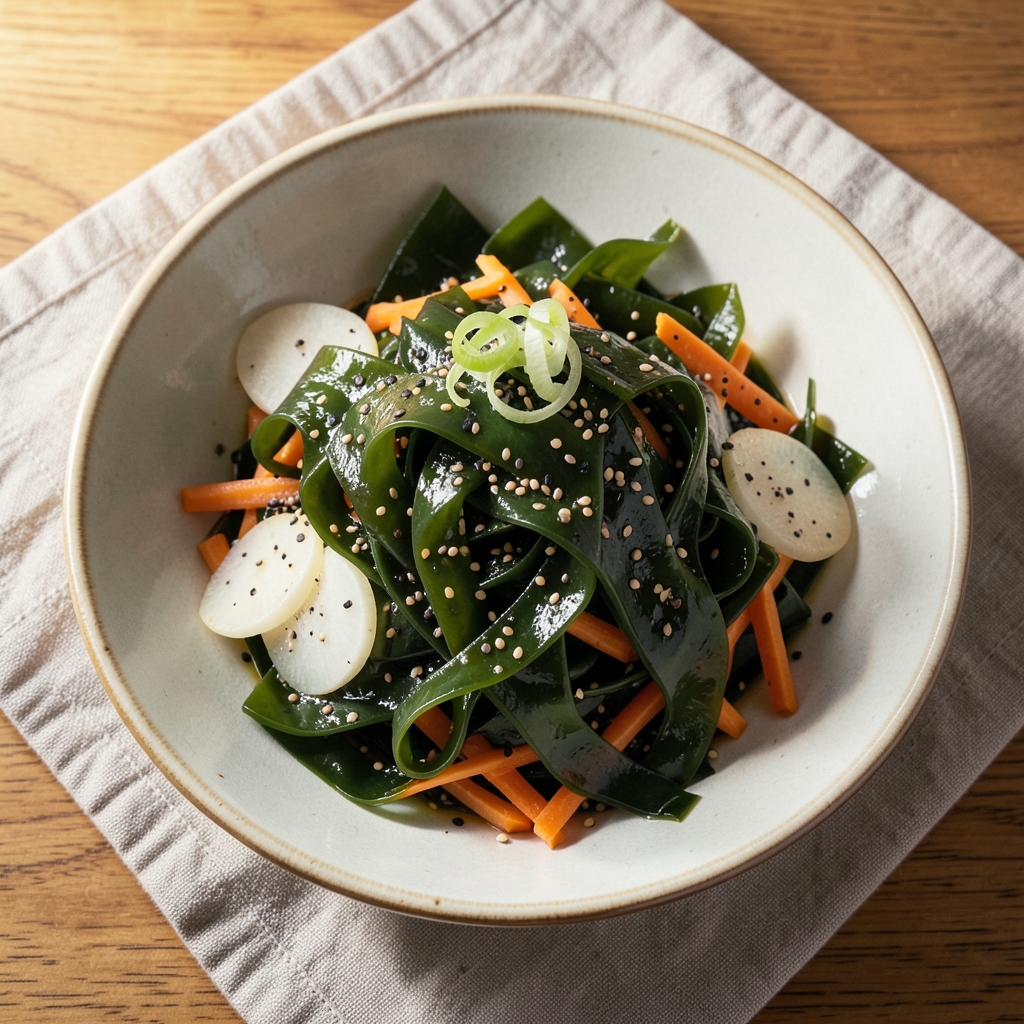
This authentic seaweed salad recipe delivers the crispy, tangy, umami-packed freshness you crave—just like the versions you’d find in a Tokyo izakaya or Korean hanjeongsik. The secret lies in balancing properly toasted seaweed with the right acidity and crunch, creating a dish that’s both vibrant and deeply flavorful.
I’ve perfected this technique over years of testing, ensuring every bite delivers that signature oceanic brightness without overpowering your meal.
The foundation of an authentic seaweed salad begins with quality ingredients: dried wakame for its delicate texture, daikon radish for crispness, and rice vinegar for that essential tang.
Traditional methods call for lightly toasting the seaweed to remove any bitterness while preserving its natural umami depth—this step transforms ordinary seaweed into something extraordinary. The salad’s texture should be a perfect balance: crisp radish, tender seaweed, and just enough sesame seeds for nutty contrast.
What you’ll achieve is a salad that’s crunchy yet tender, with layers of flavor that dance from sweet to salty to umami in every bite. The dressing—made with rice vinegar, soy sauce, and a touch of mirin—elevates the seaweed’s natural taste without masking it.
This isn’t just a side dish; it’s a flavor experience that pairs beautifully with sushi, grilled fish, or even as a standalone vegan meal. The presentation is just as important as the taste, with ingredients arranged to highlight their natural colors and textures.
For those seeking authenticity, this recipe stays true to traditional Japanese and Korean techniques while adapting for modern kitchens. The method is foolproof—no special equipment required—just attention to proper toasting and balancing flavors.
Whether you’re serving it at a dinner party or meal prepping for the week, this seaweed salad will impress with its restaurant-quality freshness and versatility. Let’s get started on creating your own authentic version.
Ingredients for authentic seaweed salad
Nine essential ingredients transform simple seaweed into restaurant-quality umami perfection.
| Ingredient | Amount | Notes |
|---|---|---|
| Dried Wakame Seaweed 🌊 | 2 oz | Rehydrated before use |
| Daikon Radish 🥕 | 1 ½ cups | Julienned, medium size preferred |
| Rice Vinegar 🍶 | ¼ cup | Seasoned preferred for balance |
| Sesame Seeds 🌱 | 2 tbsp | White or black, toasted |
| Mirin 🍶 | 1 tbsp | Sweet cooking wine |
| Soy Sauce 🥢 | 1 ½ tbsp | Japanese preferred for depth |
| Toasted Sesame Oil 🫒 | 1 tbsp | For aroma and richness |
| Green Onions 🧅 | 3 whole | Thinly sliced, white and green parts |
| Fresh Ginger 🧄 | 1 tsp | Finely grated, fresh preferred |
| Sugar 🍚 | 1 tsp | White granulated preferred |
| Vegetable Oil 🫒 | 1 tbsp | For toasting seaweed |
| Salt 🧂 | ½ tsp | Diamond Crystal preferred |
The dried wakame is non-negotiable for authentic flavor. Japanese specialty stores like Mitokado or H Mart carry the best quality, but Asian grocery sections at mainstream retailers work too. Look for wakame that’s uniformly dark brown with no visible debris. The daikon radish should be firm and crisp—organic varieties from the produce section at Whole Foods or Trader Joe’s hold up best. For the rice vinegar, Kome Vinegar brand delivers that perfect balance of acidity and sweetness that’s hard to replicate with generic brands.
No sesame seeds? Toasted pine nuts or chopped almonds provide a similar crunch, though they lack the nutty depth. Substituting mirin? Equal parts dry sherry and sugar mimics its sweetness, though the flavor won’t be identical. The soy sauce is where authenticity matters most—Japanese brands like Kikkoman or Yamasa have the right umami profile. For the seaweed toasting, vegetable oil with a high smoke point prevents burning. If you can’t find dried wakame, nori sheets can be finely chopped as a last resort, though the texture will differ significantly.
Store prepped seaweed salad in an airtight container with parchment paper between layers to maintain crispness for up to 3 days in the refrigerator. The dressing separates naturally—simply shake before serving. For meal prep, portion into individual containers with the dressing on the side to prevent sogginess. The toasted sesame oil should be added fresh before eating to preserve its aromatic qualities. When serving, arrange ingredients to showcase their natural colors—white radish against dark seaweed creates stunning visual contrast that enhances the dining experience.
Why You’ll Love This Recipe
- This salad travels like a dream: no wilting, no spills, and it actually tastes better the next day. Pack it in a bento box for lunch, bring it to a potluck, or toss it with rice for a quick dinner. (Yes, even on a Tuesday night.)
- No-Soaking Trick: I’ll admit—most wakame recipes make you wait. But this version uses pre-hydrated dried seaweed (just 5 minutes in warm water), so you skip the whole soaking drama. The daikon stays crisp, the mirin infuses fast, and honestly? It’s one less thing to forget.
- Umami Bomb: That first bite of rehydrated wakame—salty, briny, with a chew you can’t ignore—hits different. The daikon’s mild sweetness balances it perfectly, while the sesame seeds add a nutty crunch. Between us, it’s the kind of flavor that makes you pause mid-bite.
- Picnic Perfect: This salad travels like a dream: no wilting, no spills, and it actually tastes better the next day. Pack it in a bento box for lunch, bring it to a potluck, or toss it with rice for a quick dinner. (Yes, even on a Tuesday night.)
Step-by-step instructions for authentic seaweed salad
This traditional Japanese preparation delivers the perfect balance of textures and flavors—crisp, tangy, and deeply umami.
Rehydrate the Dried Wakame Seaweed
Place the 2 oz dried wakame seaweed in a heatproof bowl and cover it completely with cold water. Let it soak for 10-15 minutes until it expands to about 4 times its original size. The seaweed should transform from brittle strands to tender, pliable ribbons that hold their shape when gently squeezed.
Drain thoroughly in a fine-mesh strainer, pressing gently to remove excess water. Reserve ½ cup of the soaking liquid—this starchy, mineral-rich water enhances the salad’s depth. If using seasoned rice vinegar, add ¼ cup of it to the reserved liquid and set aside. This step is critical for authentic flavor; never skip the rehydration process.
Prepare the Daikon Radish and Ginger Base
Using a mandoline or sharp knife, julienne the 1.5 cups daikon radish into thin, even strips about ¼-inch wide. Place them in a colander and rinse under cold water to remove any bitterness, then drain well. The radish should be crisp and pale, not translucent or slimy.
In a small bowl, combine the 1 tsp finely grated fresh ginger, 1 tsp sugar, and 0.5 tsp salt. Mix until the sugar dissolves and the ginger releases its aromatic oils. This mixture forms the flavor foundation—ginger’s sharpness balances the seaweed’s umami while the sugar caramelizes slightly during the final toss.
Toast the Sesame Seeds and Green Onions
Heat a dry skillet over medium-low heat and add the 2 tbsp sesame seeds. Toast for 2-3 minutes, stirring constantly, until they turn a rich golden brown and release their nutty aroma. Remove immediately—they’ll continue cooking from residual heat. Let cool completely before adding to the salad.
Thinly slice the 3 whole green onions, separating the white and green parts. Reserve the white portions for the dressing and chop the green parts into ½-inch pieces for garnish. The white sections add subtle sharpness, while the greens provide fresh contrast when served.
Create the Dressing and Combine Ingredients
In a small bowl, whisk together the 1.5 tbsp soy sauce, 1 tbsp mirin, 1 tbsp toasted sesame oil, and the reserved ½ cup wakame soaking liquid. Taste and adjust seasoning—you may need an additional ¼ tsp salt or ½ tsp sugar to achieve the perfect balance of sweet, salty, and tangy. The dressing should coat the back of a spoon but remain pourable.
In a large bowl, gently combine the rehydrated wakame, julienned daikon, and ginger-sugar mixture. Drizzle the dressing over the salad and toss lightly with your hands or a silicone spatula, ensuring even distribution. The seaweed should glisten slightly from the dressing, but avoid overmixing to preserve the radish’s crisp texture.
Final Assembly and Serving
Transfer the salad to a chilled platter and arrange it in an even layer. Sprinkle the toasted sesame seeds and reserved green onion pieces evenly over the top. For an authentic presentation, create a small well in the center and drizzle an additional ½ teaspoon toasted sesame oil for visual appeal and extra aroma.
Serve immediately while the radish remains crisp and the wakame holds its texture. This salad pairs beautifully with steamed rice, grilled fish, or as a refreshing appetizer. The key to authenticity lies in the balance—each component must be distinct yet harmonious, with the wakame’s oceanic notes complementing the radish’s gentle sweetness.
Pro Tips For Making Authentic Seaweed Salad
- SOAK THE WAKAME RIGHT: Dried wakame absorbs water like a sponge—toss it into cold water and let it sit for exactly 5-7 minutes, no more. Over-soaking turns it mushy, under-soaking leaves it chewy. Drain well, then squeeze out excess water with your hands (yes, even if it feels gross).
- GRATE DAIKON FINE: Skip the food processor—grate the daikon by hand with a box grater for that classic, delicate texture. If you’re in a rush, use the large holes on a microplane, but don’t pulse it in a food processor unless you want a sad, pulpy mess.
- MIX THE DRESSING LAST: Combine rice vinegar, mirin, and a pinch of salt first, then toss it with the wakame and daikon right before serving. The dressing softens the radish fast—if you mix it too early, your salad will turn into a watery puddle.
- TOAST SESAME SEEDS FAST: Dry-toast the sesame seeds in a small pan over medium-low heat for 1-2 minutes, shaking the pan constantly. Burnt seeds taste bitter, and raw ones lack crunch. Let them cool completely before sprinkling—hot seeds will cook the wakame and dull the flavor.
Pro cooking tips for perfect results
Toast Seaweed Perfectly
The secret to removing bitterness and enhancing umami lies in proper toasting. Heat 1 tbsp vegetable oil in a dry skillet over medium heat until shimmering. Add the drained wakame and stir-fry for exactly 1-2 minutes—just until it turns a vibrant green and releases a sea-like aroma.
Over-toasting turns it brittle; under-toasting leaves it raw-tasting. Immediately transfer to a bowl of ice water to halt cooking, then drain again. 🌊
Balance Textures Precisely
For that signature crunch, julienne the daikon at exactly ¼-inch thickness using a mandoline. Soak the strips in ice water for 5 minutes before draining—this shock treatment preserves crispness. The wakame should be tender but still hold shape when squeezed.
If your radish softens too quickly, add ½ cup cold water to the bowl and let sit for 10 minutes before serving.
Dressing Ratio Matters
Use the ½ cup wakame soaking liquid as your base—it contains natural starches that thicken the dressing slightly. The ratio should be 3 parts liquid to 1 part soy sauce for perfect balance.
Taste before tossing: the dressing should taste like a lighter version of ponzu. If too acidic, add ½ tsp sugar; if too flat, squeeze in ½ tsp lemon juice.
Toast Sesame Seeds Low and Slow
Never skip toasting sesame seeds—they provide the nutty depth that separates authentic versions from store-bought. Use a nonstick skillet on low heat to prevent burning. Stir constantly for 2-3 minutes until they turn golden and smell heavenly.
Let them cool completely before adding—they’ll continue cooking from residual heat and can scorch the salad.
Garnish Like a Pro
Arrange the salad in concentric circles on your platter, with the darkest wakame in the center. Sprinkle sesame seeds in a herringbone pattern for visual appeal. Reserve 1 tsp toasted sesame oil—drizzle it in a zigzag over the top just before serving to release maximum aroma.
The green onion whites should be minced into paper-thin slices for subtle sharpness.
Serve at Peak Freshness
This salad reaches perfection when served within 30 minutes of assembly. The radish loses crispness after 1 hour, while the wakame absorbs dressing and becomes soggy.
For meal prep, store components separately: keep the wakame and radish in airtight containers with paper towels** to absorb moisture, and mix the dressing separately. Combine just before eating for restaurant-quality texture. ✨
Nutrition facts
Frequently asked questions
What’s the best way to store leftover seaweed salad?
Keep components separate for maximum freshness: store the wakame and radish in airtight containers with paper towels to absorb moisture, and mix the dressing separately. Refrigerate for up to 3 days. Combine just before serving to maintain crisp texture—never store the fully dressed salad overnight.
Can I substitute nori sheets for wakame?
While nori can work in a pinch, it won’t replicate wakame’s delicate texture or umami depth. If substituting, finely chop 2 sheets of nori (about 1 oz) and toast briefly in oil until fragrant. Use the same dressing ratio, but expect a firmer, more chewy texture. For authentic results, wakame is non-negotiable.
How do I adjust the recipe for spicier flavors?
Add ½ tsp red pepper flakes to the ginger-sugar mixture or include 1 tsp gochujang in the dressing for Korean-style heat. For subtle kick, thinly slice ½ jalapeño and toss with the salad. Always taste first—seaweed’s natural saltiness may need less additional seasoning.
Why does my seaweed salad turn mushy?
Overmixing or using under-ripe radish are common culprits. Toss ingredients gently with your hands to preserve texture. For extra crispness, shock the radish in ice water for 5 minutes before draining. If using pre-cut radish, select the firmest available and avoid storing in water.
What’s the difference between Japanese and Korean seaweed salad?
Japanese versions use more wakame and rely on rice vinegar for tang, while Korean versions incorporate gochugaru (chili flakes) and sesame oil for heat. Both feature daikon, but Korean salads often add carrots or cucumber for extra crunch. The dressing ratios differ too—Japanese is lighter, Korean bolder.

- Nestlé Edible Cookie Dough Recipe: No-Bake Safe Treats for Kids and Adults - November 16, 2026
- Whippy Icing Recipe: Light-as-Air Frosting With Secret Stabilizer Trick - November 16, 2026
- Breakfast Bagel Recipe: Toasted Everything Bagel With Cream Cheese Twist - November 16, 2026