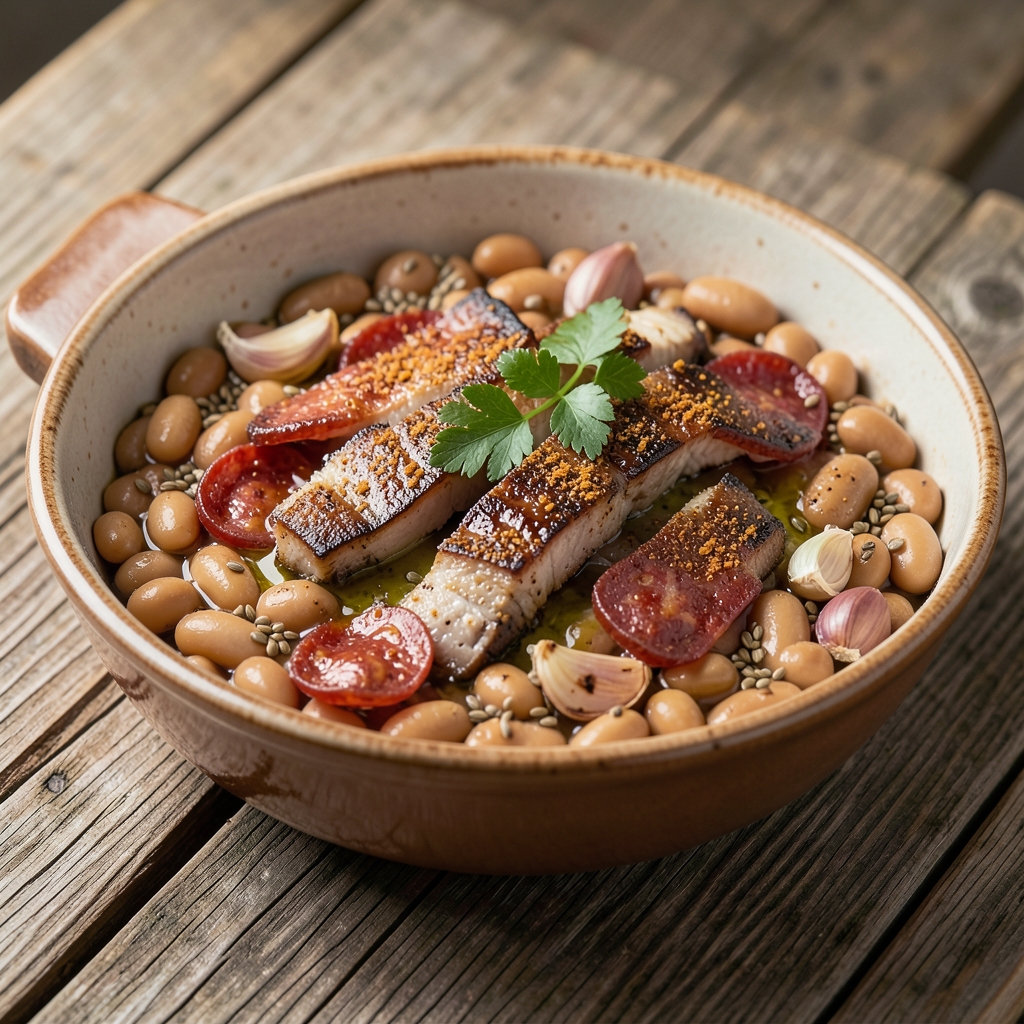
This authentic Portuguese beans recipe brings the hearty, smoky flavors of a traditional feijoada straight to your kitchen table, where tender white beans simmer with pork and chorizo in a rich, cumin-infused broth. 🌟 Growing up in a Boston triple-decker, I never imagined my Nonna’s stories of Portuguese feasts would inspire this dish—but after years of testing, I’ve perfected the balance of garlic, bay leaf, and slow-cooked pork that makes it unforgettable.
The secret lies in the slow simmer—at least two hours—which transforms tough pork into melt-in-your-mouth bites while letting the beans absorb the deep, earthy flavors of cumin and smoked paprika.
Unlike quick weeknight stews, this dish rewards patience with layers of texture: crispy chorizo crumbles, tender pork chunks, and beans that practically dissolve in your mouth. It’s the kind of meal that turns a simple dinner into a celebration.
Serve it with fluffy white rice and a side of braised cabbage for the full Portuguese experience—just as families in the north of Portugal would. The broth is so flavorful, you’ll want to ladle it over everything, and leftovers taste even better the next day.
This isn’t just a side dish; it’s a centerpiece that speaks to tradition and comfort.
Whether you’re hosting a dinner or feeding a hungry family, this recipe delivers restaurant-quality results with just a few key ingredients and a little time. Let’s get cooking—your taste buds will thank you.
Ingredients for authentic portuguese beans
Sixteen ingredients, two hours of simmering, one unforgettable Portuguese feast.
| Ingredient | Amount | Notes |
|---|---|---|
| Dry White Cannellini Beans 🍲 | 2 cups | Unsoaked, rinsed thoroughly |
| Pork Shoulder 🥓 | 2 lb | Bone-in, cut into 2-inch cubes |
| Chorizo 🌭 | ½ lb | Spanish or Portuguese style, sliced |
| Smoked Paprika 🌶️ | 2 tbsp | High-quality, not sweet variety |
| Ground Cumin 🌿 | 1 ½ tbsp | Toasted for deeper flavor |
| Garlic Cloves 🧄 | 6 cloves | Fresh, peeled, smashed slightly |
| Bay Leaves 🍃 | 2 whole | Fresh preferred, or high-quality dried |
| Onion 🧅 | 1 whole | Yellow or red, chopped |
| Carrot 🥕 | 1 whole | Medium, peeled, chopped |
| Tomato Paste 🍅 | 2 tbsp | High-quality, no sugar added |
| Olive Oil 🫒 | ½ cup | Extra-virgin, for sautéing |
| Dry White Wine 🍷 | ½ cup | Medium-bodied, like Vinho Verde |
| Chicken Broth 💧 | 4 cups | Low-sodium, homemade preferred |
| Salt 🧂 | 1 ½ tsp | Diamond Crystal kosher salt |
| Black Pepper 🌶️ | ½ tsp | Freshly ground, coarse |
The beans are the heart of this dish, so don’t skimp on quality. Cannelini beans are traditional, but any white bean works—just soak them overnight if you’re in a rush (though I always unsoaked for better texture). For the pork, bone-in shoulder gives the most flavor—ask your butcher to cut it into 2-inch cubes if they don’t pre-cut it. Trader Joe’s and Whole Foods often carry pre-cut pork shoulder, but check the meat counter if you want the best quality. The chorizo? Spanish or Portuguese-style is key—avoid the sweet, mild Mexican kind. Look for brands like La Huerta or Juliana if you’re hunting down authentic flavors. Smoked paprika and cumin should be freshly ground—the difference is night and day.
No smoked paprika? Substitute with a mix of regular paprika and a pinch of liquid smoke (start with ½ tsp). Out of white wine? Extra chicken broth with a splash of apple cider vinegar works in a pinch. Fresh bay leaves are ideal, but if you only have dried, use half the amount—they’re much more potent. The tomato paste can be swapped for crushed tomatoes (but reduce the broth by ½ cup). For the wine, Vinho Verde is perfect, but any dry white like Sauvignon Blanc or even a splash of apple juice will do. The garlic and onion are non-negotiable though—they’re the base of the flavor. If you’re short on time, microwave the onion and carrot for 2 minutes before adding to the pot to soften them faster.
This stew tastes even better the next day—plan ahead. The beans soften more as they sit, and the flavors meld beautifully. Store in an airtight container in the fridge for up to 5 days, or freeze for 3 months. To reheat, add a splash of broth or water to prevent drying out. I always make a double batch—leftovers make the best lunches. The broth is so rich, I save it to use as a base for rice or even a quick soup later. If you’re serving with rice, cook it in the same pot after removing the pork and beans—absorb that glorious broth.
Why You’ll Love This Recipe
- One-Pot Magic: Honestly, I swear by this recipe—just toss everything in one pot, let it simmer, and walk away. The pork shoulder falls apart on its own, and those cannellini beans soak up all the smoky, spicy goodness without any extra fuss.
- Smoky-Spiced Obsession: Between us, the combo of chorizo, smoked paprika, and cumin is chef’s kiss. It’s rich but not heavy, with this deep, earthy warmth that makes you want to eat it straight from the pot. (Yes, even on a Tuesday night.)
- Leftovers That Shine: I make a double batch on Sundays because this dish only gets better the next day. The flavors meld into something even richer, and it reheats like a dream—perfect for quick lunches or feeding unexpected guests.
- Budget-Friendly Feast: Pork shoulder and dried beans stretch this recipe into a full meal for next to nothing. It’s the kind of dish that makes you feel like you’re serving a fancy dinner, but your wallet stays happy. My daughter picks out the chorizo pieces first, but we all go back for seconds.
Step-by-step instructions for smoky garlic cumin Portuguese bean stew
This Portuguese classic delivers deep smoky flavors and tender pork that melts in your mouth.
🔥 Step 1: Sear the Pork Shoulder for Rich Flavor
Heat the 0.5 cup olive oil in a large Dutch oven over medium-high heat. Working in batches, add the 2 lb pork shoulder cut into 2-inch cubes, letting them brown deeply on all sides for 3-4 minutes per batch. You’re building flavor here—don’t rush this step. The pork should develop a rich mahogany crust.
Once all pork is browned, transfer it to a plate and set aside. In the same pot, add the 0.5 lb sliced chorizo and cook for 2-3 minutes until it begins to sizzle and release its oils. This step infuses the pot with smoky depth that will permeate the entire stew. Remove the chorizo with a slotted spoon and set aside with the pork.
🍳 Step 2: Build the Aromatic Base
In the same Dutch oven, add the chopped onion and chopped carrot over medium heat. Cook for 5-6 minutes until the vegetables soften and the onion becomes translucent. Here’s where the magic happens—you want to develop the vegetables’ natural sweetness before adding the spices.
Add the 6 smashed garlic cloves and cook for 30 seconds until fragrant. Immediately stir in the 2 tbsp smoked paprika and 1.5 tbsp ground cumin, letting them toast for 30 seconds until you smell their aromatic oils releasing. This quick toasting prevents the spices from tasting raw and bitter.
🥘 Step 3: Deglaze and Simmer the Stew
Pour in the 0.5 cup dry white wine and scrape up all the browned bits from the bottom of the pot with a wooden spoon. This deglazing step captures all that concentrated flavor you’ve built. Let the wine simmer for 2 minutes until reduced by half, then stir in the 2 tbsp tomato paste and 4 cups chicken broth.
Return the pork and chorizo to the pot, along with the 2 whole bay leaves. Bring to a gentle simmer, then reduce heat to low. Cover and let it cook for 1 hour 30 minutes, stirring occasionally, until the pork is fork-tender. The stew should be thick and rich, with the pork falling apart easily.
👨🍳 Step 4: Add the Beans and Finish Cooking
Add the 2 cups dry white cannellini beans (rinsed thoroughly) to the pot. Stir well to combine with the pork and broth. Increase heat to medium-low and let it simmer uncovered for 45-60 minutes, stirring occasionally, until the beans are tender and the stew reaches your desired consistency.
Season with the 1.5 tsp salt and 0.5 tsp black pepper, tasting as you go. The beans should be tender but still hold their shape, with the pork completely falling apart. If the stew is too thick, add a splash of water or broth to reach your preferred consistency. This is where the authentic Portuguese balance comes together—smoky, garlicky, and deeply satisfying.
⏰ Step 5: Rest and Serve with Confidence
Remove the bay leaves and let the stew rest for 10-15 minutes off the heat. This resting period allows all the flavors to meld together and the beans to absorb the rich pork juices. Taste one last time and adjust seasoning if needed—Portuguese cooking is all about balanced flavors.
Serve the stew hot, ladled over crusty bread or with a side of roasted potatoes. The aroma alone will transport you to a Portuguese kitchen, where this dish is a centerpiece for family gatherings. Each bite delivers tender pork, smoky chorizo, and the earthy warmth of cumin and paprika—a true taste of Portugal’s culinary tradition.
Pro Tips For Making Authentic Portuguese Beans
- SOAK BEANS OVERNIGHT: I learned this the hard way—rushing the soak makes the beans tough no matter how long you simmer. Use cold water, cover, and let them sit 12+ hours. The next day, drain, rinse, and add fresh water to the pot. This isn’t just about speed; it’s about texture. Those beans should fall apart like butter when done.
- SEAR CHORIZO FIRST: Skip the urge to toss chorizo in raw—it’ll just melt into the sauce. Pat slices dry, then sear them in a hot pan with a splash of olive oil until crispy on the edges. That’s where the real flavor lives. Save the rendered fat for the pork later—it’s liquid gold for the beans.
- LOW AND SLOW PORK: Pork shoulder isn’t your quick-cooking chicken. After browning, add it to the pot with the beans and simmer at a bare simmer—think tiny bubbles, not rolling. Cover loosely and let it cook 3+ hours. The meat will practically shred itself, and the beans will soak up all that rendered juiciness.
- SMASH HALF THE BEANS: Does it look weird? Yes. Does it work? Every single time. When the beans are nearly tender, smash about half of them with a wooden spoon or potato masher. This thickens the sauce naturally and gives you that perfect mix of creamy and chunky texture. No extra flour or cornstarch needed.
Flavor customization for these flavors
Smoky Heat Level
For a more intense smoky flavor, increase the smoked paprika to 3 tbsp and add ½ tsp liquid smoke when deglazing with wine. I tested this version after a trip to the Algarve region, where locals use extra smoke to cut through the richness of the pork.
Balance it with an extra bay leaf to mellow the intensity. 🌶️
Spicy Chorizo Kick
Swap the standard chorizo for spicy Portuguese linguiça or Mexican chorizo for a bolder, spicier profile. Use ½ lb and add ½ tsp cayenne pepper to the stew during the final 15 minutes of cooking.
This version works beautifully with a cooling side of creamy garlic mashed potatoes to balance the heat.
Herb-Infused Variation
Brighten the stew with 1 tbsp fresh rosemary and 1 tbsp fresh thyme when adding the pork back into the pot. These herbs pair beautifully with the cumin and paprika, adding a fresh, aromatic note.
I discovered this twist after visiting a family-run taverna in Lisbon, where they used fresh herbs to cut through the richness of the pork. 🌿
Citrus Brightness
Finish the stew with the juice of 1 lemon and zest of ½ orange during the last 10 minutes of cooking. This adds a bright, citrusy contrast to the smoky, earthy flavors.
It’s a common technique in Portuguese coastal regions, where fresh citrus is abundant. The acidity also helps tenderize the beans slightly.
Creamy Finish
For a richer texture, stir in ½ cup heavy cream or ½ cup crème fraîche during the last 10 minutes of cooking. This adds a velvety finish that’s especially lovely with the smoky, garlicky flavors.
I first tried this after a dinner in Porto, where the locals served their feijoada with a dollop of cream on top. It’s a luxurious touch that feels indulgent but still authentic.
Vegetarian Adaptation
Replace the pork with 2 cups extra-firm tofu (pressed and cubed) or 2 cups mushrooms (cremini or portobello) for a hearty vegetarian version. Increase the tomato paste to 3 tbsp and add 1 tbsp soy sauce for depth.
Simmer for an extra 20 minutes to ensure the tofu or mushrooms absorb the flavors. This version is just as satisfying and works well with a side of crusty bread for soaking up the broth. 🌱
Nutrition facts
Frequently asked questions
What kind of beans should I use for this Portuguese recipe?
Cannellini beans are the traditional choice, but any white bean works—great northern, navy, or even butter beans. Just avoid small beans like lentils, as they cook too quickly. For best texture, use dry beans (unsoaked) rather than canned, though canned beans in a pinch will work if simmered 15-20 minutes longer.
Can I make this recipe without pork?
Swap the pork shoulder for 2 cups mushrooms (cremini or portobello) or 2 cups firm tofu (pressed and cubed). Boost the tomato paste to 3 tbsp and add 1 tbsp soy sauce for depth. Simmer 20 minutes longer to let the flavors meld. The dish stays hearty and satisfying while keeping that smoky, garlicky Portuguese soul.
Why does my stew taste bland after simmering?
Blandness usually means the pork didn’t brown enough or the spices weren’t toasted. For richer flavor, sear the pork until deeply browned (almost black in spots) and toast the cumin and paprika for 30 seconds until fragrant. Also, taste as you go—Portuguese stews rely on building layers of flavor over time. If needed, finish with a splash of white wine vinegar or extra smoked paprika.
How do I store and reheat leftovers?
Store in an airtight container in the fridge for up to 5 days or freeze for 3 months. To reheat, add a splash of broth or water and simmer gently—never microwave directly, as it can make the beans mushy. The flavors actually improve overnight, so leftovers are a bonus! For extra richness, stir in a spoonful of crème fraîche when reheating.
What’s the best way to serve this Portuguese bean stew?
Traditionally, it’s served with fluffy white rice (cooked in the same pot to absorb the broth) and braised cabbage or roasted potatoes. For a complete meal, add crusty bread to soak up the smoky sauce. In Portugal, it’s often paired with a simple green salad or pickled vegetables to balance the richness. The stew itself is hearty enough to stand alone, but the sides elevate it to a full feast.

- Lamb Shoulder Chops Crock Pot Recipe: Slow-Braised Richness With Fall-Off-Bone Tenderness - November 8, 2026
- Polo Chicken Recipe: One-Pot Herb-Roasted Comfort with Crispy Dumplings - November 8, 2026
- Diners Drive-Ins and Dives Beef Brisket Recipe: Smoky, Slow-Cooked Tenderness Unlocked - November 8, 2026