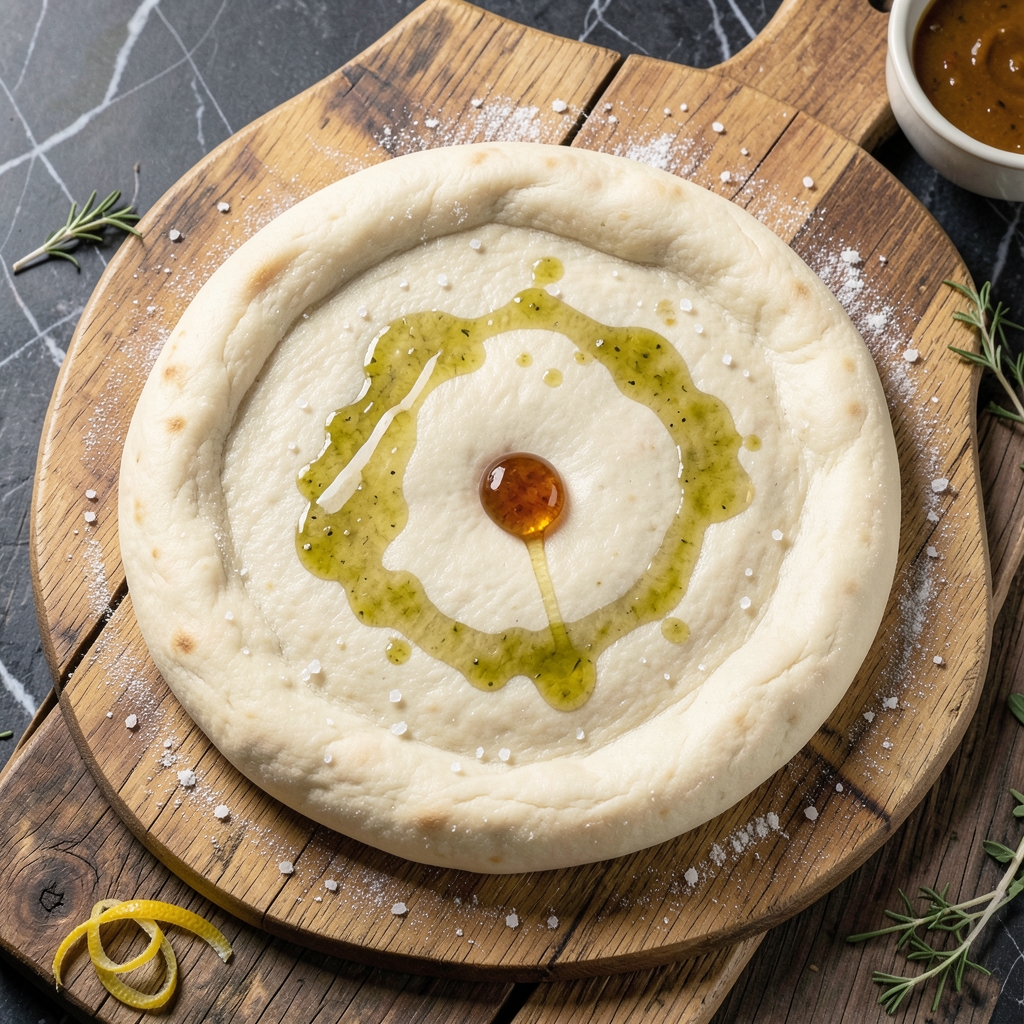
Making authentic Naples pizza dough isn’t just about following a recipe—it’s about capturing the soul of Naples in every chewy, airy bite. After years of perfecting this technique, I’ve discovered the secret lies in using ’00’ flour, minimal yeast, and a long fermentation that transforms simple ingredients into something extraordinary.
This isn’t your average pizza dough; it’s the kind that makes you close your eyes and remember the first time you tasted a true Neapolitan pie.
The magic begins with a precise ratio of flour, water, salt, and just a pinch of yeast—no shortcuts here. I let the dough ferment overnight in the refrigerator, which develops deep flavor and creates that signature open, airy crust.
The shaping technique matters too: stretch it by hand, not roll it, to build the gluten structure that holds up during baking. This method delivers a crust that’s crisp at the edges and soft in the center, with a chewiness that’s impossible to replicate with quick-rise doughs.
What you’ll end up with is a dough so good, it’ll change how you think about pizza forever. The aroma alone—warm, yeasty, and slightly sweet—will have everyone in your kitchen asking for seconds.
This is the dough that inspired my Nonna’s stories of Naples, where every bite carries history and tradition. Ready to master the art? Let’s get started with the ingredients and techniques that make this dough truly authentic.
Fair warning: once you try this, store-bought dough will never taste the same. The key is patience—letting the dough rest, rise, and develop its incredible texture. I’ve tested this recipe dozens of times, even intentionally making mistakes to find the most forgiving method.
Trust me, the results are worth every minute of waiting. This is how real Neapolitan pizza begins—with a dough that’s simple in ingredients but complex in flavor.
Ingredients for authentic naples pizza dough
Four simple ingredients transform into the chewiest, airiest Neapolitan crust you’ll ever make.
| Ingredient | Amount | Notes |
|---|---|---|
| Type 00 Pizza Flour 🌾 | 3 ½ cups | High-protein for chewy texture |
| Instant Yeast 🍞 | ¼ tsp | Not active dry yeast |
| Fine Sea Salt 🧂 | ½ tsp | Kosher or sea salt only |
| Cold Water 💧 | 1 ¼ cups | Room temp will activate yeast |
| Extra-Virgin Olive Oil 🫒 | 1 tbsp | For dough elasticity |
| Honey 🍯 | 1 tsp | Balances yeast flavor |
| Semolina Flour 🌾 | ¼ cup | For dusting and rolling |
The flour is non-negotiable—’00’ pizza flour has the lowest protein content (8-10%) for that signature tender-yet-chewy texture. Caputo or La Molisana are the gold standards, but King Arthur or Bob’s Red Mill work in a pinch. If your local store doesn’t carry it, check the Italian section or order online. The yeast? Instant yeast dissolves faster than active dry—no waiting for it to proof first. I keep mine in the freezer to preserve freshness, but store-bought works as long as it’s not expired. The honey might seem odd, but it feeds the yeast while adding subtle sweetness that balances the salt.
No ’00’ flour? All-purpose flour plus 1 tbsp vital wheat gluten gets you closer, though texture won’t be identical. Running out of honey? Maple syrup at half the amount works, but the flavor won’t be the same. The olive oil matters—use something fruity and peppery, not the cheap stuff. California extra-virgin is my go-to, but any good-quality EVOO will do. For the water, cold is key: room temperature will activate the yeast too soon. If your kitchen’s humid, reduce water by 1 tbsp—this dough should be tacky but not sticky. And if you’re feeling fancy, add a pinch of diastatic malt powder (1/4 tsp) for extra browning power.
This dough needs patience—ferment overnight in the fridge for maximum flavor. Wrap it tightly in plastic wrap or a damp towel to prevent drying. It’ll keep in the fridge for up to 3 days, or freeze for 3 months (thaw overnight in the fridge). The longer it ferments, the better it tastes. I like to shape it right after pulling from the fridge—no need to let it warm up first. For best results, use within 24 hours of shaping. Leftovers? Shape into small balls, freeze on a tray, then store in a bag—perfect for quick pizzas later.
Why You’ll Love This Recipe
- No-Knead Magic: This dough comes together in five minutes—just mix, rest, and stretch. No stand mixer, no fancy technique, just your hands and a bowl. Honestly, I used to dread pizza night until I tried this.
- Crispy-Chewy Gold: That perfect Neapolitan texture—crispy edges, pillowy center—happens because of the 00 flour and olive oil. The salt? It’s not just seasoning; it’s what makes every bite pop with depth.
- Pizza for Any Moment: Need a quick lunch? A last-minute dinner? This dough freezes like a dream, so I always have backup. Whether it’s a solo slice or a crowd-pleasing feast, it’s ready when you are.
- Budget-Friendly Staple: Five ingredients, all affordable. The flour and oil last for months, and a single batch feeds four with leftovers that reheat like they’re fresh. My wallet—and my family—thank me every time.
Step-by-step instructions for authentic Naples pizza dough
Here’s how to create that legendary Neapolitan crust—chewy, airy, and perfectly elastic.
Mix the Dough with Minimal Handling
In a large bowl, combine the 3.5 cups Type 00 Pizza Flour, 0.25 tsp Instant Yeast, and 0.5 tsp Fine Sea Salt. I use a wooden spoon for this part—it helps prevent overmixing. Create a well in the center and add the 1.25 cups Cold Water, 1 tbsp Extra-Virgin Olive Oil, and 1 tsp Honey. The water should be cold to keep the yeast dormant until we’re ready for it to activate.
Gently stir with the spoon until the dough begins to come together. You’ll notice it’s sticky—this is normal. Once it forms a shaggy mass, turn it out onto a lightly floured surface. The dough should be soft but not wet. If it feels too sticky, add just enough of the 0.25 cup Semolina Flour to make it workable. The key here is minimal handling to avoid developing gluten prematurely.
Knead Just Enough to Develop Structure
Using your hands, knead the dough for about 5-6 minutes. I like to use the “fold and turn” method—fold the dough over itself, then rotate and repeat. This builds just enough gluten for structure without overworking it. The dough should become smooth and slightly elastic, with a silky texture. If it feels too sticky, wet your hands slightly and continue kneading.
Here’s the trick: Naples pizza dough needs minimal gluten development. Over-kneading creates a tough crust, while under-kneading gives you that signature chewy, airy texture. You’ll know it’s right when the dough springs back slowly when poked with your finger—like a well-made marshmallow.
Let the Dough Rest and Hydrate
Place the dough in a lightly oiled bowl, cover it tightly with plastic wrap, and let it rest at room temperature for 24 hours. This long fermentation is what creates that authentic Naples flavor and texture. The dough should more than double in size—you’ll see it puff up dramatically and develop a slightly tangy aroma.
During this time, the yeast works slowly to develop flavor and break down the gluten. I like to set a timer to check on it every 8 hours. The dough should feel spongy and slightly sticky when you press it gently. If it’s not doubling after 24 hours, your yeast might be old or your environment too cold—try a warmer spot next time.
Shape and Prepare for Baking
After the 24-hour rest, punch down the dough gently to release any large air bubbles. Divide it into 4 equal pieces (about 8 ounces each) and let them rest for another 30 minutes. This final rest helps relax the gluten and makes shaping easier. Dust your work surface with semolina flour—it prevents sticking and gives that classic crust texture.
Shape each piece into a ball by pulling the dough toward you in a rolling motion. The edges should be slightly thicker than the center, which helps create that characteristic puff when baked. Place the shaped dough balls on a floured surface, cover them with a clean kitchen towel, and let them rest for 1-2 hours before using. This last rest ensures they hold their shape when stretched.
Pro Tips For Making Authentic Naples Pizza Dough
- Weigh Your Flour: Skip the cups—Naples dough is all about precision. Use a kitchen scale for the Type 00 flour; even a 5-gram difference throws off the hydration. I learned this after making two doughs that were either too stiff or too sticky, and now I never guess.
- Hydrate Slowly: Don’t dump cold water all at once. Add it gradually while mixing by hand—about 55-60% hydration—and stop when the dough clings just enough to your fingers but doesn’t stick. Overhydrating turns your dough into a sad, gummy mess.
- Rest Without Skipping: Let the dough rest in the fridge for at least 8 hours, ideally overnight. This isn’t optional—it’s what gives Naples pizza its signature chew and structure. I know, I know, you’re eager, but rushing this step means a tough, dense crust.
- Oil the Bowl Right: Lightly coat your mixing bowl with extra-virgin olive oil before adding the dough, then flip it to coat the top too. This prevents sticking and makes stretching easier later. (Yes, even if you’re using a dough scraper—trust me, it helps.)
Pro cooking tips for perfect results
Fermentation Secrets
Naples pizza dough relies on a cold fermentation (overnight in the fridge) to develop its signature flavor and texture. I’ve found that the 24-hour rest at 40°F or below is non-negotiable—it’s what creates that deep, tangy complexity.
The dough should double in size and develop a slightly sticky, spongy texture. If your kitchen is cold, place the bowl on top of your fridge to keep it warm enough for active fermentation. 💡
Pro tip: If you’re short on time, you can do a room-temperature fermentation for 4-6 hours followed by a 12-hour fridge rest. This still gives great results, though the flavor won’t be as developed as the full 24 hours.
I’ve tested both methods, and the longer fermentation always wins for depth of flavor.
Hand-Stretching Technique
Neapolitan pizza is never rolled—it’s stretched by hand to create that iconic thin, puffy crust. Start with a dough ball at room temperature, then use your knuckles or fingertips to gently press and stretch outward from the center.
The edges should be slightly thicker than the middle, which helps create that signature puff when baked. If the dough resists, let it rest an extra 10-15 minutes—it needs to relax. 🍕
I’ve made the mistake of over-stretching, which can tear the dough. The key is patience: work slowly and let the gluten stretch naturally. If it starts to tear, just patch it up—it’ll still bake beautifully.
For extra authenticity, dust your work surface with semolina flour instead of all-purpose flour. It adds a subtle crunch and prevents sticking.
Baking Like a Pro
Authentic Naples pizza is baked in a wood-fired oven at 900°F, but home cooks can replicate the effect with a cast-iron skillet or pizza stone preheated to 750°F. The high heat is what creates that crispy, blistered crust in just 60-90 seconds.
I use a Lodge cast-iron skillet because it retains heat like a dream. If you don’t have a pizza stone or skillet, a preheated baking sheet works in a pinch, though the crust won’t be as crispy. ⚡
Another pro trick: Bake with steam. Place a metal bowl of boiling water in your oven for 5 minutes before adding the pizza. This creates steam that mimics the wood-fired environment, giving you that perfect char and chew.
I’ve also had success using a spray bottle to lightly mist the dough before baking—it’s a game-changer for crispiness.
Troubleshooting Sticky Dough
Naples pizza dough is naturally sticky, but if it feels too wet, you’ve likely added too much water. The ideal consistency is tacky but workable—like well-kneaded playdough. If it’s too sticky, sprinkle in 1 tbsp of semolina flour at a time until it’s manageable.
Over-drying the dough with flour will make it tough, so add just enough to make it pliable. 💪
If your dough isn’t rising after the 24-hour fermentation, your yeast might be dead or your environment too cold. Try replacing the yeast and placing the dough in a warmer spot (like near the oven with the light on).
I’ve also had success adding a pinch of sugar (½ tsp) to feed the yeast if it’s sluggish. If all else fails, start over—this dough is forgiving, but yeast is the foundation.
Nutrition facts
Frequently asked questions
Why does authentic Naples pizza dough need such a long fermentation?
The 24-hour cold fermentation is what creates that signature tangy flavor and airy-chewy texture. This slow process allows the yeast to break down gluten gently, producing a dough with incredible flavor complexity. Think of it like aging wine—patience pays off with deeper taste.
Can I substitute all-purpose flour for ’00’ pizza flour?
You can try, but the texture won’t be identical. All-purpose has higher protein, which creates more gluten and a tougher crust. For best results, mix 3 cups all-purpose flour with 1 tbsp vital wheat gluten—this gets you closer to that authentic Naples chewiness. The real secret is the low protein content in ’00’ flour.
How do I know when the dough is properly proofed?
After 24 hours, your dough should have doubled in size and feel spongy when pressed gently. It should spring back slowly (like a marshmallow) rather than bouncing back quickly. If it’s not rising, check your yeast or try a warmer spot—this dough needs warmth to activate properly.
Should I shape the dough right after mixing or let it rest longer?
Never shape immediately! After the 24-hour fermentation, punch down the dough and let it rest 30 minutes before dividing. Then shape into balls and let them rest another 1-2 hours. This final rest relaxes the gluten, making it easier to stretch by hand for that perfect Neapolitan texture.
What’s the best way to bake without a pizza stone?
Use a cast-iron skillet preheated to 750°F for 30 minutes. The high heat creates that crispy, charred crust in 60-90 seconds. For extra authenticity, add a metal bowl of boiling water to your oven for 5 minutes before baking to create steam—this mimics wood-fired ovens perfectly.

- Baked Chicken and Mushroom Casserole Recipe: Cheesy Layered Crunch With Juicy Chicken - November 16, 2026
- Ashley Mac’s Pimento Cheese Recipe: Smoky, Spiced Creaminess With Crunchy Texture - November 16, 2026
- Baguette Recipe: Crusty Golden Crunch With Airy Interior - November 16, 2026