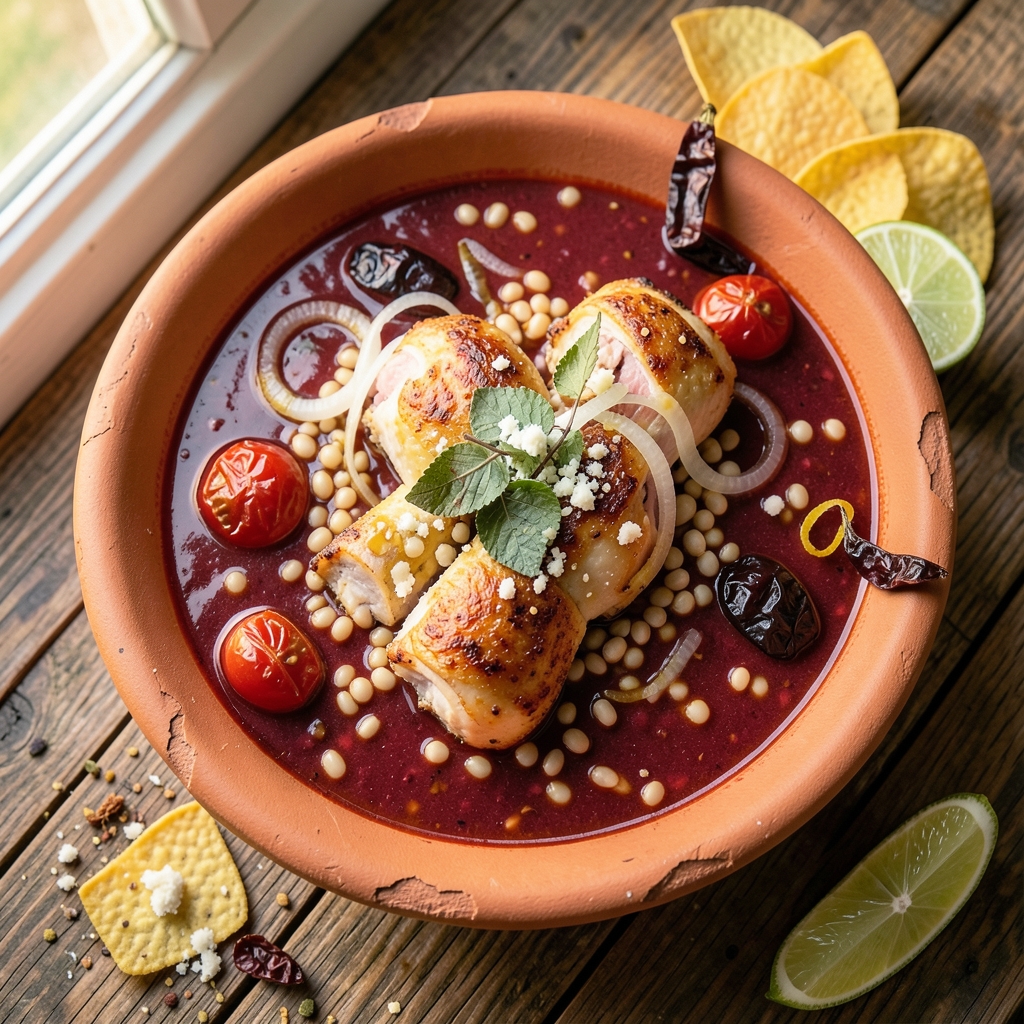
Creating authentic Mexican red chicken pozole means capturing the soul of Mexico in every spoonful—smoky, vibrant, and deeply flavorful. This recipe delivers the traditional combination of tender shredded chicken, hominy, and a rich tomato-chili broth, all simmered to perfection.
I’ve spent years refining this method to balance authenticity with home-cooking practicality, ensuring the flavors shine without requiring specialized ingredients.
The heart of pozole lies in its broth, built from scratch with dried chilies, tomatoes, and spices that develop a deep, smoky complexity. Chicken thighs break down into melt-in-your-mouth tenderness, while hominy adds the signature earthy texture.
This version stays true to the original while incorporating modern shortcuts—like using chicken stock for depth—without sacrificing authenticity. Every step, from toasting the spices to garnishing with fresh toppings, is designed to honor tradition.
What you’ll end up with is a steaming bowl of tender chicken, creamy hominy, and a broth so flavorful it tastes like a celebration. The garnishes—crisp radishes, fresh cilantro, lime wedges, and toasted oregano—add layers of texture and brightness.
This is the kind of pozole that brings people together, whether for a festive gathering or a cozy weeknight dinner. Let’s get cooking.
Perfect for feeding a crowd or meal prepping for the week, this pozole scales beautifully while keeping its restaurant-quality depth. The instructions walk you through every step, from building the broth to shredding the chicken and assembling the final dish. Trust the process—authenticity is in the details.
Ingredients for authentic mexican red chicken pozole
Sixteen ingredients, one unforgettable bowl of smoky, tender pozole magic.
| Ingredient | Amount | Notes |
|---|---|---|
| Chicken Thighs, Bone-In 🍗 | 3 lb | Skin-on preferred for flavor |
| White Hominy, Canned 🌽 | 2 cups | Drained and rinsed well |
| Dried Ancho Chilies 🌶️ | 4 whole | Stems/seeds removed, toasted |
| Dried Guajillo Chilies 🌶️ | 4 whole | Stems/seeds removed, toasted |
| Roma Tomatoes 🍅 | 4 whole | Roasted for depth of flavor |
| White Onion 🧅 | 1 whole | Quartered, charred slightly |
| Garlic Cloves 🧄 | 6 cloves | Peeled, toasted lightly |
| Chicken Stock 💧 | 4 cups | Homemade preferred, low-sodium |
| Cumin Seeds 🌿 | 1 tbsp | Toasted until fragrant |
| Ground Cumin 🌿 | 1 tbsp | For extra depth |
| Mexican Oregano 🍃 | 1 tbsp | Dried, not Italian oregano |
| Bay Leaves 🍃 | 2 whole | Fresh for best aroma |
| Salt 🧂 | 1 ½ tsp | Diamond Crystal preferred |
| Lime Wedges 🍋 | 4 whole | For serving, freshly cut |
| Fresh Cilantro 🌿 | ½ cup | Chopped, for garnish |
| Radishes 🥕 | 1 cup | Thinly sliced, for crunch |
| Avocado 🥑 | 1 whole | Sliced, for serving |
The chilies are non-negotiable for that authentic depth. MexGrocer or La Tienda carry the best dried ancho and guajillo—look for vibrant color and no moisture. Toast them in a dry skillet until fragrant (about 30 seconds per side), then soak in hot water for 15 minutes. The Roma tomatoes? Heirloom varieties have more flavor, but any good-quality Roma works. Char them whole under a broiler for 5 minutes—blistered skin adds smoky sweetness. The hominy? Goya or La Costeña brands are reliable, but drain and rinse them thoroughly to cut the canned taste. For the chicken thighs, skin-on is ideal—the fat renders beautifully and keeps the meat juicy. If you’re short on time, bone-in, skin-on thighs from the butcher section give the best results.
No ancho chilies? Substitute with 2 dried chipotle peppers in adobo for heat, but reduce to 2 total. Mexican oregano hard to find? Regular dried oregano at half the amount works in a pinch, but the flavor won’t be identical. Short on fresh cilantro? Fresh parsley or even more oregano can stretch it out. The avocado is purely for serving—skip it if you’re prepping ahead, but add it fresh before eating. For the radishes, white or red varieties both work, but the white has a cleaner crunch. Pro tip: Toast the Mexican oregano in a dry pan for 30 seconds before adding to the broth—it intensifies the aroma dramatically. The lime wedges? Mexican limes (key limes) are ideal if you can find them, but regular limes work just fine.
This pozole tastes even better the next day as the flavors meld. Store in the fridge for up to 5 days, covered tightly. For freezing, portion into individual containers—3 months max for best texture. The hominy and chicken hold up well, but the garnishes (cilantro, radishes, avocado) should be added fresh when serving. Double the batch if you’re feeding a crowd—pozole is one of those dishes that gets better with more servings. Leftovers reheat beautifully; just add a splash of water or broth to loosen the broth if needed. Garnish generously with lime and cilantro before serving—brightness cuts through the richness.
Why You’ll Love This Recipe
- I’ll be real: this recipe only asks for one pot—no chopping marathons, no last-minute pan juggling. Toss in the bone-in chicken thighs (they stay juicy, I swear) and let the ancho-guajillo blend do its magic while you stir occasionally. That’s it. The hominy just soaks up the broth like a sponge.
- Simmer, Not Stress: I’ll be real: this recipe only asks for one pot—no chopping marathons, no last-minute pan juggling. Toss in the bone-in chicken thighs (they stay juicy, I swear) and let the ancho-guajillo blend do its magic while you stir occasionally. That’s it. The hominy just soaks up the broth like a sponge.
- Smoky Depth Magic: The dried chilies? Oh, they’re the secret weapon. Toasted and rehydrated, they melt into a broth that’s rich but bright—not too heavy, not too one-note. The Roma tomatoes add that tangy lift, and the hominy gives it that satisfying, creamy bite. Honestly, it’s the kind of flavor that makes you pause mid-bite.
- Weeknight Crowd-Pleaser: Between us, this is my go-to for game days, lazy Sundays, or when my in-laws show up unannounced. Serve it with tortillas, radishes, and lime—suddenly, you’ve got a full spread without extra effort. And the leftovers? Even better the next day, if you can resist eating the whole pot.
Step-by-step instructions for authentic Mexican red chicken pozole
Here’s the traditional method for creating this smoky, hominy-rich stew with perfectly tender chicken.
Toast and Rehydrate the Dried Chilies
Begin by toasting the 4 whole dried ancho chilies and 4 whole dried guajillo chilies in a dry skillet over medium heat for 1-2 minutes per side until fragrant and slightly darkened. This step deepens their natural smokiness and removes any bitterness. Transfer the toasted chilies to a bowl and cover them with 4 cups hot chicken stock to rehydrate for 15 minutes. The chilies will plump up and release their rich, earthy flavors into the liquid.
While the chilies soak, remove their stems and seeds carefully using your fingers. I like to keep the seeds in guajillo chilies for a slight heat, but remove them from ancho chilies to maintain a more earthy, smoky profile. Set aside the rehydrated chilies and their soaking liquid—they’ll form the base of your pozole’s vibrant red color and complex flavor.
Char and Prepare the Aromatics
Heat a grill pan or cast-iron skillet over high heat and char the 1 whole white onion, cut into quarters, until deeply browned and slightly blackened in spots—about 8-10 minutes. The charring adds a smoky depth that’s essential for authentic pozole. Transfer the charred onion to a cutting board and roughly chop it.
In the same pan, toast the 6 cloves garlic and 1 tbsp cumin seeds over medium heat for 1-2 minutes until the garlic turns golden and the cumin seeds sizzle and darken slightly. Immediately transfer the garlic to a small bowl and mash it with the back of a spoon to create a paste. This step ensures the garlic infuses completely into the broth rather than remaining as distinct cloves.
Build the Smoky Tomato Base
In a large Dutch oven, combine the charred onion, garlic-cumin paste, 4 whole roma tomatoes (halved), 2 whole bay leaves, 1 tbsp ground cumin, 1 tbsp mexican oregano, and 1.5 tsp salt. Cook over medium-high heat for 8-10 minutes, stirring occasionally, until the tomatoes soften and the mixture begins to caramelize slightly. This creates a rich, concentrated base that will carry the pozole’s depth of flavor.
Pour in the rehydrated chilies and their soaking liquid, scraping the bottom of the pot to incorporate any browned bits. Add the 4 cups chicken stock and bring the mixture to a gentle boil. Reduce heat to low and let it simmer uncovered for 20 minutes, stirring occasionally. This slow simmer allows the flavors to meld and develop that authentic smoky, slightly tangy profile that defines red pozole.
Cook the Chicken and Hominy
Add the 3 lb chicken thighs, skin-side down, to the simmering broth. Increase heat to medium-high and bring to a boil, then reduce to medium-low and cover partially. Let the chicken cook for 45-50 minutes, turning occasionally, until the meat is fork-tender and easily pulls away from the bone. The skin should be crispy and golden—this indicates the chicken is fully cooked and infused with the broth’s flavors.
Once the chicken is tender, remove it from the broth and let it cool slightly before shredding it with two forks. Discard any bones or large pieces of cartilage. Return the shredded chicken to the pot and stir in the 2 cups white hominy, which has been drained and rinsed. Simmer the pozole uncovered for another 15-20 minutes to allow the hominy to absorb the broth’s flavors and become tender. The hominy should be plump and slightly creamy, adding that signature texture to the stew.
Finish and Serve Traditionally
Taste the pozole and adjust the seasoning with additional salt or chicken stock if needed. The broth should be rich, slightly tangy, and deeply flavorful with a vibrant red hue from the chilies. Ladle the pozole into bowls and let each person customize their serving with the traditional toppings: 4 whole lime wedges, 0.5 cup chopped fresh cilantro, 1 cup thinly sliced radishes, and 1 whole avocado sliced into wedges.
Serve the pozole immediately with warm corn tortillas or bolillos on the side. The contrast of the creamy hominy, tender chicken, and crisp radishes creates a perfect balance of textures, while the lime and avocado add freshness to cut through the richness. This is a dish meant to be shared—gather around the table and enjoy the smoky, hearty flavors of authentic Mexican pozole.
Pro Tips For Making Authentic Mexican Red Chicken Pozole
- Char the Tomatoes: Blacken those Roma tomatoes over high heat for 3-4 minutes—yes, they’ll look like burnt hockey pucks—before adding them to the pot. I used to skip this, and the broth never had that deep, smoky backbone that makes pozole sing.
- Toast the Chilies: Dry-toast your ancho and guajillo chilies in a skillet for 20-30 seconds per side until fragrant, then soak them in hot water. Skipping the toasting makes the broth taste flat, like someone forgot to season it.
- Simmer Low and Slow: Once the broth starts boiling, drop the heat to a bare simmer—just enough to see tiny bubbles—and let it cook for 2-3 hours. Rushing this turns your rich, complex broth into a sad, watery mess.
- Rinse the Hominy: Drain and rinse the canned hominy under cold water to remove excess starch—this keeps the pozole from turning gluey. I learned this the hard way when my first batch had the consistency of oatmeal.
Storing and reheating this dish
Refrigerator Storage
Let your pozole cool to room temperature (about 1 hour) before transferring to airtight containers—I swear by glass Pyrex with snap-on lids. Store at 40°F or below for up to 5 days, though the flavors actually deepen overnight as spices meld.
The hominy stays tender, and the broth remains rich, but add a splash of water when reheating to restore consistency. ❄️
Freezer Prep Tips
For long-term storage, portion pozole into quart-sized freezer bags (leave 1-inch headspace for expansion) or glass containers. Freeze for up to 3 months—the chicken and hominy retain texture, though the garnishes (cilantro, radishes, avocado) should be added fresh after reheating.
Label with the date and “Pozole” to avoid freezer confusion. 💡
Stovetop Reheating
My preferred method: Pour pozole into a heavy-bottomed pot and heat over medium-low heat for 10-15 minutes, stirring occasionally. If the broth thickens too much, add ¼ cup chicken stock or water to restore its silky texture.
Taste and adjust seasoning—pozole often needs a pinch of salt after reheating. The stovetop method preserves the hominy’s creaminess best. 🔥
Microwave Shortcut
For quick meals, transfer pozole to a microwave-safe bowl, cover loosely with a damp paper towel, and heat on 50% power in 2-minute intervals, stirring between each.
Avoid full power—it can make the hominy mushy. Finish with fresh lime and cilantro to brighten the flavors. This works best for individual servings. ✨
Garnish Refresh
Never skip the fresh toppings! Add lime wedges, cilantro, and radishes right before serving—these cut through the richness and add vibrant contrast. For extra authenticity, toast Mexican oregano in a dry pan and sprinkle on top. The avocado should always be added fresh to prevent browning. 🌿
Leftovers Magic
Pozole tastes even better the next day—it’s a labor of love! Store leftovers in the fridge for up to 5 days or freeze for 3 months.
When reheating, prioritize the stovetop method for the best texture. Double the batch if you’re hosting; pozole is a crowd-pleaser that only improves with more servings. 💛
Nutrition facts
Frequently asked questions
Why does authentic red pozole need both ancho and guajillo chilies?
Ancho chilies provide the deep, earthy base that gives pozole its signature rich color, while guajillo adds a subtle fruity heat and complexity. Together, they create the perfect balance of smoky depth and mild spice that defines red pozole. Skipping one will make your broth taste flat or one-dimensional.
Can I substitute chicken thighs with chicken breasts for this recipe?
Not recommended! Chicken thighs stay juicy and tender with their fat content, while breasts dry out quickly in the broth. If you must use breasts, marinate them in lime juice for 30 minutes first and add them 15 minutes before the end of cooking to preserve moisture. The texture won’t be identical, but it’ll still be flavorful.
What’s the best way to make this pozole spicier without altering the authentic flavor?
Add 1-2 dried chipotle peppers in adobo (minced) to the broth during simmering for smoky heat, or stir in ½ tsp cayenne pepper at the end. For extra depth, toast 1 tsp whole cumin seeds until fragrant and add to the broth. Always taste first—pozole’s spice should complement, not overpower, its natural richness.
How do I know when the chicken is fully cooked and tender?
The chicken is done when it reaches an internal temperature of 165°F and the meat pulls away from the bone with minimal resistance. For bone-in thighs, this typically takes 45-50 minutes of simmering. Test by inserting a fork—if it glides through easily and the juices run clear, it’s perfect. Overcooking will make the meat tough.
Can I make pozole in a slow cooker for hands-off cooking?
Follow the same steps for the broth and aromatics, then transfer everything (including chicken and hominy) to your slow cooker. Cook on low for 6-8 hours or high for 3-4 hours. The slow cooking enhances the flavors, but you may need to add ½ cup broth or water if it gets too thick. The texture will be slightly different but still delicious.

- Sweet Cornbread Recipe Using Jiffy: Box Mix Magic With Buttery Crumb - November 17, 2026
- Campbell’s Tomato Soup Beef Stew Recipe: One-Pot Heartiness With Meat-In-Broth Luxury - November 17, 2026
- Petha Sweet Recipe: Candied Ash Gourd With Cardamom and Rose Perfection - November 17, 2026