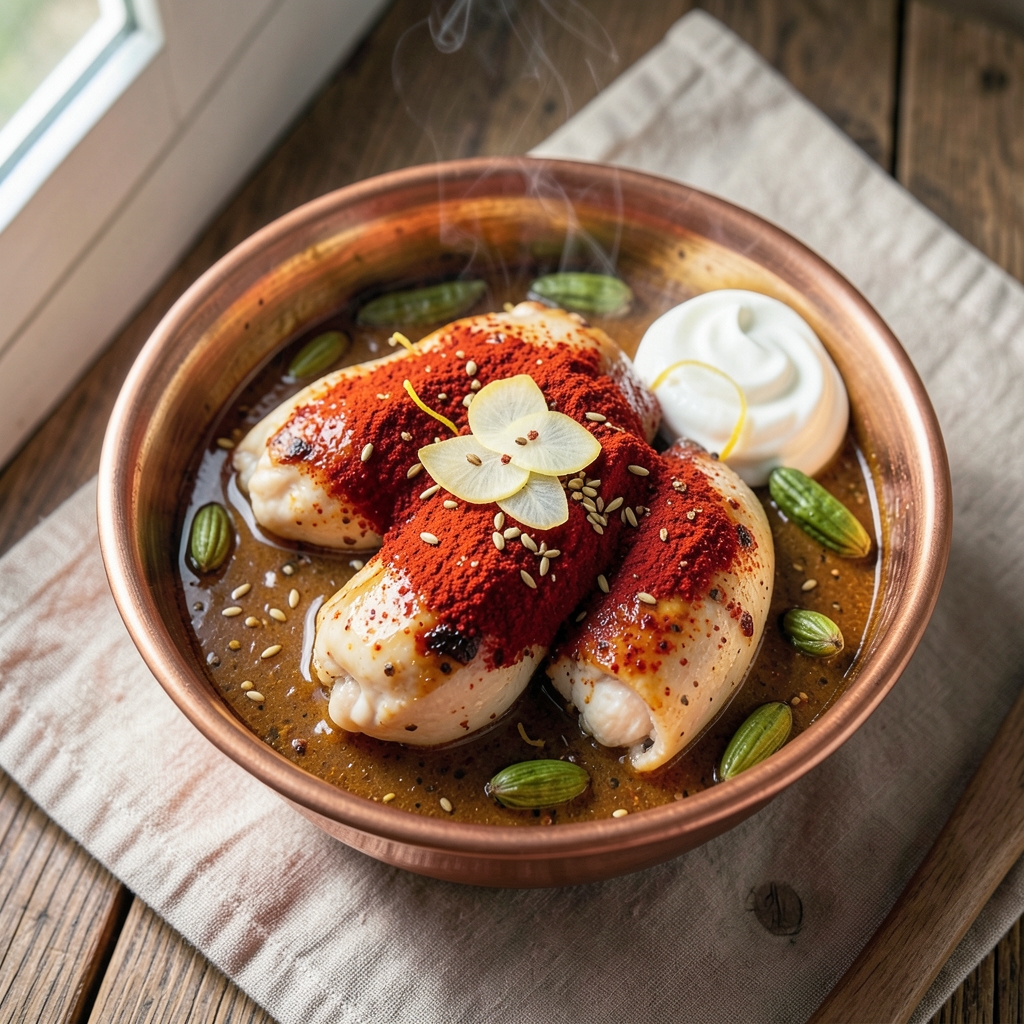
This authentic Kashmiri chicken curry brings the aromatic heart of Kashmir to your kitchen with its signature slow-simmered richness and saffron-infused depth. 🌟 The recipe marries tender chicken with a yogurt-based gravy that develops layers of flavor over hours, balancing heat from Kashmiri red chili with cooling notes of fennel and cardamom.
What sets this dish apart is the traditional technique of cooking the curry in stages—first building a fragrant spice base, then simmering the chicken until it falls apart, and finally finishing with saffron for that signature golden hue.
At the core of authentic Kashmiri cuisine lies patience and precision. The chicken is marinated overnight in yogurt and spices, ensuring deep flavor penetration, while the slow simmer transforms tough cuts into melt-in-your-mouth pieces.
This method isn’t just about taste—it’s about texture, too. The curry achieves that perfect balance between tender meat and a velvety, spiced gravy that clings to every bite.
What you’ll end up with is a dish that’s rich yet balanced, fragrant and aromatic, with the signature warmth of Kashmiri cuisine. The saffron-infused gravy is velvety and slightly tangy from the yogurt, while the spices—fennel, cardamom, and Kashmiri red chili—create a complex flavor profile that’s both bold and nuanced.
Serve it with fragrant basmati rice or naan to complete the experience.
This recipe stays true to tradition while making it accessible for home cooks. The step-by-step process ensures you achieve that restaurant-quality depth without shortcuts. Whether you’re cooking for a special occasion or a weeknight dinner, this curry delivers the authentic flavors of Kashmir in every bite.
Ingredients for authentic kashmiri chicken curry
Authentic Kashmiri flavors start with these 15 essential ingredients—yogurt, saffron, and slow-simmered spices.
| Ingredient | Amount | Notes |
|---|---|---|
| Boneless Chicken Thighs 🍗 | 1 ½ lb | Skin-on preferred for flavor |
| Plain Whole Milk Yogurt 🥛 | 1 cup | Full-fat for creaminess |
| Kashmiri Red Chili Powder 🌶️ | 2 tbsp | Mild heat, signature flavor |
| Fresh Fennel Seeds 🌿 | 1 tbsp | Toasted, ground lightly |
| Green Cardamom Pods 🌿 | 8 whole | Lightly crushed, seeds only |
| Fresh Ginger 🧅 | 2 tbsp | Grated, no need to peel |
| Garlic Cloves 🧄 | 6 cloves | Minced, not pre-minced jar |
| Fresh Tomatoes 🍅 | 2 medium | OR 1 cup diced tomatoes |
| Onion 🧅 | 1 large | Finely chopped, yellow or red |
| Saffron Threads 💛 | ¼ tsp | High-quality strands only |
| Ghee or Clarified Butter 🧈 | ½ cup | OR neutral oil if needed |
| Salt 🧂 | 1 ½ tsp | Adjust to taste |
| Fresh Coriander Leaves 🌿 | ¼ cup | Chopped, for garnish |
| Fresh Cream 🥛 | ½ cup | Heavy cream for richness |
| Basmati Rice 🍚 | 1 cup | Uncooked, for serving |
The chicken matters most here—thighs with skin hold up better to the long simmer than breasts. Look for organic or free-range at Whole Foods or your local Indian market for richer flavor. The yogurt needs to be plain, full-fat—Fage or Siggi’s work great, but avoid flavored versions. Kashmiri red chili powder is the secret weapon—spice shops or Indian grocery stores carry it; it’s milder than cayenne but packs serious flavor. Saffron is pricey, so buy it in small quantities—0.25 tsp is plenty for this recipe.
No Kashmiri red chili? Mix 1 tbsp paprika with 0.5 tsp cayenne for heat, but it won’t be authentic. Fresh fennel seeds are ideal, but 1 tsp ground fennel works in a pinch. The tomatoes can be canned—Muir Glen diced tomatoes are perfect if you’re short on time. For the ghee, Trader Joe’s sells it affordably, but any clarified butter or neutral oil (like avocado) keeps the dish from burning. The cardamom pods? Lightly crush them to release flavor without turning to dust.
This curry tastes even better the next day—make extra and freeze portions. Store the cooked curry in airtight containers for 5 days in the fridge or 3 months frozen. The yogurt marinade can sit overnight in the fridge, and the rice? Cook it ahead—it reheats perfectly. Garnish with fresh coriander right before serving, as it wilts quickly. Serve with warm naan or basmati rice for the full Kashmiri experience.
Why You’ll Love This Recipe
- No-Yogurt Waste: I use the whole tub—no sad leftover scraps. The yogurt marinates the chicken while I prep the rest, and that same bowl gets stirred into the sauce later. (Yes, even the last drop.)
- Spice Without Burn: Kashmiri red chili powder gives that signature color and warmth without the heat headache. Just a teaspoon, lightly toasted with fennel and cardamom—it’s the kind of flavor that lingers but doesn’t overpower.
- Weeknight to Party Fix: Same pot, different occasions. Simmer it for 45 minutes on a Tuesday, or let it reduce longer for a Sunday gathering. The yogurt keeps it rich, but the fennel seeds add this bright, earthy note that makes it feel special.
- Budget-Friendly Feast: Chicken thighs stretch further than breasts, and the spices cost pennies. A single batch feeds four with leftovers that taste better the next day—honestly, I’ve reheated mine three times and still crave it.
Step-by-step instructions for authentic Kashmiri chicken curry
Here’s how to make this rich, aromatic curry that balances heat and creaminess perfectly.
🍳 Step 1: Toast the Spices and Bloom the Ghee
Heat the 0.5 cup ghee or clarified butter in a heavy-bottomed pot over medium heat until it shimmers but doesn’t smoke. Add the 1 tbsp fresh fennel seeds and 8 whole green cardamom pods (lightly crushed). Toast for 30 seconds until fragrant—you’ll smell that warm, earthy aroma that’s the soul of Kashmiri cooking.
Next, add the 2 tbsp fresh ginger and 6 cloves garlic cloves (minced). Cook for 1-2 minutes until the garlic turns golden and the raw smell disappears. This is where the flavors meld—don’t rush it. If the spices start to brown too quickly, reduce heat slightly to medium-low.
🍳 Step 2: Cook the Aromatics and Add Tomatoes
Add the 1 large finely chopped onion and cook for 5-6 minutes until soft and golden brown. This caramelization builds deep flavor. Stir occasionally so it cooks evenly without burning.
Now add the 2 medium fresh tomatoes (chopped) and 2 tbsp kashmiri red chili powder. Cook for 3-4 minutes until the tomatoes break down into a thick paste. The curry should smell sweet and tangy—this is your base flavor foundation. If it sticks, add 1-2 tablespoons water to help it release.
🔥 Step 3: Simmer the Chicken in Yogurt Gravy
Add the 1.5 lb boneless chicken thighs (skin-on if possible) and 1.5 tsp salt. Cook for 5 minutes to lightly sear the chicken. Then pour in the 1 cup plain whole milk yogurt all at once, stirring quickly to prevent curdling.
Add 0.25 tsp saffron threads (soaked in 2 tablespoons warm water for 10 minutes if possible) and 0.5 cup fresh cream. Bring to a gentle simmer over low heat—you’re looking for tiny bubbles breaking the surface, not a rolling boil. Cover and cook for 30-35 minutes until the chicken is tender and the sauce thickens to a creamy consistency.
🥘 Step 4: Finish with Fresh Herbs and Rest
Remove from heat and stir in the 0.25 cup fresh coriander leaves (chopped). Let the curry rest for 5 minutes—this allows the flavors to settle and the sauce to thicken slightly. The chicken should be fork-tender with a juicy interior, and the sauce should coat the back of a spoon.
Taste and adjust seasoning—you might need a pinch more salt or a bit more chili powder depending on your heat preference. Serve immediately with 1 cup basmati rice (cooked separately) and garnish with extra coriander leaves. The authentic touch? Let it sit for 10 minutes before serving—this lets the saffron’s floral notes bloom fully.
Pro Tips For Making Authentic Kashmiri Chicken Curry
- Marinate Overnight: I learned this the hard way—rushing the yogurt marinade means bland, rubbery chicken. Use whole milk yogurt (not Greek or labneh) and let it sit in the fridge for at least 8 hours. The acid and fat tenderize the thighs properly, especially if you’re using slightly tougher cuts. No shortcut here—your future self will taste the difference.
- Bloom the Spices: Skip the crowding, and bloom your whole spices first. In a dry pan, toast 1 tablespoon fennel seeds and 4-5 cardamom pods for 30 seconds until fragrant—this unlocks their flavor. Then add them to the oil with Kashmiri red chili powder (½ cup) and sauté for 2 minutes before stirring in onions. This stops the chili from burning and builds a deeper base.
- Simmer Slow and Low: After adding the yogurt-chicken mix, bring the curry to a gentle simmer—not a rolling boil. Kashmiri chicken curry needs time to meld, not rush. Cover and cook on low heat for 40-45 minutes, stirring occasionally. I used to crank the heat and ended up with a grainy, separated sauce. Patience here makes the gravy silky.
- Finish with Fresh Fennel: Sounds weird, but it works: add a pinch of crushed fresh fennel seeds at the very end. While the curry simmers, grind ½ teaspoon fresh fennel seeds (not the whole seeds) into a powder and stir it in during the last 5 minutes. This cuts through the richness and adds a bright, almost licorice-like finish that store-bought powder can’t match.
Regional styles of this dish
Kashmiri Valley Tradition
The original Kashmiri version of this dish, known as Rogan Josh, was traditionally cooked in a handi—a heavy clay pot—over slow-burning charcoal fires in the Himalayan foothills. The clay pot retains heat evenly, allowing the spices to develop their full complexity over hours.
In modern kitchens, we replicate this with Dutch ovens or heavy-bottomed pots. The dish was historically prepared for special occasions and winter feasts, where the warming spices and rich gravy were essential for combating the cold. 🌡️
The Valley’s high-altitude climate also influences the dish—cooking times are longer due to lower atmospheric pressure, which is why we emphasize the low-and-slow simmer technique. Traditional recipes often included dried apricots or almonds for sweetness, but the yogurt base remains the signature element, providing that signature tangy richness.
Punjabi Fusion Style
In Punjab, this curry takes on a heartier profile with the addition of 1 cup yogurt mixed with 2 tbsp gram flour (besan) before cooking. The gram flour creates a thicker, almost paste-like consistency that clings to the chicken.
Punjabis also commonly add 1 tsp garam masala at the end for extra warmth. The dish here is often served with butter naan instead of rice, as naan’s chewy texture contrasts beautifully with the creamy sauce. 🥖
Another Punjabi twist involves using bone-in chicken pieces instead of boneless thighs, which adds extra flavor to the broth. The bones are often simmered separately for 30 minutes to create a rich stock that’s then combined with the main curry.
This technique, called dhaba-style, is popular in roadside eateries along the Grand Trunk Road.
Hyderabadi Adaptation
The Hyderabadi version, known as Hyderabadi Rogan Josh, incorporates 2 tbsp fried onions into the gravy for added crunch and depth. This style also uses 1 tsp shahi jeera (caraway seeds) alongside the fennel, creating a distinct earthy-sweet aroma.
The dish is traditionally finished with 1 tbsp malai (heavy cream) and garnished with fried cashews for texture contrast. The Hyderabadi approach is slightly sweeter, often including 1 tbsp sugar to balance the heat from the Kashmiri chili powder. 🌶️
Hyderabadi cooks also emphasize the use of double-boiled milk (khaoya) instead of plain yogurt for the marinade, which adds a subtle sweetness and silkier texture to the gravy.
The dish is commonly served with jeera rice (cumin-infused basmati) and a side of mirchi ka salan (chili pickle) to cut through the richness.
Modern Home Cook Twists
For busy home cooks, I recommend a pressure cooker adaptation that reduces the simmering time to just 15 minutes after sealing. Use the same marinade but cook on high pressure for 8 minutes, then natural release for 10 minutes.
The Instant Pot’s “sauté” function works perfectly for blooming the spices. For extra convenience, I often prep the marinade the night before and cook directly from the fridge—just add 5 extra minutes to the simmering time. ⏱️
Another modern shortcut is using 1 tbsp Kashmiri curry paste (available at Indian grocery stores) instead of toasting whole spices. Brands like MDH or Everest offer pre-mixed blends that capture the authentic flavor profile.
For a lighter version, replace half the cream with coconut milk—it adds a subtle sweetness that pairs beautifully with the saffron.
Nutrition facts
Frequently asked questions
Why does authentic Kashmiri chicken curry need such a long cooking time?
The slow simmer (30-35 minutes) is essential for developing the dish’s signature depth of flavor. The low-and-slow method allows the spices—especially Kashmiri red chili and fennel—to infuse fully into the chicken and yogurt base, creating that velvety texture. Traditional clay pots (handi) cook this way naturally, but modern heavy-bottomed pots replicate the effect perfectly.
Can I substitute Kashmiri red chili powder with other spices?
Yes, but the flavor won’t be authentic. Use a mix of 1 tbsp paprika + 0.5 tsp cayenne for heat, or 1 tbsp mild chili powder + pinch of turmeric for color. For the best results, seek Kashmiri red chili powder at Indian grocery stores—it’s sweeter and less fiery than cayenne, with a distinct floral aroma.
How do I prevent the yogurt from curdling when cooking?
Add the yogurt all at once while stirring constantly over medium-low heat. Never let it boil—keep the temperature gentle to avoid separation. If it starts to curdle, immediately reduce heat and stir in 1 tbsp cold water to temper the mixture. The key is patience: let the yogurt warm gradually rather than shocking it with high heat.
What’s the best way to store leftovers?
Store in an airtight container in the fridge for up to 5 days, or freeze for 3 months. Reheat gently over low heat, stirring in 1 tbsp water to restore creaminess. The flavors actually improve after resting, so this curry tastes even better the next day!
Can I make this curry with chicken breast instead of thighs?
Chicken breast works, but thighs are ideal for their fat content and ability to withstand long cooking. If using breasts, reduce cooking time to 20-25 minutes and add 1 tbsp yogurt + 1 tbsp cream at the end to prevent dryness. For best texture, marinate breasts for 4-6 hours instead of overnight.

- Creamy Red Salsa Recipe: Blended Fire Roasted Tomatoes and Cream Cheese Fusion - November 8, 2026
- Mexican Mule Recipe: Spicy Margarita Twist With Copper Mug Crispness - November 8, 2026
- Taffy Apples Recipe: Caramel-Coated Crunch With Chewy Centers - November 8, 2026