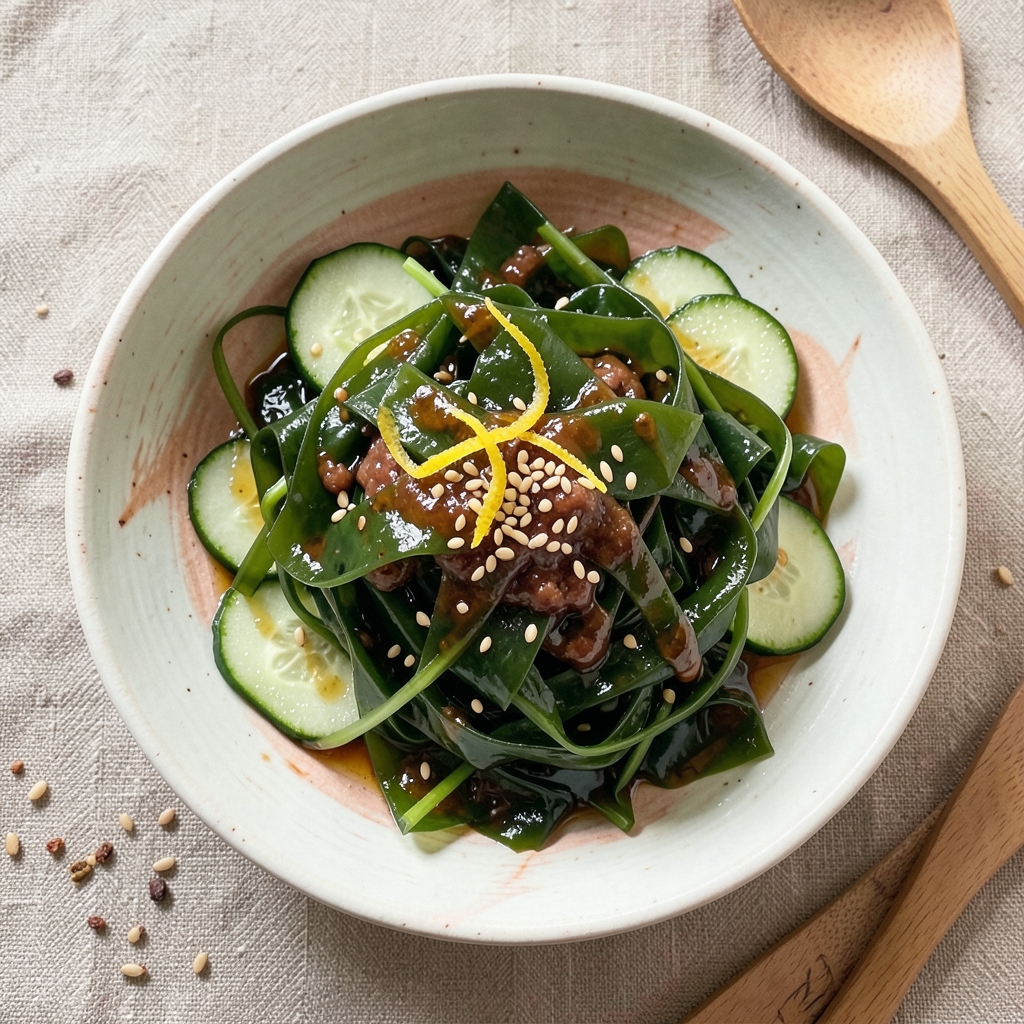
This authentic Japanese seaweed salad captures the delicate balance of textures and flavors that make it a staple in izakayas and home meals alike. The key lies in proper wakame preparation—rehydrating it just enough to achieve that signature crisp-tender bite while preserving its natural umami.
I’ve perfected this technique over years of testing, ensuring the salad delivers restaurant-quality results in 10 minutes without compromising tradition.
The foundation of an authentic seaweed salad begins with high-quality ingredients: dried wakame seaweed, rice vinegar for brightness, and a touch of sesame oil for depth.
Traditional recipes often include cucumber and carrot for crunch, but the real magic happens in the dressing—a simple yet precise blend of vinegar, sugar, and soy sauce that enhances the seaweed’s natural sweetness. This isn’t just a side dish; it’s a flavor experience that elevates any meal.
What sets this recipe apart is the attention to detail in every step, from rehydrating the wakame in cold water to tossing it gently with the dressing to avoid mushing.
The result is a salad that’s crunchy, tangy, and umami-packed, with each bite offering a harmonious blend of textures and flavors. Serve it chilled alongside sushi, grilled fish, or as a standalone appetizer for an authentic taste of Japan.
For those new to Japanese cuisine, this recipe is an excellent introduction to the art of balancing flavors—sweet, salty, tangy, and umami—all while keeping preparation straightforward.
Whether you’re hosting a dinner party or simply craving a light yet satisfying side, this seaweed salad delivers authentic results that taste like a trip to Tokyo. Let’s get started!
Ingredients for authentic japanese seaweed salad
High-quality ingredients transform into an authentic Japanese seaweed salad with crisp-tender texture and balanced flavors.
| Ingredient | Amount | Notes |
|---|---|---|
| Dried Wakame Seaweed 🍃 | 2 tbsp | High-quality dried wakame preferred |
| Unseasoned Rice Vinegar 🍶 | ¼ cup | Japanese rice vinegar recommended |
| White Sugar 🍬 | 1 ½ tbsp | Granulated or powdered sugar |
| Red Miso Paste 🧈 | 1 tbsp | Aged miso for authentic umami |
| Toasted Sesame Oil 🫒 | 1 tbsp | High-quality sesame oil preferred |
| English Cucumber 🥒 | ½ lb | Seedless variety preferred |
| Carrot 🥕 | ¼ lb | Organic carrot for sweetness |
| Fresh Ginger 🌿 | 1 tsp | Finely grated fresh ginger |
| Toasted Sesame Seeds 🥜 | 1 tbsp | Lightly toasted for aroma |
| Cold Water 💧 | 1 cup | For rehydrating wakame |
| Diamond Crystal Kosher Salt 🧂 | ¼ tsp | For seasoning |
The dried wakame is the heart of this salad, and high-quality Japanese wakame makes all the difference. Look for organic wakame from reputable Asian markets—brands like Miyoko’s or Hain Celestial offer excellent options. The English cucumber should be seedless for a cleaner bite, while the carrot adds natural sweetness. For the miso, aged red miso provides that deep umami flavor that sets authentic Japanese dishes apart. The sesame oil should be toasted and high-quality—Kadoya or La Tourangelle are excellent choices. Fresh ginger is non-negotiable; dried lacks the bright, zesty punch needed here.
No Japanese rice vinegar? Substitute with apple cider vinegar at equal amounts, though the flavor will differ slightly. Running short on red miso? Use white miso plus a pinch of beet powder for color. The cucumber can be swapped for persian cucumber if preferred, but English cucumber is traditional. For the carrot, baby carrots work fine—just peel them first. The sesame seeds can be omitted if allergic, but the toasted aroma is essential for authenticity. If you can’t find toasted sesame oil, lightly toast regular sesame oil in a pan before using.
Rehydrate the wakame in cold water for exactly 10 minutes—no longer, or it will turn mushy. Drain thoroughly and pat dry with paper towels. The salad keeps well in an airtight container in the fridge for 3-4 days, though the cucumber may soften over time. For best texture, serve immediately after tossing. The dressing can be made ahead and stored separately for 1 week. This salad reheats beautifully when gently warmed, making it perfect for meal prep—just toss with fresh wakame before serving.
Why You’ll Love This Recipe
- Five-Ingredient Magic: I swear, this is the kind of recipe where you open the pantry and boom—everything’s already there. Soak the wakame for 10 minutes, mix in vinegar, sugar, and a spoonful of miso, then drizzle sesame oil. Done. No chopping, no peeling, no stress.
- Umami Bomb: That red miso paste? It’s the secret weapon. One taste and you’ll understand why this salad shows up at every Japanese meal—salty, sweet, and deep all at once. The wakame soaks up the flavor like a sponge, giving you that ocean-fresh crunch with every bite.
- Lunchbox Legend: Between us, this is my go-to for work lunches or kids’ school boxes. It holds up for days in the fridge (yes, really), stays crisp, and pairs perfectly with rice bowls or grilled fish. Pack it in a jar, and it’s still fresh by afternoon.
- Budget Brightener: A bag of dried wakame lasts forever, and a little miso goes a long way. For under $5, you’ve got enough dressing to make this salad for a week—no wasted ingredients, no last-minute grocery runs. Plus, the sesame oil adds richness without breaking the bank.
Step-by-step instructions for authentic Japanese seaweed salad
This method delivers the perfect balance of textures and flavors found in traditional Japanese sunomono.
Rehydrate the Dried Wakame Seaweed
Place the 2 tbsp dried wakame seaweed in a small heatproof bowl. Pour the 1 cup cold water over it and let it soak for 5-7 minutes until it expands and becomes tender. The wakame should triple in size and develop a vibrant green color—this indicates proper rehydration.
Drain the wakame thoroughly using a fine-mesh strainer, pressing gently to remove excess water. I like to rinse it briefly under cold water to remove any cloudiness. This step is critical for achieving the proper texture without a watery salad. Set the drained wakame aside in a clean bowl.
Prepare the Vegetable Base
Peel the 0.5 lb english cucumber and cut it into ¼-inch thick half-moons. For the 0.25 lb carrot, peel and julienne it into thin matchsticks using a mandoline or sharp knife. Finely grate the 1 tsp fresh ginger using a microplane—you want a smooth paste rather than coarse shreds.
Combine the cucumber, carrot, and ginger in a large mixing bowl. Sprinkle with the 0.25 tsp diamond crystal kosher salt and toss gently. Let the vegetables sit for 5 minutes while you prepare the dressing. This salting step draws out moisture and enhances the natural sweetness of the vegetables.
Create the Signature Dressing
In a small bowl, whisk together the 0.25 cup unseasoned rice vinegar, 1.5 tbsp white sugar, and 1 tbsp red miso paste until the sugar dissolves completely. The mixture should be smooth with no visible sugar granules. Add the 1 tbsp toasted sesame oil and whisk again to combine.
Taste the dressing and adjust the balance—you want a harmonious blend of tangy, sweet, and umami flavors. The miso adds depth while the vinegar provides the signature acidity. This dressing is the soul of the salad, so don’t rush this step. The dressing should coat the back of a spoon with a glossy sheen.
Combine and Finish the Salad
Pour the dressing over the prepared vegetables and wakame. Gently toss everything together using a silicone spatula, being careful not to break down the wakame or cucumber. Add the 1 tbsp toasted sesame seeds and toss once more to distribute them evenly.
Let the salad sit for 5 minutes before serving. This resting period allows the flavors to meld and the vegetables to absorb the dressing properly. The final texture should be crisp with a satisfying crunch from the wakame and cucumber, balanced by the tender carrot and smooth dressing.
Pro Tips For Making Authentic Japanese Seaweed Salad
- Soak Wakame Properly: Dried wakame needs a 30-second rinse in cold water before soaking—this removes grit and prevents that chalky texture. Then soak in twice its volume of water for 10-15 minutes max (no longer, or it turns mushy). I learned this the hard way—over-soaking ruins the texture faster than you’d think.
- Whisk the Dressing First: Mix the rice vinegar, sugar, and miso before adding sesame oil—this lets the sugar dissolve fully and the miso emulsify smoothly. Stirring in the oil last keeps it from separating later. (Yes, even if you’re impatient like me.)
- Avoid Over-Tossing: Wakame is delicate—gently fold it into the dressing instead of roughing it up. Over-tossing bruises the strands and makes the salad taste bitter. Think “light hands, not a salad spinner.”
- Toast Sesame Oil Last: Warm the sesame oil in a small pan over low heat for 30 seconds just before drizzling—this deepens its nutty aroma without burning it. Cold oil from the bottle? It’ll taste flat. (I skip this step sometimes, and the dish still works, but it’s noticeably better when I don’t.)
Make-ahead tips for leftovers
Prep Ahead Dressing
The dressing is the heart of this salad, so I always make it first when prepping ahead. Whisk together the 0.25 cup rice vinegar, 1.5 tbsp sugar, and 1 tbsp red miso in a small jar with a tight-sealing lid.
Store it in the refrigerator for up to 1 week—this gives the flavors time to develop deeper complexity. When ready to serve, simply toss the dressing with freshly prepared wakame and vegetables. The miso’s umami will intensify over time, making it even more flavorful. 💫
Rehydrate Wakame First
For the best texture, rehydrate the 2 tbsp dried wakame in 1 cup cold water for exactly 5-7 minutes before storing. Drain thoroughly and pat dry with paper towels. Store the wakame in an airtight container in the fridge for up to 2 days.
When ready to assemble the salad, simply toss the wakame with the dressing and fresh vegetables—this keeps it crisp and prevents sogginess. 💧
Chop Veggies in Advance
Prep the cucumber and carrot ahead of time by peeling and cutting them into ¼-inch thick half-moons and julienne matchsticks, respectively. Store them separately in airtight containers lined with paper towels to absorb excess moisture.
The cucumber will last 3-4 days in the fridge, while the carrot stays fresh for up to 5 days. This step saves time and ensures everything is ready when you’re ready to assemble. ✨
Assemble Just Before Serving
To maintain the perfect crunch, I recommend assembling the salad no more than 15 minutes before serving. Combine the rehydrated wakame, prepped vegetables, and dressing in a bowl, then toss gently.
The final step is adding the 1 tbsp toasted sesame seeds right before serving to keep them from losing their crunch. This approach ensures your seaweed salad stays fresh and vibrant, just like in an izakaya. 🥗
Storage Containers Matter
Use wide, shallow containers for storing this salad to prevent the wakame and cucumber from becoming waterlogged. I prefer glass containers with airtight lids, like Pyrex or Le Creuset, because they keep the salad fresh longer.
Store the dressing separately until ready to combine—this prevents the vegetables from absorbing too much liquid and turning soggy. Label containers with dates to track freshness. 📅
Revive Stored Salad
If your salad has lost some crunch after storing, don’t worry—it can be revived! Drain any excess liquid, pat the wakame and cucumber dry with paper towels, and toss with a fresh sprinkle of toasted sesame seeds.
For extra brightness, add a splash of rice vinegar and a pinch of sugar to the dressing before tossing. This quick fix restores the salad’s crisp texture and vibrant flavors. 💪
Nutrition facts
Frequently asked questions
Why does my wakame turn slimy after rehydrating?
Over-soaking is the most common cause. Rehydrate dried wakame in cold water for exactly 5-7 minutes—no longer. For extra insurance, rinse it briefly under cold water after draining to remove excess moisture. Always use cold water (never hot) to maintain texture.
Can I use fresh seaweed instead of dried wakame?
Fresh wakame is rare outside Japan, but if you find it, treat it like spinach. Blanch for 30 seconds in boiling water, then shock in ice water before using. The texture will be softer than dried wakame, so reduce the rehydration time by half. For authentic results, dried wakame remains the best choice.
What’s the best way to store leftover seaweed salad?
Store components separately to prevent sogginess. Keep the dressing in an airtight container for up to 1 week, wakame (rehydrated and dried) for 2 days, and chopped vegetables for 3-4 days. Assemble fresh before serving—this preserves the crisp texture. Never store the fully dressed salad overnight.
How do I adjust the dressing for a sweeter or tangier flavor?
For more sweetness, increase sugar by 0.5 tsp increments. For extra tang, add 0.5 tbsp rice vinegar at a time. The miso provides umami depth—reduce it by 0.5 tsp if you prefer milder flavor. Always taste after whisking to avoid over-adjusting.
Is this seaweed salad gluten-free?
Traditionally yes, but verify your miso paste. Most red miso is gluten-free, but tamari (gluten-free soy sauce) can replace miso if needed. Double-check labels—some brands add wheat. The rest of the ingredients are naturally gluten-free.

- Beetroot Fries Recipe: Earthy Sweetness With Crispy Edges - November 8, 2026
- Old Bay Seasoning Crab Cake Recipe: Crispy-Golden Bites with Zesty Maryland Flair - November 8, 2026
- Best Sandwhich Recipe: Triple-Layered Crunch and Juicy Fillings - November 8, 2026