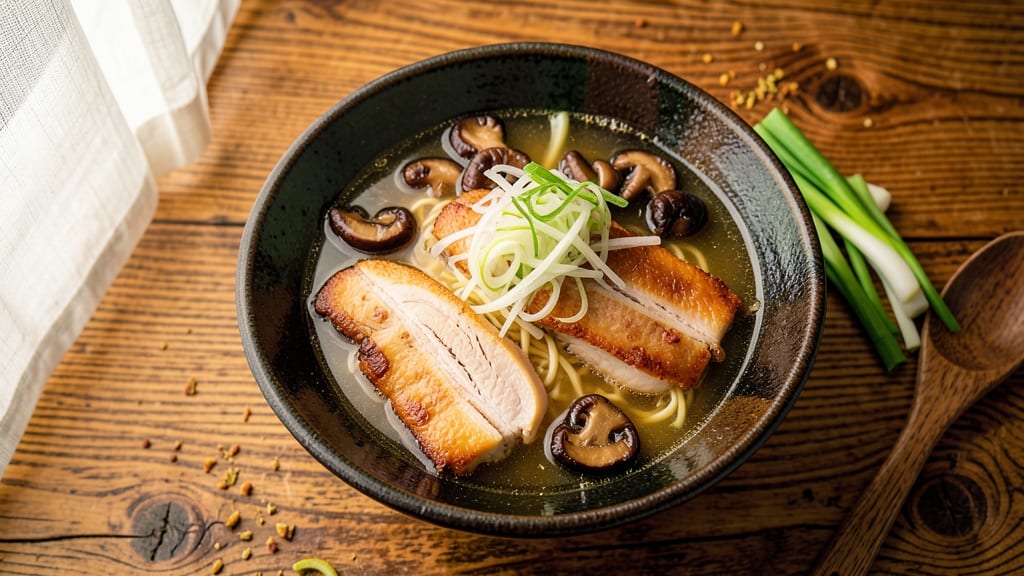
Authentic Japanese ramen soup begins with a deeply flavorful broth that carries the soul of Japan’s street food culture—rich, complex, and impossible to replicate with shortcuts. I’ve spent years perfecting this recipe, drawing from regional traditions like Sapporo’s creamy tonkotsu or Tokyo’s balanced shoyu base, ensuring every bowl delivers that signature umami depth that defines true ramen.
The secret lies in the broth preparation: slow-simmered pork bones for tonkotsu, or fermented soybeans and miso for miso ramen, each method requiring patience and precision.
We’ll use proper ramen noodles (not udon substitutes) that cook in just 3-4 minutes to maintain their signature silky texture, while traditional toppings like chashu pork, marinated soft-boiled eggs, and crisp menma add layers of flavor and texture that transform this into a complete dining experience.
What you’ll achieve is a bowl of ramen that transports you to a Tokyo alleyway or Sapporo izakaya—steaming hot broth with perfectly tender noodles floating beneath a mountain of toppings.
The aroma alone will have your kitchen smelling like a ramen shop, while the first sip delivers that perfect balance of savory, salty, and slightly sweet that defines authentic Japanese ramen.
Whether you’re recreating a specific regional style or creating your own signature bowl, this recipe gives you the foundation to build a truly authentic ramen experience at home. The techniques here are what separate homemade ramen from instant noodles—let’s begin with the broth that makes it all possible.
Ingredients for authentic japanese ramen soup
Four pounds of pork bones kickstart this umami journey—don’t skip the marrow-rich cuts.
| Ingredient | Amount | Notes |
|---|---|---|
| Pork Bones 🍖 | 4 lb | Marrow-rich for tonkotsu broth |
| Fresh Fukuoka-Style Chicken 🍗 | 1 ½ lb | For chashu pork substitute |
| Dried Shiitake Mushrooms 🍄 | ½ cup | Rehydrated for umami depth |
| Green Onions 🧅 | 1 whole | Cut into 2-inch lengths |
| Fresh Garlic Cloves 🧄 | 8 cloves | Peeled, smashed for infusion |
| Fresh Ginger 🌿 | ½ cup | Julienned, skin removed |
| Ramen Noodles 🍜 | 2 packages | 160g per package, not udon |
| Kombu Seaweed 🍃 | 1 sheet | Dried, for dashi base |
| Bonito Flakes 🐟 | ¼ cup | For dashi aroma |
| Soy Sauce 🥫 | ½ cup | Usagi or Koikuchi preferred |
| Mirin 🍶 | ¼ cup | Sweet rice wine |
| Sesame Oil 🫒 | 1 tbsp | Toasted for finishing |
| Ramen Toppings 🥬 | 1 package | Menma, nori, corn, bean sprouts |
| Eggs 🥚 | 4 whole | Soft-boiled, marinated |
| Miso Paste 🍶 | ¼ cup | White or red, for miso ramen |
The pork bones are non-negotiable—marrow-rich cuts from the leg or trotter create that signature tonkotsu creaminess. Costco or Asian markets carry them pre-cut, but if buying whole, ask your butcher to remove joints. Fresh shiitake mushrooms? Trader Joe’s sells them dried—soak them first. The kombu sheet should be vibrant green, not yellowed. For bonito flakes, Marukome is the gold standard, but any reputable brand works. Ginger and garlic? Organic if possible, but conventional is fine—just peel and prep them right before simmering to preserve freshness.
No pork bones? Beef marrow bones work in a pinch, but the flavor will differ. Out of shiitake? Dried porcini mushrooms at half the amount add depth. For the miso ramen variation, red miso gives more body than white. The green onions should be bright green, not wilted—trim the roots but leave the whites for extra flavor. Eggs for marination? Pasture-raised if you can find them, but any eggs will work. The ramen noodles? Not udon substitutes—look for 160g packages labeled specifically for ramen.
Broth keeps for 5 days in the fridge or 3 months frozen—portion into ice cube trays for easy reheating. Fresh toppings like menma and bean sprouts last 1 week in the fridge, but the marinated eggs? 3 days max. Store them in their marinade to keep them tender. The noodles? Cook fresh for best texture, but you can parboil and store them separately for 2 days.
Why You’ll Love This Recipe
- One-Pot Magic: I swear by this recipe because it’s literally one pot—pork bones simmer all day (or overnight) while you sleep, then I just toss in the chicken and mushrooms. No extra pans, no stress, just deep, rich flavor with zero fuss.
- Umami Bomb: The combo of pork bones and dried shiitake mushrooms? That’s where the soul lives. The broth turns into this velvety, savory elixir—salty, sweet, and earthy all at once—while the garlic and green onions add that bright, fresh kick that makes it dangerously addictive.
- Leftovers That Shine: Between us, this broth gets better the next day. I make a giant batch on Sundays, then reheat portions all week—add a soft-boiled egg or quick-fried noodles, and suddenly it’s dinner. My kids even ask for it when they’re sick (and trust me, that’s the highest praise).
- Budget-Friendly Luxury: Pork bones and dried mushrooms stretch this recipe into a full week’s worth of meals without breaking the bank. Honestly, it’s the kind of dish that makes me feel like I’m eating at a high-end ramen spot, but my wallet stays happy. Plus, the chicken adds protein without the price tag of fancy cuts.
Step-by-step instructions for authentic Japanese ramen soup
Here’s how to build a restaurant-quality ramen with deep umami broth and perfect toppings.
Prepare the Dashi Base and Marrow-Rich Broth
In a large stockpot, combine the 4 lb pork bones with 1 sheet kombu seaweed and cover with 12 cups cold water. Bring to a boil, then immediately reduce to a simmer for 2 hours. Skim off any foam that rises to the surface—this ensures a clear, clean broth. The pork bones will release their marrow, creating a velvety texture that’s the heart of tonkotsu ramen.
After 2 hours, remove the kombu and pork bones, then strain the broth through a fine-mesh sieve. Return the strained broth to the pot and add 0.25 cup bonito flakes. Simmer for 5 minutes, then remove from heat and let steep for 10 minutes. This dashi layer forms the aromatic foundation of your broth. Keep the broth warm at a gentle simmer—never a rolling boil—as you prepare the remaining components.
Build the Umami-Packed Broth
In the same pot, add the 1.5 lb fresh fukuoka-style chicken, 0.5 cup dried shiitake mushrooms (rehydrated in hot water for 20 minutes), 8 cloves fresh garlic cloves (smashed), and 0.5 cup julienned fresh ginger. Bring to a gentle simmer and cook uncovered for 1.5 hours, skimming any surface foam periodically. The chicken will break down into tender pieces, infusing the broth with rich flavor.
After 1.5 hours, add 0.5 cup soy sauce and 0.25 cup mirin, stirring to combine. Simmer uncovered for another 30 minutes until the broth reduces slightly and develops a deep, caramelized color. The aroma should be complex—earthy from the mushrooms, sweet from the mirin, and savory from the chicken. Taste and adjust seasoning if needed, adding a pinch more soy sauce if the broth lacks depth.
Prepare the Toppings and Assemble
While the broth simmers, prepare the 4 whole eggs by placing them in a saucepan of water and bringing to a gentle boil for 6 minutes. Transfer to an ice bath to stop cooking, then peel and marinate in a mixture of 1 tbsp sesame oil, 1 tbsp soy sauce, and 1 tsp mirin for 10 minutes. This creates silky, flavorful soft-boiled eggs that cut through the rich broth.
Cut the 1 whole green onions into 2-inch lengths and set aside. Divide the 1 package ramen toppings (menma, nori, corn, bean sprouts) among four bowls. Keep the toppings separate until ready to serve—this prevents sogginess and allows for customization.
Cook the Noodles and Finish the Broth
Bring a separate pot of water to a boil and cook the 2 packages ramen noodles for 2 minutes less than package instructions (they’ll finish cooking in the hot broth). Drain and divide the noodles among four bowls. Ladle 1.5 cups hot broth into each bowl, then add 0.25 cup miso paste to the broth in the pot, stirring until fully dissolved. Ladle the miso-infused broth over the noodles and toppings.
Top each bowl with 1 marinated egg, green onions, and a drizzle of the reserved sesame oil. The contrast of textures—silky noodles, tender chicken, crisp menma, and creamy egg—creates the perfect balance. Serve immediately with chopsticks and a small bowl of extra broth for sipping.
Pro Tips For Making Authentic Japanese Ramen Soup
- CHAR THE BONES FIRST: I learned this the hard way—skip it, and your broth will taste bland no matter how long you simmer. Blacken the pork bones in a dry pot until they’re deep brown, then add water. That crust locks in collagen and flavor, turning your broth from good to rich. (Yes, even if you’re impatient like me.)
- SOAK SHIITAKES LONG: Dried shiitake mushrooms need at least 20 minutes in hot water to rehydrate properly—any less, and they’ll turn to mush when you add them to the broth. Use the soaking liquid too; it’s packed with umami. (Pro move: Save a few whole mushrooms to slice fresh on top later.)
- DON’T CROWD THE CHICKEN: Fukuoka-style chicken should sizzle, not steam. Cut it into even pieces and cook them in batches if needed—overcrowding makes the meat rubbery. A quick sear in the pork bone fat before adding broth builds flavor faster. (Your future self will notice the difference.)
- FINISH WITH GARLIC OIL: Toss the minced garlic into the broth last—right before serving. It burns easily and turns bitter if simmered too long. For extra depth, fry the garlic in a little of the pork fat until golden, then drizzle it over the soup. (Sounds weird, but it works: trust the process.)
Troubleshooting this recipe
Broth Too Thin?
If your broth lacks body, simmer uncovered for an extra 30-45 minutes to reduce the liquid. The key is patience—tonkotsu should coat the back of a spoon.
I’ve found that adding 1 tbsp cornstarch mixed with 2 tbsp cold water and whisked into the broth during the final 5 minutes of simmering can thicken it without altering flavor. 💡
Noodles Mushy?
Overcooked noodles happen when you follow package instructions exactly. Ramen noodles finish cooking in the hot broth, so reduce cook time by 2 minutes in boiling water. For extra insurance, rinse them briefly in cold water after draining to stop the cooking process immediately.
I also recommend using fresh, high-quality ramen noodles—cheap brands break down faster. 🍜
Eggs Too Firm?
Soft-boiled eggs are delicate—overcooking by even 30 seconds makes them rubbery. Stick to 6 minutes for perfect jammy yolks. For marination, use 1 tbsp soy sauce, 1 tbsp mirin, and 1 tsp sesame oil per egg.
If eggs still seem bland, add a pinch of sugar to the marinade for balance. 🥚
Toppings Soggy?
Keep toppings like menma and bean sprouts separate until serving to prevent sogginess. If you must prep ahead, store them in a dry paper towel-lined container in the fridge.
For crisp nori sheets, toast them briefly in a dry skillet over medium heat for 10 seconds per side right before serving. 🌿
Broth Too Salty?
If your broth tastes overly salty, balance it with 1 tbsp mirin or ½ cup dashi stock (made from kombu and bonito). Avoid adding water—it dilutes the umami. For a quick fix, add 1 tbsp freshly grated ginger or 1 tsp toasted sesame oil to enhance complexity. 🧄
Foam Overload?
Excessive foam means impurities are rising. Skim aggressively during the initial 2-hour simmer and use a fine-mesh sieve when straining. For stubborn foam, add 1 tbsp rice vinegar to the broth during the final 10 minutes of simmering—it breaks down proteins and clarifies the broth. ⚡
Nutrition facts
Frequently asked questions about authentic Japanese ramen
What’s the difference between tonkotsu and shoyu ramen?
Tonkotsu ramen features a creamy, pork-bone-based broth with rich umami, while shoyu ramen uses a lighter soy sauce foundation with added wheat flour for body. The pork bones in tonkotsu create that signature velvety texture, whereas shoyu broth is brighter and more balanced. For this recipe, we’re focusing on tonkotsu’s deep flavor profile.
Can I make ramen without pork bones?
Yes! Use beef marrow bones for a similar richness, or substitute with chicken thighs and extra shiitake mushrooms for umami depth. The key is long simmering—at least 2 hours—to develop flavor. For vegetarian options, mushroom-based dashi with miso paste works well, though the texture will differ.
How do I store leftover ramen?
Store broth separately in an airtight container for up to 5 days in the fridge, or 3 months frozen. Reheat gently on low heat—never microwave directly. Save noodles separately (cooked al dente) and reheat in fresh hot broth for 1 minute. Toppings like marinated eggs last 3 days in their marinade.
Why does my broth look cloudy?
Cloudiness usually means unskimmed impurities or under-simmered collagen. Skim foam aggressively during the first 2 hours and strain through a fine-mesh sieve. For stubborn cloudiness, add 1 tbsp rice vinegar in the final 10 minutes of simmering—it helps clarify the broth. The ideal tonkotsu should be opaque but not milky.
What’s the best way to customize my ramen?
Start with the base broth, then adjust toppings: swap chashu pork for spicy miso pork, add kimchi for tang, or use soft-boiled quail eggs instead of chicken eggs. For extra richness, stir in 1 tbsp sesame paste or 1 tsp truffle oil at serving. The broth’s balance makes it versatile—just keep the umami foundation intact.

- BJ’s Caprese Salad Recipe: Fresh Mozzarella, Tomato, and Basil Brilliance - November 9, 2026
- Baked Chicken Wings Marinade Recipe: Smoky Garlic-Herb Infusion for Crispy Perfection - November 9, 2026
- Almond Flour Flatbread Bread Recipe: Crispy, Nutty Perfection in 10 Minutes - November 9, 2026