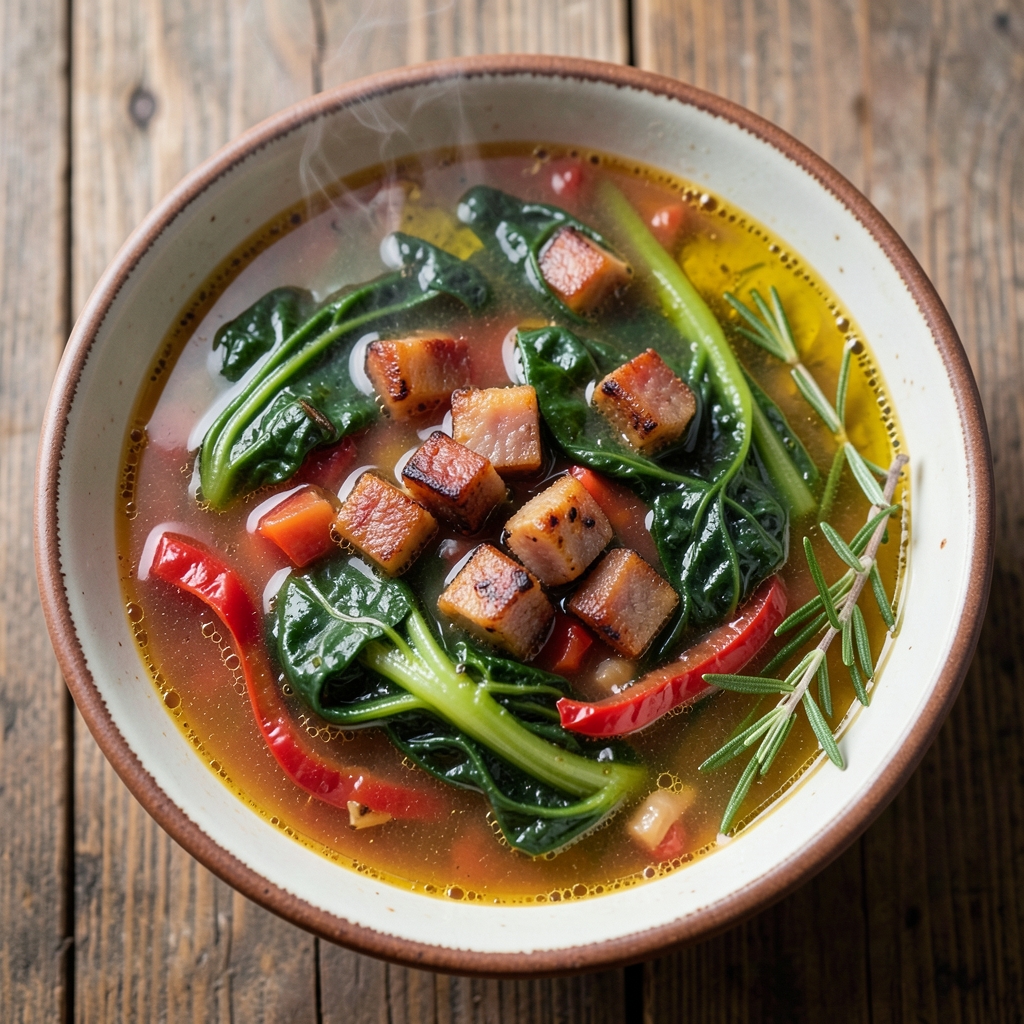
This authentic Italian escarole soup captures the soul of Roman cuisine in every steaming bowl—earthy greens, aromatic garlic, and just a whisper of chilli that lingers long after the last spoonful.
The secret lies in slow simmering, where escarole transforms from bitter to tender while absorbing the flavors of pancetta, tomatoes, and rosemary. I perfected this recipe after years of studying traditional Italian techniques, and it never fails to transport me back to trattorias in Rome.
The foundation of an authentic escarole soup begins with proper preparation—wilted greens, caramelized aromatics, and a rich broth that builds flavor gradually. Unlike many modern versions, this recipe relies on slow cooking to develop depth, with garlic and chilli infusing the broth while pancetta adds savory richness.
The result is a soup that’s both comforting and refined, with a balance of textures that Italian nonnas have mastered for generations.
What makes this dish truly special is the final touch of chilli flakes and a drizzle of high-quality olive oil, which elevates the humble escarole into something extraordinary.
Each bowl delivers tender greens, fragrant broth, and a subtle heat that lingers on the palate—proof that authenticity comes from respecting tradition while letting flavors shine. Ready to experience Italy in your kitchen?
This soup works as a light main for chilly evenings or a hearty starter for dinner parties, serving 6 with minimal effort. The technique is straightforward, but the result is anything but ordinary—restaurant-quality without the fuss. Let’s begin with the ingredients that will bring this classic to life.
Ingredients for authentic italian escarole soup
Sixteen ingredients. One soulful bowl of Roman tradition. Authenticity begins here.
| Ingredient | Amount | Notes |
|---|---|---|
| Escarole 🥬 | 12 oz | Heads separated into leaves |
| Pancetta 🥓 | 6 oz | Diced into small cubes |
| Garlic Cloves 🧄 | 4 cloves | Peeled and lightly smashed |
| Red Bell Pepper 🌶️ | 1 whole | Diced into small pieces |
| Canned San Marzano Tomatoes 🍅 | 28 oz | Crushed by hand |
| Fresh Rosemary 🌿 | ½ tsp | Chopped finely |
| Dried Red Chilli Flakes 🔥 | ½ tsp | Adjust to taste |
| Extra-Virgin Olive Oil 🫒 | ½ cup | High-quality, fruity |
| Vegetable Broth 💧 | 4 cups | Homemade or quality store-bought |
| Sea Salt 🧂 | 1 ½ tsp | Diamond Crystal preferred |
| Black Pepper 🌶️ | ½ tsp | Freshly ground |
| Parmesan Cheese 🧀 | ¼ cup | Freshly grated |
The escarole must be fresh—bright green leaves with no wilting. Local farmers markets often carry the best quality, but any reputable grocery store will suffice. Pancetta is non-negotiable for authentic flavor; avoid bacon substitutes as they lack the necessary fat and depth. Garlic should be freshly peeled and lightly smashed to release its oils without turning bitter. For the tomatoes, San Marzano is essential—its natural sweetness balances the earthy escarole perfectly. If using store-bought broth, opt for low-sodium to control seasoning precision.
No pancetta? Guanciale is the traditional Italian alternative, but thick-cut bacon works in a pinch—just render the fat thoroughly. Fresh rosemary is ideal, but dried at one-third the amount suffices if needed. The red bell pepper adds subtle sweetness; yellow or orange varieties can substitute equally well. For extra depth, toast the garlic and chilli flakes in olive oil for 30 seconds before adding to the pot. The Parmesan should be real Parmigiano-Reggiano—pre-grated varieties contain anti-caking agents that alter texture.
This soup develops richer flavor when reheated—3-4 days in the refrigerator is ideal. For longer storage, freeze portions in airtight containers for up to 3 months. The pancetta fat solidifies when cold; simply reheat gently to restore its silky texture. Garnish each serving with a drizzle of high-quality olive oil and a sprinkle of chilli flakes just before serving—this final touch transforms the dish from ordinary to extraordinary.
Why You’ll Love This Recipe
- Pancetta Magic: The crispy bits from the pancetta melt into the broth like little flavor bombs—salty, smoky, and impossible to resist. I swear, that’s the secret: render it until it’s golden, then toss it in whole so every spoonful packs that rich, meaty punch.
- One-Pot Wonder: Honestly, this soup is my go-to when I’m too tired to wash extra dishes. Escarole wilts down fast, the bell pepper sweetens the broth, and those San Marzano tomatoes? They practically cook themselves. Just chop, simmer, and done—no straining, no fuss.
- Weeknight Crowd-Pleaser: Between us, this feeds six but costs less than takeout for two. The bitterness of escarole balances the sweetness of the tomatoes, and the garlic? It’s like a warm hug in a bowl. My roommates fight over the last serving—no one leaves hungry.
- Leftovers That Don’t Suck: I make a double batch on Sundays because the flavor only gets better the next day. The pancetta keeps it hearty, and the escarole holds up perfectly. Reheat it with a splash of water, and it’s just as good—maybe even better—than the first time. (Yes, even on a Tuesday night.)
Step-by-step instructions for authentic Italian escarole soup
This traditional Roman method delivers rich, earthy flavors with perfectly balanced textures.
Render the Pancetta and Build the Base
Heat the 0.5 cup extra-virgin olive oil in a large Dutch oven over medium heat. Add the 6 oz diced pancetta and cook for 8-10 minutes, stirring occasionally, until the fat renders and the pancetta becomes crispy and golden. This rendered fat forms the flavor foundation of your soup.
Remove the pancetta with a slotted spoon and set aside, leaving the fat in the pot. Add the 4 lightly smashed garlic cloves and 1 diced red bell pepper to the pan, cooking for 3-4 minutes until the garlic is fragrant and the pepper softens. This step develops the aromatic base that carries through the entire soup.
Develop the Tomato Sauce
Pour in the 28 oz crushed San Marzano tomatoes and stir to combine with the aromatics. Add the 0.5 tsp dried red chilli flakes and 0.5 tsp finely chopped fresh rosemary, then bring the mixture to a gentle simmer. Cook uncovered for 15-20 minutes until the tomatoes break down and the sauce thickens slightly, creating a rich, concentrated tomato base.
Here’s the thing—don’t rush this reduction. You want the tomatoes to develop deep flavor and lose their raw acidity. The sauce should coat the back of a spoon and have a velvety consistency when finished.
Incorporate Vegetable Broth and Season
Pour in the 4 cups vegetable broth and add the reserved crispy pancetta back to the pot. Stir in the 1.5 tsp sea salt and 0.5 tsp freshly ground black pepper, then bring the soup to a gentle boil. Once boiling, reduce heat to medium-low and let it simmer for 10 minutes to allow all the flavors to meld together.
This simmering time is crucial for building depth. The pancetta will release its remaining fat into the broth, while the tomatoes and aromatics continue to develop their complex flavors. Taste the broth now—it should be seasoned but not overwhelmingly salty.
Add Escarole and Simmer Gently
Add the 12 oz escarole leaves, separating any tightly packed heads by hand. Stir gently to distribute the leaves evenly through the soup. Return the soup to a gentle simmer and cook for 10-12 minutes, until the escarole is tender but still retains a slight bite. Overcooking will turn the greens mushy, which defeats the purpose of their earthy texture.
I like to check the escarole’s doneness by tasting a leaf—it should be tender enough to eat with a spoon but still hold its shape. The soup should have a vibrant green color with just a few darker green spots remaining.
Finish and Serve
Remove the soup from heat and stir in the 0.25 cup freshly grated Parmesan cheese. Let it sit for 5 minutes to allow the cheese to melt and create a creamy finish. Taste and adjust seasoning if needed—sometimes the escarole absorbs more salt than expected.
Serve the soup immediately in deep bowls, garnished with additional Parmesan and a sprinkle of fresh black pepper. The pancetta will float on top, adding both visual appeal and bursts of salty, crispy flavor with each spoonful. This authentic preparation captures the soul of Roman winter soups—simple ingredients elevated through careful technique.
Pro Tips For Making Authentic Italian Escarole Soup
- Render Pancetta Low: Cook the pancetta over low heat until it’s golden and crispy—not high, or you’ll burn it before the fat renders. I learned this the hard way after inhaling my kitchen from a smoke alarm going off. Let it simmer gently for 8-10 minutes, stirring occasionally, until the fat pools and the meat turns opaque.
- Core the Escarole: Remove the tough, fibrous core from each escarole leaf before chopping—it’s the thing that matters most for texture. Use a sharp knife to slice the core out lengthwise, then stack leaves and slice into ribbons. Skimp here, and you’ll end up with a mouthful of chewy bits.
- Sauté Garlic Fast: Add the garlic last to the pancetta fat and cook it for no more than 30 seconds—just until fragrant. Any longer, and it’ll turn bitter. I was skeptical until I tried it, and now I can’t imagine doing it any other way.
- Crush Tomatoes by Hand: Dump the San Marzano tomatoes into a bowl and crush them with your fingers before adding to the pot. This breaks down the skins and releases more flavor than a blender ever will. Sounds weird, but it works—and it’s faster than you’d think.
Flavor customization for this dish
Spicy Heat Level
Adjust the chilli flakes to your preference—start with 0.5 tsp for a subtle warmth, but add 1 tsp for a noticeable kick. I like to toast the chilli flakes in the olive oil for 30 seconds before adding them to deepen the flavor.
For a smoky twist, swap half the chilli flakes with ½ tsp smoked paprika. 🌶️
Creamy Texture Boost
Stir in ½ cup heavy cream or ½ cup ricotta cheese during the final 5 minutes of simmering for a velvety finish. This works especially well if you prefer a richer, more decadent soup.
For a dairy-free option, blend ½ cup cooked white beans with the broth before adding the escarole.
Umami Depth
Enhance the savory profile by adding 1 tsp soy sauce or 1 tbsp fish sauce when incorporating the broth. Alternatively, stir in 1 oz finely chopped porcini mushrooms (rehydrated if dried) to deepen the earthy notes. Note: Fish sauce is optional but traditional in some Roman recipes.
Herb Variations
Swap the rosemary for ½ tsp dried thyme or 1 sprig fresh sage for a different herbal profile. I find thyme pairs beautifully with escarole, while sage adds a piney aroma.
For a brighter twist, add 1 tbsp fresh basil at the end—it brightens the soup without overpowering the escarole’s natural bitterness.
Protein Additions
For a heartier bowl, stir in ½ lb cooked chicken breast or ½ lb crumbled feta cheese during the last 5 minutes of cooking. If using feta, add it off-heat to prevent melting. For a vegetarian option, fold in ½ cup cooked lentils for extra protein and texture.
Acidity Balance
Brighten the soup with a squeeze of lemon juice (about 1 tbsp) or a splash of white wine (about ¼ cup**) when adding the broth.
This cuts through the richness and balances the earthy escarole. I especially recommend this if your tomatoes are particularly sweet or the pancetta is very salty.
Nutrition facts
Frequently asked questions
Why does authentic escarole soup need slow cooking?
The slow simmering process is essential to transform escarole’s natural bitterness into tender, flavorful greens while allowing pancetta fat to infuse the broth. This method develops deep, complex flavors that can’t be achieved through quick cooking. The 30-40 minute total cooking time ensures the tomatoes break down properly and all ingredients meld together harmoniously.
Can I substitute pancetta with something else?
Yes, but with flavor trade-offs. For authenticity, use guanciale (cured pork cheek), which has a more delicate fat. Thick-cut bacon works in a pinch, but render the fat thoroughly for best results. Avoid lean meats—the fat is crucial for creating the rich, savory base. If you’re vegetarian, swap for mushroom duxelles (finely chopped mushrooms sautéed with olive oil) for umami depth.
How do I know when the escarole is perfectly cooked?
The escarole should be tender enough to eat with a spoon but still hold its shape—no mushy texture. Test by tasting a leaf: it should be soft but not falling apart. The soup will have a vibrant green color with just a few slightly darker green spots remaining. Overcooking by even 2-3 minutes can turn the greens into a sad, mushy mess.
Can I make this soup ahead of time?
This soup actually tastes better the next day as flavors deepen. Store in an airtight container in the refrigerator for up to 3 days. Reheat gently on the stove, adding a splash of water or broth if it thickens too much. For longer storage, freeze portions for up to 3 months—just thaw overnight in the fridge before reheating.
What’s the secret to balancing the flavors?
The key is in the tomato reduction and proper seasoning. Let the tomatoes simmer until they develop deep flavor, then taste the broth before adding escarole. The pancetta should provide saltiness, the tomatoes acidity, and the chilli heat—adjust each component accordingly. A final squeeze of lemon or splash of white wine can brighten the dish if needed.

- Canned French Cut Green Beans Recipe: Blanched Crisp-Tender in 10 Minutes - November 9, 2026
- Lamb Chops and Mashed Potato Recipe: Herb-Crusted Richness Paired Perfectly - November 9, 2026
- Cool Ranch Pickle Doritos Salad Recipe: Crunchy Chip Base With Creamy Ranch Magic - November 9, 2026