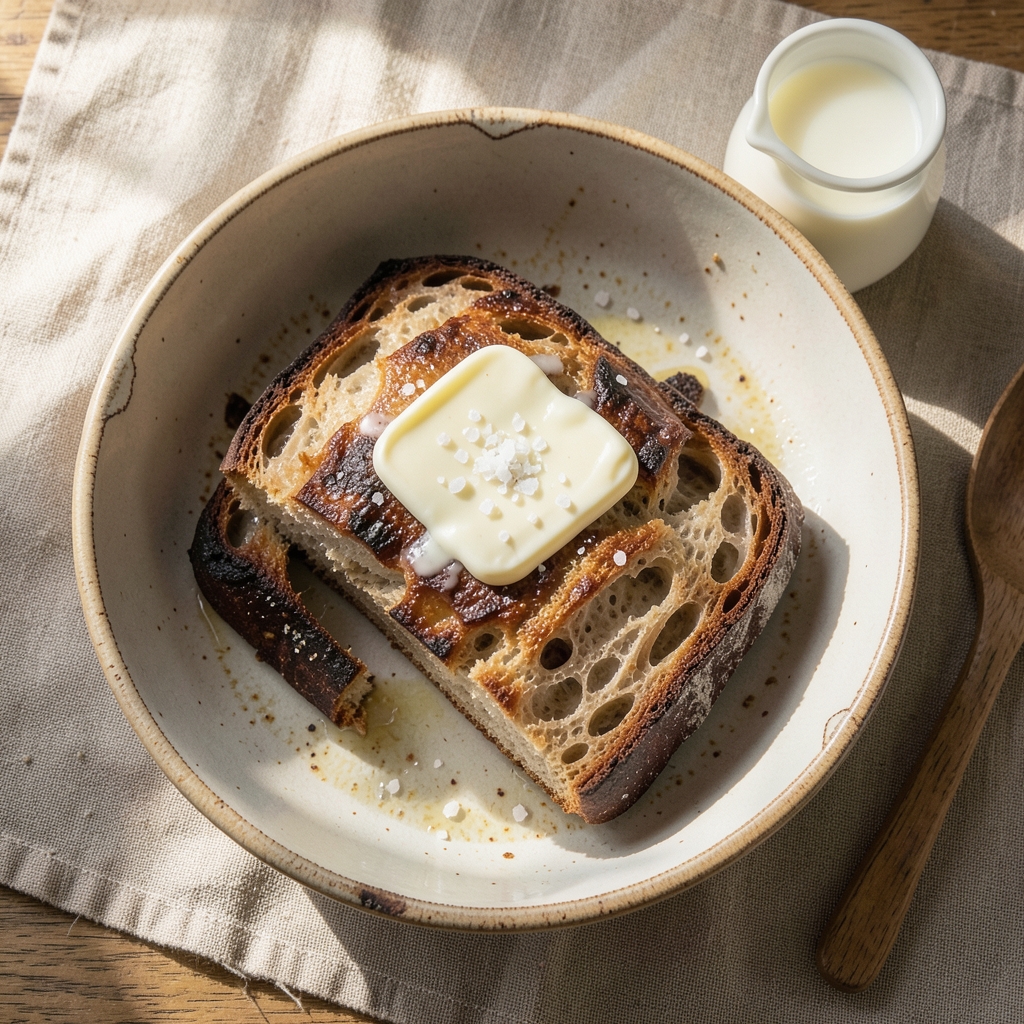
This authentic Irish bread recipe delivers the rustic charm of traditional soda bread with a golden, buttery crust that feels like a hug from County Cork. The secret lies in buttermilk and baking soda—a simple yet transformative combination that creates a tender crumb and crisp exterior without yeast or kneading.
I’ve baked this version countless times for family gatherings, and it never fails to transport us back to Irish pubs and countryside kitchens.
The beauty of soda bread is its simplicity: just four core ingredients—flour, buttermilk, baking soda, and salt—come together in minutes. No fancy equipment, no waiting for yeast to rise, just a bowl, a knife, and a hot oven.
The buttermilk activates the baking soda, creating air pockets that give the bread its signature open crumb, while the salt enhances the natural wheat flavor. This method stays true to Ireland’s working-class roots, where quick breads were essential for daily meals.
What you’ll end up with is a loaf with a buttery crust that’s crisp enough to hold jam but tender enough to tear by hand, and a moist interior with just enough density to hold its shape.
The aroma alone—warm, slightly tangy, with a hint of caramelized butter—will fill your kitchen like a cozy pub. Perfect alongside soups, stews, or with clotted cream and jam for a proper Irish breakfast.
For those seeking extra authenticity, try adding a pinch of salt to the buttermilk or incorporating whole wheat flour for a nuttier flavor. This bread keeps well for days wrapped in a cloth, making it ideal for meal prep or gifting.
The method is foolproof, but the magic happens in the details—like letting the dough rest just long enough or scoring the top before baking. Let’s get started on creating something truly traditional.
Ingredients for authentic irish bread
Four core ingredients transform into Ireland’s iconic rustic bread with a golden crust and tender crumb.
| Ingredient | Amount | Notes |
|---|---|---|
| All-Purpose Flour 🌾 | 4 cups | Unbleached preferred for rustic texture |
| Buttermilk 🥛 | 1 ½ cups | Room temperature for best texture |
| Baking Soda 🧪 | 1 tbsp | Pure, unadulterated baking soda |
| Kosher Salt 🧂 | 1 tsp | Fine grain for even distribution |
| Unsalted Butter 🧈 | ½ cup | Cold, cubed for buttery crust |
| Whole Milk 🥛 | ¼ cup | For brushing crust (optional) |
| Coarse Sea Salt 🧂 | 1 tbsp | For sprinkling crust (optional) |
| Freshly Ground Black Pepper 🌶️ | ¼ tsp | Traditional finishing touch |
The flour is the foundation—King Arthur or Bob’s Red Mill all-purpose yields the best texture, though Irish flour like McKenzie’s elevates authenticity. Baking soda must be fresh (test by dropping in water: it should fizz vigorously). For buttermilk, Cultivate brand works best, but you can substitute 1.5 cups milk + 1.5 tsp vinegar left to sit for 5 minutes. The butter should be cold and cubed—this ensures maximum crispness on the crust. If using whole wheat flour, replace up to 1 cup of all-purpose for a nuttier profile, though the texture will be denser.
No buttermilk? 1.5 cups milk + 1.5 tsp lemon juice works perfectly (let sit 5 minutes). Short on baking soda? 1.5 tsp cream of tartar + 0.5 tsp baking soda mimics its chemical lift. The optional milk wash and sea salt sprinkle create that pub-style crust—skip them for a simpler loaf, but don’t miss the freshly ground black pepper on top, a classic Irish touch. For extra richness, brush the crust with melted butter instead of milk. Prefer a sweeter loaf? Add 1 tbsp honey to the buttermilk, though traditional soda bread remains savory.
This bread keeps remarkably well—3-4 days wrapped in a clean kitchen towel at room temperature, or 1 week in a paper bag in the fridge. For longer storage, freeze the loaf for up to 3 months (thaw at room temp). The crust stays crisp even after reheating—5 minutes at 350°F restores its golden glow. Slice with a serrated knife for clean cuts, and always serve warm for that authentic pub experience. Leftovers make perfect toast or French toast the next morning.
Why You’ll Love This Recipe
- No-Yeast Hassle: I swear by this recipe because it skips the waiting—no yeast, no proofing, just mix and bake. The buttermilk and baking soda do all the work while I sip my tea, and that golden crust? Ready in under an hour.
- Buttery Crust Magic: That little pat of cold butter folded into the dough? It melts into flaky layers that make every bite feel like a hug. The salt balances the richness just right—no one will guess it’s this simple.
- Weeknight & Picnic Star: I keep a loaf in the freezer for lazy mornings or pack slices for sandwiches when we’re out all day. Toast it fresh, and it’s breakfast. Serve it warm with jam, and it’s a cozy dinner. Honestly, it’s my go-to for everything.
- Budget-Friendly Staple: Flour, buttermilk, butter—these are pantry basics that won’t break the bank. One loaf feeds my family for days, and the leftovers? Perfect for French toast or breadcrumbs. Between us, this is how I stretch groceries without sacrificing taste.
Step-by-step instructions for authentic Irish soda bread
Traditional Irish soda bread delivers rustic charm with minimal ingredients—just follow these precise steps.
Prepare the Dough with Buttermilk and Baking Soda
In a large mixing bowl, combine the 4 cups all-purpose flour and 1 tsp kosher salt. Make a well in the center and add the 1.5 cups buttermilk and 1 tbsp baking soda. Using a wooden spoon or your hands, gently mix until a shaggy dough forms—don’t overwork it. The dough should be sticky but hold together when pressed.
Here’s the thing—Irish soda bread relies on the chemical reaction between baking soda and buttermilk for leavening, not yeast. The dough will be denser than bread made with yeast, which is exactly what gives it that authentic texture. Let the dough rest for 10 minutes while you prepare the butter for the crust.
Shape and Add the Buttery Crust
Turn the dough onto a lightly floured surface and gently shape it into a round loaf about 1 inch thick. I like to keep it rustic—don’t worry about perfect symmetry. Cut a deep cross on top with a sharp knife, about ½ inch deep, extending three-quarters of the way through. This signature detail ensures even baking.
Cut the 0.5 cup unsalted butter into small cubes and press them gently into the sides of the dough, leaving the top cross exposed. This creates that iconic buttery crust without altering the bread’s interior texture. For extra authenticity, brush the top lightly with 0.25 cup whole milk and sprinkle with 1 tbsp coarse sea salt and 0.25 tsp freshly ground black pepper.
Bake Until Golden and Hollow-Sounding
Preheat your oven to 425°F. Place the bread on a baking sheet lined with parchment paper and bake for 30-35 minutes until the crust is deep golden brown and the internal temperature reaches 190°F. The bread is done when it sounds hollow when tapped on the bottom—this is your best indicator of doneness.
Don’t be tempted to open the oven door early. The sudden heat change can cause the bread to collapse. If the top browns too quickly, tent it loosely with aluminum foil after 20 minutes to prevent over-browning while ensuring the interior cooks through.
Cool and Serve for Maximum Texture
Remove the bread from the oven and let it cool on a wire rack for at least 20 minutes before slicing. This resting period allows the internal steam to escape, preventing a gummy texture. The crust should be crisp and buttery, while the interior remains tender and slightly dense.
Slice with a serrated knife for clean cuts. Serve warm with Irish butter, jam, or alongside soups and stews. The bread keeps well at room temperature for 2-3 days or can be frozen for up to 3 months—just thaw at room temperature before serving for the best texture.
Pro Tips For Making Authentic Irish Bread
- Measure buttermilk cold: Irish bread relies on that tangy buttermilk for tenderness, but warm liquid kills the baking soda’s lift. Grab the carton straight from the fridge—no thawing needed—and measure it while it’s still chilled. I learned this the hard way when my first batch turned dense because the buttermilk was lukewarm by the time I mixed it.
- Skip the overmixing: Stir the dough just until the flour disappears—maybe 10-12 strokes max. Overworking it develops gluten, and that’s the fast track to a tough, chewy loaf instead of the soft, pillowy texture you want. My grandmother used to say, “Handle it like a shy cat—just enough to bring it together.”
- Butter in cubes, not melted: Cut that unsalted butter into ½-inch cubes and fold them into the batter last—they’ll melt from the oven’s heat and create pockets of richness. Melted butter? That’s how you end up with a cakey texture instead of that classic Irish bread crumb. (Yes, even if you’re impatient like me.)
- Preheat pan and oven: Cast iron or steel pan? Slap it in the oven while it’s preheating—no need to wait. A hot pan sears the bottom instantly, giving you that golden crust while the center stays tender. I used to rush this, and my bread would steam instead of brown. Now? First thing I do.
Wine and beer pairings for this recipe
Irish Whiskey Pairings
An authentic Irish soda bread pairs beautifully with Irish whiskey—the smoky, caramel notes complement the bread’s buttery crust and subtle tang. I recommend a single malt like Redbreast 12-year (peaty yet smooth) or Connemara Peated for a bold contrast.
The whiskey’s warmth enhances the bread’s rustic charm, making it perfect for a cozy evening. 🥃
Light Beer Complements
For beer lovers, a crisp Irish lager like Guinness Draught or Murphy’s Irish Stout balances the bread’s richness. The roasted malt in stout mirrors the bread’s crust, while a light ale like Smithwick’s keeps the experience refreshing. Avoid heavy IPAs—they overpower the delicate buttermilk flavor. 🍺
Creamy Stout Contrast
A nitro-infused stout (like O’Hara’s Irish Cream Stout) adds a velvety texture that contrasts the bread’s crisp crust. The vanilla and cocoa notes in the beer harmonize with the bread’s buttery richness, creating a luxurious pairing. Serve slightly chilled for the best experience.
Dry Cider Harmony
For a non-alcoholic option, dry Irish cider like Bulmers Dry or Magners Original cuts through the bread’s richness. The slight acidity cleanses your palate, making each bite of the buttery crust more enjoyable. This pairing is ideal for casual gatherings where beer isn’t an option. 🍏
Wine for Traditionalists
While whiskey and beer dominate, a dry Riesling (like Chateau Ste. Michelle) offers a refreshing contrast. Its crisp acidity and citrus notes balance the bread’s buttery richness, making it a sophisticated choice for wine lovers. Avoid heavy reds—they clash with the bread’s delicate flavor. 🍷
Nutrition facts
Frequently asked questions
Why does authentic Irish bread use baking soda instead of yeast?
Traditional Irish soda bread relies on baking soda for leavening, not yeast, because it was historically a quick bread made with simple ingredients. The baking soda reacts with the buttermilk’s acidity, creating air pockets that give the bread its signature open crumb. This method requires no waiting for yeast to rise, making it perfect for Ireland’s working-class kitchens where time was precious.
Can I make this bread without buttermilk?
Mix 1.5 cups milk with 1.5 teaspoons vinegar or lemon juice, let it sit for 5 minutes until slightly thickened, and use as a 1:1 substitute. The acidity triggers the baking soda just like buttermilk would. For extra richness, use whole milk instead of skim.
What’s the best way to store leftover Irish bread?
Wrap the bread in a clean kitchen towel or place in a paper bag at room temperature for 2-3 days. For longer storage, freeze it for up to 3 months. To revive stale bread, warm it in a 350°F oven for 5-10 minutes or toast it until crispy. The crust stays fresh surprisingly well!
Why does my bread turn out dense instead of light and airy?
Overmixing the dough or using old baking soda (that doesn’t fizz in water) are common culprits. Also, ensure your baking soda is fresh and mix just until combined—don’t knead. For extra lift, try adding 1 teaspoon cornstarch to the flour. The bread should be tender but slightly dense, which is traditional!
Can I add seeds or raisins to this recipe?
Yes! Traditional variations include sunflower seeds, poppy seeds, or raisins. Just fold them into the dough before shaping. For best results, use 2-3 tablespoons total—too many can make the bread gummy. A seed mix adds texture and pairs beautifully with the buttery crust.

- Smoked Brisket and Beer Cheese Pretzel Bombs Recipe: Crunchy Crust Meets Smoky-Savory Filling - November 9, 2026
- Zing Zang Bloody Mary Mix Recipe: Spicy-Sweet Kick Without the Mess - November 9, 2026
- Gordon Ramsay Tomato Butter Sauce Recipe: Velvety-Smooth Balance in Minutes - November 9, 2026