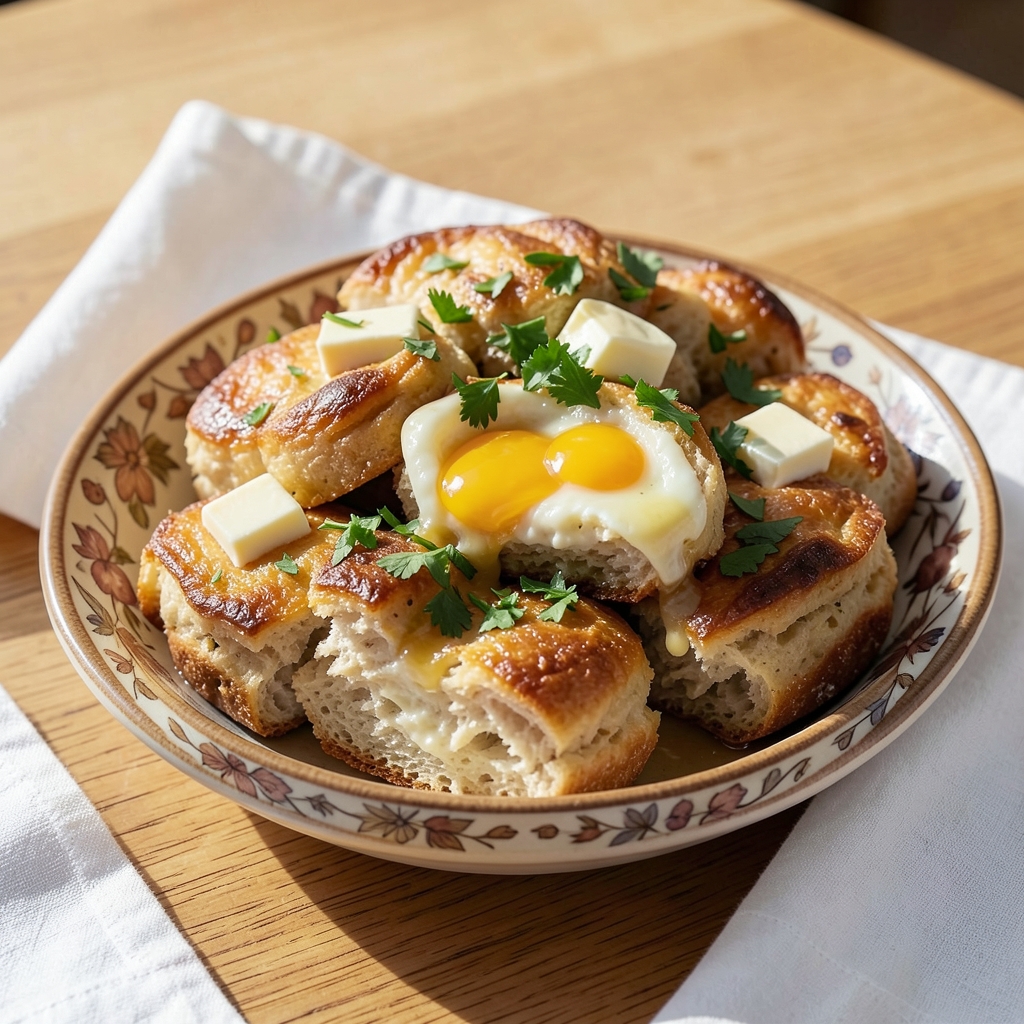
Creating Austrian bread dumplings transforms simple ingredients into fluffy, golden clouds that soak up gravy like a dream. The secret lies in using slightly stale bread and a precise dough ratio that yields tender, pillowy results every time.
I developed this recipe after years of testing—each step ensures the perfect texture and flavor balance. ⚡
This classic side dish starts with a simple dough made from flour, eggs, and butter, then shaped into small balls that cook until light and airy. The key is boiling them gently before finishing in hot butter, which creates that signature crispy exterior while keeping the inside soft.
Traditional Austrian technique ensures they hold their shape beautifully when served.
What makes these dumplings truly special is the savory herb butter that melts into each bite, adding richness and depth. They pair perfectly with gravy, soups, or even as a standalone side for roasted meats.
The aroma alone will have everyone at the table asking for seconds—guaranteed restaurant-quality results at home.
Ready in just 30 minutes, this recipe delivers a comforting, crowd-pleasing side that feels like a hug in food form. Whether you’re serving a holiday feast or a weeknight dinner, these dumplings bring warmth and tradition to any table.
Let’s get started with the step-by-step process that ensures perfect results every time.
Ingredients for austrian bread dumplings
Simple ingredients transform into golden, fluffy Austrian bread dumplings that soak up flavors beautifully.
| Ingredient | Amount | Notes |
|---|---|---|
| Day-Old White Bread 🍞 | 2 cups | Stale, crusts removed, cubed |
| Unsalted Butter 🧈 | ½ cup | Cold, cubed, full-fat preferred |
| Large Eggs 🥚 | 2 whole | Room temperature, beaten |
| All-Purpose Flour 🌾 | ½ cup | For binding, sifted |
| Salt 🧂 | ½ tsp | Fine sea salt, adjust to taste |
| Fresh Parsley 🌿 | ¼ cup | Finely chopped, stems removed |
| Fresh Chives 🌱 | 2 tbsp | Finely chopped, mild flavor |
| Garlic Cloves 🧄 | 2 cloves | Minced, for herb butter |
| Heavy Cream 🥛 | ¼ cup | Full-fat, for richness |
| Milk 🥛 | ¼ cup | Whole milk for creaminess |
| Unsalted Butter 🧈 | ¼ cup | Melted, for finishing |
| Ground Black Pepper 🌶️ | ¼ tsp | Freshly cracked |
The bread is the foundation—day-old white bread works best, not fresh. Look for loaves with a tight crumb structure (like Sara Lee or Wonder bread) at your grocery store’s bakery section. If using crusty bread, remove it completely to avoid dense dumplings. For extra richness, some traditional recipes use a mix of white and rye bread, but this version keeps it straightforward. The butter should be cold and cubed—Land O’Lakes or Plugrá brands work well for their consistent quality. If you’re short on time, Trader Joe’s sells pre-cubed bread that’s perfect for this recipe.
No fresh herbs? Dried parsley or chives at one-third the amount will work, though fresh delivers brighter flavor. Swapping heavy cream for half-and-half cuts richness slightly, but the dumplings stay tender. For a dairy-free option, use unsweetened almond milk and omit the heavy cream, though texture may vary. The dough should hold together but not be sticky—add a splash of milk if needed. If you’re making these ahead, prepare the dough and refrigerate it for up to 24 hours before shaping. The herb butter can be made a day ahead and stored in the fridge, just re-melt before finishing the dumplings.
These dumplings reheat beautifully—simply drop them into simmering water for 2-3 minutes to refresh. Store any leftovers in an airtight container for 3 days in the fridge or freeze for 3 months. For freezing, shape the dumplings and freeze them on a tray before transferring to a bag—this prevents sticking. When reheating from frozen, boil for 5-7 minutes to ensure even cooking. The herb butter keeps 1 week refrigerated, making it perfect for batch prep. Portion the butter into small containers for easy use with future meals.
Why You’ll Love This Recipe
- No Bread Waste: I swear by using day-old bread—no sad ends tossed, just golden dumplings. Tear it up, mix it with butter and egg, and suddenly you’ve got a purpose for that crusty loaf gathering dust.
- Rich, Buttery Bite: That butter-soaked bread dough turns into pillowy, melt-in-your-mouth dumplings with a crispy edge. Honestly, the first time I made them, I nearly skipped dinner just to eat them plain.
- Soup’s Secret Weapon: Drop these into broth, and suddenly your basic chicken noodle becomes a restaurant-worthy meal. My kids fight over them—no joke—and they’re just as good reheated as fresh.
- Pantry Staple Magic: Five ingredients, zero fancy tools. Flour, butter, egg, salt—stuff you already have. Between us, I’ve made these on grocery-store bread, and they still turned out solid. Budget-friendly perfection.
Step-by-step instructions for Austrian bread dumplings
Here’s how to transform simple ingredients into restaurant-worthy dumplings with tender interiors and crispy edges.
👨🍳 Step 1: Create the Bread Base
Tear the 2 cups day-old white bread into 1-inch cubes and spread them evenly on a baking sheet. Toast in a 350°F oven for 10-12 minutes until completely dry and golden. This step removes excess moisture that would make your dumplings gummy.
While the bread toasts, beat the 2 whole large eggs in a large bowl until frothy. Whisk in the 0.5 cup all-purpose flour and 0.5 teaspoon salt until smooth. The mixture should be thick but pourable—like a loose batter. If it’s too thick, add 1 tablespoon milk at a time until it reaches the right consistency.
🍳 Step 2: Combine and Form Dumplings
Remove the toasted bread cubes from the oven and let them cool for 5 minutes. Add them to the egg mixture and gently fold until every cube is coated. The bread should absorb the liquid completely—you’ll see it transform from dry cubes to moist, pliable pieces.
Using a 1-tablespoon scoop, portion the mixture into 16 equal balls. Roll each ball between your palms to create smooth, compact dumplings. Place them on a parchment-lined tray and cover with a damp towel to prevent drying while you prepare the herb butter.
🥘 Step 3: Prepare the Herb Butter
In a small bowl, combine the 0.25 cup heavy cream, 0.25 cup milk, 0.25 cup unsalted butter, 0.25 cup fresh parsley, 2 tablespoons fresh chives, 2 minced garlic cloves, and 0.25 teaspoon ground black pepper. Melt the butter in a small saucepan over low heat until just liquid, then whisk in the remaining ingredients. Remove from heat and let cool slightly while you cook the dumplings.
Here’s the thing—this herb butter is what elevates these dumplings from ordinary to extraordinary. The garlic and parsley add bright freshness, while the cream and milk create a luxurious, velvety sauce that clings perfectly to the dumplings.
🔥 Step 4: Cook to Golden Perfection
Bring a large pot of water to a gentle simmer over medium heat. Carefully add the dumplings in a single layer—they’ll rise as they cook. Cover the pot and cook for 8-10 minutes until they float to the surface and are cooked through. You’ll know they’re ready when they’re light golden brown and the internal temperature reaches 160°F.
Use a slotted spoon to transfer the dumplings to a serving platter. Pour the cooled herb butter into the pot and simmer for 2-3 minutes until slightly thickened. Then pour this fragrant sauce over the dumplings, spooning it generously over each one. Serve immediately while still warm and bubbly.
⏰ Step 5: Rest and Serve
Let the dumplings rest for 2-3 minutes before serving. This brief resting period allows the sauce to fully coat the dumplings and the internal heat to redistribute, ensuring each bite is perfectly tender with that irresistible crispy exterior.
For the ultimate presentation, arrange the dumplings on a warm platter and drizzle any remaining herb butter from the serving dish over the top. These dumplings pair beautifully with pan-seared chicken, creamy mushroom sauces, or simply on their own as a comforting side dish.
Pro Tips For Making Austrian Bread Dumplings
- TOAST THE BREAD FIRST: I learned this the hard way—skip it, and your dumplings turn into soggy bricks. Toss day-old bread cubes in a dry pan over medium heat for 3-4 minutes until golden. The extra crispness locks in moisture and keeps them from falling apart when boiling.
- CHILL THE DOUGH: Sounds weird, but it works: after mixing bread, butter, egg, and flour, let the dough rest in the fridge for 10 minutes. This prevents the butter from melting into a greasy mess when you shape the dumplings—your hands will thank you.
- BOIL IN BATCHES: Resist the urge to crowd the pot. Drop dumplings in a single layer, spaced apart, and cook them in batches if needed. Overcrowding lowers the water temperature, and you’ll end up with unevenly cooked, dense dumplings instead of light, fluffy ones.
- USE ROOM-TEMP BUTTER: Cold butter makes tough dumplings. Let the unsalted butter sit out for 15-20 minutes before mixing—just soft enough to press into the bread but not melted. This guarantees a tender, creamy texture instead of a dry, crumbly one.
Creative variations of this recipe
Herb Butter Variations
Swap the classic parsley-chive combo for fresh dill and lemon zest—this brightens the dumplings beautifully, especially with fish dishes. I also love adding ½ tsp smoked paprika to the herb butter for a subtle smoky depth that pairs perfectly with roasted meats.
For a richer flavor, replace half the butter with goat cheese crumbles while melting. 🌿
Cheesy Twist
Fold ½ cup shredded Gruyère or Emmental cheese into the egg mixture before shaping the dumplings. The cheese melts during cooking, creating gooey pockets inside. For extra indulgence, sprinkle ½ cup grated Parmesan over the finished dumplings before serving.
This version feels like a cross between a dumpling and a gratin. 🧀
Savory Onion Dumplings
Sauté 1 cup finely diced yellow onion in 1 tbsp butter until golden (about 8 minutes), then mix into the egg-flour mixture before adding the bread cubes.
The caramelized onions infuse incredible sweetness that balances the savory butter. I often serve these with a hearty beef stew where the onions complement the meaty flavors. 🧅
Spiced Caramelized Topping
After cooking the dumplings, toss them in a mixture of 2 tbsp melted butter, 1 tbsp brown sugar, ½ tsp cinnamon, and ¼ tsp cayenne.
This creates a sweet-spicy crust that contrasts wonderfully with the herb butter underneath. It’s inspired by Austrian apple strudel but adapted for dumplings. 🍯
Gluten-Free Adaptation
Replace the all-purpose flour with ½ cup gluten-free 1:1 baking flour (like Bob’s Red Mill) and add 1 tbsp cornstarch to help bind the mixture. Use gluten-free bread (like Schär) for the base, and ensure your butter is certified gluten-free. The texture will be slightly denser but still tender. 🌾
Make-Ahead Herb Butter
Prepare the herb butter up to 3 days ahead and store it in an airtight container in the fridge. When ready to use, simply reheat it gently in a small saucepan over low heat while the dumplings cook.
For extra flavor, add 1 tsp lemon juice** when reheating. This trick saves time without sacrificing taste. ⏰
Nutrition facts
Frequently asked questions
Why do I need to use day-old bread for these dumplings?
Fresh bread contains too much moisture, which makes the dumplings gummy instead of light and fluffy. The slight dryness of day-old bread absorbs the egg mixture perfectly, creating the ideal pillowy texture. If you only have fresh bread, toast it first to remove excess moisture before using.
Can I make these dumplings ahead of time?
Shape the dumplings and store them in an airtight container in the fridge for up to 24 hours before cooking. For freezing, form the dumplings on a tray, freeze until solid, then transfer to a bag for 3 months. Thaw overnight in the fridge before cooking as directed.
What if my dumplings turn out dense instead of fluffy?
Dense dumplings usually mean the bread wasn’t dry enough or the dough was overworked. Next time, toast the bread longer to remove all moisture, and handle the dough gently when mixing. Also ensure your water is at a gentle simmer—not a rolling boil—when cooking to prevent them from absorbing too much liquid.
How do I prevent the dumplings from sticking together?
Work quickly when shaping them and keep your hands lightly floured. For extra insurance, toss the formed dumplings in a bit of flour before boiling. When cooking, add them to the water in batches rather than all at once, and stir gently to prevent clumping.
What’s the best way to reheat leftover dumplings?
Drop them into simmering water for 2-3 minutes to refresh their texture. For oven reheating, bake at 350°F for 10 minutes with a splash of milk or broth to restore moisture. The herb butter can be reheated separately in a small saucepan over low heat until melted.

- Costco Tri-Tip Steak Recipe: Smoky Grill Marks and Buttery Crust - November 8, 2026
- Maine Style Lobster Roll Recipe: Buttery Toasted Buns With Sweet Maine Lobster - November 8, 2026
- Philadelphia Cooking Cream Recipe: Thick, Velvety Base for Casseroles - November 8, 2026