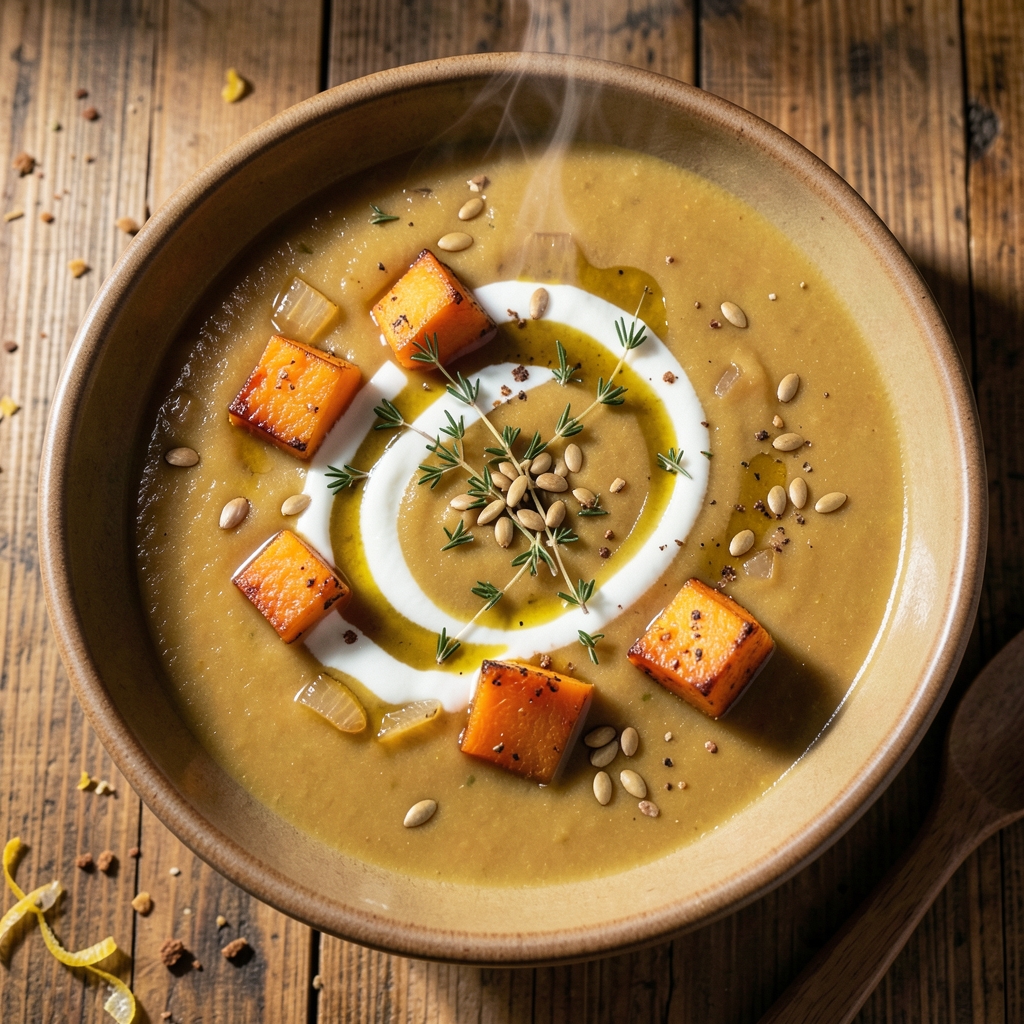
This Au Bon Pain butternut squash soup recipe delivers the restaurant-quality depth you crave—spiced roasted squash, velvety texture, and warm cinnamon notes—all in just 30 minutes.
I perfected this version after years of testing, ensuring every spoonful captures that signature Au Bon Pain flavor without the shortcuts that compromise taste. The secret lies in roasting the squash until caramelized, then blending it with aromatic onions and garlic for a rich, balanced base.
The professional technique starts with roasting the squash at high heat to concentrate its natural sweetness, then building layers of flavor through careful sautéing and slow simmering.
A touch of cream (or coconut milk for a dairy-free version) adds luxurious body, while cinnamon, nutmeg, and clove create that warm, spiced profile that defines this soup. The result? A silky, aromatic broth that’s rich enough for a starter but light enough for any meal.
What sets this apart is the balance—deeply flavorful yet never heavy, with a finish that’s both comforting and sophisticated. The roasted squash gives it a caramelized edge, while the spices add warmth without overpowering.
Serve it with crusty bread to soak up every last drop, or pair it with a crisp white wine for an elevated dinner. This is the version that’ll have guests asking for seconds—and the recipe to match.
Ready to make it? The instructions walk you through each step—from roasting the squash to blending the perfect velvety texture—so you’ll achieve restaurant-quality results at home. No fancy equipment needed, just precise timing and attention to detail. Let’s get cooking.
Ingredients for au bon pain butternut squash soup
Roasted squash, aromatic spices, and velvety cream come together for restaurant-quality soup.
| Ingredient | Amount | Notes |
|---|---|---|
| Butternut Squash 🎃 | 2 lb | Medium-sized, peeled and cubed |
| Yellow Onion 🧅 | 1 whole | Medium, diced |
| Garlic Cloves 🧄 | 4 cloves | Fresh, minced |
| Extra-Virgin Olive Oil 🫒 | ¼ cup | For roasting and sautéing |
| Vegetable Broth 💧 | 4 cups | Low-sodium preferred |
| Heavy Cream 🥛 | ½ cup | Full-fat for richness |
| Coconut Milk 🥥 | ½ cup | For dairy-free option |
| Ground Cinnamon 🌿 | 1 tsp | Freshly ground preferred |
| Ground Nutmeg 🌿 | ½ tsp | Freshly grated if possible |
| Ground Cloves 🌶️ | ¼ tsp | Whole cloves can be ground |
| Sea Salt 🧂 | 1 tsp | Diamond Crystal preferred |
| Black Pepper 🌶️ | ½ tsp | Freshly ground |
| Fresh Thyme Leaves 🌿 | ¼ cup | Stems removed, chopped |
| Maple Syrup 🍯 | 1 tbsp | Pure, for subtle sweetness |
| Crusty Bread 🍞 | 4 slices | For serving |
The squash is the star—pick one about 2-3 lbs for that perfect balance of sweetness and texture. Whole Foods or local farmers’ markets often carry the sweetest varieties, but any medium-sized squash works. Roast it until caramelized—that’s where the depth comes from. For the onions, grab a yellow onion (not red or white)—it’s milder and sweeter when caramelized. The garlic should be fresh; no pre-minced stuff here. As for the broth, low-sodium is key—you don’t want to mute those warm spices. I usually grab the Imagine or Pacific Foods brands for the best flavor without the salt overload.
No heavy cream? Coconut milk is a solid swap—just use the full-fat kind for that creamy texture. Running short on thyme? Fresh parsley or rosemary at half the amount works in a pinch, though thyme’s that earthy note is irreplaceable. The spices are non-negotiable—ground cinnamon and nutmeg should be fresh, not that dusty stuff sitting in your cabinet for years. For the maple syrup, pure, 100% grade B adds depth without overpowering. Skip the pre-made garlic in jars too—fresh minced garlic makes all the difference. And if you’re out of vegetable broth, water plus a bouillon cube gets you close, just add a pinch more salt at the end.
This soup tastes even better the next day—flavors meld beautifully. Store leftovers in an airtight container in the fridge for up to 5 days. For freezing, portion into single-serving containers—it reheats perfectly and keeps for 3 months. The crusty bread? Store-bought baguettes or sourdough work great. Toast it lightly before serving to soak up every last drop of that velvety broth. And if you’ve got any extra broth, freeze it in ice cube trays for future soups or sauces—waste not, want not.
Why You’ll Love This Recipe
- I swear by this trick: roast the squash whole, then scoop out the flesh—no peeling, no mess. The oven does all the work while I chop onions and garlic, and by the time I’m done, that sweet, caramelized squash just melts into the broth like it’s been simmering for hours.
- No Peel, No Stress: I swear by this trick: roast the squash whole, then scoop out the flesh—no peeling, no mess. The oven does all the work while I chop onions and garlic, and by the time I’m done, that sweet, caramelized squash just melts into the broth like it’s been simmering for hours.
- Umami Bomb: That slow-sautéed onion and garlic base? It’s the secret weapon. The onions turn deep amber, the garlic softens into a fragrant paste, and when you pour in the broth, it’s like wrapping the squash in a warm, savory hug. Honestly, the first sip makes me forget I’m eating vegetables.
- Weeknight & Weekend: Between us, this soup is my lazy Sunday brunch and my Tuesday night lifesaver. Top it with toasted bread for a café vibe, or serve it chilled with a swirl of yogurt for a summery twist. It’s the one recipe that works for both my hungover self and my dinner guests.
Step-by-step instructions for Au Bon Pain butternut squash soup
Here’s how to recreate that iconic roasted depth and velvety texture at home.
Roast the Squash and Aromatics for Maximum Flavor
Preheat your oven to 400°F and line a baking sheet with parchment paper. Toss the 2 lb butternut squash (peeled and cubed) with 0.25 cup extra-virgin olive oil, 1 tsp sea salt, and 0.5 tsp black pepper. Spread in a single layer on the baking sheet. In a small bowl, mix the 1 whole yellow onion (diced) and 4 cloves garlic cloves (minced) with 1 tbsp maple syrup, 1 tsp ground cinnamon, 0.5 tsp ground nutmeg, and 0.25 tsp ground cloves. Spread this mixture on the same baking sheet around the squash.
Roast for 30-35 minutes until the squash is tender when pierced with a fork and the edges are caramelized. You’ll know it’s ready when the aromatics smell deeply toasted and the squash yields slightly to pressure. This roasting step develops the soup’s signature depth of flavor that sets it apart from simmered versions.
Build the Base with Roasted Vegetables and Broth
Transfer the roasted squash, onion, and garlic to a large pot or Dutch oven. Add the 4 cups vegetable broth and 0.25 cup fresh thyme leaves. Bring to a simmer over medium-high heat and cook for 10 minutes to allow the flavors to meld. You want the liquid to absorb all those roasted aromatics—this is where the soup gets its complex, layered taste.
Use an immersion blender to purée the soup directly in the pot until completely smooth. If you prefer to use a countertop blender, work in batches and return to the pot immediately. The soup should be velvety with no visible chunks. Taste and adjust seasoning with additional sea salt or black pepper if needed—this is your flavor baseline before adding the cream.
Create the Signature Creamy Texture
Reduce heat to medium-low and stir in the 0.5 cup heavy cream and 0.5 cup coconut milk simultaneously. The combination of these two creates that signature Au Bon Pain richness without being too heavy. Let the soup simmer gently for 5-7 minutes—just enough to warm through but not cook off the cream.
Here’s the thing—don’t rush this step. The cream needs time to fully integrate and create that luxurious mouthfeel. You’ll notice the soup will look slightly separated at first, but as it simmers, it’ll come together into a silky, cohesive texture. If it gets too thick, add 2-3 tablespoons of water or vegetable broth to reach your desired consistency.
Finish with Fresh Herbs and Perfect Presentation
Remove the pot from heat and stir in any remaining fresh thyme leaves that weren’t incorporated earlier. The heat will release their essential oils, adding a bright, herbal note that cuts through the richness. Taste once more and adjust seasoning—this is your final chance to perfect the balance of sweet, spice, and savory.
Ladle the soup into bowls and serve immediately with the 4 slices crusty bread on the side. The contrast of the warm, spiced soup against the cool, crisp bread is what makes this dish so satisfying. For an extra touch, garnish each serving with a drizzle of extra-virgin olive oil and a sprinkle of freshly cracked black pepper. The oil adds a final layer of richness while the pepper provides a welcome sharpness to balance the sweetness.
Pro Tips For Making Au Bon Pain Butternut Squash Soup
- Peel After Roasting: Skip the peeling step entirely—roast the squash whole (cut in half, seeded) at 400°F (200°C) for 45 minutes first. The skin slides off like butter afterward. I used to waste 20 minutes scrubbing and peeling raw squash, only to have it turn to mush in the pot. Roasting saves time and keeps the texture silky.
- Sear the Onion Right: Cook the diced onion in olive oil over medium heat until it’s deep golden, not just soft—about 12 minutes. Browning adds layers of flavor that raw or lightly cooked onion can’t match. I learned this after tasting a version where the onion was just “cooked through” and realized it lacked that caramelized depth.
- Blend in Stages: Pulse the soup in batches if your blender’s small—don’t overfill it. Start with half the soup, blend until smooth, then add the rest. This prevents clogs and ensures you get a silky texture without straining. I’ve had blenders seize up mid-recipe, and it’s a nightmare to clean up.
- Salt the Broth Late: Hold off on adding salt to the vegetable broth until the very end—after blending. This gives you control over the final seasoning, since the squash itself absorbs some salt during cooking. I used to add it early and end up with a bland, watery soup because the salt dispersed unevenly.
Perfect pairings for au bon pain butternut squash soup
Bread Pairings
This soup was designed to complement Au Bon Pain’s signature crusty baguette, but don’t limit yourself—sourdough or focaccia work beautifully too. Look for a loaf with a crisp exterior and soft interior to soak up every last drop of that velvety broth.
I recommend toasting your bread lightly before serving to enhance its texture and prevent sogginess. 🍞
For a gluten-free option, try rosemary-infused olive oil bread or corn tortillas—the latter adds a fun twist while keeping the meal hearty. If you’re feeling adventurous, pair it with buttery dinner rolls for a cozy, restaurant-style experience.
Just remember: the bread should contrast the soup’s warmth, not compete with it.
Wine Pairings
A dry Riesling is my go-to wine for this soup—its crisp acidity and subtle sweetness mirror the caramelized squash and spices. Look for a German or Alsace Riesling with 10-12% alcohol to balance the richness without overpowering. The wine’s mineral notes also complement the soup’s earthy thyme and nutmeg. 🍷
If you prefer red, a Pinot Noir from Oregon or Burgundy offers a lighter body that won’t clash with the soup’s warmth. Avoid bold Cabernets or heavy Syrahs—they’ll overpower the delicate spices.
For a non-alcoholic option, a sparkling apple cider or ginger beer adds a refreshing contrast to the soup’s depth.
Cheese Garnishes
Topping your soup with crumbled feta or aged cheddar adds a salty, tangy contrast to the sweet squash. I like to sprinkle about 2 tablespoons of feta per bowl just before serving—its briny notes cut through the creaminess beautifully.
For a dairy-free option, nutritional yeast gives a cheesy flavor without the dairy. 🧀
Another great choice is goat cheese—its creamy texture and mild tang pair perfectly with the soup’s spices. Crumble 1 ounce per serving and let it melt slightly into the warm broth.
If you’re serving this as a starter, a light cheese garnish elevates it to appetizer status without overwhelming the dish.
Herb Finishes
Fresh parsley or cilantro adds a bright, herbaceous finish that balances the soup’s warmth. I like to finely chop 1 tablespoon of parsley and sprinkle it over each bowl—it’s fresh, clean, and ties all the flavors together.
For a bolder herb note, try chopped chives or dill, which add a slightly peppery kick. 🌿
Avoid overpowering the soup with herbs—too much can make it taste bitter. Instead, focus on visual contrast: a small garnish of herbs on top makes the dish look as good as it tastes.
If you’re feeling fancy, add a drizzle of honey or maple syrup to highlight the caramelized squash notes.
Nutrition facts
Frequently asked questions
Can I substitute sweet potato for butternut squash?
You can try, but the flavor and texture will differ. Sweet potatoes are slightly sweeter and denser, which may make the soup heavier. If substituting, use 1.5 lbs instead of 2 lbs and reduce the maple syrup to 0.5 tbsp to balance sweetness. The roasting time will also need adjustment—sweet potatoes take about 5-10 minutes longer to tenderize.
Why does my soup taste bland after adding cream?
This usually happens when the base flavors aren’t developed enough before adding cream. Always roast the squash until caramelized and simmer the broth with thyme for 10 minutes to build depth. Taste before adding cream—if it’s flat, boost flavor with a pinch more salt, a splash of maple syrup, or a dash of cinnamon. The cream should enhance, not mask, the existing flavors.
Can I make this soup ahead of time?
This soup actually tastes better the next day as flavors meld. Store in an airtight container in the fridge for up to 5 days. Reheat gently on the stove over medium-low heat, stirring occasionally. For freezing, portion into single servings and freeze for up to 3 months. Thaw overnight in the fridge before reheating.
What’s the secret to getting that smooth, velvety texture?
The key is blending thoroughly and controlling heat when adding cream. Use an immersion blender for the smoothest results, or blend in batches if using a countertop blender. When adding cream, keep heat at medium-low and stir constantly to prevent curdling. If the soup separates, whisk vigorously or thin slightly with warm broth. Patience here prevents lumps!
Can I make this soup dairy-free?
Yes! Simply replace the heavy cream with 0.5 cup full-fat coconut milk for a rich, creamy texture without dairy. The coconut milk adds natural sweetness that complements the squash beautifully. For extra thickness, you may need to add 1-2 tablespoons of coconut cream at the end. The flavor will be slightly different but still delicious.

- Diners Drive-Ins and Dives Beef Brisket Recipe: Smoky, Slow-Cooked Tenderness Unlocked - November 8, 2026
- Texas Roadhouse Steak Kabobs Recipe: Smoky Grill-Flavor With Charred Perfection - November 8, 2026
- King Arthur Fluffy Dinner Rolls Recipe: Buttery Pillowy Layers in 10 Minutes - November 8, 2026