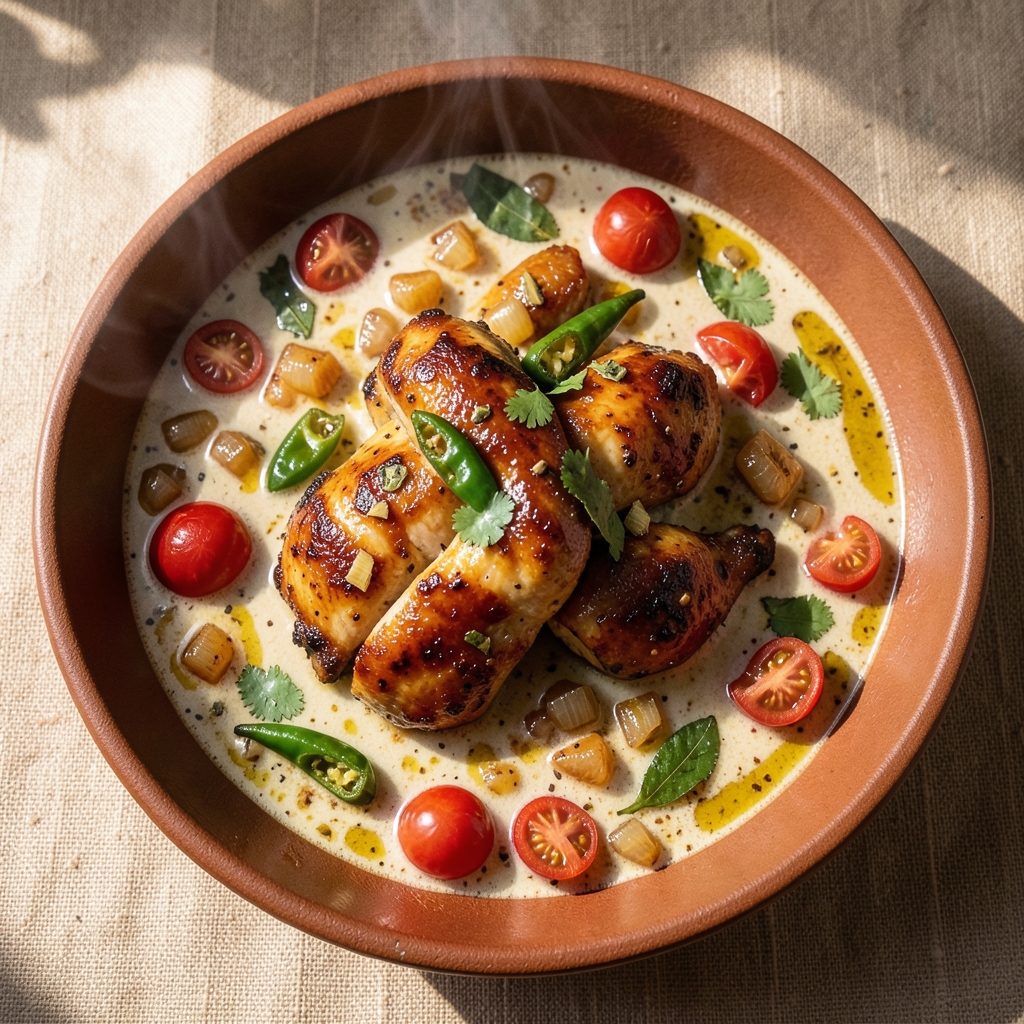
This Assam curry recipe delivers the bold, tangy flavors of Northeast India in a single pot, where tamarind and kokum create a complex sauce that balances sweet, sour, and spicy notes.
Growing up, I’d watch my Nonna stir similar curries over low heat for hours, letting the spices meld into something deeper than any takeout could match.
The key lies in slow-cooking—letting the protein (whether chicken, pork, or lentils) break down into tender perfection while the sauce reduces into a glossy, aromatic finish.
The beauty of this dish is its versatility—it works as a hearty weeknight meal or a showstopper for dinner guests. We’ll build the spice blend from scratch, toasting whole spices until they release their oils, then simmering everything together until the flavors marry into harmony.
For those short on time, a quick fermented khorisa (tamarind paste) can cut prep by half without sacrificing depth. The result? A restaurant-quality curry with layers of umami, tang, and warmth that pairs perfectly with steamed rice or fluffy roti.
What makes this recipe stand out is the balance of techniques—slow cooking for tenderness, high heat for caramelized spices, and a final touch of fresh herbs to brighten the dish.
I’ve tested it with chicken, pork, and even lentils for a vegetarian version, and each time, the sauce delivers that signature Assam tang. The secret? Don’t rush the reduction—let the sauce thicken naturally, and the flavors will develop into something truly special. Ready to bring Northeast India to your table?
This curry is forgiving yet precise—ideal for both beginners and seasoned cooks. We’ll walk through every step, from spice toasting to sauce reduction, with tips to adjust heat levels and texture.
Whether you’re serving it for a family dinner or meal prepping for the week, the leftovers only get better as the flavors deepen. Let’s get cooking!
Ingredients for assam curry
Pantry spices plus a few fresh finds make this Assam curry sing with tangy depth.
| Ingredient | Amount | Notes |
|---|---|---|
| Boneless Chicken Thighs 🍗 | 1 ½ lb | Skin-on preferred for flavor |
| Yellow Onions 🧅 | 1 whole | Medium size, finely chopped |
| Fresh Ginger Root 🌿 | ½ cup | Finely grated, peeled |
| Garlic Cloves 🧄 | 6 cloves | Peeled, minced |
| Tamarind Paste 🍯 | ¼ cup | Fermented, unsweetened |
| Kokum Dried 🍇 | ⅛ cup | Soaked in 1 cup hot water |
| Medium Tomatoes 🍅 | 2 whole | Ripe, blended into pulp |
| Coconut Milk 🥥 | 1 can | Full-fat, 13.5 oz can |
| Green Chilies 🌶️ | 2 whole | Fresh, slit lengthwise |
| Bay Leaves 🌿 | 2 whole | Dried, lightly crushed |
| Cinnamon Sticks 🌿 | 1 whole | 2-inch piece |
| Cardamom Pods 🌿 | 4 whole | Lightly crushed |
| Cloves 🌿 | 4 whole | Whole, lightly crushed |
| Turmeric Powder 🌶️ | 1 tsp | Freshly ground preferred |
| Garam Masala 🌶️ | 1 tbsp | Store-bought blend works |
| Fresh Coriander Leaves 🌿 | ¼ cup | Chopped, for garnish |
| Salt 🧂 | 1 ½ tsp | Adjust to taste |
The tamarind and kokum are the heart of this curry—Indian grocery stores carry them dried or as paste. Tiger Brand tamarind paste is my go-to, but any unsweetened fermented version works. Kokum can be tricky to find fresh, so dried is fine—just soak it in hot water for 15 minutes to soften. The chicken thighs? Skin-on gives the best flavor, but boneless is easier. If you can’t find kokum, extra lime juice adds tang (use 1 tbsp instead). For the spices, whole spices toast better than ground—lightly crush them with a mortar or rolling pin before adding to the pot.
No tamarind? Lemon juice plus a pinch of sugar mimics the tang, though it won’t be identical. Running short on kokum? Amchur (dry mango powder) at half the amount works too. The green chilies can be swapped for red chili powder (1/2 tsp), but fresh adds a bright kick. Coconut milk is non-negotiable here—light versions won’t give the same richness. For the tomatoes, canned crushed tomatoes save time, but fresh blended is better. The garam masala blend? MDH or Everest are solid store-bought options if you’re not making your own.
This curry tastes even better the next day—3-4 days in the fridge, 3 months frozen. Portion into containers with a layer of oil on top to preserve the spices. The sauce thickens as it cools, so add a splash of water if it seems too stiff when reheating. Garnish with fresh coriander just before serving—don’t add it early, or it’ll wilt into oblivion. Leftovers freeze beautifully, so double the batch if you’re feeding a crowd.
Why You’ll Love This Recipe
- One-Pot Magic: I swear by this recipe because it’s actually one-pot—no extra pans, no messy cleanup. The onions caramelize right in the same pot where the chicken simmers, and the tamarind paste ties everything together without a single extra dish to wash.
- Tamarind Tang Kick: That little jar of tamarind paste? It’s the secret weapon. It cuts through the richness of the chicken thighs and garlic, giving this curry that bright, slightly sour punch that makes it ridiculously more interesting than your average dish.
- Lunchbox Hero: Between us, this curry tastes even better the next day—seriously. I make a big batch on Sundays, and by Wednesday, it’s the star of my lunchbox. The flavors meld perfectly, and the chicken stays juicy, so it’s my go-to for meal prep without the fuss.
- Budget-Friendly Feast: Chicken thighs are forgiving and cheap, and this recipe doesn’t skimp on flavor. Honestly, I’ve made this for date nights, family dinners, and even a potluck, and no one ever questions why it’s on the menu—because it’s solid every time.
Step-by-step instructions for Assam curry
This one-pot Assam curry delivers bold tamarind-kokum tang with tender chicken—here’s how to nail it every time.
Prepare the Tangy Base
Soak the 0.125 cup dried kokum in 1 cup hot water for 15 minutes—this creates the signature tangy broth. Meanwhile, blend the 2 whole medium tomatoes into a smooth pulp using a food processor or mortar and pestle. Set both aside.
In a heavy-bottomed pot over medium-high heat, add 2 tablespoons oil and sauté the 1 whole finely chopped yellow onion until golden brown—about 5 minutes. Add the 0.5 cup finely grated fresh ginger root and 6 cloves minced garlic cloves, cooking for 1 minute until fragrant. This aromatic foundation is where all the flavors begin to dance.
Build the Spice Layer
Add the 2 whole slit green chilies, 2 whole lightly crushed bay leaves, 1 whole 2-inch cinnamon stick, 4 whole lightly crushed cardamom pods, and 4 whole cloves to the pot. Stir for 30 seconds until the spices sizzle and release their oils—this prevents bitterness and maximizes their aroma.
Pour in the 0.25 cup tamarind paste and tomato pulp, stirring well. Cook for 5 minutes until the mixture thickens slightly and the raw taste disappears. Sprinkle in the 1 teaspoon turmeric powder and 1.5 teaspoons salt, stirring constantly for 1 minute to bloom the spices. The pot should smell intensely tangy and earthy at this stage.
Simmer the Chicken
Add the 1.5 lb boneless chicken thighs to the pot, coating them evenly in the spiced mixture. Pour in the 1 cup strained kokum water and bring to a gentle boil. Once boiling, reduce heat to low and cover partially. Let the chicken simmer for 20 minutes, stirring occasionally, until it begins to pull away from the edges.
Here’s the key: don’t lift the lid during this time—steam is your friend. It keeps the chicken tender and prevents the sauce from drying out. After 20 minutes, check for doneness by inserting a knife—it should slide in easily with just slight resistance.
Finish with Coconut Milk
Pour in the 1 can full-fat coconut milk, stirring gently to combine. Increase heat to medium-low and let the curry simmer uncovered for 15 minutes. This allows the coconut to meld with the tangy base while reducing slightly for a thicker consistency. Taste and adjust seasoning—you may need an extra pinch of salt or a splash of water if it’s too thick.
Stir in the 1 tablespoon garam masala, reserving 2 tablespoons for garnish. The curry should now balance sweet, sour, and spicy notes perfectly. Remove from heat and let it rest for 5 minutes—this allows flavors to settle and the sauce to thicken slightly.
Garnish and Serve
Gently fold in the 0.25 cup chopped fresh coriander leaves and sprinkle the reserved garam masala on top. Serve immediately with steamed basmati rice or warm naan. The curry should coat the back of a spoon with a glossy sheen, and each bite should deliver layers of tamarind tang, kokum brightness, and coconut richness.
For extra depth, save a ladleful of the cooking liquid to drizzle over the rice—it’s packed with flavor. This curry tastes even better the next day as the flavors meld further, so make extra if you can!
Pro Tips For Making Assam Curry
- Bloom the Spices Slowly: Start your masala on medium-low heat—don’t rush the blooming. I used to crank it up high, and the spices burned before they could release their aroma. Let them dance for 3-4 minutes until the oil shimmers golden, or you’ll end up with bitter, charred flavor instead of that warm, earthy base Assam curry needs.
- Grate Ginger Like It’s 1998: Skip the food processor for ginger—hand-grate it fine, like you’re shredding cheese for a grilled cheese. The texture matters: too coarse, and the heat lingers unevenly; too fine, and it dissolves into mush. This is the thing that matters most for balancing the tamarind’s tang later.
- Don’t Crowd the Chicken: Brown the chicken thighs in batches, even if it means two rounds in the pan. Overcrowding steams them instead of searing, and you’ll end up with pale, soggy meat instead of caramelized edges. Hot oil and space = flavor. Yes, even if you’re impatient like me.
- Soak Tamarind Paste First: Mix the tamarind paste with ¼ cup warm water and let it sit for 5 minutes before adding to the curry. This prevents clumping and ensures it dissolves smoothly—no one wants to taste gummy bits in their otherwise perfect Assam curry. (Your future self will thank you.)
Best sauces and condiments for this recipe
Tamarind-Kokum Tang
This is the heart of Assam curry, where tamarind paste and kokum create that signature tangy-sweet balance. For best results, use Tiger Brand tamarind paste (available at Indian grocery stores) and soak ¼ cup dried kokum in 1 cup hot water for 15 minutes.
The strained liquid should be bright and slightly sour—this is your flavor foundation. 🍯
If you can’t find kokum, amchur (dry mango powder) at half the amount works in a pinch, though it won’t be identical. For extra tang, add 1 tbsp lemon juice after cooking.
The key is balancing sweetness and acidity—taste as you go and adjust gradually. I’ve ruined this step before by overdoing the tamarind, so start with less and build up.
Coconut Milk Finish
The 1 can full-fat coconut milk at the end is non-negotiable—it rounds out the sharp tang with creamy richness. I use Thai Kitchen brand because it’s affordable and reliable, but any full-fat canned coconut milk works.
Stir it in gently to avoid breaking the sauce’s texture, then simmer uncovered for 15 minutes to let the flavors meld.
For a lighter version, substitute ½ cup heavy cream at the end, but you’ll lose some of that authentic Assam depth. The coconut should create a velvety sheen—if it looks too thin, reduce uncovered for another 5 minutes. This is where the magic happens, so don’t rush it.
Spice Blend Secrets
The whole spice toast is where Assam curry gets its complexity. Lightly crush cardamom pods, cloves, and cinnamon sticks before adding to the pot—they release more aroma this way. Toast them for 30 seconds until fragrant, then immediately add the tamarind mixture to lock in those flavors. 🌿
For a pre-made shortcut, use 1 tbsp garam masala (like MDH brand) at the end, but fresh toasted spices make all the difference. The garam masala should be sprinkled in last—reserve 2 tbsp for garnishing to add that final aromatic punch.
This is the step I always skip when I’m in a hurry, and I regret it every time.
Fresh Herb Garnish
Don’t skip the 0.25 cup chopped fresh coriander leaves—they brighten the dish and add a fresh contrast to the rich, tangy sauce. Add them just before serving so they stay vibrant. For extra flair, sprinkle with toasted cumin seeds or crushed peanuts—both add texture and depth.
I like to finish with a drizzle of hot oil (heat 2 tbsp oil with 1 tsp red chili powder until smoking) for an authentic Assam touch.
For a vegetarian version, swap the chicken for 1 cup cooked lentils (like masoor dal) and add 1 tbsp soy sauce to boost umami. The garnish remains the same—fresh herbs and spices are universal flavor boosters.
This is where I get creative with textures, because presentation matters just as much as taste in Indian cuisine.
Nutrition facts
Frequently asked questions
Can I make this Assam curry vegetarian?
Swap the chicken for 1 cup cooked lentils (like red lentils or masoor dal) and add 1 tablespoon soy sauce or 1 teaspoon miso paste to boost umami. The tangy sauce works perfectly with plant-based proteins—just ensure the lentils are fully cooked before adding them to the pot. For extra richness, stir in ½ cup coconut cream at the end.
Why does my Assam curry taste too sour?
Overdoing the tamarind or kokum is the usual culprit. Start with ¼ cup tamarind paste and ¼ cup dried kokum, then adjust gradually—1 teaspoon sugar or ½ teaspoon salt can balance the acidity. For a quicker fix, stir in 1 tablespoon coconut milk to mellow the sharpness. Taste as you go, and remember: the flavors deepen as the curry cooks!
How do I store and reheat leftovers?
This curry keeps beautifully for 4 days in the fridge or 3 months in the freezer. Store in an airtight container with a layer of oil on top to preserve the spices. Reheat gently on low heat with a splash of water if it thickens too much. For extra flavor, add a pinch of garam masala or a squeeze of lemon juice when reheating.
What’s the best rice to serve with this?
Steamed basmati rice is the classic pairing, but jeera rice (cumin-infused) or scented rice with cardamom adds extra harmony. For a quicker option, try quinoa or cauliflower rice for a lighter twist. Pro tip: Save a ladle of the cooking liquid to drizzle over the rice—it’s packed with flavor!
Can I make this curry in a slow cooker?
Yes! Follow the same steps until adding the chicken, then transfer everything to the slow cooker. Cook on low for 4-5 hours or high for 2-3 hours, then stir in the coconut milk and simmer for another 30 minutes on the stove to thicken. The slow cooker keeps the chicken tender and lets the spices meld beautifully.

- Amish Corn Chowder Soup Recipe: Smoky Ham and Golden Dumplings - November 8, 2026
- Bob’s Red Mill Shortbread Cookies Recipe: Buttery Crunch With Vanilla-Kissed Layers - November 8, 2026
- Bariatric Jello Recipe Without Video: Protein-Packed Gelatin for Safe Healing - November 8, 2026