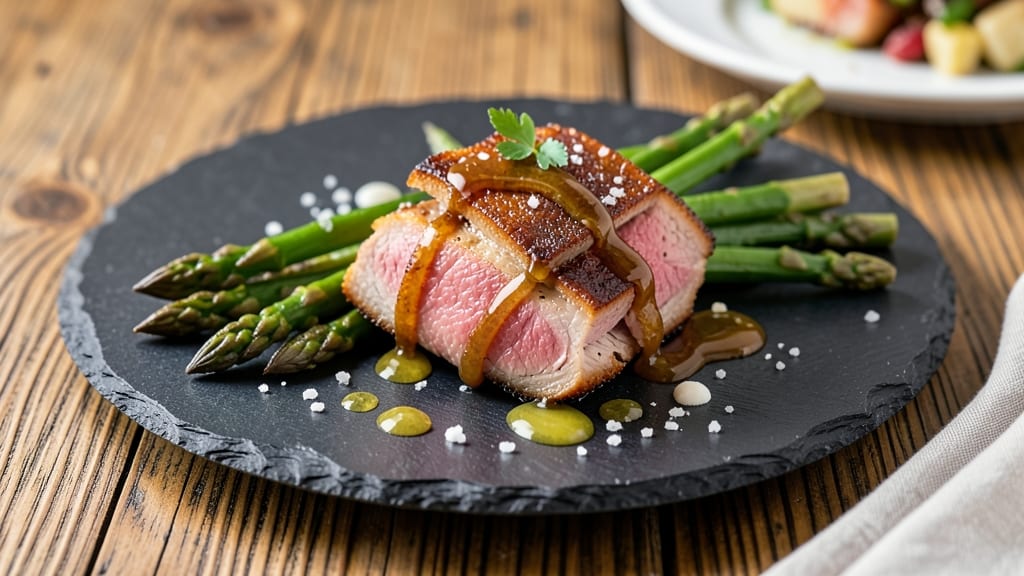
This asparagus with pork belly recipe transforms humble ingredients into a showstopping dish where crispy pork belly meets perfectly charred asparagus in a symphony of textures and flavors. 🔥 The secret lies in slow-roasting the pork belly until it’s crackling and tender, then finishing it with a glaze that balances sweet and savory notes.
I developed this technique during a particularly chilly spring evening when I wanted something rich yet light—something that would feel indulgent without being overly heavy.
The beauty of this dish is in its simplicity: just three main components that come together effortlessly. The pork belly, scored and roasted until the fat renders into crispy shards, carries the dish with its deep, savory richness.
Meanwhile, the asparagus—tossed in olive oil and roasted until charred at the edges—adds a bright, fresh contrast. A touch of garlic and soy sauce in the glaze elevates both elements, creating a harmony that’s both elegant and satisfying.
By the time you plate this dish, you’ll have golden-brown pork belly slices with crackling edges, each bite delivering layers of flavor from the glaze. The asparagus will be tender-crisp with just the right amount of char, its natural sweetness enhanced by the smoky notes from the oven.
This is the kind of meal that feels special enough for a dinner party but simple enough for a weeknight—where every forkful tells a story of perfect balance.
The best part? Leftovers reheat beautifully, making this an ideal dish for meal prep or entertaining. Pair it with a crisp white wine or a light salad to round out the meal. Here’s how to bring this dish to life in your kitchen.
Ingredients for asparagus with pork belly
Simple ingredients that deliver restaurant-quality crispy pork belly and tender asparagus bites.
| Ingredient | Amount | Notes |
|---|---|---|
| Pork Belly 🥓 | 1 ½ lb | Skin scored in diamond pattern |
| Asparagus 🌱 | 1 lb | Fresh, medium-thick spears |
| Extra-Virgin Olive Oil 🫒 | ¼ cup | High quality, fruity |
| Garlic Cloves 🧄 | 4 cloves | Fresh, minced |
| Soy Sauce 🥢 | 2 tbsp | Light or dark preferred |
| Honey 🍯 | 1 tbsp | Wildflower for floral notes |
| Sesame Oil 🫒 | 1 tsp | Toasted sesame flavor |
| Diamond Crystal Kosher Salt 🧂 | 1 tsp | Fine grain preferred |
| Freshly Ground Black Pepper 🌶️ | ½ tsp | Cracked peppercorns |
| Fresh Thyme Leaves 🌿 | ¼ cup | Stems removed |
| Fresh Rosemary 🌿 | 2 sprigs | Woody stems |
| Unsalted Butter 🧈 | 2 tbsp | Cold, cubed |
The pork belly is the star here—look for thick-cut pieces with good marbling at Whole Foods or your local butcher. If you can’t find fresh, Costco’s vacuum-sealed pork belly works perfectly. Score the skin in a diamond pattern before roasting (that’s the secret to crispy shards). For the asparagus, medium-thick spears hold up better to roasting than the skinny ones. Trim the woody ends by snapping them off—don’t cut with a knife. Fresh thyme and rosemary from the grocery store’s produce section add that aromatic depth, but dried works in a pinch at half the amount.
No sesame oil? Toasted sesame paste mixed with a splash of olive oil works too. Short on honey? Maple syrup gives a similar sweetness, though it’s less floral. The butter could be swapped for olive oil if you’re watching dairy, but trust me on the butter—it makes the glaze silky. For the asparagus, if you accidentally overcook them (been there), toss them with a little lemon juice to brighten them up. The pork belly glaze can be made ahead and stored in the fridge for up to 1 week—just reheat gently before drizzling.
Roast the pork belly skin-side down first—it needs 45 minutes at 400°F to render all that fat. Flip halfway through, then finish with the asparagus for the last 10 minutes. The glaze should be warm when you drizzle it over the top—microwave 20 seconds if it’s cold. Leftovers? The pork belly reheats beautifully in a 350°F oven for 15 minutes, while the asparagus is best eaten fresh. Store components separately—the pork belly keeps for 3 days in the fridge, and the asparagus holds up for 2 days if wrapped tightly in a damp towel.
Why You’ll Love This Recipe
- One-Pan Magic: I swear by this recipe when I’m too tired to scrub pots—just toss pork belly and asparagus on a sheet pan, drizzle with olive oil, and let the oven do the work. The garlic and soy sauce caramelize right there, turning minimal effort into maximum flavor.
- Crispy-Creamy Obsession: That first bite of perfectly seared pork belly—crispy edges, juicy inside—paired with tender asparagus? It’s the kind of combo that makes you pause mid-bite and go, “Why don’t I do this more?” The soy and garlic infuse every piece, so every mouthful feels like a little flavor explosion.
- Weeknight to Dinner Party: Honestly, this dish works everywhere. Toss it together for a lazy Tuesday, or plate it elegantly with a drizzle of olive oil for guests—no one will guess it took less than 40 minutes. The pork belly’s richness balances the asparagus’ brightness, so it’s always a crowd-pleaser.
- Budget-Friendly Luxury: Pork belly might sound fancy, but a few slices stretch far—especially when you pair them with asparagus, which is cheaper than it looks in spring. Leftovers? Even better. Reheat the pork belly until crispy again, and suddenly, you’ve got a second dinner with zero extra effort.
Step-by-step instructions for crispy pork belly with charred asparagus
Here’s how to transform simple ingredients into a showstopping dish where crispy pork belly meets perfectly charred asparagus.
🔥 Step 1: Score and Cure the Pork Belly
Start by scoring the pork belly skin in a diamond pattern using a sharp knife, cutting down to but not through the fat. This creates crispy pockets while keeping the meat tender. Place the scored side up on a plate and sprinkle evenly with the 1 teaspoon Diamond Crystal Kosher Salt and 0.5 teaspoon Freshly Ground Black Pepper.
Let it sit uncovered in the refrigerator for 1 hour—this drying process is crucial for maximum crispiness. I like to flip it halfway through to ensure even seasoning. After curing, pat the belly completely dry with paper towels to remove any surface moisture that would prevent crisping.
🍳 Step 2: Roast the Pork Belly to Crispy Perfection
Preheat your oven to 325°F. Place the dried pork belly fat-side up on a wire rack set inside a rimmed baking sheet. Roast for 2 hours until the internal temperature reaches 145°F and the fat is golden and crispy. Here’s the thing—don’t touch it during cooking. Every time you check, you lose heat and steam the skin instead of crisping it.
About 30 minutes before the pork is done, remove it from the oven and increase the temperature to 425°F. Return the pork to the oven for 15-20 minutes to get that beautiful caramelized crust. You’ll know it’s ready when the skin is deep golden brown and nearly black in spots, with fat that’s crisp enough to shatter between your fingers.
👨🍳 Step 3: Prepare the Charred Asparagus
While the pork rests, prepare the asparagus. Trim the tough ends and discard. In a large skillet, heat 0.25 cup Extra-Virgin Olive Oil over high heat until it shimmers. Add the asparagus in a single layer and let it cook undisturbed for 3-4 minutes until deeply charred in spots. Toss gently and cook another 2 minutes until tender-crisp.
Remove from heat and transfer to a bowl. In the same pan, add the 4 cloves minced Garlic Cloves and cook for 30 seconds until fragrant. Pour in the 2 tablespoons Soy Sauce, 1 tablespoon Honey, and 1 teaspoon Sesame Oil, scraping up any browned bits. Let it simmer for 1 minute until slightly reduced, then pour this glaze over the asparagus.
🥘 Step 4: Assemble and Finish with Herbs
Slice the pork belly into ½-inch thick slices, cutting against the grain. Arrange the slices on a platter and scatter the charred asparagus around them. In a small bowl, combine the 0.25 cup Fresh Thyme Leaves and 2 sprigs Fresh Rosemary (leaves only) with the 2 tablespoons Unsalted Butter, cutting the butter into small cubes. Gently warm this mixture in a small skillet over low heat for 1 minute until melted.
Drizzle this fragrant herb butter over the pork and asparagus, letting it pool slightly in the center of the platter. The butter will melt slightly from the residual heat of the pork, creating a luxurious finish. Serve immediately while everything is hot and crispy—this dish doesn’t wait!
Pro Tips For Making Asparagus With Pork Belly
- CRACK THE BELLY FIRST: Skip the whole slab—score the pork belly skin in a crosshatch pattern before searing. This lets fat render out evenly instead of steaming under the skin, which turns it rubbery. I learned this the hard way after serving a batch where the outside was crispy and the inside tasted like shoe leather.
- CHAR THE GARLIC HARD: Smash those garlic cloves into a paste with a pinch of salt, then fry them in olive oil until they’re deep golden—almost black at the edges. That bitterness cuts through the pork’s richness and makes the asparagus taste brighter. (Yes, even if you’re squeamish about burnt garlic.)
- SALT THE ASPARAGUS WRONG: Toss the asparagus in soy sauce after roasting, not before. The salt draws out moisture, which steams the spears instead of crisping them. A quick 30-second soak in cold water post-roast revives them if they soften too much—trust me, they’ll still taste like they were kissed by a wok.
- REST THE BELLY COLD: After cooking, let the pork belly cool on a wire rack for 10 minutes before slicing—even if you’re starving. Slicing into hot, fatty pork belly sends you scrambling for paper towels. (I’ve done it. You’ll see.) If you’re impatient, wrap it in foil and let it sit while you finish the asparagus.
Common mistakes when making perfect results
Overcooking the Pork
Pork belly is forgiving, but pushing it past 160°F internal temperature turns tender meat into dry, chewy disappointment. I’ve seen home cooks walk away for “just a few minutes” while checking emails, only to return with leather-like results.
Use a meat thermometer—I swear by the Thermoworks Smoke—and pull it at 145°F. The residual heat will carry it to perfect doneness during resting. 🌡️
Skipping the Cure
That 1-hour refrigeration cure isn’t just for show—it’s what creates the crispy skin we crave. I learned this the hard way when I rushed a belly straight into the oven. The skin stayed greasy and limp.
Pat it dry after curing, and resist the urge to skip this step. If you’re short on time, 30 minutes in the freezer works in a pinch, but it won’t be as crisp.
Charred but Mushy Asparagus
Asparagus needs high heat and minimal touching to get that perfect char. I’ve seen cooks toss them too soon, resulting in limp spears. Let them sear undisturbed for 3-4 minutes on each side—watch for deep blackened spots.
If they feel soft when pierced, they’re overdone. Toss them immediately into the glaze while still firm. A splash of lemon juice can revive slightly overcooked spears, but prevention is key.
Uneven Glaze Application
The glaze should coat every bite of pork belly, not pool in one spot. I’ve made this mistake by drizzling too early—when the pork is still piping hot, the glaze burns before it can adhere.
Let the pork rest 10 minutes first, then warm the glaze gently (20 seconds in the microwave) before drizzling. This ensures even coverage and prevents sugar burning. 💫
Wrong Cutting Technique
Slicing pork belly against the grain is non-negotiable, but I’ve seen cooks cut with the grain or at crazy angles, ruining the texture. Use a sharp chef’s knife and slice perpendicular to the muscle fibers in ½-inch thick pieces.
If you’re unsure which way is “against the grain,” look for the longest muscle fibers and cut perpendicular to them. The result? Tender, melt-in-your-mouth bites every time.
Ignoring Rest Time
Skipping the 10-15 minute rest after roasting means juices will spill out when you slice, leaving you with dry meat. I’ve rushed this step before, thinking the pork was ready immediately—big mistake.
Let it rest on a wire rack (not a cutting board) to maintain crispiness. The glaze will adhere better too, creating that restaurant-quality finish we all crave.
Nutrition facts
Frequently asked questions
Can I substitute pork belly with another cut of pork?
While pork belly is ideal for its fat content and texture, you can use pork shoulder or pork tenderloin in a pinch. For pork shoulder, braise it longer at 300°F until tender (2-3 hours). Tenderloin cooks faster (15-20 minutes) but lacks the crispy fat. The glaze will still work, but expect a different texture.
How do I know when the pork belly is perfectly crispy?
The skin should be deep golden brown with nearly black spots, and the fat should shatter like glass when you press it. If it bends without cracking, it needs 10-15 more minutes at 425°F. The internal temp should read 145°F—don’t rely on color alone.
Can I make this dish ahead of time?
Roast the pork belly and asparagus separately, then store them in airtight containers. Reheat the pork in a 350°F oven for 15 minutes until crispy again. Warm the asparagus in a skillet for 2-3 minutes and refresh the glaze. Assemble just before serving for the best texture.
What if I don’t have sesame oil?
No problem! Swap it for toasted sesame paste mixed with a splash of olive oil, or use avocado oil for a neutral flavor. The dish will still taste delicious—just slightly less aromatic. The key is balancing the sweetness from honey with umami from soy sauce.
How do I serve this dish for a dinner party?
Arrange the pork belly slices on a large platter with asparagus fanned around them. Drizzle the glaze artistically and scatter fresh thyme leaves on top. Serve with steamed jasmine rice or a crisp green salad> to balance the richness. Pair with a Sauvignon Blanc or light Pinot Noir for an elegant touch.

- Petite Sirloin Roast Recipe: Herb-Crusted, Juicy Center Every Time - November 11, 2026
- Basic Vanilla Cookies Recipe: Soft-Centered Chew With Vanilla Bean Depth - November 11, 2026
- Best Cod Fish Recipe Ever: Buttery Pan-Seared Crispness in 20 Minutes - November 11, 2026