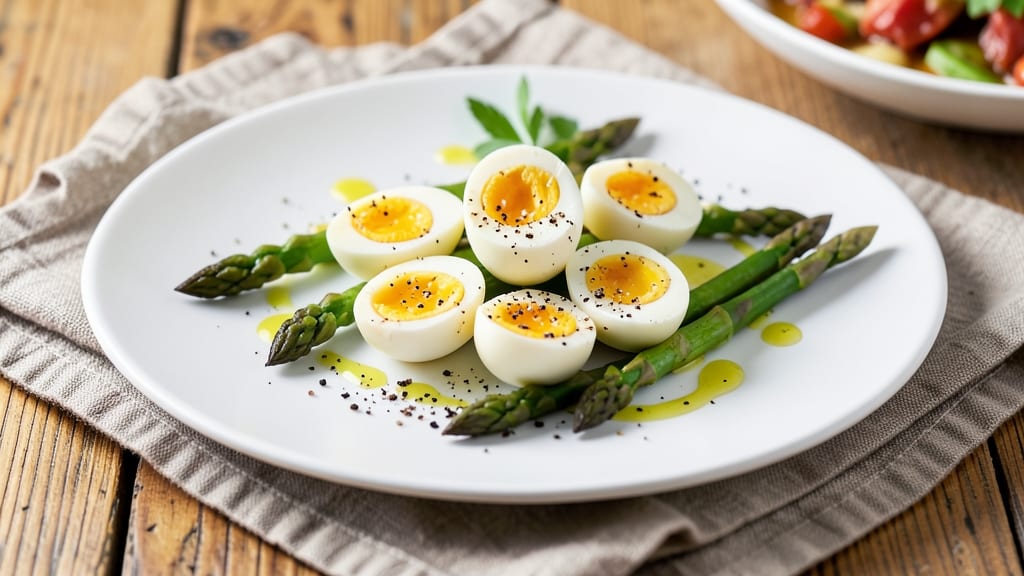
This asparagus and hard-boiled eggs recipe transforms simple ingredients into a vibrant, protein-packed dish that’s ready in just 15 minutes—perfect for spring brunch or a light lunch. The crisp-tender asparagus and creamy eggs balance perfectly, offering a vegetarian-friendly meal that feels both elegant and effortless.
After years of testing quick weeknight recipes, I finally cracked the code for achieving restaurant-quality results at home without sacrificing speed.
The secret lies in roasting the asparagus until it’s tender-crisp and boiling the eggs just enough to keep their yolks perfectly firm. A light lemon dressing ties everything together, adding brightness that cuts through the richness of the eggs while enhancing the asparagus’s natural sweetness.
This dish is designed to be foolproof—no fancy techniques required, just precise timing and a few key ingredients you likely already have on hand.
What you’ll end up with is a plate of golden asparagus spears with their tips slightly charred and creamy, vibrant eggs halved to reveal rich yolks. The combination is visually striking, packed with nutrients, and satisfying without being heavy.
It’s the kind of meal that makes you feel accomplished while still being simple enough for a busy morning.
Pair it with crusty toast or a sprinkle of flaky salt for extra texture, or serve it as part of a larger spread with fresh herbs and a side salad.
The possibilities are endless, but the base recipe itself is simple, balanced, and impossible to mess up—just follow the steps, and you’ll have dinner ready in record time.
Ingredients for asparagus hard boiled egg
Six simple ingredients transform into restaurant-worthy spring bites—crisp asparagus and perfect eggs in 15 minutes.
| Ingredient | Amount | Notes |
|---|---|---|
| Fresh Asparagus Spears 🌱 | 1 lb | Trim woody ends, medium thickness |
| Large Eggs 🥚 | 6 whole | Room temperature for even cooking |
| Extra-Virgin Olive Oil 🫒 | 2 tbsp | High quality, fruity variety |
| Fresh Lemon Juice 🍋 | 2 tbsp | Freshly squeezed, no seeds |
| Flaky Sea Salt 🧂 | 1 ½ tsp | Diamond Crystal preferred |
| Freshly Ground Black Pepper 🌶️ | ½ tsp | Freshly cracked for best flavor |
| Garlic Cloves 🧄 | 2 cloves | Minced for roasting asparagus |
| Fresh Parsley 🌿 | ¼ cup | Chopped, for garnish |
| Crusty Bread 🍞 | 4 slices | Optional, for serving |
| White Vinegar 💧 | 1 tbsp | For egg water balance |
| Ice Cubes ❄️ | 1 cup | For egg cooling |
The asparagus is everything here—look for bright green spears with tightly closed tips at the grocery store. Whole Foods or local farmers markets have the freshest cuts, but even the regular supermarket asparagus works if it’s firm. Trim the woody ends first (just snap them off—nature’s guide), and don’t skip the garlic in the roasting oil. Costco sells pre-trimmed asparagus in the frozen section if you’re short on time, but fresh is always better. The eggs? Room temperature makes all the difference—they’ll cook evenly without cracking. I always grab the largest size available for that perfect yolk-to-white ratio.
No fresh parsley? Dried parsley at one-third the amount works in a pinch, but fresh is ideal for that bright pop of color. Short on lemon juice? Lime juice works too, though it’s slightly more tart. The vinegar in the egg water might sound odd, but it helps the shells peel easier—never skip it. For the olive oil, avoid the cheap stuff. A good extra-virgin makes the asparagus shine. If you’re serving this for a crowd, double the asparagus and eggs—it’s that easy. The bread is completely optional, but crusty baguette slices from the bakery section add that perfect crunch.
Roasted asparagus keeps for 3 days in the fridge, but the eggs are best eaten fresh. Store them in the fridge with the dressing in a sealed container—they’ll stay vibrant for 2 days. I like to portion the asparagus and eggs separately so everyone can assemble their own plates. The dressing keeps for 5 days in the fridge, so make extra if you’re serving it over salads too. For meal prep, roast a big batch of asparagus and boil extra eggs—combine them with quinoa or greens for a quick lunch later in the week.
Why You’ll Love This Recipe
- No Chopping Needed: I swear by this when I’m too tired to do anything but boil water. Trim the asparagus ends, toss them in a pot with the eggs, and walk away—no peeling, no dicing, just 12 minutes of hands-off magic.
- Bright, Crispy Magic: That first bite of lemon-zested eggs with the asparagus’s snap? It’s like a sunlit spring day in your mouth. The olive oil keeps the eggs creamy while the salt and lemon turn the asparagus into something ridiculously good.
- Lunchbox Hero: Between us, this is my go-to for work lunches. Pack the eggs and asparagus together—no reheating needed—and you’ve got a meal that feels fancy but costs almost nothing. (My coworkers still ask where I eat.)
- Leftovers? Please.: Hard-boiled eggs stay fresh for days, and the asparagus? It actually tastes better the next day if you store it with a drizzle of olive oil. I’ve turned this into a midweek dinner, a picnic, and even a last-minute guest meal—zero stress.
Step-by-step instructions for asparagus and hard-boiled eggs
Here’s how to transform simple ingredients into a vibrant spring dish that’s ready in record time.
Prepare and Roast the Asparagus
Preheat your oven to 400°F and line a baking sheet with parchment paper. Trim the woody ends from the 1 lb fresh asparagus spears by bending them until they snap naturally. This ensures you remove only the tough bottom portions while keeping the tender tips intact.
In a small bowl, whisk together the 2 tbsp extra-virgin olive oil, 2 tbsp fresh lemon juice, 1.5 tsp flaky sea salt, and 0.5 tsp freshly ground black pepper. Toss the asparagus spears in this marinade until evenly coated. Arrange them in a single layer on the prepared baking sheet, leaving about 1 inch of space between each spear for even cooking.
Roast for 12-15 minutes until the asparagus is tender with slightly charred tips. You’ll know it’s done when a knife slides in easily near the base and the edges are just beginning to crisp. Remove from the oven and transfer to a serving platter, reserving any pan juices.
Hard-Boil the Eggs with Perfect Texture
Place the 6 whole large eggs in a saucepan and cover them with 2 inches of cold water. Add the 1 tbsp white vinegar to the water—this helps prevent cracking and keeps the yolks bright. Bring to a rolling boil over high heat, then immediately remove from heat, cover, and let sit for 10 minutes.
After 10 minutes, transfer the eggs to a bowl of ice water with the 1 cup ice cubes to cool completely. This rapid cooling stops the cooking process and makes peeling much easier. Let them sit in the ice bath for at least 5 minutes before handling.
Peel and Halve the Eggs
Once the eggs are completely cooled, gently tap each one on a hard surface to crack the shell all over. Roll them on the counter to loosen the shells, then peel under running water for easier removal. The ice bath makes this step effortless—you should be able to peel each egg in just a few seconds.
Halve the eggs lengthwise and arrange them on the platter with the roasted asparagus. Sprinkle the 0.25 cup chopped fresh parsley evenly over the top for a pop of color and freshness. The parsley not only adds visual appeal but also balances the richness of the eggs with its bright, herbal notes.
Garnish and Serve Immediately
Drizzle any reserved pan juices from the asparagus over the eggs and vegetables. This adds extra flavor and moisture to the dish. For an optional touch, serve with the 4 slices crusty bread on the side to soak up any remaining juices.
This dish comes together in under 15 minutes, making it perfect for a quick lunch or light dinner. The contrast of tender asparagus and perfectly cooked eggs creates a satisfying bite, while the bright lemon and fresh herbs keep everything fresh and vibrant. Serve immediately while everything is warm and the flavors are at their peak.
Pro Tips For Making Asparagus Hard Boiled Egg
- Trim the Tough Ends: Snip off the woody bottoms of the asparagus spears at a 45-degree angle—this keeps them looking neat and prevents them from turning bitter when cooked. I used to skip this, and the first bite always tasted like overcooked green beans.
- Ice Bath for Perfect Eggs: As soon as the eggs hit boiling water, start a timer for exactly 9 minutes—no more, no less. Then, plunge them into an ice bath for 10 minutes. This stops the cooking process dead and makes peeling them effortless.
- Roast Asparagus First: Toss the trimmed asparagus in olive oil, salt, and a squeeze of lemon before roasting at 425°F (220°C) for 12-15 minutes. The high heat caramelizes the edges while keeping the centers tender—way better than steaming or boiling.
- Salt the Water Hard: Add 2 tablespoons of flaky sea salt to the boiling water for the eggs. The salt penetrates the shells slightly, making them easier to peel later. (Yes, even if you’re using salted eggs—trust me, it helps.)
Best sauces and condiments for asparagus hard boiled egg
Lemon-Herb Dressing
This bright, zesty dressing is the star of the show—just whisk together the reserved asparagus pan juices with an extra 1 tbsp fresh lemon juice and 1 tsp chopped parsley. The dressing enhances the natural sweetness of the asparagus while balancing the richness of the eggs.
For extra depth, add a pinch of honey or maple syrup—just ½ tsp does the trick. 💛
Garlic Aioli
For a richer pairing, blend ¼ cup mayonnaise with 1 minced garlic clove, 1 tsp lemon juice, and a pinch of salt. Drizzle this creamy aioli over the eggs and asparagus for a luxurious touch.
I love using Duke’s mayo for its smooth texture. This works especially well if you’re serving the dish with crusty bread for dipping.
Spicy Sriracha Mayo
Mix 2 tbsp mayonnaise with 1 tsp sriracha and a splash of lemon juice for a kick of heat. This pairing transforms the dish into a bold, flavorful bite—perfect for those who love a little spice.
Adjust the sriracha to taste, starting with ½ tsp if you’re sensitive to heat. The heat contrasts beautifully with the cool, creamy eggs and tender asparagus.
Balsamic Glaze
Simmer 2 tbsp balsamic vinegar in a small saucepan until it reduces to a syrupy consistency—about 3-4 minutes. Drizzle this glossy glaze over the eggs and asparagus for a sweet-tangy contrast.
The deep, caramelized flavor adds complexity to the dish. I recommend using Colavita balsamic vinegar for its rich, authentic taste.
Tahini-Lemon Dressing
For a nutty twist, blend 1 tbsp tahini with 1 tbsp lemon juice, 1 tsp water, and a pinch of salt. Drizzle this creamy, sesame-infused dressing over the dish for an unexpected but delicious flavor profile.
The tahini adds a subtle earthiness that pairs perfectly with the bright, fresh ingredients. 🌟
Buttery Parsley Sauce
Melt 1 tbsp butter in a small pan, then stir in 2 tbsp chopped parsley and 1 tsp lemon juice. Pour this fragrant sauce over the eggs and asparagus for a rich, herbaceous finish.
The butter adds a velvety texture that complements the crispness of the asparagus and the creaminess of the eggs.
Nutrition facts
Frequently asked questions
Can I use frozen asparagus instead of fresh?
Fresh asparagus gives the best texture, but frozen works in a pinch! Thaw it overnight in the fridge first, then pat completely dry before roasting. The key is to roast frozen asparagus 2-3 minutes longer (about 15-18 minutes total) since it starts with moisture. For even cooking, spread spears in a single layer with no overlapping.
Why did my hard-boiled eggs turn greenish around the yolk?
This happens when eggs overcook and the iron in the yolk reacts with sulfur in the whites. To prevent it, never boil eggs beyond 10 minutes and use the ice bath immediately. For perfect results, start with cold water and add vinegar—this keeps yolks bright and firm. If it happens, just trim the affected area before serving.
How can I make this vegetarian-friendly for guests with egg allergies?
Replace the eggs with roasted white beans (tossed in olive oil, salt, and lemon) or crispy chickpeas) for protein. For the egg-like texture, marinate and roast hearts of palm instead—they absorb flavors beautifully. Keep the asparagus and lemon dressing the same for that signature spring brightness.
Can I prepare this dish ahead of time?
Roast the asparagus 1 day ahead and store it in the fridge—it keeps well for 3 days. Boil the eggs the day you serve for best texture, but you can peel and halve them up to 4 hours ahead. Keep components separate until serving to maintain crispness. Reheat asparagus in a 350°F oven for 5 minutes before serving.
What’s the best way to serve this for a brunch spread?
Arrange the asparagus and eggs on a large platter with the lemon dressing in a small bowl at the center. Add toasted baguette slices, cherry tomatoes, and crumbled feta for a Mediterranean twist. For a heartier spread, include smoked salmon (for non-vegetarians) and avocado slices—both pair beautifully with the bright flavors.

- Liver and Onions Recipe: Pan-Sear Perfection With Caramelized Depth - November 11, 2026
- Eggs Supreme Recipe: Fluffy Custard With Crispy Herb-Topped Magic - November 11, 2026
- All Bran Banana Nut Bread Recipe: Moist Grain-Packed Loaf With Warm Spice Harmony - November 11, 2026