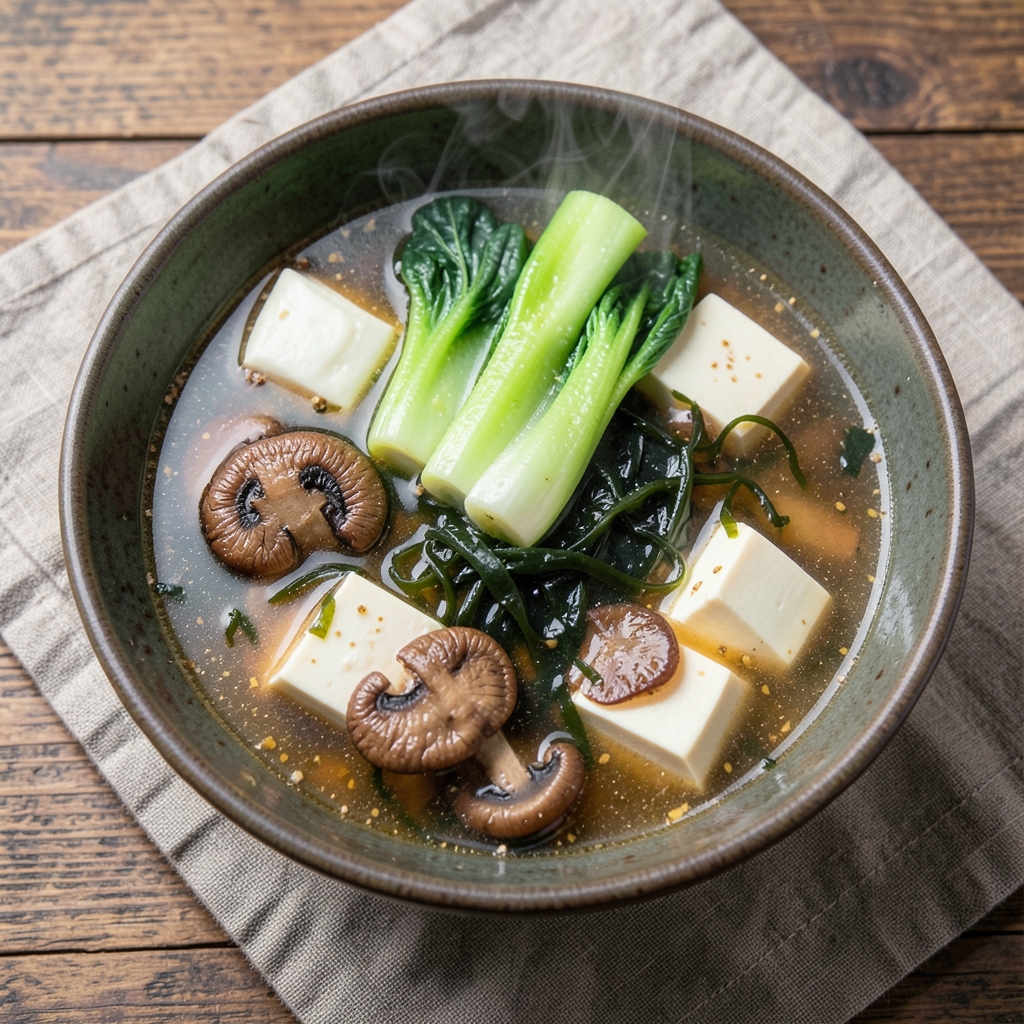
This Asian miso soup recipe delivers the perfect balance of umami depth and comforting simplicity—silky tofu, delicate greens, and a velvety broth that warms the soul. The foundation lies in a carefully crafted dashi or kombu broth, where miso paste dissolves into a rich, savory essence without bitterness.
I developed this version after years of testing ratios, ensuring every spoonful carries that signature Japanese restaurant quality at home.
The beauty of this recipe is its versatility—vegetarian-friendly yet adaptable for meat lovers, quick to prepare yet packed with layers of flavor. Silken tofu adds protein and a delicate texture, while wakame seaweed contributes briny depth and traditional authenticity.
Scallions and chili oil provide freshness and a subtle kick, but the real star is the broth, where precise miso-to-broth ratios create harmony rather than overpowering intensity.
What you’ll achieve is a restaurant-quality bowl that’s ready in under 30 minutes—crisp scallions on top, silky tofu floating in a golden broth, and aromatic greens that brighten every sip. The miso paste dissolves smoothly, creating a velvety texture that coats your spoon without heaviness.
This is the kind of soup that transforms a simple meal into something special, especially on chilly evenings when warmth is most welcome.
Customize it with mushrooms, corn, or extra herbs to suit your taste, but the core technique remains foolproof: simmer the broth gently, dissolve the miso properly, and assemble toppings just before serving.
The result is a perfectly balanced bowl that’s as nourishing as it is delicious. Let’s get started on creating your own batch.
Ingredients for asian miso soup
Nine essential ingredients transform into a velvety miso soup with restaurant-quality depth and umami harmony.
| Ingredient | Amount | Notes |
|---|---|---|
| Silken Tofu 🍲 | 1 package (14 oz) | Extra-firm preferred for texture |
| White Miso Paste 🧂 | ¼ cup | High-quality, non-GMO preferred |
| Dried Kombu Seaweed 🍃 | 1 piece (4×4 inch) | Organic, no additives |
| Dried Shiitake Mushrooms 🍄 | ½ oz | Rehydrated in hot water |
| Wakame Seaweed 🌊 | ¼ oz | Dried, rehydrated separately |
| Fresh Bok Choy 🥬 | 2 small heads | Baby bok choy preferred |
| Green Onions 🧅 | 3 whole | Thinly sliced for garnish |
| Chili Oil 🌶️ | 1 tbsp | Homemade or store-bought |
| Sesame Oil 🫒 | 1 tsp | Toasted sesame oil preferred |
| Rice Vinegar 🍶 | 1 tbsp | Seasoned preferred |
| Fresh Ginger 🧅 | 1 inch | Thinly sliced, peeled |
| Water 💧 | 4 cups | Filtered preferred |
| Diamond Crystal Kosher Salt 🧂 | ½ tsp | For seasoning broth |
| Toasted Sesame Seeds 🌾 | 1 tsp | For garnish |
The miso paste is non-negotiable—White miso from Marukome or Hatsu-miso delivers that authentic, slightly sweet umami without bitterness. Kombu seaweed is your broth builder; grab the dried sheets from Japanese grocery stores or the bulk section at Whole Foods. For shiitake mushrooms, dried is best—rehydrate them in hot water for 20 minutes before using. Fresh bok choy should have crisp stems and vibrant green leaves—baby bok choy from Trader Joe’s works perfectly. The wakame? Look for organic dried sheets—it dissolves beautifully into the broth, adding that signature briny depth.
No white miso? Red miso at half the amount works in a pinch, but expect a deeper, slightly fermented flavor. Dried kombu hard to find? Dashi granules (like Hondashi) are a decent substitute, though they lack kombu’s natural umami. Fresh shiitake mushrooms can replace dried, but slice and sauté them first to concentrate their flavor. Skip the bok choy? Spinach or napa cabbage holds up well to the broth’s heat. The chili oil can be swapped for a pinch of red pepper flakes plus sesame oil—just don’t overdo it. For extra richness, add 1 tbsp of tahini when dissolving the miso.
Miso paste keeps for up to 1 year in the fridge once opened—store it in an airtight container. Dried kombu and wakame last 6-12 months in a cool, dark place. Rehydrated mushrooms and seaweed should be used within 3 days for best texture. The broth itself reheats beautifully; just gently warm on the stove and adjust seasoning with a splash of rice vinegar or extra miso. For meal prep, store components separately—assemble bowls fresh to keep the tofu silky and greens crisp.
Why You’ll Love This Recipe
- Zero-Chop Needed: I swear by this—just soak the dried shiitakes and kombu, then toss them in boiling water. No knife skills required, no mess, just pure umami magic from the miso and seaweed doing all the work.
- Umami Bomb: That first sip? Chef’s kiss. The white miso’s deep, salty warmth meets the briny wakame and earthy shiitakes—it’s like a flavor explosion without any heavy lifting. The silken tofu just melts into creamy perfection.
- Lunchbox Hero: Between us, this is my go-to for packed lunches. Keep a jar of miso paste in the fridge, and you’ve got a protein-packed, warming meal in minutes. Toss in leftover rice or noodles, and suddenly it’s a full-on bowl of happiness.
- Pantry Goldmine: Honestly, the ingredients last forever. A block of miso, a bag of dried mushrooms—these aren’t things you’ll waste. And if you make a big batch? Second helpings taste just as good the next day, reheated or cold. Budget-friendly and foolproof.
Step-by-step instructions for Asian miso soup
Here’s how to craft a velvety miso broth bursting with umami depth and fresh greens.
Prepare the Kombu and Shiitake Broth Base
In a medium saucepan, combine the 4 cups of water with the 1 piece (4×4 inch) dried kombu seaweed and 0.5 oz dried shiitake mushrooms. Bring to a gentle simmer over medium heat. You’ll notice the kombu releases its mineral-rich essence into the water almost immediately – this is where the soup’s signature depth begins.
Simmer uncovered for exactly 10 minutes. The kombu should soften slightly and the mushrooms will begin rehydrating. Remove the kombu piece with tongs and discard it – we’ve extracted all its flavor. Keep the shiitake mushrooms in the broth as they’ll continue softening. The broth should smell like the ocean meets a forest after rain at this point.
Build the Umami Foundation with Miso
Reduce heat to low and carefully whisk in the 0.25 cup white miso paste. I use a heatproof spatula to gently fold it in, creating ribbons that dissolve completely. This step is crucial – never boil miso as it destroys its delicate probiotics and complex flavors. The soup should now have a thick, paste-like consistency with a deep amber color.
Let the miso-infused broth steep for 5 minutes off direct heat. You’ll see the miso’s natural oils separate slightly – this is normal and actually enhances the soup’s luxurious mouthfeel. The aroma should be intensely savory with notes of fermented soy and subtle sweetness. This is your umami foundation, so don’t rush this step.
Rehydrate and Prepare the Greens
While the broth steeps, prepare the 0.25 oz wakame seaweed by soaking it in 1 cup hot water for 5 minutes until pliable. Drain and set aside. Separate the 2 small heads of fresh bok choy into bite-sized pieces, keeping the stems attached. Thinly slice the 3 whole green onions, separating the white and green parts.
In a separate small bowl, combine the 1 inch fresh ginger (thinly sliced) with the 1 tbsp rice vinegar. Let this sit for 2 minutes – the vinegar will draw out the ginger’s essential oils, intensifying its flavor. This simple marinade transforms ordinary ginger into a vibrant, aromatic component.
Assemble and Finish the Soup
Return the saucepan to low heat and add the rehydrated wakame and ginger-vinegar mixture. Stir gently to combine. The wakame will rehydrate further in the warm broth. Add the 1 package (14 oz) silken tofu, cut into 1-inch cubes. The tofu should begin to warm through while maintaining its silky texture – this takes about 3 minutes.
Gently add the bok choy pieces, reserving any remaining liquid from the wakame soaking. Simmer for exactly 2 minutes until the bok choy is bright green and just tender. Remove from heat and stir in the 1 tsp sesame oil. The oil should create a delicate sheen on the surface – this is your visual cue that the flavors are perfectly balanced.
Garnish and Serve Immediately
Divide the soup among 4 bowls, ladling in the silky tofu cubes and bok choy stems first. Drizzle each serving with 1 teaspoon of the reserved chili oil. The oil should create a vibrant red pattern on the surface – this not only looks stunning but adds a subtle heat that cuts through the richness.
Finish each bowl with 1 teaspoon toasted sesame seeds and the green parts of the sliced green onions. The seeds should be evenly distributed, creating a golden contrast against the pale soup. Serve immediately while the tofu is still silky and the broth maintains its perfect temperature. The aroma alone should make your kitchen smell like a bustling Tokyo street market.
Pro Tips For Making Asian Miso Soup
- SOAK KOMBU FIRST: Toss the dried kombu into cold water for 10 minutes before simmering—it softens faster and releases more umami. I used to skip this, and the broth always tasted flat; now it’s the thing that matters most.
- STIR MISO LAST: Add the white miso paste after removing the kombu and just before serving—heat kills its delicate flavor. Stir briskly for 10 seconds, then taste and adjust; don’t let it sit in the broth.
- REHYDRATE SHIITAKES DRY: Soak dried shiitakes in hot water (not boiling) for 15 minutes, then drain and slice—this keeps them from turning mushy. I learned this the hard way when my soup turned into a sad, watery mush.
- UPGRADE WITH WAKAME: Tear wakame into 1-inch pieces and add it after the soup simmers—it rehydrates in minutes and adds a briny depth. Skip the pre-packaged flakes; fresh or bulk dried makes a real difference.
Common mistakes when making great asian miso soup
Over-Simmering Broth
Never let your miso broth boil after adding the paste—this kills its delicate probiotics and creates a bitter, metallic flavor. I’ve ruined batches by simmering too aggressively, so always maintain low heat after adding miso.
Even a gentle bubble can degrade the broth’s quality. Instead, keep the temperature below 160°F while dissolving the miso for that velvety texture. 🌡️
Skipping Miso Steeping
The 5-minute off-heat steeping after adding miso is non-negotiable. This step lets the paste fully hydrate and develop its complex flavors. I once rushed this and ended up with a soup that tasted flat and one-dimensional.
The miso needs time to meld with the kombu’s umami—don’t skip it, even if you’re in a hurry. 💡
Using Wrong Miso Type
White miso is the star here, but substituting red miso (like Hatcho) without adjusting the amount will make your soup taste overly fermented and strong. If you must use red miso, reduce it to 1-2 tablespoons and compensate with extra kombu or shiitake for balance.
I’ve learned this the hard way—once, I used red miso and ended up with a soup that tasted like a miso bomb. 🚫
Overcooking Tofu
Silken tofu turns rubbery if simmered too long—3 minutes max in the broth is ideal. I’ve seen people leave it in for 10+ minutes, and the result is a sad, dense cube instead of the silky cloud it should be.
Cut the tofu right before adding it to the broth to keep it tender. For extra insurance, chill the tofu in ice water for 10 minutes before cubing. ❄️
Ignoring Kombu Texture
If your kombu stays rock-hard after 10 minutes, it’s either too thick or not properly hydrated. Soak it in cold water for 5 minutes before adding to the broth—this jumpstarts the flavor extraction.
I’ve had kombu pieces that refused to soften, leaving the broth bland. A quick soak fixes this every time. 🍃
Salting the Broth Early
Adding salt before the miso can disrupt its delicate balance. Instead, season the broth after the miso has dissolved and the tofu is added. Taste first—you might need just a pinch of Diamond Crystal kosher salt to enhance the umami without overpowering it.
I’ve ruined batches by salting too soon, making the miso taste harsh. 🧂
Nutrition facts
Frequently asked questions
Can I make this miso soup vegetarian?
This recipe is already vegetarian-friendly, using kombu-based broth instead of fish dashi. The umami comes from the kombu seaweed and shiitake mushrooms, which create a rich, savory depth without animal products. For extra plant-based protein, add edamame or extra silken tofu.
How long will the miso soup keep in the fridge?
The broth itself stays fresh for 4-5 days when stored in an airtight container, but the tofu and greens are best added fresh. Reheat gently on low heat—never boil—and adjust seasoning with a splash of rice vinegar or extra miso. For maximum freshness, store components separately and assemble bowls when ready to eat.
What if I don’t have kombu seaweed?
No problem! Use dashi granules (like Hondashi) as a substitute—just dissolve 1 teaspoon in the broth instead of kombu. Alternatively, add an extra 0.25 oz of dried shiitake mushrooms or a splash of soy sauce for umami. The flavor won’t be identical, but it’ll still taste delicious.
Can I make this soup spicier?
Yes! Increase the chili oil to 2 tablespoons or add a pinch of red pepper flakes directly to the broth. For a smoky kick, drizzle with a little gochujang (Korean chili paste) when serving. Start with small amounts—you can always add more heat but can’t remove it.
Why does my miso soup taste bitter?
Bitterness usually means the broth boiled after adding miso or the kombu wasn’t properly hydrated. Keep heat at a gentle simmer (below 160°F) after adding miso, and always soak kombu for 5 minutes in cold water before using. A splash of rice vinegar or extra shiitake mushrooms can also help balance the flavor.

- Roasted Boston Butt Recipe: Slow-Smoked Tenderness With Crispy Bark - November 8, 2026
- Jello Cooked Banana Pudding Recipe: Warm, Silky Layers With Vanilla Kiss - November 8, 2026
- Trader Joe’s Flatbread Pizza Recipe: Chewy Crust and Melty Cheese Magic - November 8, 2026